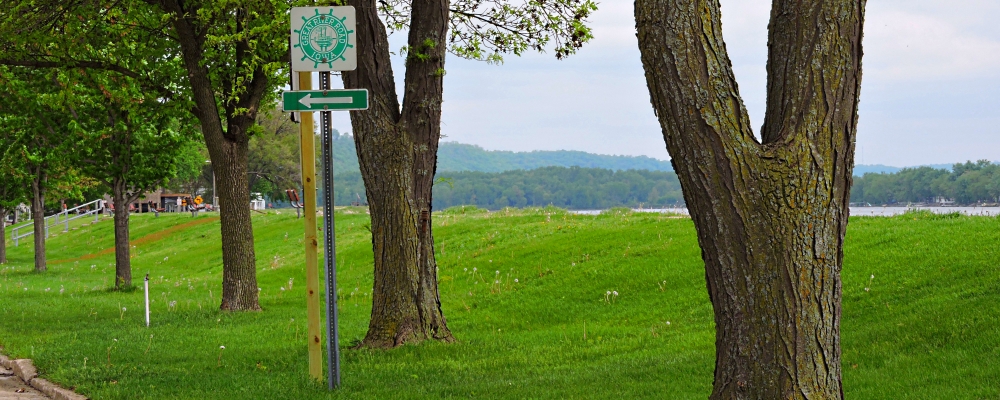
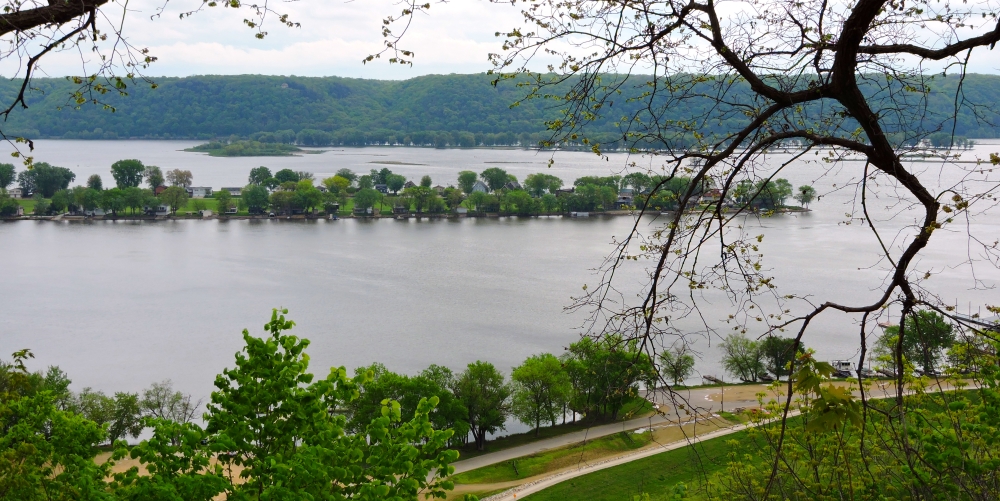
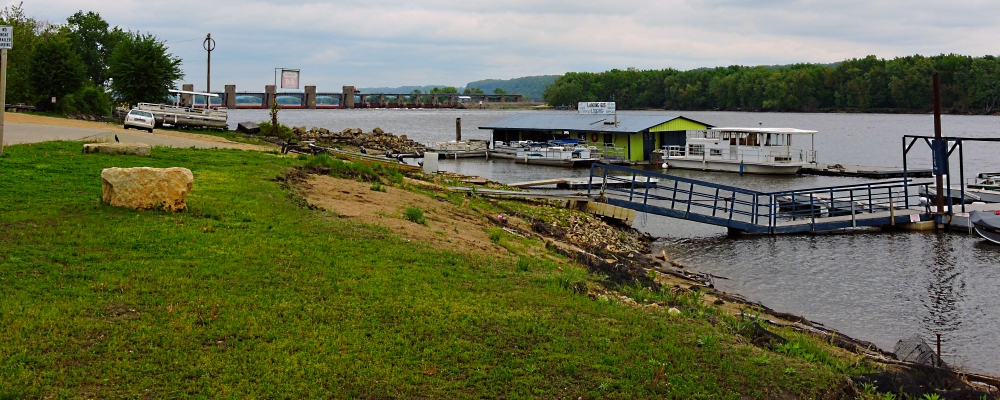
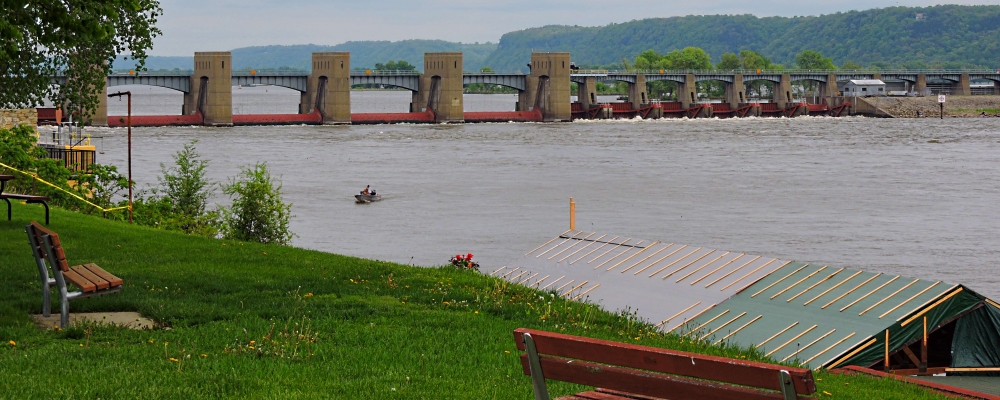
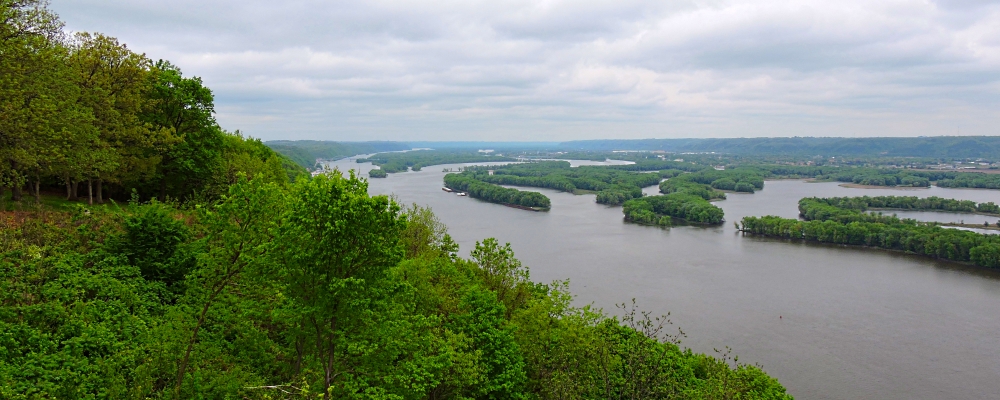
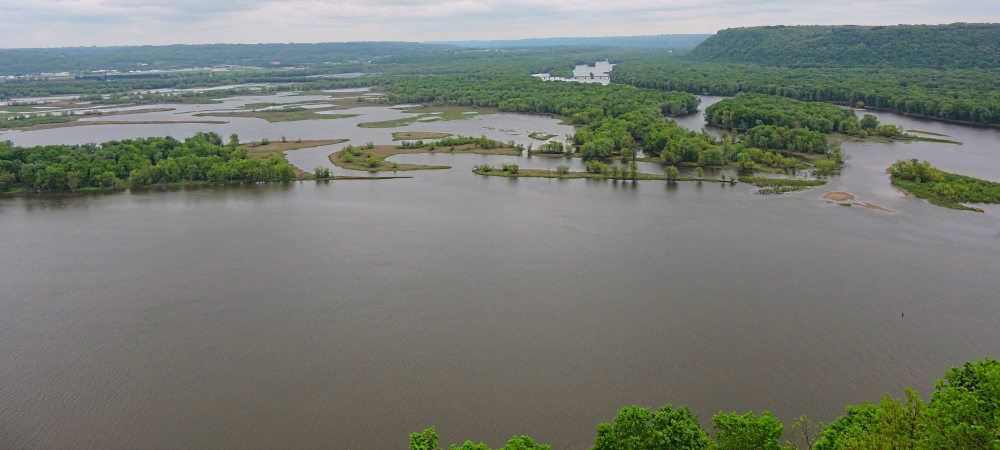
The Mississippi river, in the state of Iowa, flows along its border with the state of Wisconsin above the city of Dubuque, Iowa and along the state of Illinois below the city of Dubuque.
This river valley lured prehistoric man to both the
Effigy Mounds and
Pikes Peak Mound areas. Too, even modern populations have come to this river valley, settling many small communities. Thus, for millennia, both prehistoric and historic man have come to enjoy life along these scenic contours of waterways, islands and bluffs.
Further, the river in these rock lined corridors hosts a large variety of life, both plants and animals.
Here in Iowa, the valley of the Mississippi River is most likely the most distinctive landscape of central North America. The river is set in the geologic framework of both an ancient sea floor and a glacial floodwaters.
The northeastern part of Iowa reveals the Mississippi as being a deep, steep sided valley carved into sedimentary bedrock. Carved by glacier meltwater as well as by outwash sand and gravel released from the melting glaciers, the river was long ago formed to have a level valley floor.
The high bluffs along either side of the Mississippi River expose the internal composition of the geology into which the river entrenched its valley. The layered limestone strata were formed from older deposits of lime rich mud that accumulated int the ancient shallow, tropical sea which covered central North America during the
Ordovician period about 440 mya.