|
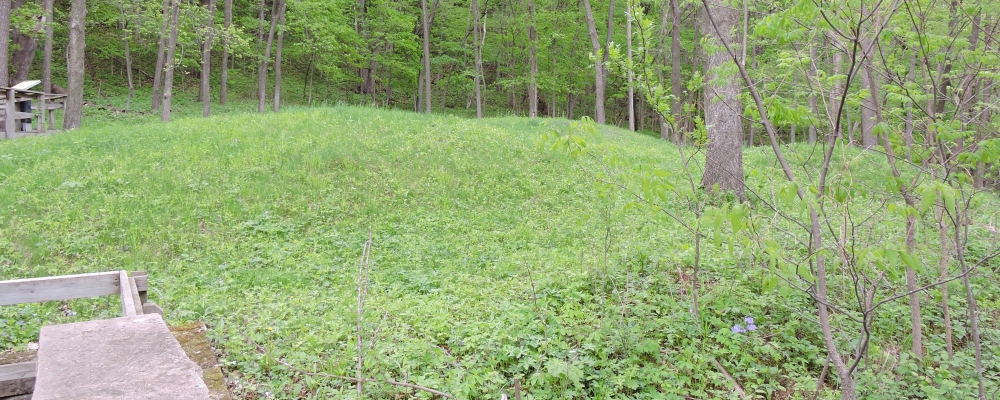
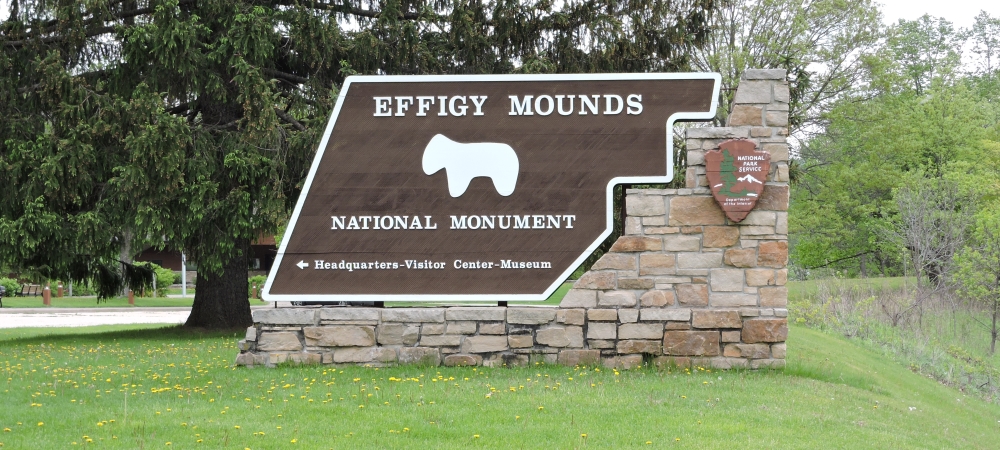
The site of Effigy Mounds is currently a US national monument which help to preserve some 200 or more prehistoric mounds built by pre-Columbian Mound Builder cultures, mostly in the first millennium CE and during the later part of the Woodland period of pre-Columbian North America. Numerous effigy mounds are shaped like animals, including bears and birds.
The monument is located Allamakee County, Iowa, with a small part in Clayton County, Iowa, in what is called the midwestern United States. The visitor center for the monument park is located in Harpers Ferry, Iowa, just north of Marquette.
The monument covers over 2,500 acres and contains 206 mounds, which include 31 effigies. The largest effigy mound is Great Bear Mound, measures nearly 137 feet from head to tail and rises over three feet above the original ground level.
Found in the states of Iowa, Minnesota, Wisconsin and Illinois, the effigy mounds are located in the southern extreme near Dubuque, Iowa, then, north into southeast Minnesota, across southern Wisconsin from the Mississippi river to Lake Michigan, and along the Wisconsin–Illinois state line.
The People
The indigenous people who lived in this area and built these mounds were known as the Woodland Culture, which dates from 500 BCE to about 1200 CE. This culture is broken down further into three different sub-cultures: the Early Woodland, also called the Red Ochre, the Middle Woodland, also known as the Hopewellian, and the Late Woodland, also known as the Effigy.
It was not until in the Late Woodland period when these indigenous people began building earthen effigy mounds, which are mounds in the shapes of birds, mammals, and reptiles.
|