|
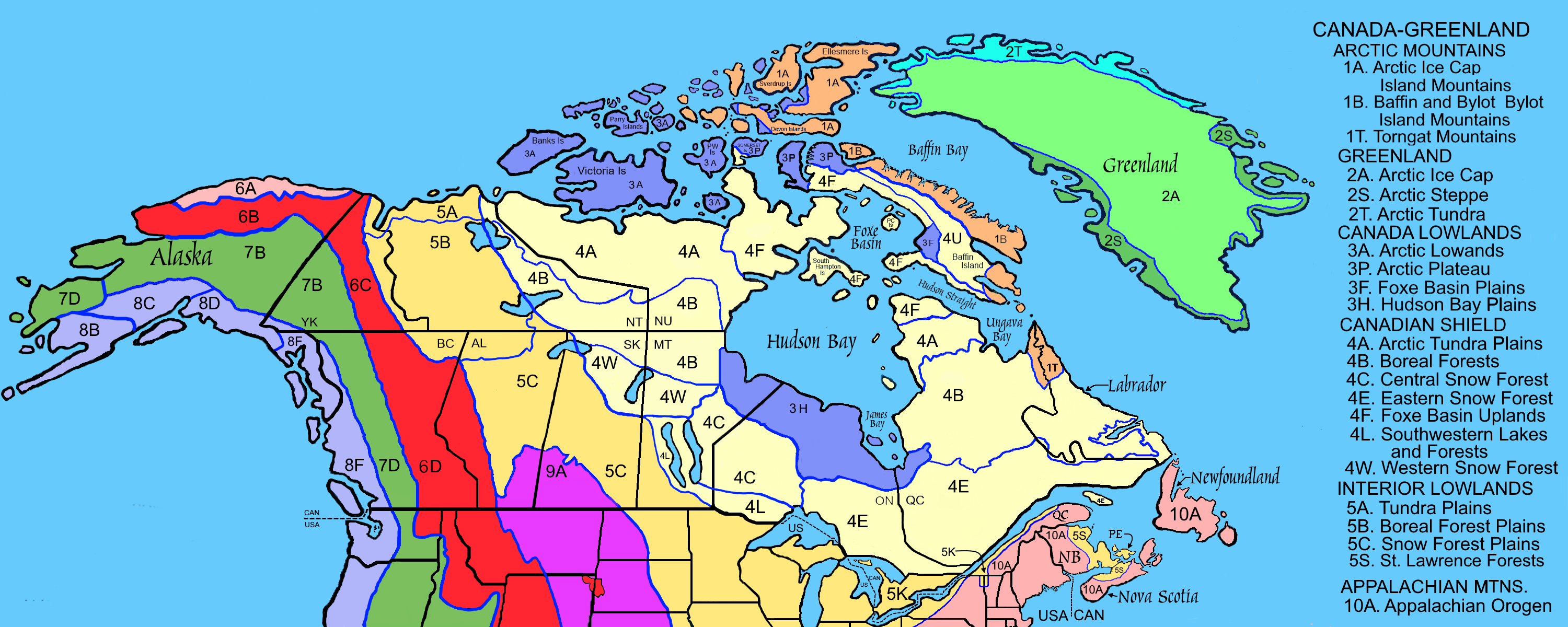
Greenland is the world's largest island, located between the Arctic and Atlantic oceans, east of the Canadian Arctic Archipelago and has the second largest ice cap on earth, after Antarctica. The ice cap on Greenland covers about seventy-five percent of the landmass. Although the ice cap is declining in size due to global warming, ice-free areas remain limited, to the extCent that only two ecoregions are defined for Greenland: the more southern and eastern Kalaallit Nunaat Arctic Steppe and the northern Kalaallit Nunaat High Arctic Tundra.
Though physiographically a part of the continent of North America, Greenland has been politically and culturally associated with Europe (specifically the colonial powers of Norway, Denmark and Iceland) for over a thousand years. Thus, today, it is an autonomous territory within the Kingdom of Denmark.
The majority of its residents are Inuit, whose
ancestors migrated from previous settlements in Alaska through Northern Canada and gradually settling onto Greenland by the 13th century. Today, the population is largely concentrated on the southwest coast with the rest of the island very sparsely populated.
About a third of the population lives in Nuuk, the capital and largest city. The second-largest city in terms of population is Sisimiut, 200 miles north of Nuuk. The Arctic Umiaq Line ferry acts as a lifeline for western Greenland, connecting the various cities and settlements.
Greenland, located in the Subarctic America, also called a Nearctic region, which region consists entirely of ice-covered land, coastal tundra, and sea ice including adjacent marine areas.
The total land area of this geographical region is approximately 838,000 square miles (217 million hectares), which when compared to Australia, is about one forth the size of Australia. Of that, approximately 183,400 square miles is tundra with the entire rest of the island just rock and ice.
Despite being the largest island on earth four-fifths of the land area lies beneath the second largest ice cap on earth.
Ice free areas are limited to small coastal areas of this island where it is inhabitable, most of which is along the south coast in the Arctic Steppe Ecoregion.
|