The Wayƒarers Journal ©

The Journal

The Wayƒarers

The Selƒ

The Journey

The Burden

The Mountain

   The Ancients
   The Earth

     Geochronology
     Continents

       Africa
       Antarctica
       Asia
       Europe
       North America

         Geographical
         Geological

           Arches
           Blue Holes
           Canyons
           Caves
           Craters
           Deserts
           Forests
           Hot Springs
           Mountains
           Parks
           Rock Spires
           Viewpoints
           Volcanoes
           Waterways

             Lakes
             Rivers
             Seas
             Springs
             Waterfalls
             Wetlands
             Water Divides

       Oceania
       South America

     Oceans

   The Life
   The Modern Man
   The Nonpareils
   The Steps
   The Way

The Appendix

The Wayƒarer
The Mountain
Go to bottom of this page
THE COLUMBIA RIVER TRIBUTARIES
The Kootenai

The Kootenay River Go Down go back
From it′s Head Waters to the Columbia River
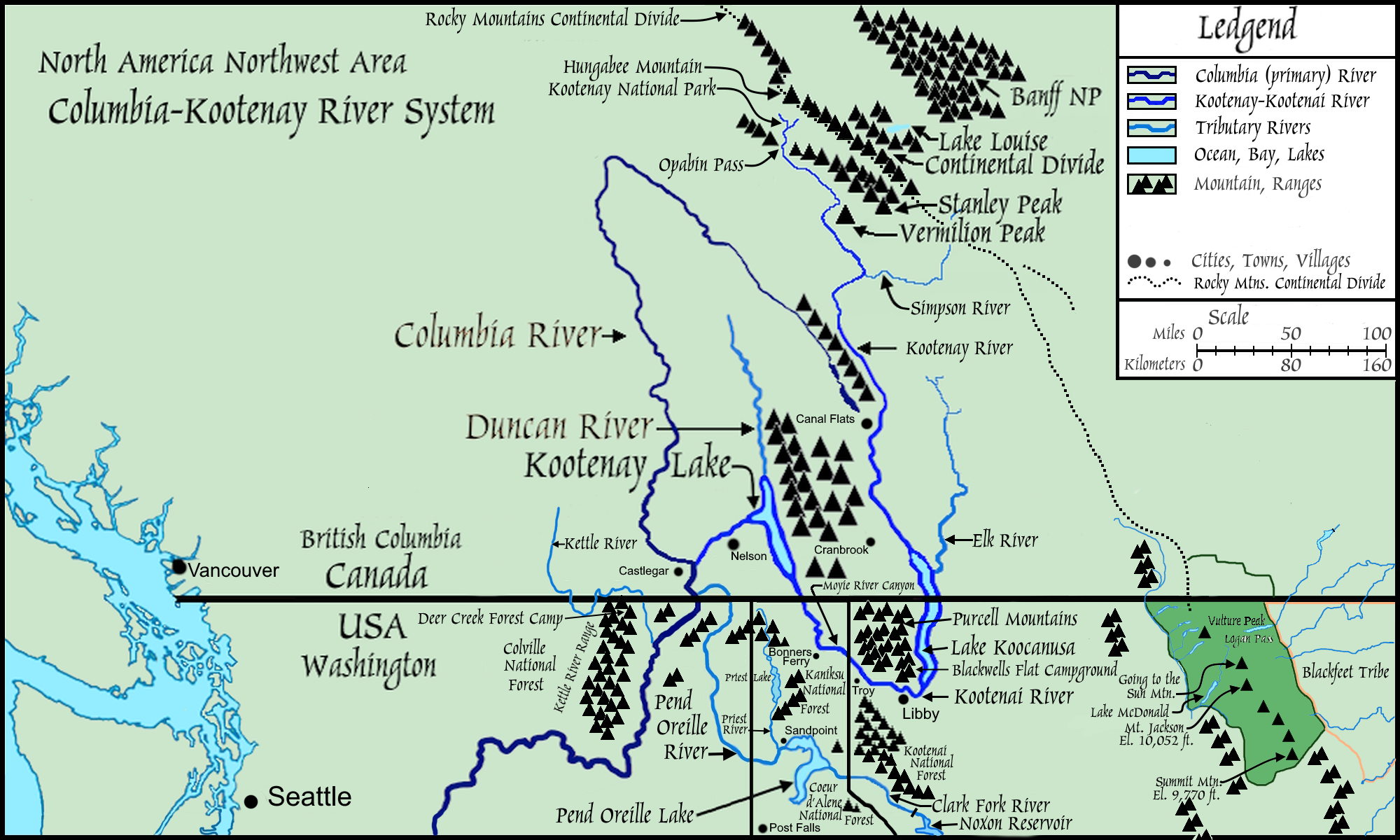
The Kootenay River has it′s head waters in the Canadian Rockies not far from Lake Louise and Banff National Park. These head waters are found on the west side of the continental divide just below the steeps of Hungabee Mountains and Opabin Pass where snowmelt trickles into the rills which then flow into streams, then creeks and continue to flow downward to the valley flats below and ultimately in the general direction southward.
The Kootenay flows southeast, then southwest, merges with the Simpson River and after several twists through the Canadian mountains, the Kootenay merges with the Elk river in Lake Koocanusa. Their combined waters then crosses into the United States, entering the extreme northwestern area of Montana, even more northward than Flathead Lake. Next, the Kootenay flow under the Lake Koocanuse Bridge, it flows into the extreme northwestern corner of Montana, more northwest even than the Flathead.
When the river flows south into Montana just west of Glacier National Park, it becomes the Kootenai river. The rive continues south until it reaches the Libby Dam. After flowing out of the dam, it turns to the northwest to the Kootenai Falls between Libby and Troy Montana. The Kootenai river continue northwest and then crosses into northern Idaho before turning northwest to return to Canada.
When back in Canada, the Kootenay river enters Kootenay Lake, merges with the Duncan river coming in from the north, then turn west through the Kootenay narrows and finally merges with the Columbia River at Castlegar, British Columbia.
Primary: Columbia River, (British Columbia, Canada)
Location:
Confluence with Primary:
Coordinates: (49.316667, -117.651111)
Elevation: 1380 feet
Source:
Coordinates: (51.3298861, -116.2935035)
Elevation: 8870 feet
Size:
Total Length: 485 miles
Total Basin Area: square miles
Geography Information:
Geographical Region
Rocky Mountains Region of Montana, and Idaho
Ecoregion
Northern Rockies Ecoregion of Montana, and Idaho
The Kootenai
Image
Kootenai River Information:
Primary: Columbia River,
British Columbia, Canada
Major Tributaries:
Province: British Columbia
Simpson River (51.196120, -116.090217) ?
Elk River (49.171567, -115.225152)

History:
For thousands of years, the Kootenai River has been a travel route for the indigenous people known as the Kootenai tribe, both the Ktunaza and the Ksanka bands. Also, along the banks of this river was a land route, established by these same people, who often walked these footpaths, establishing trails. (For more information, See The Ancients below)
David Thompson Bridge (see photos below)
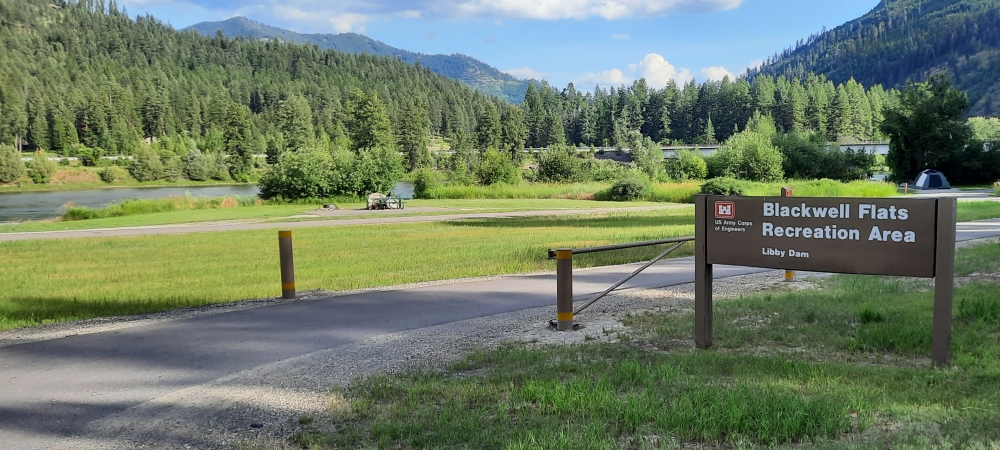
The David Thompson Bridge was built during the Libby Dam construction, but what I did not know until my visit in 2022 is who David Thompson was and the remarkable things that he accomplished. Previously, I had thought that he was one of the workers that had died during the construction, which is a common naming protocol in construction, but that was not the case. After camping for two days on the banks of the Kootenai River at Blackwell Flats just downstream of the dam, I pack out and drive west on US 2 towards Ponderay, Idaho.
Along this highway, a short way south of Bonners Ferry, Idaho, I see three information kiosks on the west side of the highway, stop and read the stories. One of the kiosks tells the story of the famous map maker, explorer, and fur trader who hunted the land and traded with the natives all along while working for the North West Company. He arrived into this area and traveled the Kootenai River in 1808.
Who was this early North American Wayfarer? He was the same person that this bridge has been named for, David Thompson.
Also, David Thompson of the North West Company traveled the Kootenai River by canoe intending to open the area for trade. He arrived in this area on the fifth of May 1808. On a return trip two year later in May of 1810, he arrived on foot using the trail system. When he left the Kootenai, her headed north to cross the Rocky Mountains through Howse Pass in what is now British Columbia.
During the winter of 1808-1809, Finan McDonald, also of the North West Company, opened the first trading post. It was on the north side of the Kootenai River near the location of where Libby, Montana is now. Later, that post moved upstream, likely to a place near to where the Libby Dam is now located. A competitor company, called the Pacific Fur Company was along the Kootenai during the winter of 1812-1813. Aslo, the Hudson Bay Company operated trading operations, sending men to open a seasonal post called Fort Kootenai along the banks of the river. After 1839, the Hudson Bay trading post was moved to the Tobacco River valley and finally, the Fort Kootenai was moved north into the British Territory in 1865.
There were a few other noteworthy travelers including a Jesuit priest, Father Pierre DeSmet who came on foot walking the established trails, arriving in 1845 and established a Catholic mission in the Tobacco River valley. Then, in 1859, James Hector of the Palliser Expediton arrive at the Big Bend of the Kootenai River, the place where its flow coming down from the British Territory in a southbound direction into what is now Montana at a location just below where Libby Dam now exists and then begins to turn back northbound. A year later, in 1860, the American Boundary Commission pass through the area during their survey and marking of the international boundary line. Four years after that, in 1864, Ed Warren built a ferry to provide miners a place to cross not far from the Big Bend of the Kootenai. These miners were on their way to the Wild Horse Creek gold strike in British Columbia but Warren′s business failed primarily due to a better route called the Moyie Trail in what is now Idaho.
Then, in 1891, the Old Tote Road opened, which was located on the south side of the Kootenai and was the first actual road between Libby and Kalispell, which was then known as Demerville. This road came to be the supply route for settlers and railway workers coming to the area prior to the construction of the Great Northern Railroad completed in 1892.
David Thompson, Born: 30 April 1770, Died: 10 February 1857
David Thompson was a British Canadian cartographer, explorer, fur trader, and surveyor, who was known to some native people as Koo-Koo-Sint or in English, the Stargazer. It is reported that during Thompson′s career, he traveled 56,000 miles or 90,000 kilometers across the North American continent and along the way was able to map about 1.9 million square miles of the continent along his travels. Because of his accomplishment, Thompson has been described as the greatest practical land geographer that the world has produced.
In 1784, at the age of 14, the Grey Coat hospital, a school for the disadvantaged where he graduated from the school of mathematics. The home treasurer paid the Hudson′s Bay Company the sum of five pounds, upon which Thompson became the company′s indentured servant for a period of seven years to be trained as a clerk. He set sail on 28 May of 1784, and left England for North America.
Later, when convalescing from a fractured leg bone (tibia) Thompson expanded his astronomical, mathematical, and surveying skills under the tutelage of Hudson's Bay Company surveyor Philip Turnor. After his apprenticeship ended in 1790, he then hired on as a fur trader and completed his first significant survey of the route to Lake Athabasca near the extreme northern Alberta and Saskatchewan border.
In 1811, David Thompson was the first European to navigate he entire length of the Columbia river and map both the Columbia river and record the location of its tributaries. He arrived at the mouth of the Columbia on 14 July 1811 and reached the partially constructed Fort Astoria being built by the Pacific Fur Company who arrived on the Ship Tonquin just two months earlier. In 1812, Thompson returned to Montreal and published his journals.

The Ancients Steps:
Ancient Steps:
The Kutenai People
The land along the Kootenay River in British Columbia, Canada and the Kootenai river in Idaho and Montana in the United States has long been inhabited by the Kutenai people. From where did this indigenous people come from?
The ancestors of the modern day Kootenay were from the sons of Joktan, who with their father came across the Beringia land bridge. Then, after traversing across the interior of what is now Canada, this nation of people continue with Joktan southwest towards the the coast near to where the Columbia river goes through the Columbia River Gorge and cuts through the Cascade mountains. And it was along the banks of a very large lake which they called, Ta-Maschilamek Menuppek, or in English, Great Salmon Lake, where Hadoram decided to depart company from his father, Joktan and to make the area along the shores of this lake his homeland. Over the centuries, the Great Salmon Lake drained out to the Pacific Ocean through the Columbia River and in the process, cut a deep gorge through the Cascade Mountains, one which today divides the states of Washington and Oregon.
The Kutenai River
The river was central to the economic life of the Kutenai people as an important fishing and hunting area. Too, it has been a place of special and spiritual meaning ever since their forefathers arrive here after the crossing of the Bering Land Bridge.
Later, as the level of the lake began to recede, some of the sons of Hadoram began to follow the water inland. These were Hadoram′s sons who became the Pacific Interior Region Tribes of the Salish, the Sahaptin and the Plateau. And it was from the Plateau, that there came to be a tribe whose homeland became the Kootenai river, a tribe we know today as the Kutenai people.
Since then, the Kutenai have coexisted with the creations in their habitat. Even today, stewardship of the Kootenai waterway requires the utmost respect and protection for all elements of the natural world.
The Kootenai Falls, as the sole barrier to navigation from the headwaters marks a transition zone between the Upper Kutenai tribe and Lower Kutenai tribe.

The 2025 Journey, Kootenai River Go Down Go Up
Upon arriving at Libby, Montana, I just drive through until arriving at the junction of US 2 with SH 37, which is where I turn left onto the state highway. Doing this means that I have only ten miles left to drive today. It is during this last ten miles where I loose my phone service and must needs use my paper map to complete the final few miles to the campground. Arriving at the dam, I have to drive through the entire Libby Dam site, struggling mentally to remember exactly where the campsite I want to stay at is located.
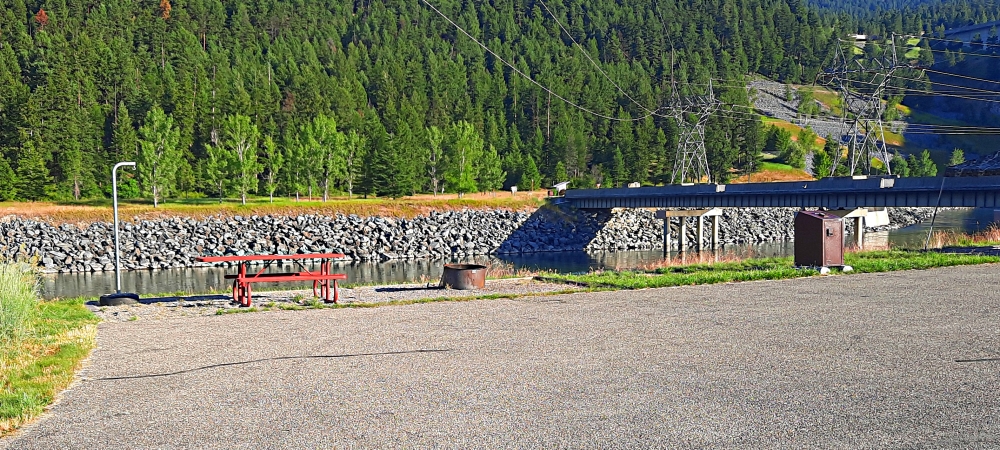
It has been more than three years since the last time I was here, staying two night beginning on Day 420 TN, so I hope not too many changes have occurred. Then, at about five-fifty this afternoon, I arrive at the Blackwell Flats free campground which is located below the US Army Corps of Engineers Libby Dam, a dam which holds back Lake Koocanusa. Lo and behold, the campsite is just where I left it, next to the same Kootenai river, with the same seven camp sites, and the same vault toilet. So, I choose campsite number 6 because it is half way between the dumpster and the vault toilet. I then back into the site and begin setting up my gear.
The Kootenai
Image The Kootenai
Image The Kootenai
Image

The 2022 Journey, Kootenai River Go Down Go Up
Tuesday, 12 July 2022, Libby Dam, MT.
(Day 421 TN) 52°F. 7:30 am, sunny
Summer Sojourn, Day 21
Blackwell Flats USACoE Campground
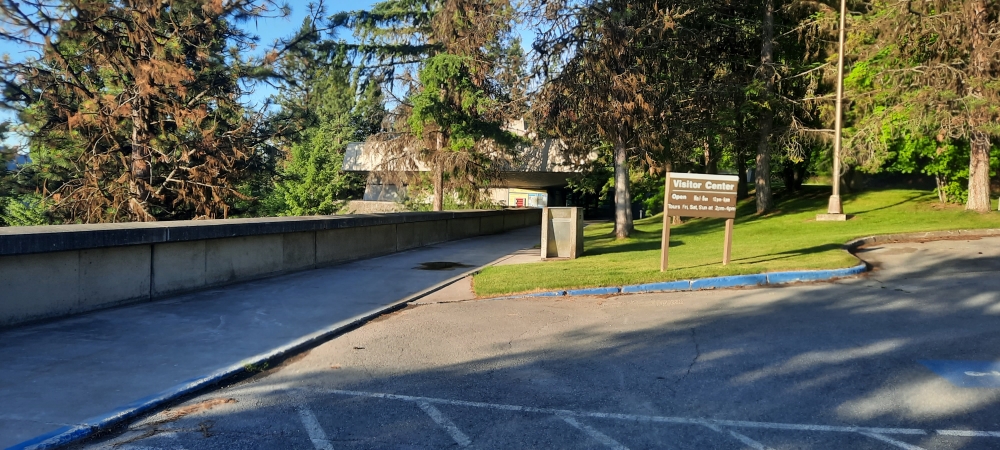
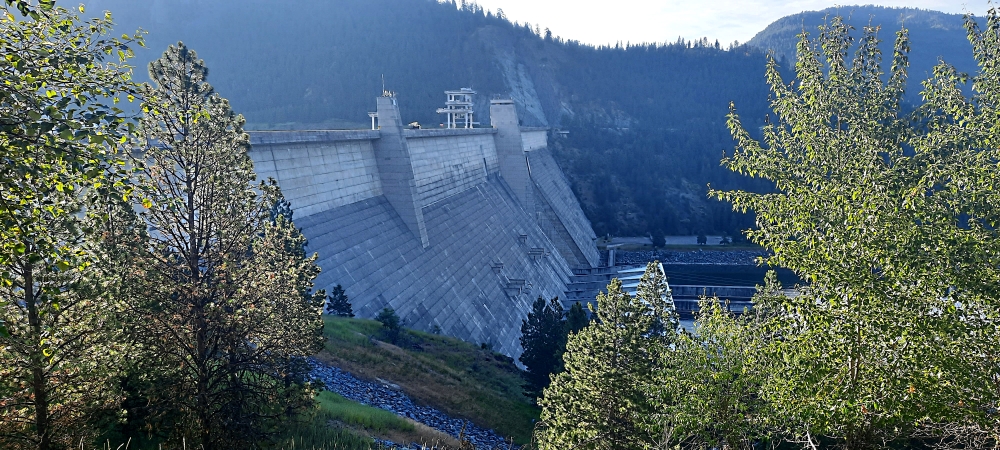
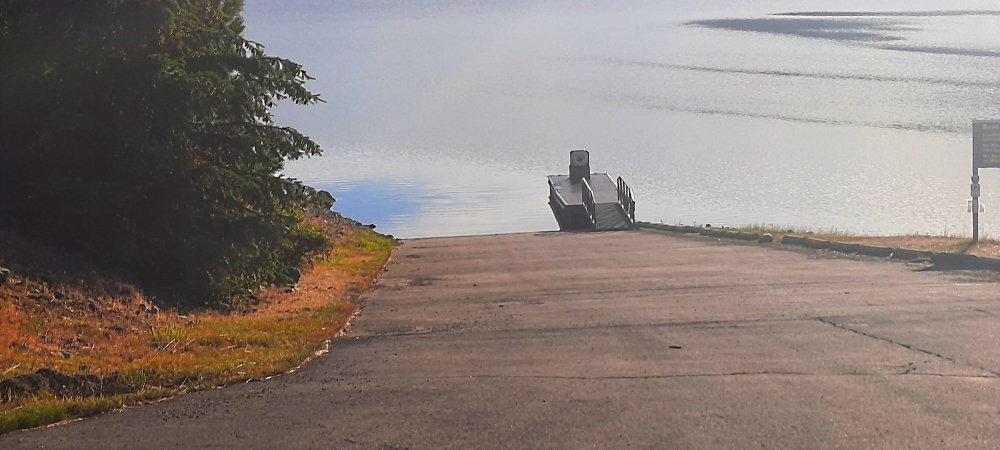
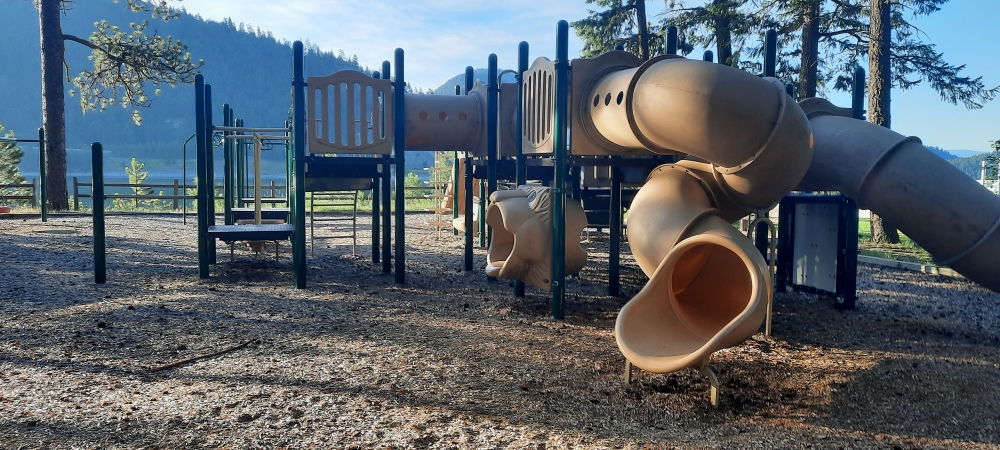
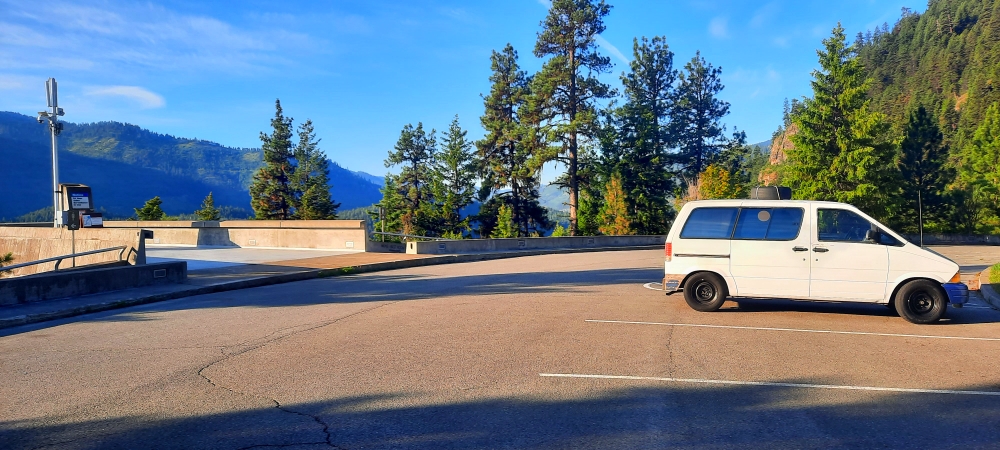
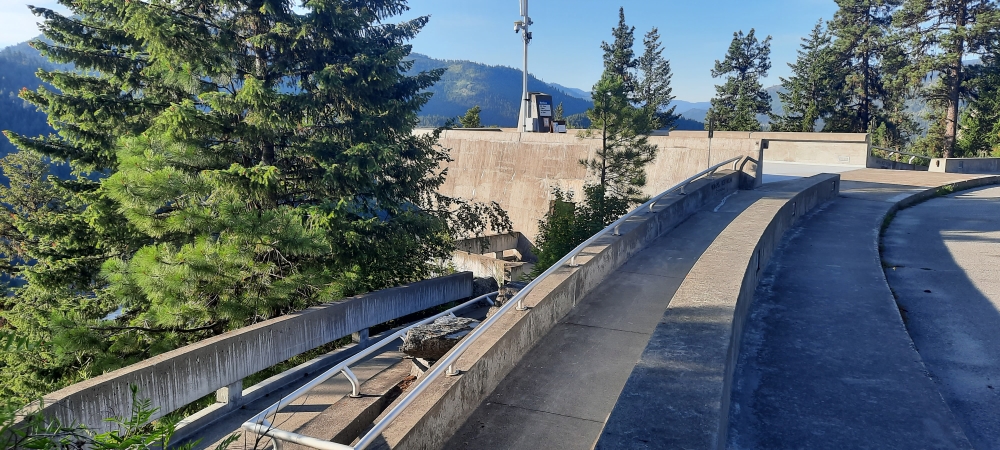
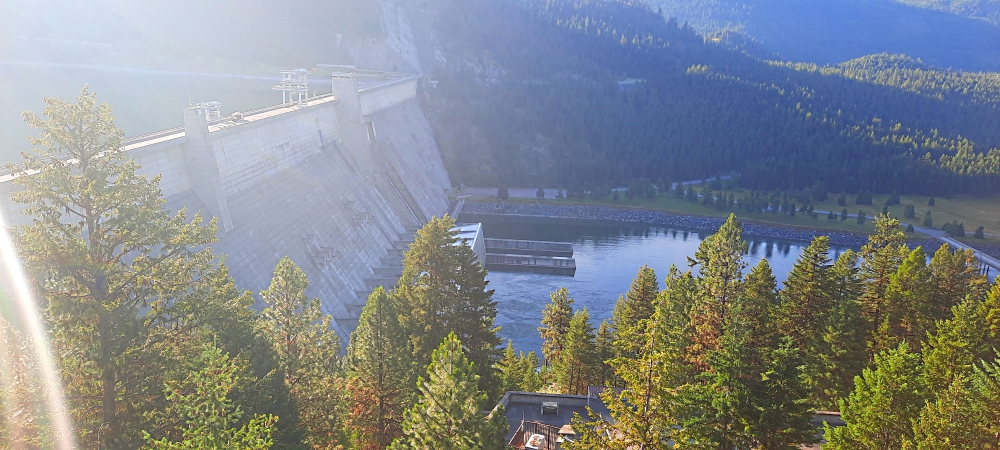
Awake, start the jammer, pull forward and stop. Then I step out and check the campsite and find that I did not leave anything here. I then drive north on FR 288 up to the visitor center and take some photos both at the visitor center area and at the West Side overlook.
The Kootenai
Libby Dam The Kootenai
Libby Dam Visitor Center The Kootenai
Libby Dam The Kootenai
Libby Dam Boat Ramp The Kootenai
Libby Dam Playground The Kootenai
Libby Dam Overlook The Kootenai
Libby Dam Overlook
The view from the west side overlook has a lot of glare but the other photos are gooc. Next, I drive back down to the lower river level and drive across the David Thompson Bridge to look at the other campsites.
The Kootenai
David Thompson Bridge
Finally, I connect to SH 37, turn south and the west, cross the Kootenai river again and continue west until arriving at Libby where I cross back to the south side and turn west again onto US 2. After stopping briefly for some coffee, I then continue west on US 2 along the river until I arrive at the Kootenai Falls and stop again for a short time and some photos.
The Kootenai
Image The Kootenai
Image
Leaving the falls, I continue west on US 2, cross the Kootenai again and then the state line into Idaho at which time, I cross into the Pacific Time Zone and have to turn my clocks back one hour. In other words, when I left Montana, it was 10:30 this morning and when I entered Idaho, it was 9:30.
Continuing west on US 2, I cross the Kootenai river one more time, then drive through Bonner′s Ferry and come upon roadside pullout with historical information. The one that catches my attention is the one with the name David Thompson.
The Kootenai
David Thompson Information Board
Then I drive south on US 2 until I arrive in Ponderay, Idaho where I pull into the w-mart, grab my computer bag and go inside for some key pounding and uploading of files. Even here, it is quite hot outside and I will see how hot it remains into the evening. At least this cafe is open until nine every day of the week. If the temperature outside has cooled off by nine, then I could possibly stay here for several days or longer. Only the temperature will tell.
Sunday, 10 July 2022, Kalispell, MT.
(Day 419 TN) 59°F. 6:30 am, rain
Summer Sojourn, Day 19
At eleven this morning, I pack out of the cafe, drive north through town to US 2, turn left and drive west towards Libby, Montana where I stop to add fifty dollars of gasoline to the tank. Next, I stop at a g-mart to purchase some organic vegetables, sprouted bread, chips and guacamole.
Then, I cross to the north side of the Kootenai river and drive upriver on SH 37 to near Fisher River where SH 37 crosses the Kootenai river to the southeast side and from there follows along the Kootenai on the east side of the river. However, just before SH37 crosses the Kootenai, I turn north onto FR 228, which follows the Kootenai on the west side of the river. I then continue north for a short distance and come to an Army Corp of Engineer Campground, pull in and find that camping here is free.
The Kootenai
Image The Kootenai
Image The Kootenai
Image The Kootenai
Image The Kootenai
Image

The 2020 Journey, Kootenai River Go Down Go Up
(Day 721 TG) 58°F. 7:00 am, sunny

The Northern Tier Route
Having connected to the Northern Tier route in Sandpoint, Idaho, I drive north to Bonners Ferry, then east on US 2, cross the time zone, continue along the Kootenai River until I come to the Kootenai Falls and Swinging bridge. As I approach the turn off, I see another view point above the river, and I remember how long the walk was to the bridge and falls on my last visit here, how it took several hours to walk to all the viewpoints. I pull over here take photos from this highway overlook.
The Kootenai
2020 Journey The Kootenai
2020 Journey
Leaving the overlook, I drive east until I arrive in Libby, Montana, where I depart from the Northern Tier route as well as the Kootenai river and choose to continue on US 2 through the Kootenai NF which has numerous lakes along the highway. For the reason that I begin my drive late in the afternoon, I select the shorter distance to Kalispell, Montana where I end up after today′s drive.

The 2018 Journey, Kootenai River Go Down Go Up
Koocanusa Lake
After the Kootenay river flows through the Kootenay national park in British Columbia, Canada, it continues flowing down in a mostly southern direction through one mountain valley to the next until it crosses into the United States where the name changes to the Kootenai river.
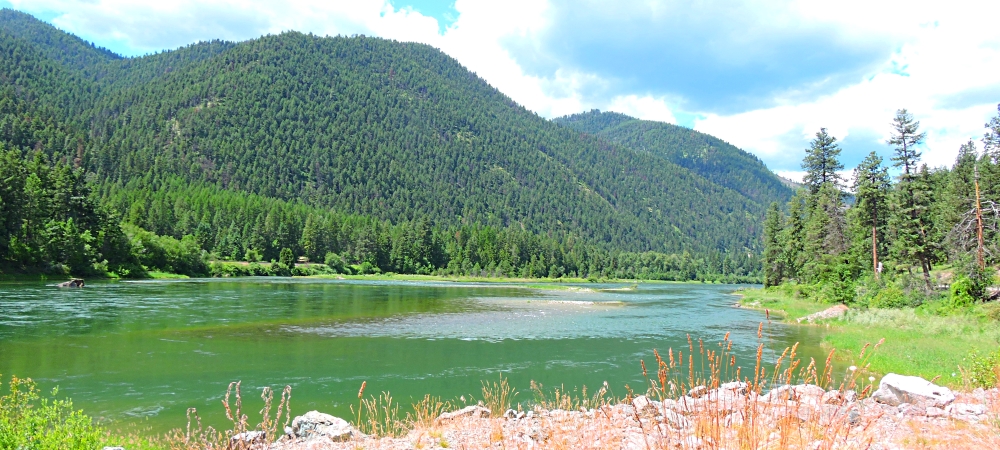
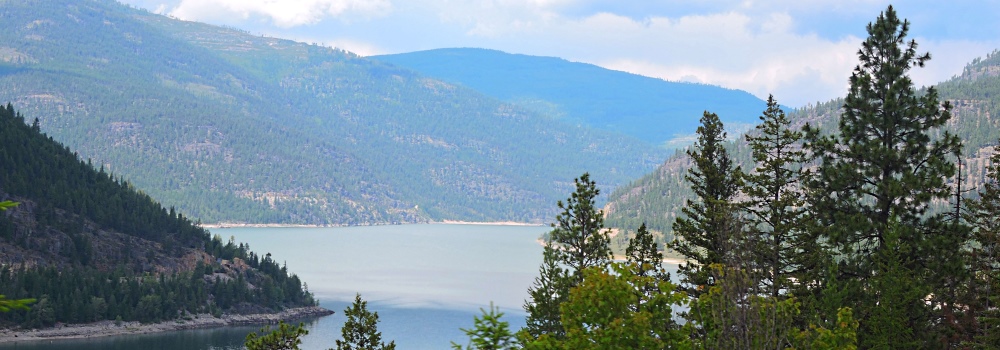
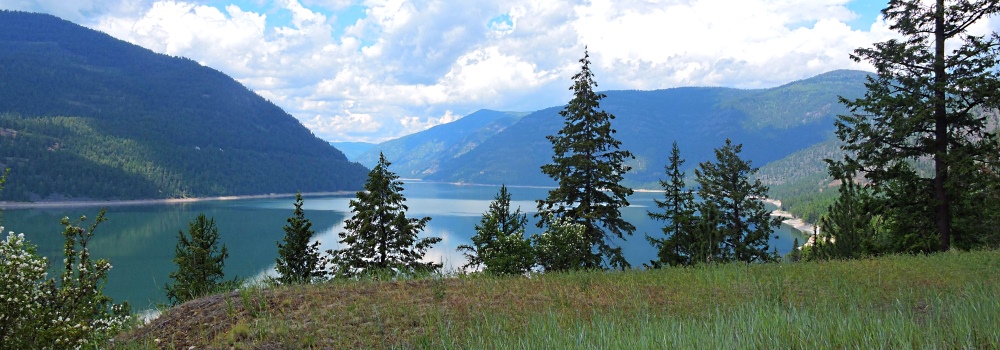
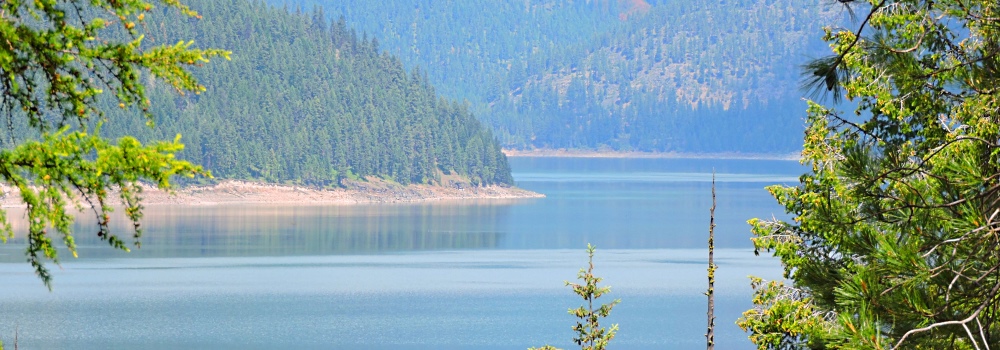
Once in the United States, the Kootenai river moves through a narrow deep body of water known as Koocanusa Lake, a 93 mile long lake section of the lake that rises above Libby Dam to the south, just above Libby, Montana.
The Kootenai
Image
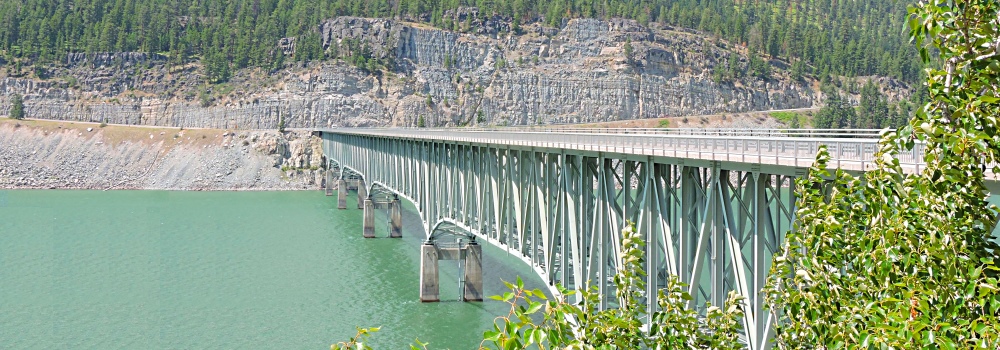
About thirty miles south of the national border, along the Koocanusa lake is a bridge that spans the lake, this bridge is known as the Koocanusa Bridge.

Koocanusa Bridge
At the point where the Kootenai and Tobacco rivers merge and SR 37 comes in from Eureka, Montana, turns southward to travel along the east side of Lake Koocanusa, the river is now flowing along side the Northern Tier route (NTR). 2
Soon afterwards, the Koocanusa bridge provides the only crossing at the north end of the lake and then SR continues uninterrupted through mature northern national forest lands for 67 miles until it reaches the Libby Dam.
The Koocanusa Bridge
over Koocanusa Lake
Stopping at a rest stop near the bridge, I notice the information boards that tells of how the Koocanusa bridge was built before the dam was complete. The bridge was built in 1971 and the dam completed four years later in 1975.
Before the lake rose, the bridge was 215 feet above the river, about thirty-five feet higher than the Deception Pass bridge is above Puget Sound.
The Koocanusa Bridge
before the Lake Rose
Below the Koocanusa bridge, SR 37 runs alongside very peacefull still waters for some sixty miles of nothing but forests, mountains and water.
Kootenai Lake
Forested Roadway Kootenai Lake
Enshrouded by Forest Kootenai Lake
Enshrouded by Forest
Libby Dam
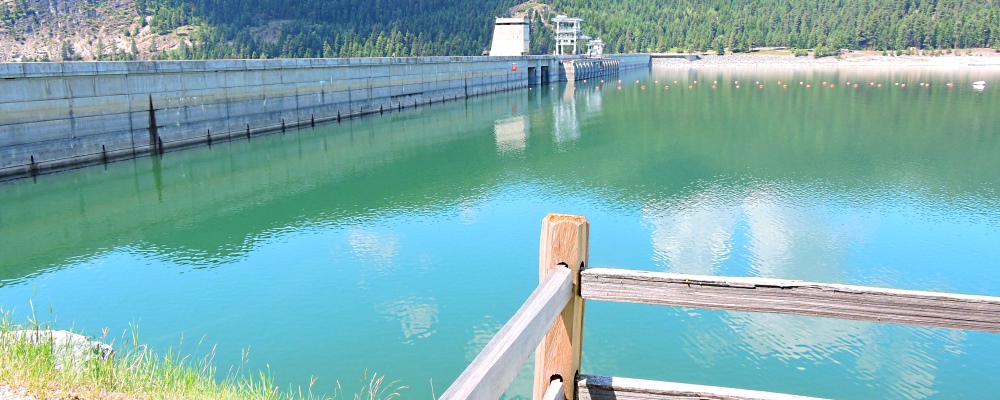
Upon arriving to the Libby dam there is a parking area with a viewpoint and rest rooms. I stop, get out for a couple of photos of the dam and while here see several violet-green swallows at the overlook and I take some photos of these birds to include in my gallery.
but soon, I am on my way again.
Koocanuse Lake
at Libby Dam
Below Libby Dam
Just below the dam, the David Thompson bridge can be crossed from SH 37 on the east side of the river to access the visitors center for the dam, as well as FR 288 and the campgrounds on the west side.
This NF road on the west side of the lake is a hard surface forest road that goes north along the west side of the lake to the Koocanusa bridge and further. It also continues south almost to Libby.
All of these roads, bridges were put in place and became operational while the dam was being built. Now, there serve as access to several boat ramp, campgrounds and viewpoints that line both sides of the lake.
Kootenai River
Flows out of Spillway
When the river comes out of the spillway, it is now called the Kootenai River and becomes free flowing once again. After flowing a short distance south, it turns west to Libby, Montana, where SR 37 ends. Here, the NTR turns onto US 2 westward.
Too, after flowing downriver past Libby, Montana the river takes a gradual course through the Kootenai National Forest lands right along highway.

Kootenai Falls
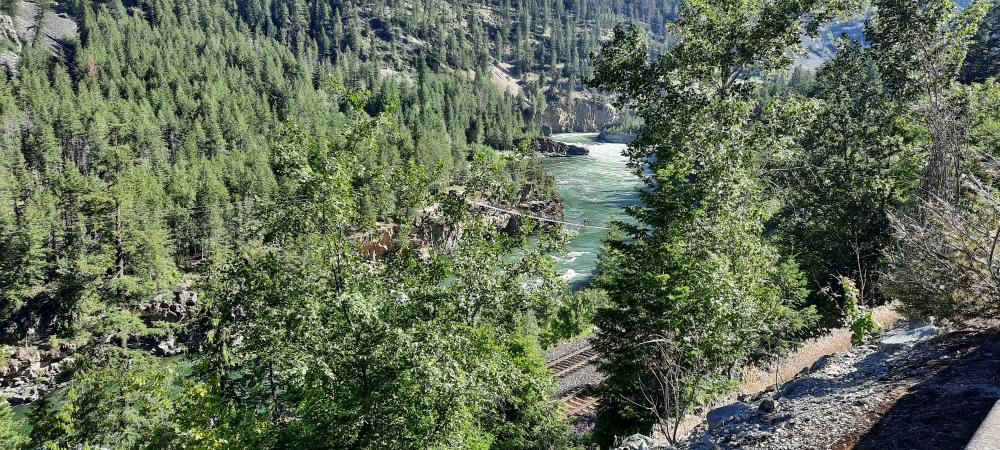
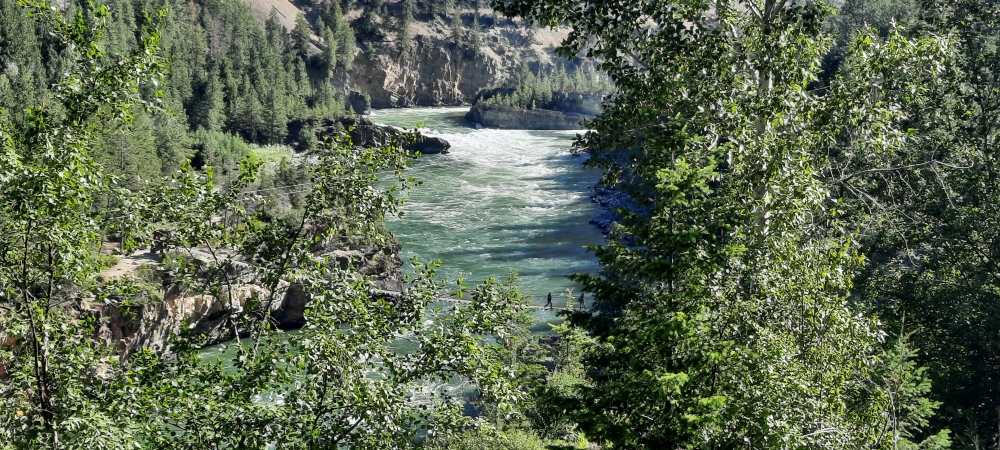
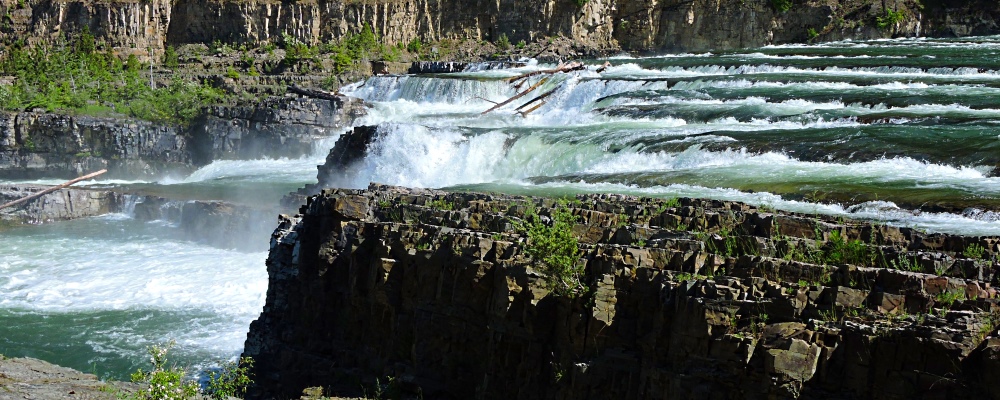
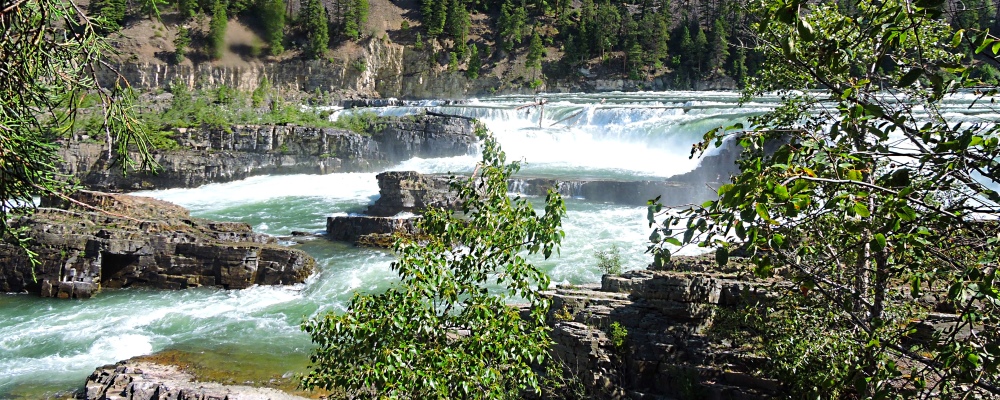
On US 2 a short ways west of Libby, Montana, the calm Kootenai River suddenly gathers momentum and then tumbles through the first rapids and then over the main drop of Kootenai Falls, a drop of about 33 feet.
The water then tumbles further through several cascades and chutes with a total drop of 90 feet in less than a mile.
Above Kootenai
Falls Above Kootenai
Falls Kootenai Falls Kootenai Falls Kootenai Falls Kootenai Falls Chutes below
Kootenai Falls Chutes below
Kootenai Falls

Downstream from Libby, the Kootenai River enters a canyon and flows over Kootenai Falls, one of the largest free-flowing waterfalls in the northwest. A forested trail leads from the highway parking lot a quarter mile to a sign indicating to the right is the falls and to the left is the Swinging Bridge.
Kootenai Falls
Swinging Bridge
(m2cont-nam-geol-wa-riv-columbia-kootenay-2018-0622.0926) Kootenai Falls - Swinging Bridge Trail
Kootenai Falls
Swinging Bridge
Both trails are not too strenuous, about a half mile one way, but the swinging bridge trail has more rocks and ruts and root that does the falls trail and it would be better to have hiking shoes or in the least wearing sneakers.
Kootenai Falls
Swinging Bridge
Built by the Forest Service to access forest fires across the Kootenai River, this foot bridge was destroyed by a major flood in 1948. The bridge was rebuilt on concrete piers and is now protected from flooding by Libby Dam. The bridge is at an elevation of 2,100 feet.
Kootenai Falls
Swinging Bridge Kootenai Falls
Swinging Bridge
Picnic areas and rest rooms are available near the parking area. Located just downstream from Kootenai Falls, the bridge offers access to the other side of the Kootenai River, offering a different view of the falls and connects to multiple hiking paths.
Kayakers can use the bridge to gain access to the famous Super Hole and other river access points.

West of The Falls
The Kootenai River continues to flow downstream in a northwestern direction, along Troy, Montana where there is a nice riverside park called Roosevelt Park.
The river continues the same direction, crosses into Idaho and is merged with the Moyie river, after which it turns in a westerly direction for a short way until reaching Bonners Ferry, Idaho.
The Kootenai
at Bonners Ferry
Bonners Ferry
When gold was discovered in the East Kootenays of British Columbia in 1863, thousands of prospectors from all over the West surged northward over a route that became known as the Wildhorse Trail.
Edwin Bonner, a merchant from Walla Walla, Washington, established a ferry in 1864 where the trail crossed the broad Kootenai River. In 1875, Richard Fry, and his Sinixt 3 wife, Justine Su-steel Fry, leased the business, but the location retained the name of the original founder and later became the town of Bonners Ferry.

The Kootenai returns to Canada
Leaving northwest from Bonners Ferry, the Kootenai river has another twenty to thirty miles before re-entering Canada and returning to being called the Kootenay river.
Too, the Northern Tier route crosses the river from the north side, enters Bonners Ferry and then travels southwest out of town on US 2 towards Sandpoint, Idaho, then west into Washington.

2  
The Northern Tier Route is a coast to coast bicycle route that traverses 4285 miles almost entirely on the northernmost paved highways of the United States. The western terminus is at Anacortes, WA and the eastern terminus is at Bar Harbor, ME. The most scenic section of this routes inevitably is the 457 miles crossing of the top of Washington state and most likely the most scenic routes on the continent.
3  
Sinixt, (also know as Sinkaietk or Sin Aikst) are a first nation people who have lived in the West Kootenay area of British Columbia and nearby areas of eastern Washington. The Sinixt are of Salishan language decent. Today, most live in the Colville Indian reservation in Washington.

To go back to River Index, click on down arrow. Go Back Go to previous section
on this page

Thank you for visiting The Wayƒarers Journal.

See Ya above the Treeline!

This Page Last Updated: 31 March 2026


To continue to the next Episode Level page, Click here go to top
 
The Wayƒarers Journal © ::: Come Join the Journey ™
by Thom Buras
Come Join the Journey ™