|
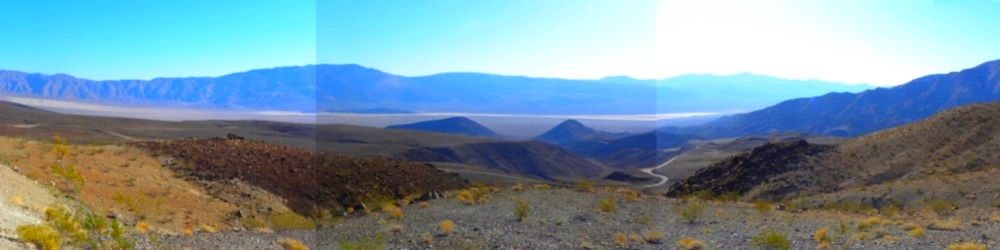
Death Valley is located in Eastern California in the northern most part of the
Mojave Desert and just south of the border of the
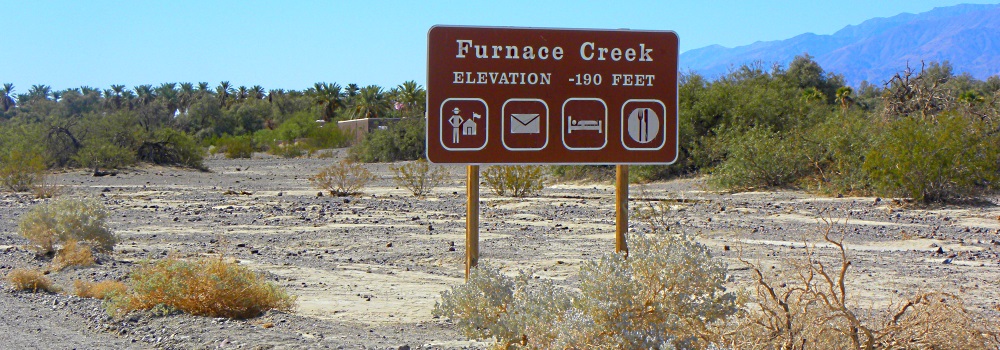
Great Basin Desert. During the summer, it is know as one of the hottest places in the world, as hot as those deserts in Africa and the Middle East. Furnace Creek holds the record for the highest recorded air temperature in the world at 56.7 degrees C. (134 degrees F.) on July 10, 1913.
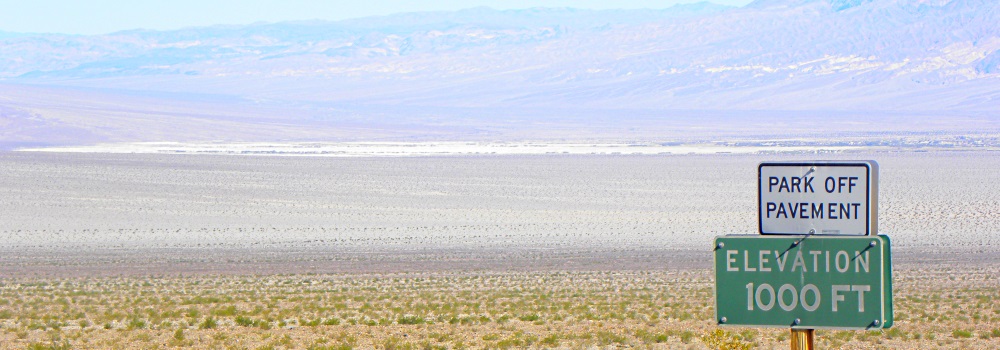
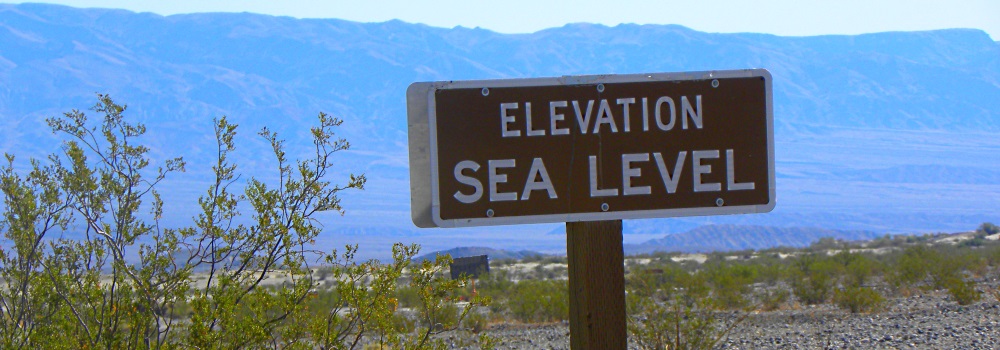
The lowest elevation in North America is located in Death Valley at Badwater Basin, at 282 feet (86 meters) below sea level. Interesting, the highest point in the contiguous forty-eight states is just 86 miles (136.2 km) from here to the west-northwest. This high point is Mount Whitney at 14,505 feet (4421 meters.) The highest elevation in Death Valley is Telescope Peak in the Panamint Mountains at 11,043 feet (3366 meters.)
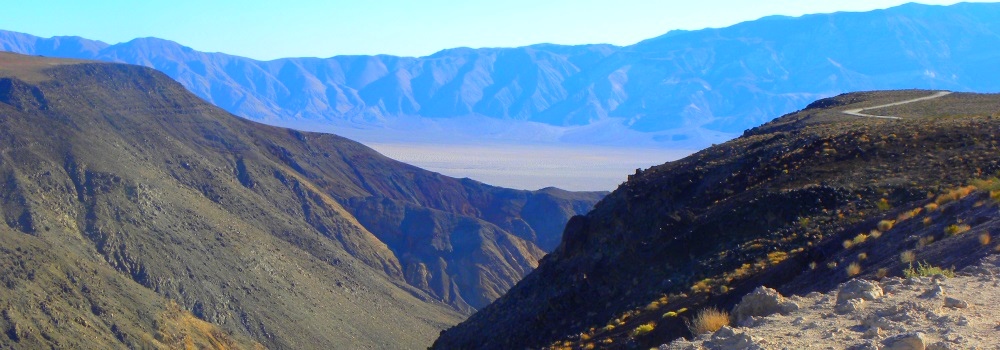
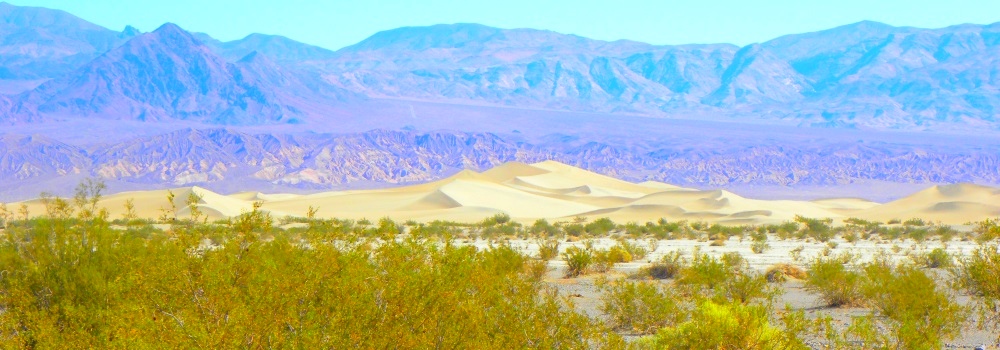
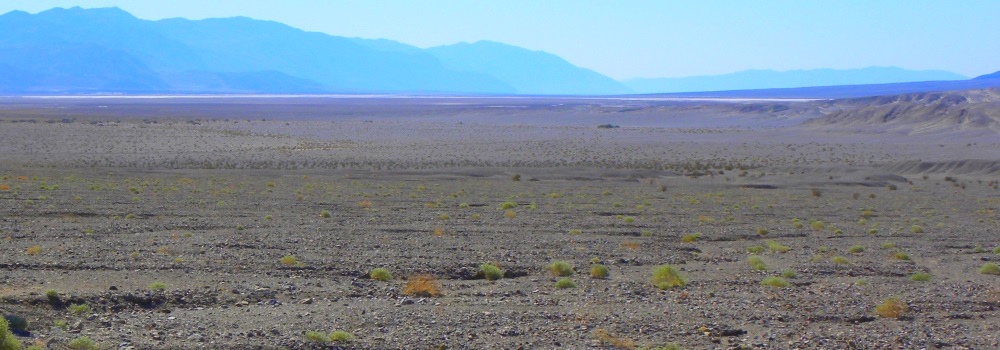
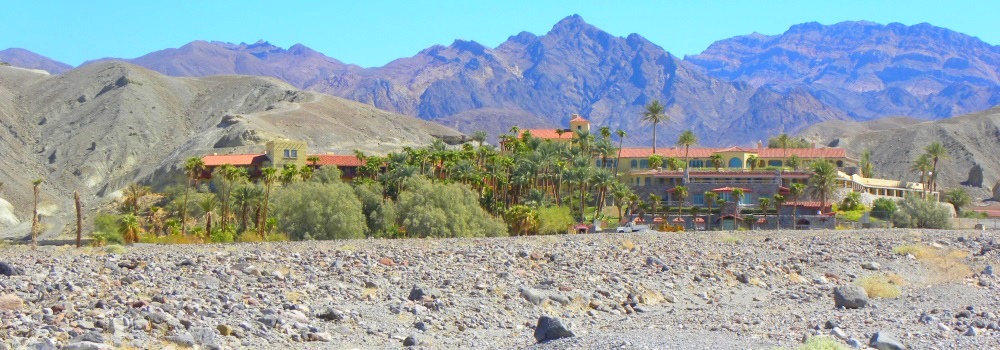
The valley has an area of 3000 square miles (7800 sq km), runs from north to south and is enclosed by mountains on all sides. These ranges are the Amargosa Mountains on the east, the Panamint Mountains on the west, the Grapevine Mountains on the north and the Owlshead Mountains on the south. The valley is a long, narrow basin, most of which below sea level and has high, steep mountain ranges which form walls all around it.
Death Valley has long extremely hot summers, short mild winters and very little rainfall.
Twelve Thousand Years Ago
According to the wise men of this world, during the Late
Pleistocene Epoch, some twelve thousand years ago, and what the wise men of this world call the last ice age, Death Valley was the low point of a system of once interconnected lakes, all now located in the state of California. This lake system includes, first Mono Lake at the highest elevation, then Adobe Lake, Owens Lake, China Lake, Searles Lake, Panamint Lake, and Manly Lake which is now the Death Valley basin.
Manly Lake, the end-basin in the chain of the above lakes was 100 miles (160 km) long, 600 feet (180 meters) deep and this lake is the basin that is now the location of the modern day Death Valley.
Unbeknownst to those Wise Men
However, what those Wise Men fail to recognize is that prior to the Noahacian flood, which occurred less than 4,400 years ago, there were no ice ages because the earth had a canopy of thick clouds that cause a
greenhouse effect earth wide.
Not long after Noah, his family and the animals disembarked from the arc, God gave the command for all the people to
migrate across the surface of the earth.
Settling a New Continent
The first to migrate across Beringia, was
Joktan, who was one of the grandsons of Shelah, who was a grandson of Seth. Then during 2200 BCE, about 170 years after the flood, Joktan who at the age of 68 years, left Mesopotamia with his sons, traveled northeast across the Asian continent crossed the land bridge and unbeknownst to them at the time, entered a new continent and began to search for a new homeland. At the time of their arrival onto the North America continent, this new land was much different than it has become today.
One difference that stands out is that Manly Lake which once filled the Death Valley basin, was in fact a lot larger than purported to be. When Joktan and his sons arrived in the area, this lake was possibly as large as 300,000 square miles in area, covering large areas of the modern day states of Arizona, California, Idaho, Nevada, Oregon and Utah. This lake was called by Joktan and his sons
Schawaneu Menuppek (Great South Lake), and later, when the Uto-Aztecan people, specifically the Fremont and Anasazi indigenous people arrived at this lake, they came to call it by the name of
Atezcatl Cahuilla. Even later still, when the Athabascan arrived on the locattion, the size of this body of water had decreased and already become salty, so they named it
Tooh ashih-hi, or Salt Lake.
Furthermore, as the water continued to evaporate and the lake decreased in size, smaller lakes remained, of which lakes have since been called by the Wise Men of this world, the ancient lakes know as Lake Bonneville, Lake Lahontan and Manley Lake.
|