|
Alaska and Canada Cultures
The Cultures Today
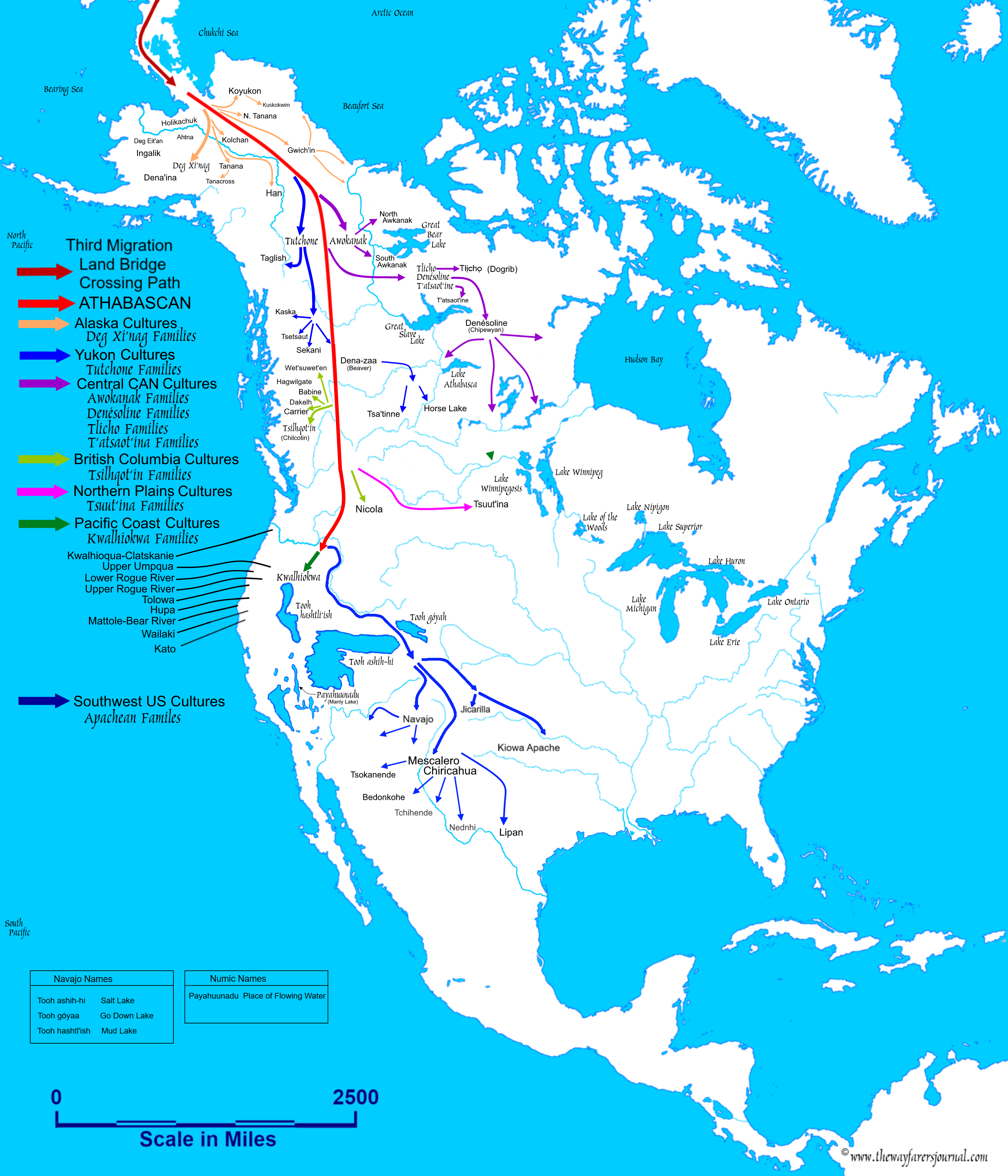
According to those wise men of this world, the original Athabascan native American people were the Deg Xit′an and the Holikachuk cultures. All other Athabascan native Americans cultures descended from those two family groups. Those wise men believe that those two families are the oldest language groups of all of the other Athabascan speaking people, and there belief in that assumption is primary because the remains from these two settlements have some of the oldest artifacts found from all the many Athabascan settlements anywhere else in North America.
I smile at their assessment because I know that all of the Athabascan tribes came from the western part of Asia, the traveled together as a family group across Asia, then the entire family together crossed the land bridge, after which they began to settle in the different parts of North American as they arrived there. The Deg Xit′an and the Holikachuk were the first two families to stopped their migration, first to choose their homelands, first to depart from the remaining family members and first to begin building their new homes. The several remaining family members were to continued further southwestward into the continent and then stopped in varying locations on varying dates later in time. This in no way means that the first two family members that stopped their migration would then become the ancestors to the rest of the family members. Well, that is what the wise men would want you to believe.
No, on the contrary, the entire family of the father, mother adn all arrived on the continent on the same general date. Some just stopped traveling before the others did. In fact, there immediate ancestors were from Mesopotamia, who, like all of the Native American Cultures were descendants of Noah′s son Shem, the father of all of the Asian People including Hebrew, Chaldeans, Assyrians, Persians, Syrians, Indians and more.
(Genesis 10:21)
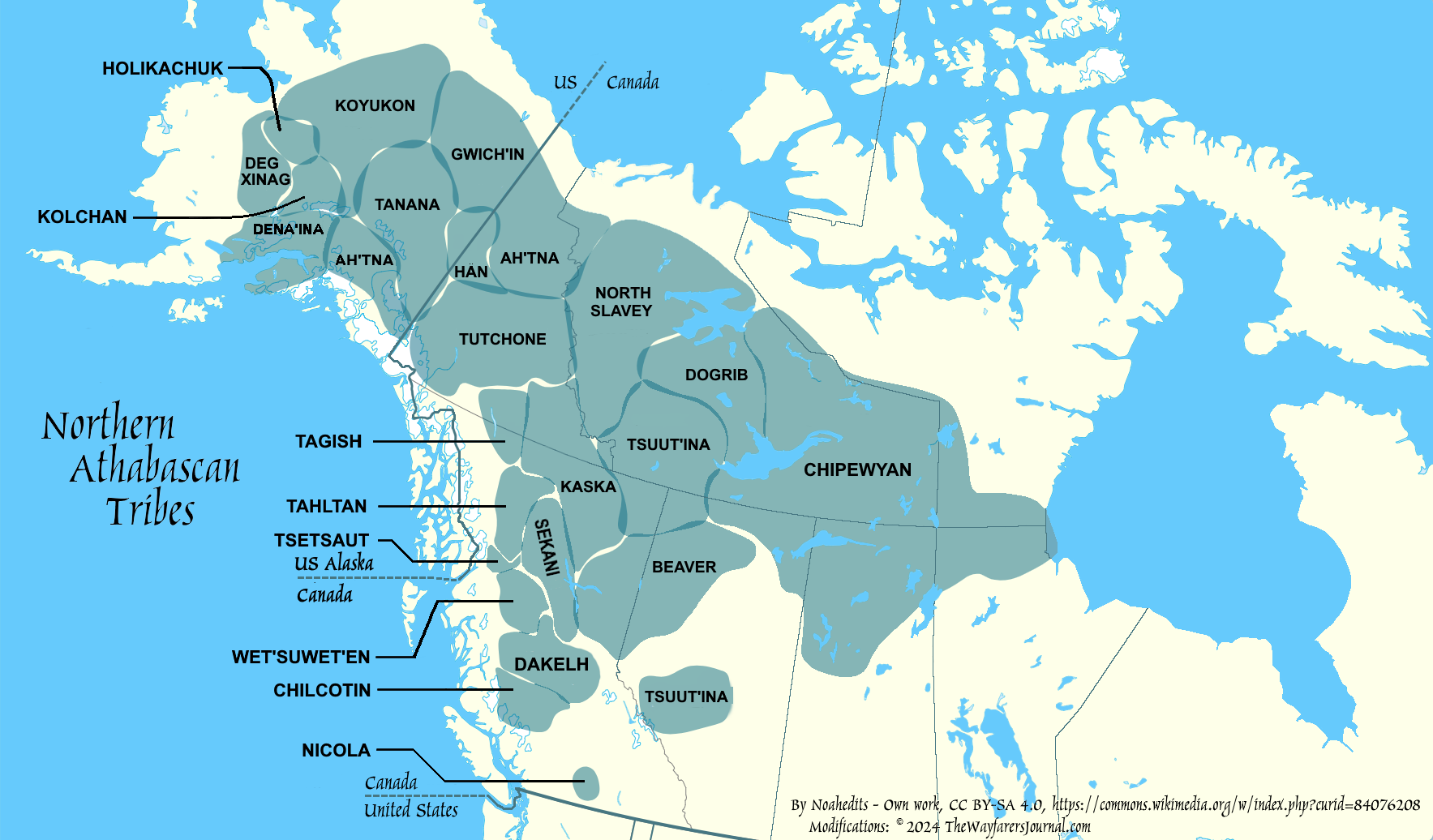
(m0-maps-athabascan-northern) Northern Athabascan Tribes (I-V)
I. Alaskan Deg Xi′nag Cultures
Nine family groups within the Alaskan Culture:
1. Ahtna
Ahtena, Atna, (Copper River basin)
Lower Atna, Atna Hwt′aene
Central Atna, Dan′ehwt′aene
Western Atna, Dze Ta Hwt′aene
Upper Atna, Taa′tl′aa Denae
2. Deg Xit′an
Deg Hit′an, Deg Hitan,
formally Ingalik
3. Dena'ina
Formally Tanaina
4. Gwich'in
Formally Kutchin or Loucheux
Clan: Nantsaii
Clan: Chits'yaa
Clan: Tenjeraatsaii
5. Hän
shortened from Han Hwech'in
Upper Yukon River
(Eagle, Alaska and Dawson City, Yukon)
6. Holikachuk
Doogh Hit'an, also Innoko
7. Kolchan
Kuskokwim (Upper)
Upper Kuskokwim River inhabitants
(Six regional bands)
8. Koyukon
Dinaa, Denaa
Koyukuk River inhabitants
9. Tanana
Lower Tanana
Kokht'ana, original inhabitants of Tanana River
Below the Goodpaster River
Four bands in Lower Tanana River valley
Upper Tanana
Koht'iin
Above the Goodpaster River
Four bands in Upper Tanana River valley
Tanacross
or Tanana Crossing
Tanana River inhabitants
Three or four bands
II. Canadian
Yukon Cultures
The earliest Athabascan language group settlements seem to have been located in this part of the North American continent, first within Alaska and then in both the Yukon and in northern British Columbia. Then, later, the Athabascan indigenous people appear to have spread further to the south and later to the east.
While most First Nations in the Yukon territory are a part of the wider Dene Nation, (or what is more commonly called the Northern Athabaskan languages) there are the Tlingit and Métis nations that provide a larger spectrum of indigeneity that links some within the Yukon Territory with non-Athabaskan people.
Today, there are eight language groups with fourteen First Nations (or tribal communities) that live within the Yukon Territory.
Yukon Cultures
4. Gwich'in
Vuntut First Nation
(Old Crow)
5. Hän
Tr'ondëk Hwëch'in First Nation
(Dawson City)
10. Kaska
Liard First Nation
(Watson Lake)
Ross River Dena Council
(Ross River)
11. Tutchone
Northern Tutchone
Na-Cho Nyak Dun First Nation
(Mayo)
Selkirk First Nation
(Pelly Crossing)
Little Salmon and Carmacks First Nations
Southern Tutchone
Kluane First Nation
(Burwash Landing)
Kwanlin Dün First Nation
(Whitehorse)
Ta'an Kwach'an First Nation
(Whitehorse)
Champagne and Aishihik First Nations
(Haines Junction)
12. Tagish
Carcross First Nation
(Carcross)
13. Tlingit
Tesling Council
(Teslin)
14. Upper Tannan
White River First Nation
(Beaver Creek)
Northwestern Canadian British Columbia Cultures (Cross border with Yukon)
10. Kaska
Dease River First Nation
Daylu Dena Council
13. Tlingit
Taku River First Nation
III. Canadian British Columbia Cultures
The cultures in the British Columbia area is divided into two general groups, northern and southern. The Language groups in this area include:
British Columbia Cultures
14. Yinka Dene
or Northern Carrier
Dakelh First Nation,
Upper Fraser River
15. Tsilhqot'in
or Chilcotin,
16. Nicola
or Stuwix, (Extinct)
17. Witsuwit'en-Babine-Hagwilgate
IV. Canadian North Central Cultures
This large Athabascan group of cultures are very similar to the British Columbia culture in both language and culture.
18. Chipewyan
19. Dogrib
20. Slavey
North Slavey
Mountain
Bearlake
Hare
South Slavey
V. Canadian Central Alberta Plains Culture
Although the only culture in the Canadian northern plains, it is close in affinities with tribes of the US Cultures, both the southern and the coastal.
21. Tsuut'ina
or Sarcee
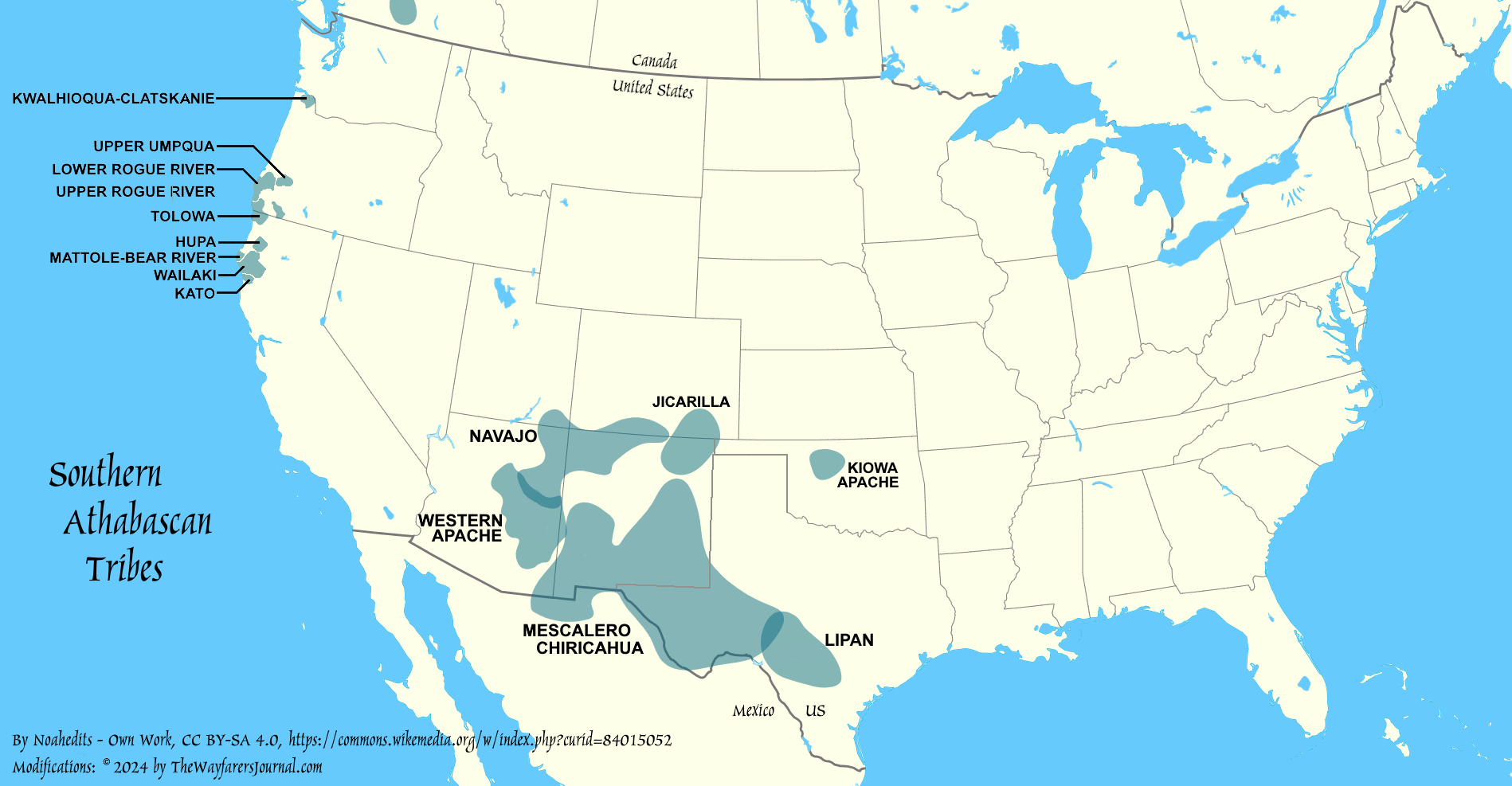
VI. US Pacific Coast Culture
a. Washington
22. Kwalhioqua-Clatskanie
b. Oregon
22. Kwalhioqua-Clatskanie
23. Upper Umpqua
24. Rogue River
Lower Rogue River
Upper Rogue River
25. Kwalhioah-Tolowa
c. California
25. Kwalhioah-Tolowa
26. Hupa
27. Mattole-Bear River
28. Wailaki
29. Kato
VII. US Southern Cultures
d. Colorado
Jicarilla
Southeast Colorado
Navajo
Colorado
Autonym: Diné bizaad, or Naabeehó bizaad
e. Utah
Navajo
Utah
Autonym: Diné bizaad, or Naabeehó bizaad
f. Arizona
Navajo
Arizona
Autonym: Diné bizaad, or Naabeehó bizaad
Tsokanende
Chiricahua Apache
Arizona, New Mexico, Mexico
Leader: Chochise
New Mexico: Fort Sill Apache
Oklahoma: San Carlos Apache
Chiricahua
Mescalero
Western Apaches
g. New Mexico
Jicarilla
Northeast New Mexico
Navajo
New Mexico
Autonym: Diné bizaad, or Naabeehó bizaad
Mescalero-Chiricahua
Southern New Mexico
Tchihende
or Chihende, Chihenne, Rad Paint People
Mimbreno Appache, Mimbres Mountains and River
Southwestern New Mexico
Northern Chihuahua and Sonora, Mexico
Oje Caliente (Warm Springs, Hot Springs Apache)
Copper Mine Apache (Santa Rita)
Tsokanende
Chiricahua Apache
Arizona, New Mexico, Mexico
Leader: Chochise
New Mexico: Fort Sill Apache
Oklahoma: San Carlos Apache
Chiricahua
Mescalero
Western Apaches
h. Oklahoma
Jicarilla
Extreme West Oklahoma
Kiowa-Apache
North-central Oklahoma
Bedonkohe
Chiricahua Apache or Mogollon Appaches
Speak Chiricahua language
Geronimo was warrior member
Fort Sill Apache Tribe
Homeland: Arizona and New Mexico
i. Texas
Lipan
Texas Edwards Plateau
VIII. Northern Mexico Cultures
Mescalero-Chiricahua
North-central Mexico
Nednhi
Nednai, Ndenai, Ndendai, Southern Chiricahua
Fierce Chiricahua Apache
Sierra Madre Occidental of Sonora and Chihuahua
Leader: Juh, a cousin of Geronimo
Janeros
Real Nednhi
Tu-ntsa-nde
People of the Aros River
Haiahende
Peopl of the East
Tchihende
or Chihende, Chihenne, Rad Paint People
Mimbreno Appache, Mimbres Mountains and River
Southwestern New Mexico
Northern Chihuahua and Sonora, Mexico
Tsokanende
Chiricahua Apache
Arizona, New Mexico, Mexico
Leader: Chochise
New Mexico: Fort Sill Apache
Oklahoma: San Carlos Apache
Chiricahua
Mescalero
Western Apaches
|