|
(Day 664 TB) 66°F. 6:00 am, sunny
Overnighting in a parking lot
Up at the first bell, dress in my short summer blues as it was quite hot last evening and I do not expect the temperature to be any better as I travel into lower latitudes. I drive to the ff-mart, purchase a senior cup of coffee, then drive a half mile to cross the state line into Arkansas.
I drive to the Mammoth Springs State Park, of which the entrance is just across US 63 from where SH 9 begins as Main street in Mammoth Springs. Upon arriving, I go to the elevated overlook of the spring pool, park and take my first photos.

The Mammoth Spring
From the information here, I find out that this is the world's tenth largest spring, in the amount of water flow. Mammoth Spring releases 9.78 million gallons every hour. Big Springs in Missouri just to the north of here ranks ninths at 11.5 million gallons per hour.
The Mammoth Spring water has a year round temperature of 58 degrees F. The water originates from rainwater which soaks down through the clay soils found on the high, flat plateaus about twenty miles to the northwest. From the plateau, it sinks through the soil and limestone deposits until it reaches the underground water table after which it flows along a vast underground system of interconnected submerged caves and eventually converge into a main artery which brings the water to Mammoth Springs.
Just like the water that flows out of Big Springs in Missouri, the water here is not safe to drink because it comes from the crop lands on the plateau where chemical fertilizers, herbicides and pesticides are used.
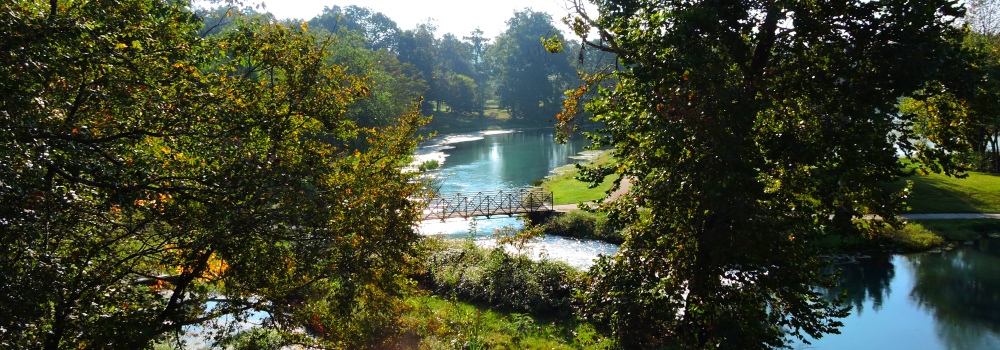
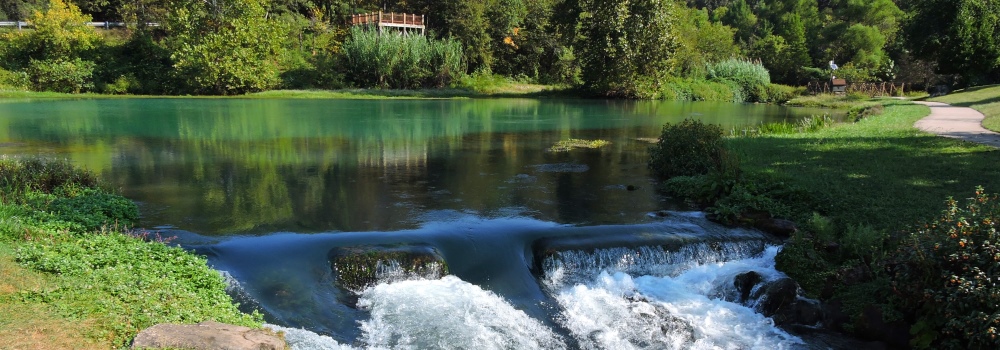
There are two discharges from the springs and the two leave an island in the middle which can be accessed by a bridge across each of the discharge channels.


The water then flows into a lake which is created by a twelve foot dam. Over the years, there have been several dams, mills and a power generator at the dam site. The water flowing over the dam connects with the Warm Fork of Spring River and then flows 57 miles to join the Black River.

In my exploration of the state park, I find, on the south side of the lake a railroad station right from the early days of railroading. This is an original railroad station which is still in it's original location and completely furnished with era furniture and displays.
I am really impressed with the detail that this station has and I am also impressed with the park ranger Josh, who shared his nonpareil knowledge of this station and the railroad in general.
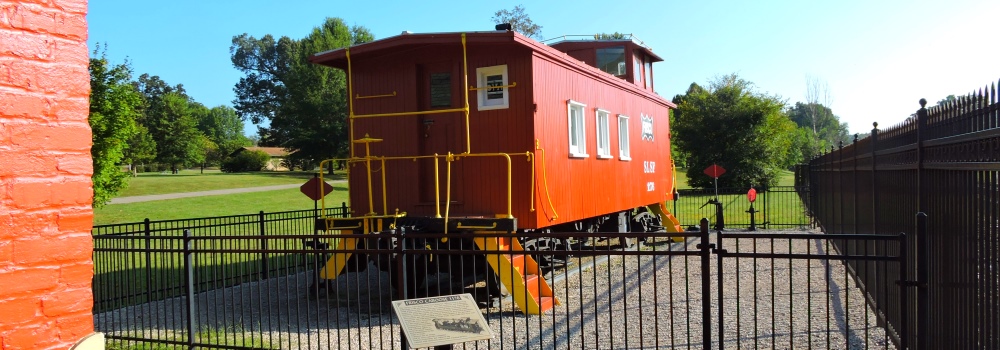

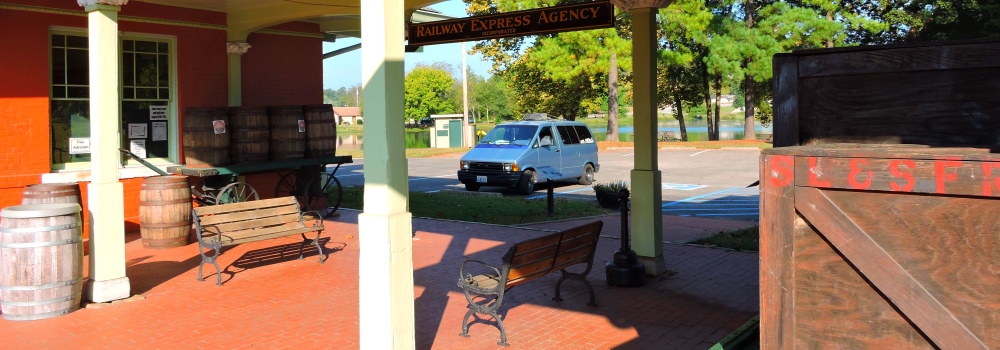


Then at ten this morning, I walk back to the jammer, leave this state park to drive across US 63 and drive through the town of Mammoth Spring.
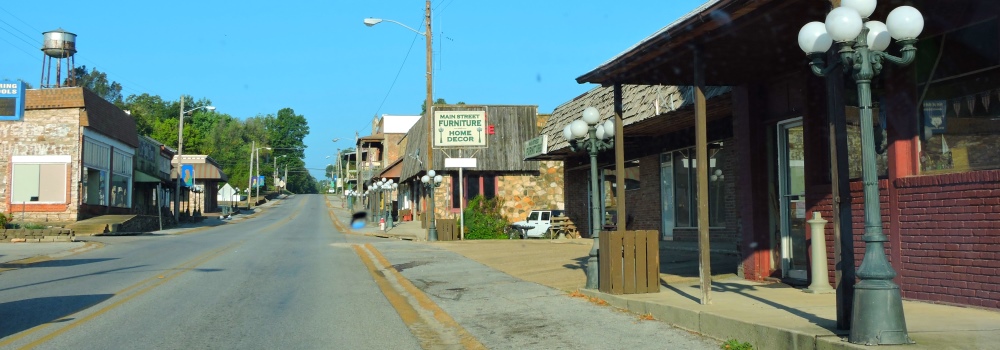
The heyday for the town of Mammoth Spring peaked in the 1880's upon the arrival of the train tracks in the area, laid by the St. Louis-San Francisco line, which even established a depot here in 1886. During the same decade, the grist mill had recently been improved and additional mills to handle cotton and flour were built near an improved dam.
Then, at the turn of the century, a steel bridge across Mammoth Spring lake was build to connect the Frisco railroad depot with the town of Mammoth Spring, which by this time had achieved some renown as a resort destination. Between 1925-1972, a hydroelectric plant operated to provide power to Mammoth Spring.
However, the heyday of Mammoth Spring went out with the steam locomotive and the grist mill, leaving this town only a remnant of what it used to be.
|