|
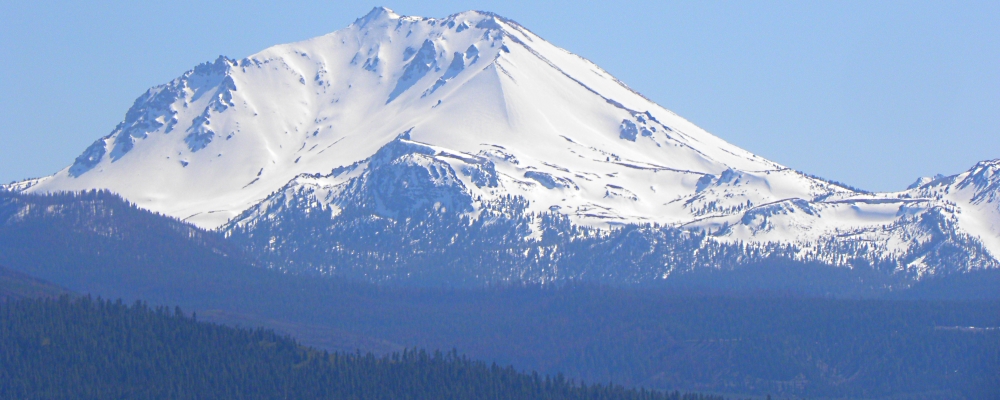
Lassen Peak Volcano
Lassen Peak, commonly referred to as Mount Lassen, is the southernmost active volcano of the
High Cascades in California and part of the
Cascade Volcanic Arc from southwestern British Columbia south to northern California.
Located in northern California, Lassen stands 3,500 ft (1,100 m) above the surrounding terrain and has a volume of 0.5 cubic miles (2 km3), making it one of the largest lava domes on the Earth.
On May 22, 1915, a powerful explosive eruption at Lassen Peak devastated nearby areas, and spread volcanic ash as far as 200 miles to the east. This explosion was the most powerful in a series of eruptions from 1914 through 1917.
Lassen Peak and
Mount Saint Hellens are the only two volcanoes in the contiguous United States to erupt during the 20th century.
Mount Tehama
Lassen Peak arose from the previously destroyed northeastern flank of the now gone Mount Tehama, a stratovolcano which once stood at over 11,000 feet, possibly as much as 1,000 feet higher than Lassen Peak′s elevation today.
Lassen Peak Facts
Elevation: 10,463 feet (3,187 m)
Prominence: 5,230 feet (1,594 m)
Coordinates: 40.488173 -121.505008
Last Eruption: 1914-1921
Volcano Type: Lava Dome
Nearest City: Redding, CA is 46 miles to the west
Range: Lassen Peak is part of the
Cascade Volcanic Arc
Summits:
Lassen Peak (10,463 feet)
Mount Lassen (10,457 feet)
Eagle Peak (9,226 feet)
First Climbed: 1851 by Gorver Godfrey
Access to Summit: Volcanic Legacy Scenic Byway, Lassen Peak Trail
Age: 27,000 year old
Native Name: Kohm Yah-mah-nee (Mountain Maidu tribe)
Geographical Region
|