The Wayƒarers Journal ©

The Journal

The Wayƒarers

The Selƒ

The Journey

The Burden

The Mountain

   The Ancients
   The Earth

     Geochronology
     Continents

       Africa
       Antarctica
       Asia
       Europe
       North America

         Geographical
         Geological

           Arches
           Blue Holes
           Canyons
           Caves
           Craters
           Deserts
           Forests
           Hot Springs
           Mountains
           Parks
           Rock Spires
           Viewpoints
           Volcanoes
           Waterways

       Oceania
       South America

     Oceans

   The Life
   The Modern Man
   The Nonpareils
   The Steps
   The Way

The Appendix

The Wayƒarer
The Mountain
Go to bottom of this page
THE EARTH′s DESERTS
The Sonoran Desert

The Sonoran Desert: California Go Down Go Back
Sonoran Information:
The Sonoran Desert is a North American desert and ecoregion that covers large parts of the southwestern United States of Arizona and California, as well as the northwestern Mexican states of Sonora, Baja California, and Baja California Sur. It is the hottest desert in both Mexico and the United States.
In the geographical distribution of plants (phytogeography), the Sonoran Desert is within the Sonoran Floristic province of the Madrean Region of southwestern North America, part of the Holarctic realm of the northern Western Hemisphere. This desert contains a variety of unique endemic plants and animals, notably, the saguaro (Carnegiea gigantea) and organ pipe cactus (Stenocereus thurberi).
The Sonoran Desert is clearly distinct from nearby deserts including: the Great Basin, Mojave, and Chihuahuan deserts because the Sonoran provides subtropical warmth in winter and two seasons of rainfall in contrast, for example, to the dry summers and cold winters of the Mojave desert. Thus, in the Sonoran desert, there is an extreme contrast between aridity and moisture.
Geography
The Sonoran desert is bounded on the west by the Peninsular Ranges, which separate it from the California chaparral and woodlands (northwest) and Baja California Desert (Vizcaino subregion, central and southeast) ecoregions of the Pacific slope.
To the north in California and northwest Arizona, the Sonoran Desert transitions to the colder-winter, higher-elevation Mojave, Great Basin, and Colorado Plateau deserts.
To coniferous Arizona Mountains forests are to the northeast. The Chihuahuan Desert and Sierra Madre Occidental pine–oak forests are at higher elevations to the east. To the south the Sonoran–Sinaloan transition subtropical dry forest is the transition zone from the Sonoran Desert to the tropical dry forests of the Mexican state of Sinaloa.
Total Size:
100,000 square miles
Primary Drainage:
Colorado river
Secondary Drainage:
Salt river, Gila river, Rillito river
Biome:
Nearctic deserts and xeric shublands
Sonoran Desert
California
(m2cont-nam-00-california) Basin and Range Region: Sonoran Desert Ecoregion, California

Sonoran Desert: California
Location:
The Sonoran desert occupies the southeast area of California.
Geographical Region: Basin and Range
Ecoregion: Sonoran Desert

The 2013 Journey, Sonoran Deserts Go Down Go Up
Thursday, 22 August 2013, Yucca Valley, CA.
(Day 175 JO) 69°F. 6:00 am, clear
Overnighting in a parking lot
It was late last night before it cooled off enough to obtain sleep and it is just after seven when I awake and walk into the d-mart to grab a cup of hot. By seven-thirty, I am driving east and stop by the Park Rock Cafe at Joshua Tree visitors center for breakfast and to upload the journal entries that I did last evening while waiting for the cool.
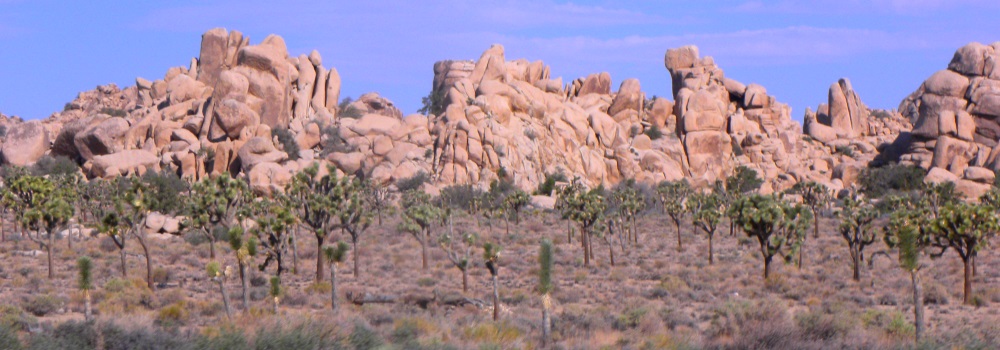
I then drive through the park to access the eastbound interstate, stopping several times for photos of some amazing rock formations, desert blooms and the steep road down to the Sonoran desert.
The Joshua Tree Desert
Joshua Trees and Boulders
(m2cont-nam-geol-de-ca-joshua-2013-0822.0904) The Joshua Tree Desert and Boulders
The Joshua Tree Desert
Cactus Blooms
(m2cont-nam-geol-de-ca-joshua-2013-0822.1203) The Joshua Tree Desert and Cactus Blooms
The Joshua Tree Desert
Joshua Trees and Boulders
(m2cont-nam-geol-de-ca-joshua-2013-0822.0907) The Joshua Tree Desert and Boulders
The Joshua Tree Desert
Down to the Lower Desert
(m2cont-nam-geol-de-ca-joshua-2013-0822.1337) The Steep Road Down to the Lower Desert

(Day 174 JO) 70°F. 6:00 am, clear
Overnighting in the Out Back
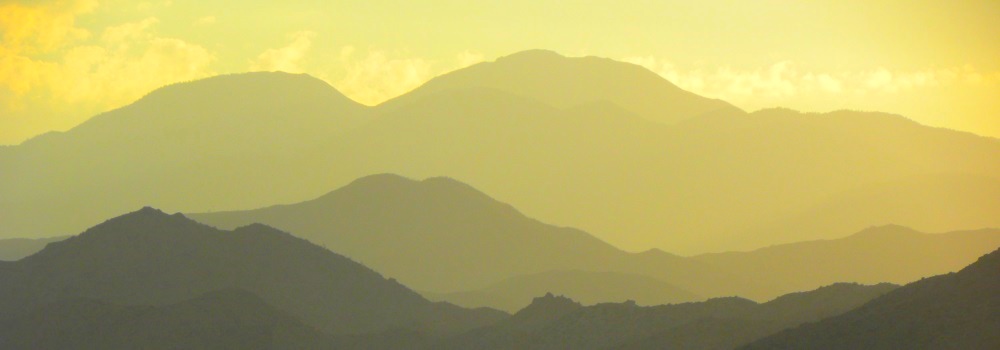
Arriving in Yucca Valley as the sun is setting, I drive into Twenty Nine Palms and stop at the d-mart to overnight. I then grab my camera to take a series of photos of the fading light on the nearby mountains.
Then, I have to wait some time for it to cool off before sleep arrives.
The Joshua Tree Desert
Sunset in the Desert
(m2cont-nam-geol-de-ca-joshua-2013-0821.1850) The Joshua Tree Desert, Sunset in the Desert
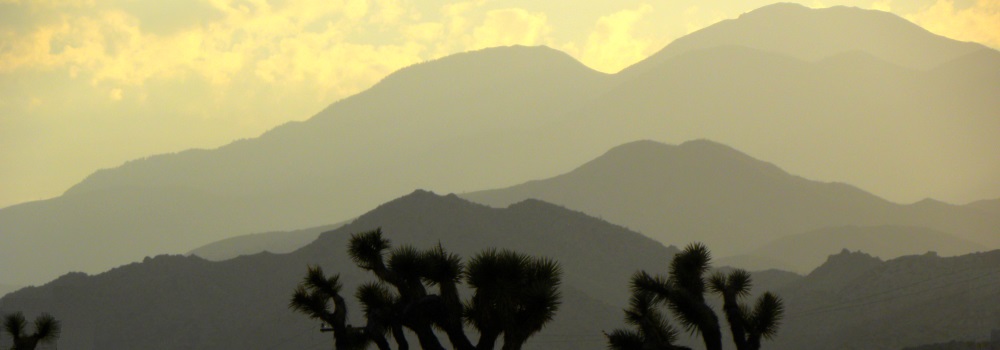
The Joshua Tree Desert
Sunset in the Desert
(m2cont-nam-geol-de-ca-joshua-2013-0821.1851) The Joshua Tree Desert, Sunset in the Desert
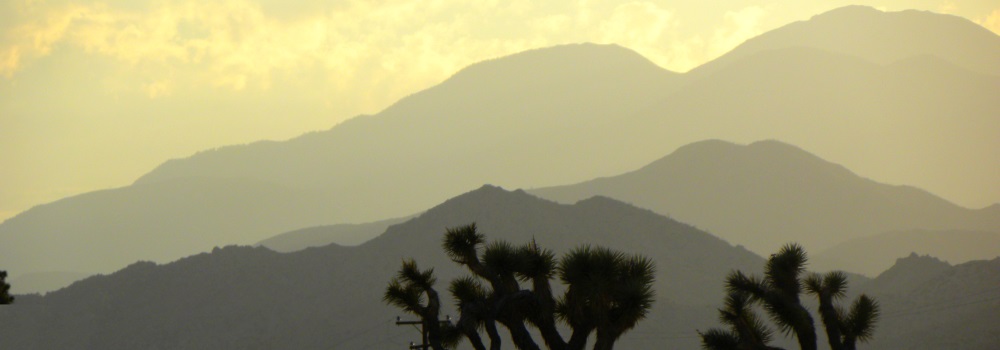
The Joshua Tree Desert
Sunset in the Desert
(m2cont-nam-geol-de-ca-joshua-2013-0821.1852) The Joshua Tree Desert, Sunset in the Desert
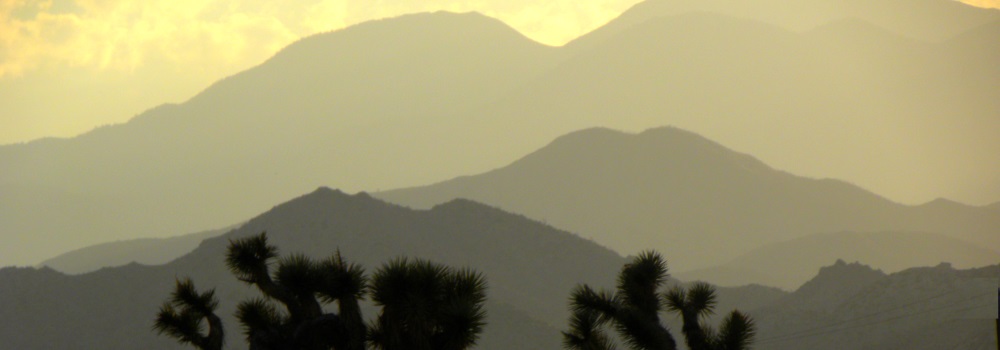
The Joshua Tree Desert
Sunset in the Desert
(m2cont-nam-geol-de-ca-joshua-2013-0821.1853) The Joshua Tree Desert, Sunset in the Desert
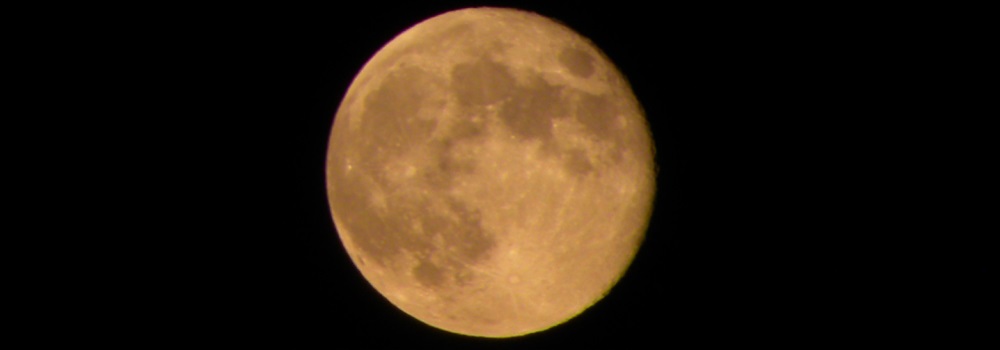
The Joshua Tree Desert
Full Moon in the Desert
(m2cont-nam-geol-de-ca-joshua-2013-0821.2021) Full Sturgeon Moon in the Joshua Tree Desert

Friday, 26 July, 2013, Twenty Nine Palms, CA.
(Day 148 JO) 75°F. 7:30 am, clear. Elev. 2000 feet.
After having driven down the west coast from Oak Harbor, Washington, a drive that had taken eleven days, I arrive at Twenty Nine Palms and overnight at a d-mart. Early this morning, I drive into Joshua Tree national park for my first time. I stop first at the visitor center but it is still closed, so, I walk into the park rock cafe and have breakfast.
After eating, I walk around the corner and enter the visitor center to see what reason this desert has been made a national park.
Spanning Two Deserts
I learn from the exhibit in the visitors center that the Joshua Tree national park spans across two deserts, with the upper elevations in the northwestern area of the park are in the Mojave Desert.
The lower elevations in the southern and eastern areas of the park are in what California calls the California Colorado desert. Too, this Colorado desert which is located in the Lower Colorado river valley in southeastern California is a subdivision of the much larger Sonoran desert.
Mojave Desert
Leaving the visitors center and heading out into the desert, I find quickly that the temperature is 100 degrees, but while in the upper elevations in the Mojave desert, I stop to take numerous photos of the Joshua Trees and the rock formations.
While examining the displays in the visitors center, I learn that the Joshua Trees only live in the Mojave desert, where the elevations are higher than those in the Sonoran desert. The Joshua trees only live at elevation between 3000 feet and 5000 feet.
Sonoran Desert
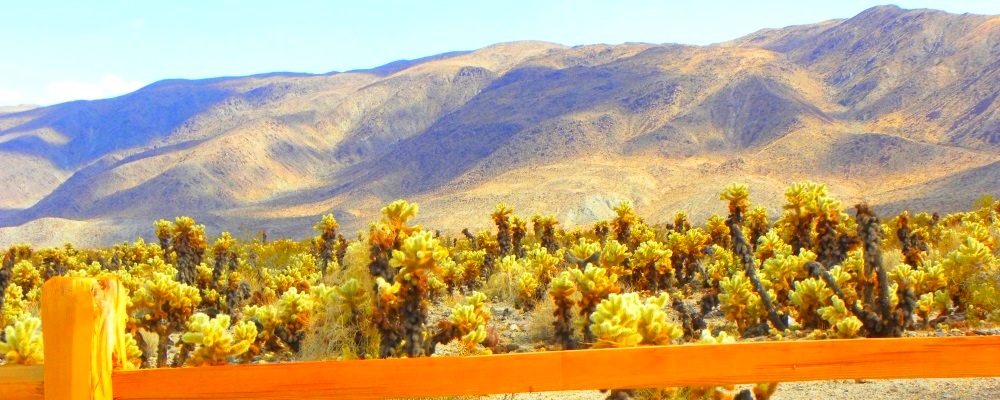
After several hours of driving through the Mojave portion of the Joshua Tree National Park, I begin the drive down into the Sonoran desert where an entire different type of cactus grows. The road literally goes down a steep grade to the lower elevations of Joshua Tree National Park.
The Joshua Tree Desert
Joshua Tree Forest
(m2cont-nam-geol-de-ca-joshua-2013-0726.1604) The Joshua Tree Desert, The Lower Desert Forest
I find that there is a subtle beauty in this place even though the environment appears totally hostile. Further, I can not envision myselƒ alone afoot is such a place even with a fully outfitted pack.
Maybe I could have done it in my youth, but now, it would take a lot of training and preparations for me to backpack in this kind of terrain. Neither do I have the desire to backpack in the desert, nor do I even want to camp for a night at one of the campgrounds here, especially not during the summer. I might, however, consider camping in the dead cold of winter.
Nevertheless, I am glad that I did come to this park to see the subtle beauty that was unknown to me prior to arriving.
Leaving the park, I head to Yucaipa, California to help a friend work on his home for a few weeks before I head east.

To go back to Gallery Index, click on the down arrow. Go Back Go to previous section
on this page

Thank you for visiting The Wayƒarers Journal.

See Ya above the Treeline!

This Page Last Updated: 31 March 2026


To continue to the next Episode Level page, Click here go to top
 
The Wayƒarers Journal © ::: Come Join the Journey ™
by Thom Buras
Come Join the Journey ™