|
Odessa Meteor Crater, Texas
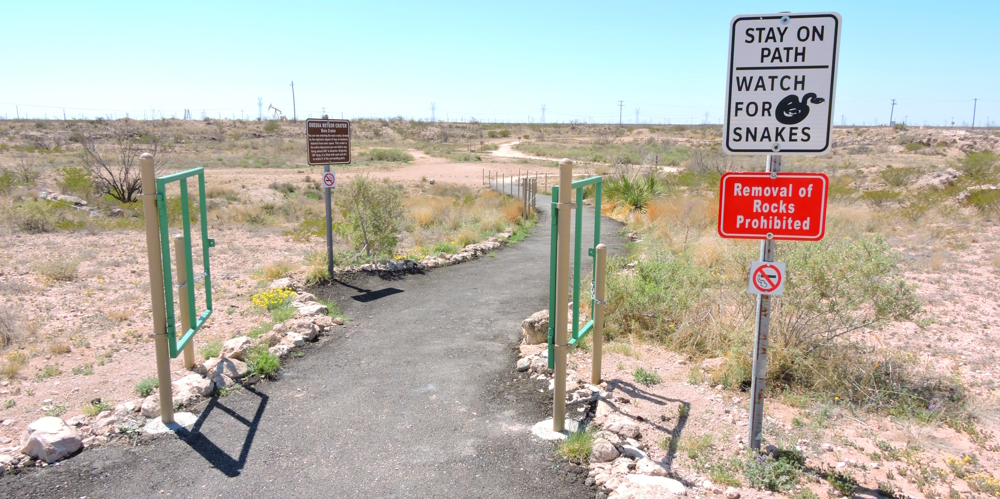
The Odessa Meteor Crater is one of only three know impact crater sites found in Texas, the others two being the older and much larger Sierra Madera crater and the Marquez crater. Odessa crater is a somewhat small meteor inpact crater, but is the largest of several smaller craters in the immediate area that were formed by the impact of thousands of octahedrites (an iron metallic type) that fell in prehistoric times.
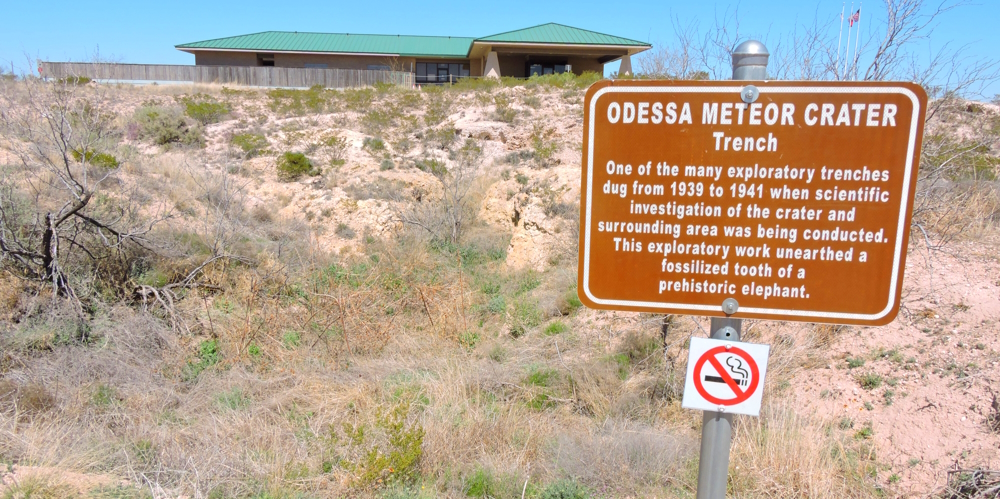
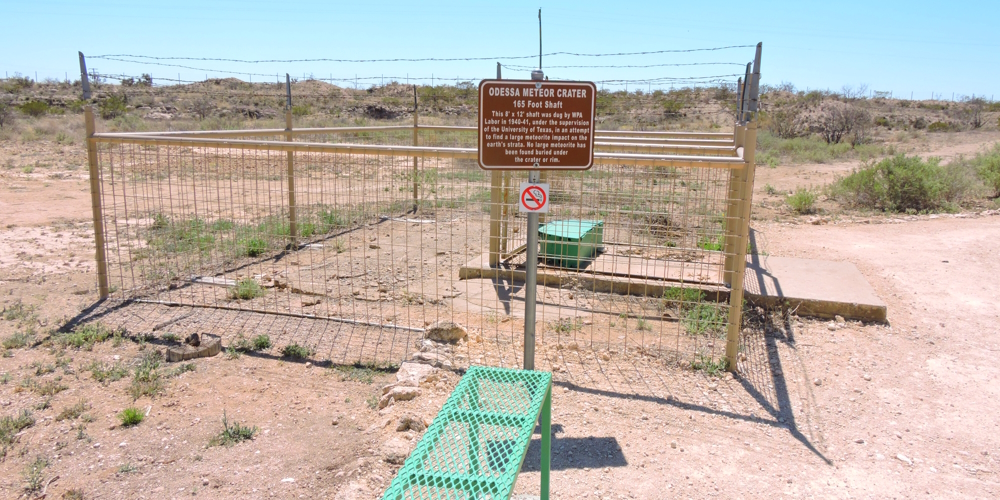
About 1500 meteorites have been recovered from the surrounding area over the years, the largest of which weighed approximately 300 pounds. Excavations in the main crater confirm that there is no meteorite mass underground and probably never has been.
Odessa Meteor Crater Information:
Description:
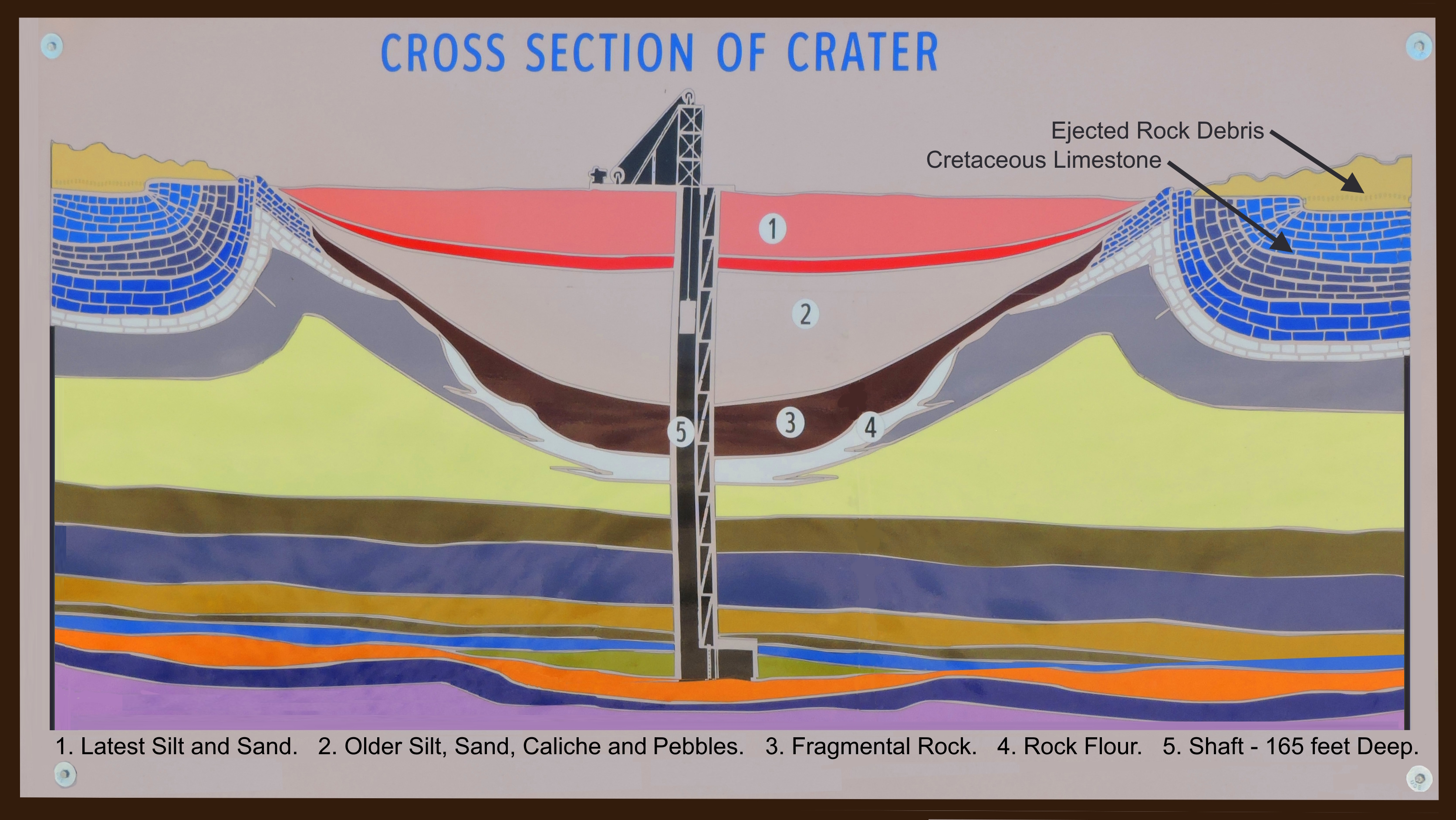
The impact crater is 550 feet in diameter and was originally 100 or more feet deep. The crater exposed to the surface and is currently about 15 feet at its lowest point as a result of subsequent infilling by soil and debris. However, this current depth provides enough relief over the surrounding plains for the clear understanding that this is an impact crater.
Onsite Information:
The Odessa Meteor Crater was formed in prehistoric time when a great shower of nickle-iron meteorites collided with the earth. Geologists estimate that the time of the meteor fall was at least 50,000 years ago. The shower was composed of many thousand of individual meteorites of various sizes which fell over an area of about two square miles. The smaller meteorites, which were the most numerous, either came to rest on the earth′s surface or at the bottom of a shallow impact pits within the soil.
There were several very large meteoritic masses in the shower, however, and struck the earth with such enormous energy that they penetrated deeply into bedrock and shattered with explosive force, thus producing the crater.
When freshly formed, the center was a funnel-shaped depression, about 550 feet in diameter and 100 feet in depth. More than 100,000 cubic feet of crushed rock was ejected from this crater by the energy released from the impacting meteoritic mass. The crater was eventually filled to within 6 feet of the level of the surrounding plain. It now appears as a shallow, nearly circular depression surrounded by a low rock-buttressed rim.
Meteor crater are among the rarest and most interesting of land features. Astrophysicists have observed the source of meteoritic bodies which strike our earth originate within our solar system probably from the asteroid belt between the planets Mars and Jupiter.
Geological Type:
Meteor Crater
Crater Diameter:
550 feet (168 m)
Crater Depth:
100 feet (30 m)
Age:
63,500 years
Exposed:
Yes
Drilled:
Yes, to 165 feet
Location:
Direction:
The Odessa Crater can be reach by taking exit 108 off of IH 20, west of Odessa and then driving south on Meteor Crater Road. From the interstate drive south for about two miles and arrive at the visitors center.
Coordinates:
31.7567885, -102.4785921
Elevation:
3052 feet
Nearest City:
Odessa, Texas
Geographical Region:
Great Plains Region
Ecoregion:
Toyah Basin Ecoregion
Fees
Park Entrance Fees:
None
Pathway Journeys:
Footpath Journeys
Roadpath Journeys
|