|
The Yosemite Valley, California
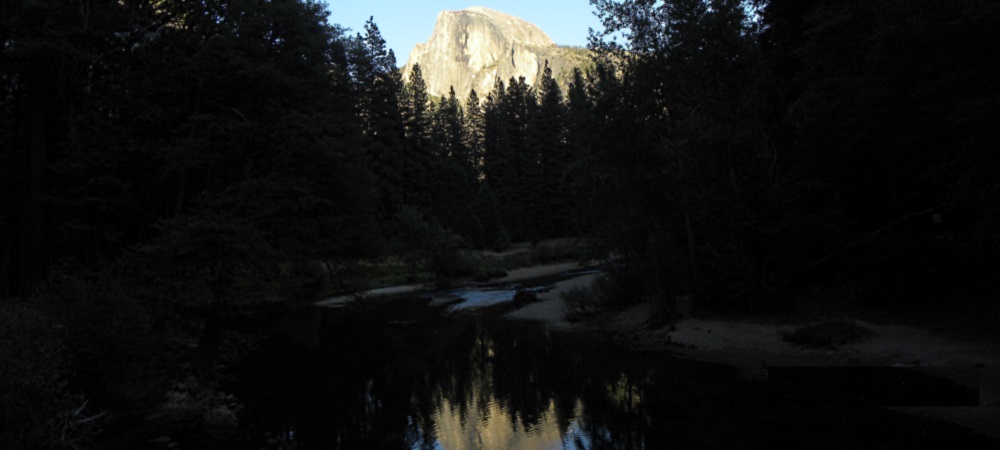
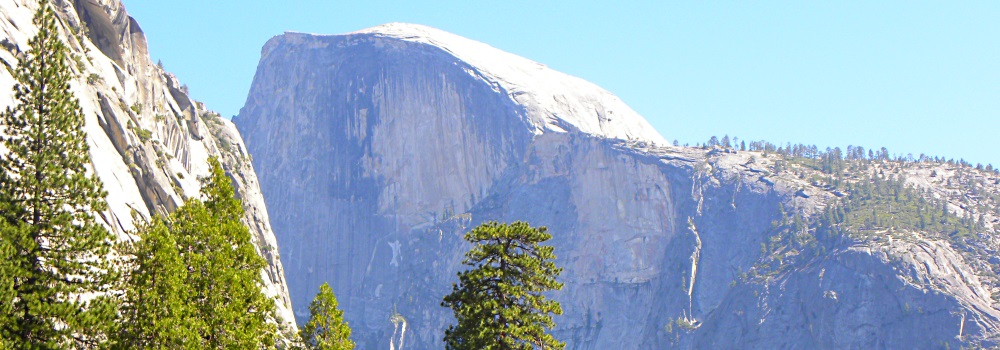
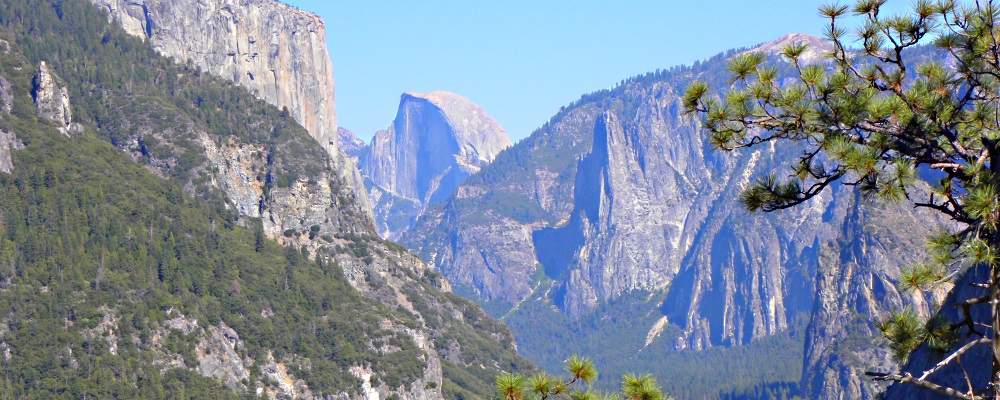
Yosemite Valley in Yosemite National Park is a world famous glacial valley located in west central California. This valley is renowned for its towering granite cliffs, such as El Capitan and Half Dome and impressive waterfalls all within the span of about 7.5 miles long and from 3000 to 3500 feet deep. The valley floor has meadows, forests and the Merced River making this valley one of the most scenic areas in California drawing a large crowd of visitors from not only California but from the entire world.
The most spectacular waterfall is Yosemite Fall, the highest waterfall in North America, dropping a total of 2,425 feet from the top of the upper falls, to the base of the lower falls. The Yosemite waterfall consists of three sections comprising six total drops including: Upper Yosemite Fall, the Middle Cascades, and the Lower Yosemite Fall.
All but the wettest years, Yosemite Waterfall dries up and ceases to flow completely by the late summer or early fall. Still, a single afternoon thunderstorm could restart the waterfall flow.
Sierra Nevada
The features in Yosemite Valley are made of granitic rock emplaced as plutons miles deep during the late Cretaceous. Over time the Sierra Nevada was uplifted, exposing this rock to erosion at the surface.
The oldest of these granitic rocks, at 114 million years, occur along the Merced River Gorge west of the valley. The El Capitan pluton intruded the valley, forming most of the granitic rock that makes up much of the central part of the valley, including Cathedral Rocks, Three Brothers, and El Capitan. The youngest Yosemite Valley pluton is the 87-million-year-old Half Dome granodiorite, which makes up most of the rock at Glacier Point, the Royal Arches, and its namesake, Half Dome.
Location:
Yosemite Valley can be accessed, at some entrances year round, in the Pacific Coast Region in the central western area of the state of California.
Entrance Coordinates:
Big Oak Flat (West) Entrance:
37.800890, -119.874533
Mariposa Grove South Entrance (Summer only)
37.506281, -119.631242
First Migration
(The Algonquian Cultures)
The Ahwahnee
Originally, Yosemite park was called the Ahwahnee by one group of the indigenous
Miwok people which in their language means Big Mouth. They also referred to themselves as the Ahwahnechee which in their language means the dwellers in Ahwahnee.
However, that peaceful existence enjoyed by the Ahwahnechee was soon to be changed forever when the California gold rush in the early to mid 1800′s drastically increased the number of gold seekers coming into the Ahwahnee.
In 1851, Army Major Jim Savage led the Mariposa battalion into the west end of Yosemite valley pursuing forces of over 200 Ahwahnechee led by Chief Tenaya resulting in the Ahwahnechee being moved to a reservation. However, even at the reservation, they were considered extremely violent people and earned the name yohhe′meti by the other Miwok people, a name which means They are Killers.
That name stuck and the valley came to be called by the new name given to the Ahwahnechee, which in English is pronounced, Yosemite.
The Earth
Yosemite Falls
2,425 feet
Snow Creek Falls
2,140 feet
Sentinel Falls
1,920 feet
Ribbon Fall
1,612 feet
Royal Arch Cascade
1,250 feet
Lehamite Falls
1,180 feet
Staircase Falls
1,020 feet
Bridalveil Fall
620 feet
Nevada Fall
594 feet
Silver Strand Falls
574 feet
Vernal Fall
318 feet
The Modern Man
Upper Pines
$36.00, 235 sties, open: all year
Lower Pines
$36.00, 60 sites, open: 22 April-20 October
North Pines
$36.00, 81 sites, open: all year
Camp 4
$10 per person, 61 walk in sites, Open: all year
The Steps
Steps Afoot
Half Dome Hike
14-17 miles, 12-16 hours (round trip)
Vernal Falls Hike
1.5 miles to footbridg
2.4 miles to top
Steps Afield
|