|
Mount Aniakchak Caldera, Alaska
Mount Aniakchak Information:
Last Eruption:
1931
Nearest City:
King Salmon and visitors center
Age:
3700 year old
Mount Aniakchak Location:
Coordinates:
56.900000, -158.100000
Elevation:
4232 feet
Prominence:
2500 feet
Geographical Data:
National Monument and Preserve
Given its remote location and challenging weather conditions, Aniakchak is one of the most wild and least visited places in the National Park System. This landscape is a vibrant reminder of the location of Alaska in the volcanically active
Ring of Fire.
Mount Aniakchak is a caldera about six miles (10 kilometers) in diameter and 2500 feet deep. The volcano is located on the Aleutian peninsula, in the Aleutian Mountain Range of Alaska.
The area around the volcano is the Aniakchak National Monument and Preserve, designated in November 1967 as a National Natural Landmark and maintained by the National Park Service.
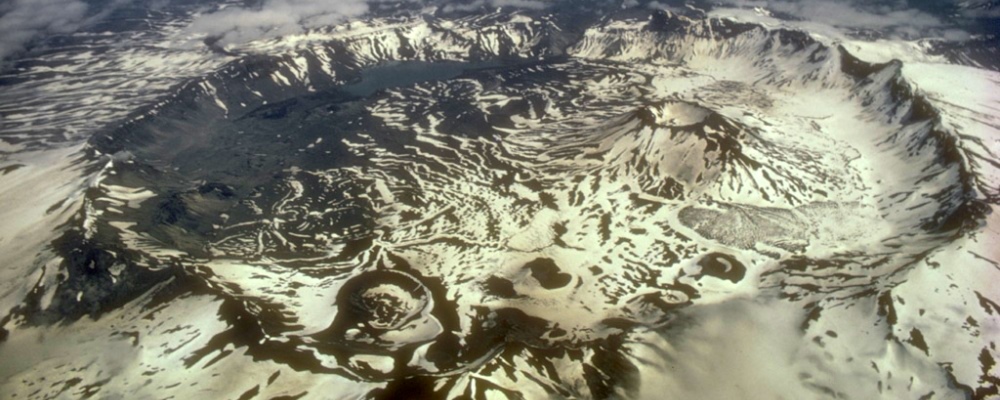
(m2vo-ak-aniakchak) Mount Aniakchak Caldera
photo credit: wikipedia common
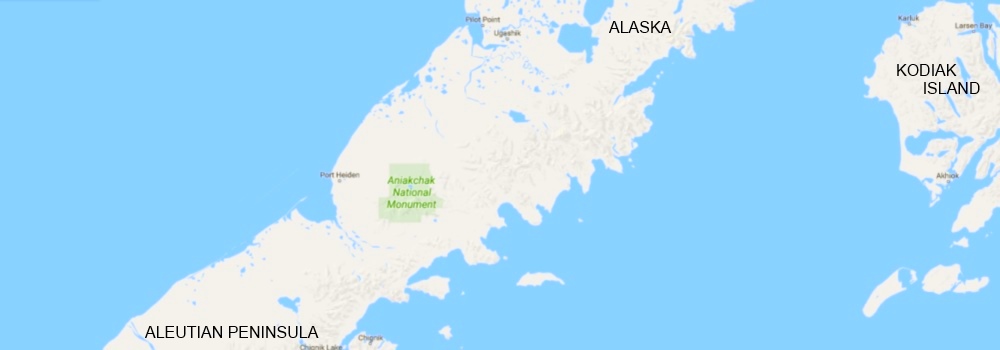
(m2vo-ak-aniakchak-aleutian) Location of Aniakchak Caldera
map credit: google maps
First Report of A Volcanic Wilderness
Midway down the wild, remote, and mostly roadless Alaska Peninsula lies one of the continent′s most fascinating recent volcanic features. Aniakchak is a large caldera formed by the collapse of a 7,000-foot volcanic mountain. Set inland in a place of frequent clouds and fierce storms, Aniakchak was unknown to all but area Natives until the 1920s, when geographers remotely plotting mountains along the caldera rim noticed that they formed a circle. In 1922, a geology field party gazed into the caldera itself and brought back news of its immense size.
This narrow stretch of the Alaska Peninsula boasts a rich human story, but its spacious promise of solitude also suggests: Here is the world as it was. Volcanoes, earthquakes, and tsunamis have interrupted the human story, even burying it under volcanic ash. Yet the land abides as a wild place where humans can sense not just independence but interdependence—kinship, even—with the whole of the natural world. Here are grizzly bears, moose, and caribou on land; sea lions, seals, and other marine mammals; and geese, swans, and other waterfowl. Life has persisted here in the face of world-class catastrophic change.
(Text from NPS brochure, Edited.)
|