|
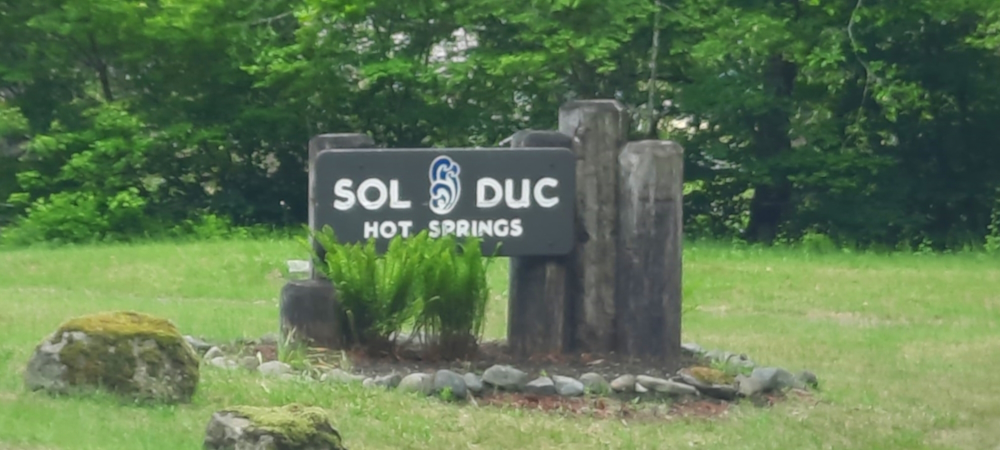
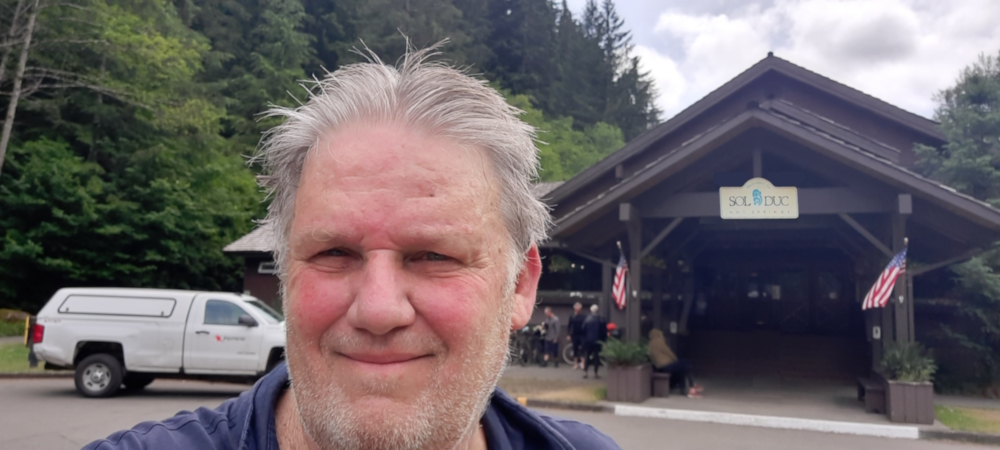
Sol Duc Hot Springs, Washington

(m0-maps-northern-wa-west) WA Northern Tier Route: Western Section
The Olympic Peninsula
The land where lies the national park, is the best example of intact and protected Pacific northwest temperate rain forest.
This rain forest is known for the diversity of its distinct ecosystems, the rugged pacific coastline, the massive glacier-clad mountain peaks, an old growth forest, and a large area of rain forest on the west side that receives 150-200 inches of rainfall annually (considered to be one of the wettest areas in the contiguous US, with a much drier climate in the northeastern areas due to the rain shadow affect).
The park lands includes 62 miles of wilderness coastline, which is the longest undeveloped coast in the contiguous United States, and is rich in native and endemic animal and plant species.
Through these park lands flow eleven major river systems which drain from the snow fields atop the Olympic Mountains and which offer some of the best habitat for fish species in the country.
Along two of these rivers are at least two hot springs, one on the Sol Duc river called the Sol Duc Hot Springs which can be driven directly to. A second hot springs is located on Boulder Creek, a tributary of the Elwa River and is called the Olympic Hot Springs, accessible only by a 22 mile round trip foot path.
Olympic National Park:
The Olympic Peninsula′s forests were originally designated as the Olympic Forest Reserve in 1897, then in 1909, it was designated the Olympic National Monument.
On October 1, 1937, President Franklin D. Roosevelt visited Lake Quinault Lodge during a fact-finding trip and during his visit, the topic of establishing a nation park came up over lunch. Nine months later, in 1938, Roosevelt signed a bill creating Olympic National Park, which to this day remains the treasure that many visitors find it to be.
It was not until decades later that the government and UNESCO would step in to legally protect the land. In 1976 the park was declared an International Biosphere Reserve and in 1981 Olympic National Park became a World Heritage site.
History:
The hot springs first came to the attention of nearby settlers in the 1880s. Then by 1912, an elaborate resort opened, which resort was dubbed the Most Noted Resort on the Pacific Coast.

Then in 1916, just four years later, the resort burned down but was rebuilt in the 1920s, but was not as grand as the original one. This resort continued in operation until the early 1970 when there was a problem with the thermal water spring.
Then, about ten years later, the problem was corrected when the resort was rebuilt once again with the current resort and this one continues today.
Sol Duc Hot Springs Information:
Description:
The Sol Duc Hot Springs is located in the Olympic National Park and is a concession operated resort, managed by Aramark, which management company does not honor the national park pass for any discounts.
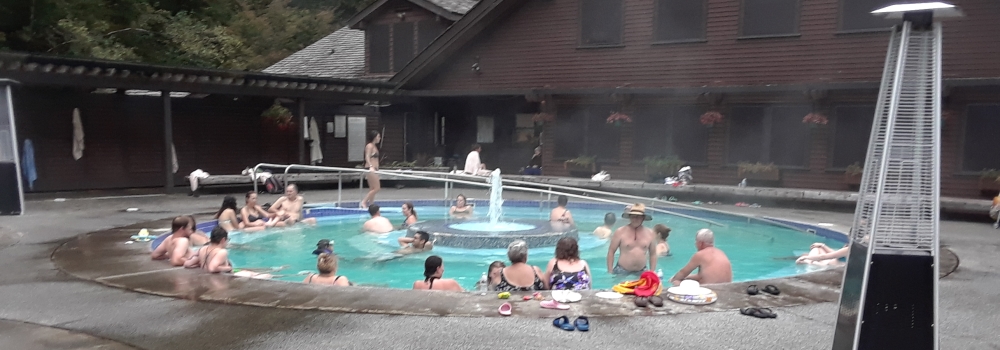
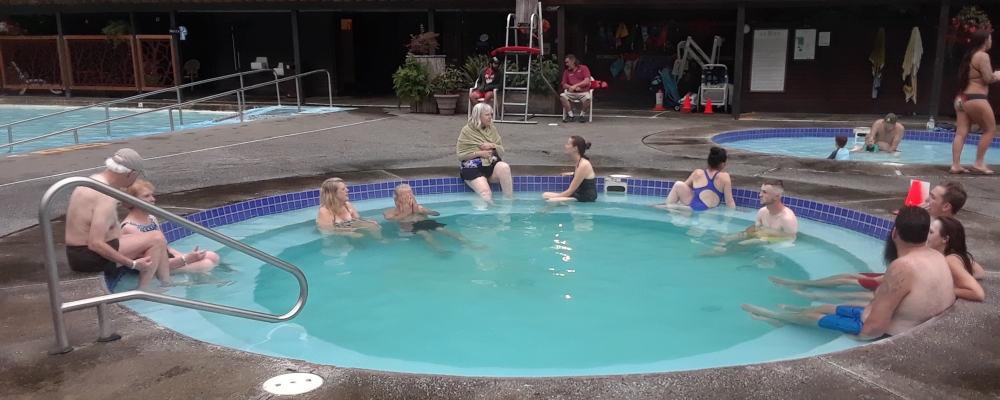
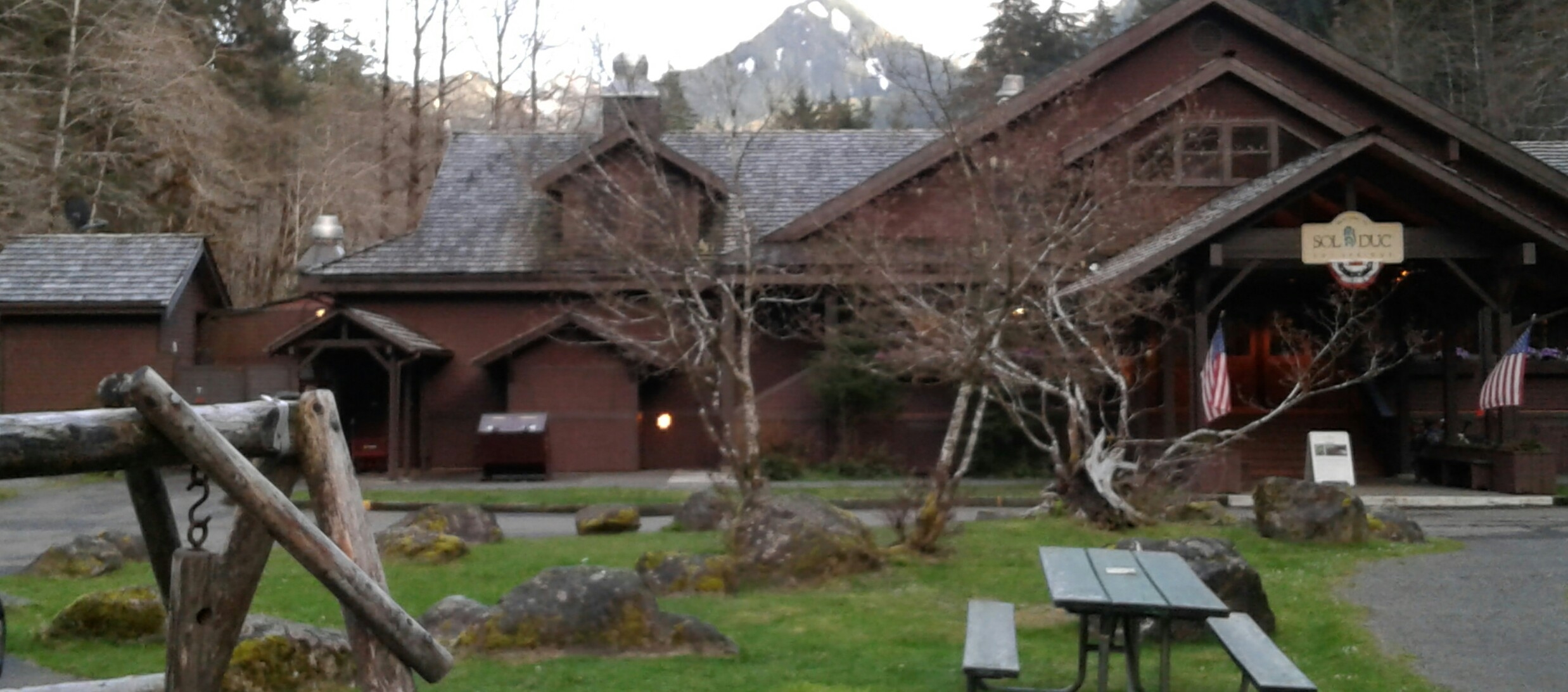
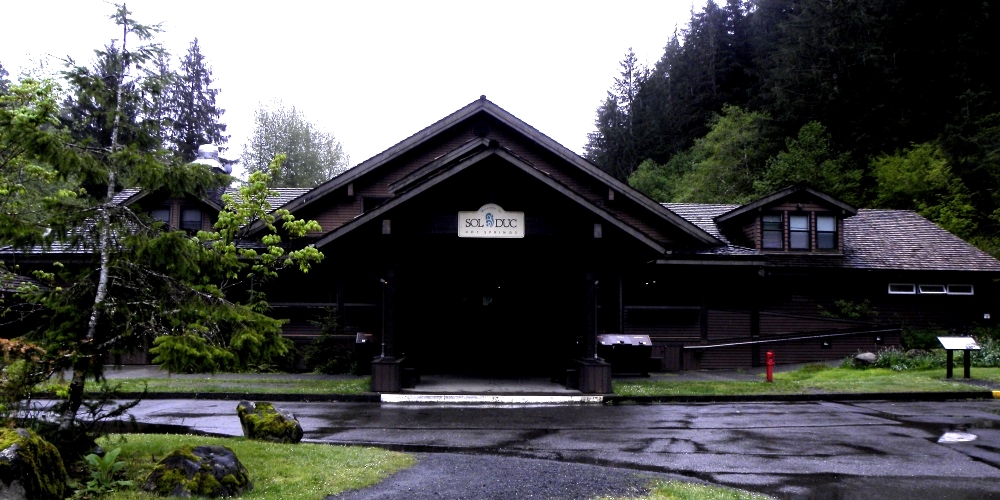
The hot springs is found in the Sol Duc river valley and the resort includes three hot pools, a fresh water full size swimming pool, a lodge with bathing and dressing rooms, restaurant, gift shop, cabin rentals, convenience store, and campground.
Driving Directions:
From Port Angeles, Washington, take South Lincoln Street southwestward (US highway 101) which curves to the west and continues towards the Olympic National park as the Olympic Highway (US 101). At 7.5 miles, cross the Elwha River; at 16 miles come into view of Lake Crescent and continue along its south shore; at 17.5 miles arrive at Crescent Lake Viewpoint turnout; and at 19 miles arrive at where the highway widens at Lake Crescent Road for the Barnes Point and Barnes Creek area. Continue west on US 101 until at 27.6 miles, where you arrive at Sol Duc Hot Springs Road. There is a street sign indicating the road name.
Turn left onto this road and continue along this road for twelve miles until you arrive at the Sol Duc Hot Springs Resort. Turn right, cross the Sol Duc river and drive onto the parking lot of the hot springs resort.
Geological Type:
Hot Springs
Pool Temperature:
Source:
150 °
Hot Pool:
104-106 °
Medium size pool- 3 feet deep
Warm Pool:
100-104 °
Small size pool- 3 feet deep
Cool Pool:
99 °
Childrens wading pool- 6-8 inches
Freshwater Cold Pool:
50-85 °
(with shallow and deep end)
Hot Springs Access:
Drive up to resort parking lot
Reservations Required:
No. First come, first serve
Walk-ins Welcome:
Yes
Time Limit:
As of 2023
Yes, enforced
90 minutes sessions (1 and 1/2 hours)
All entrance fees have session time limits
Hours of Operation:
Three seasons:
Spring:
24 March to 25 May
Daily 9 am to 8 pm
Summer:
26 May to 03 September
Daily 9 am to 9 pm
Fall:
04 September to 29 October
Daily 9 am to 8 pm
Rating:
Three of Ten Stars
C0, CS, CD, CF, D1, H1, P1, S0, T1, W1
Location:
Address:
12076 Sol Duc Hot Springs Rd., Port Angeles, Wa 98363
Phone:
888-896-3818
Coordinates:
47.9690778, -123.8632692
Elevation:
1642 feet
Nearest City:
Forks or Port Angeles, Washington
Geographical Region:
Pacific Coast
Fees
Park Entrance Fees:
Per Vehicle:
$ 30.00
Per Motorcycle:
$ 25.00
Per Individual:
$ 15.00
Access, Military and Senior Pass holders:
$ Free
Pool Entrance Fees:
Adults:
$ 18.00
per 1.5 hour session
Disabled, Military, Seniors (65+)
$ 12.00
per 1.5 hour session
Children (4-11)
$ 12.00
per 1.5 hour session
Children Under Age 4:
$ Free
Other Site Fees:
Towel Rental:
$ 5.00
The hot springs has long been known to local Native American, know as the Quileutes and Macah, who valued the water for their therapeutic quality.
Native Name:
Sol Duc is an Macah native term meaning Sparkling Water.
Native Legend:
Long before the white man came to our land, there were two dragons which lived on the Olympic Peninsula. One dragon lived in the west of the pensula, made his home in the Sol Duc Valley, while the other lived in the Elwha Valley to the east of the peninsula and neither knew of the existence of the other dragon.
All that changed one day with a chance encounter in the forest. Enraged by the thought that another dragon was infringing on their territory, the dragons began a long, bitter battle during which raged on for many years. But in time, it became evident that both were equally matches and neither was able to overpower his opponent.
So, eventually, the dragons had to admit they were evenly matched and that neither could ever win the battle. In the dragon world, failure to defeat your opponent brought great shame to a dragon, so both of the dragons retreated to their own cave, crawled far back into the deepest reaches and each bewailed the fact that they has lost the battle. There in their caves, they continues to cry tears of regret which flowed out from the caves as steaming hot springs of water.
To this day, the dragons continue to bewail the fail battle and there tears feed both the Sol Duc and Olympic Hot Springs with the hot water.
The Earth
The Modern Man
The Steps
Steps Afoot
Steps Afield
Bear Creek DNA Campground (48.0665301, -124.2401200)
Klahowya NF Campground
Sol Duc River
Olympic National Park
Pathway Journeys:
Footpath Journeys
Roadpath Journeys
|