The Wayƒarers Journal ©

The Journal

The Wayƒarers

The Selƒ

The Journey

The Burden

The Mountain

   The Ancients
   The Earth

     Geochronology
     Continents

       Africa
       Antarctica
       Asia
       Europe
       North America

         Geographical

           Arctic Mtns
           Greenland Isl
           CAN Lowlands
           CAN Shield
           Int. Lowlands
           Rocky Mtns
           Basin-Range
           Pacific Coast
           Great Plains
           Appalachian
           Int. Highland
           Coastal Plains
           N. Sierra Mad.
           Volcanic Mtns
           S. Sierra Mad.
           S. M. de Chipas
           S. Pacific Cst
           Island Lands
           Continent Shelf

         Geological

       Oceania
       South America

     Oceans

   The Life
   The Modern Man
   The Nonpareils
   The Steps
   The Way

The Appendix

The Wayƒarer
The Mountain
Go to bottom of this page
THE GEOGRAPHICAL REGIONS
The Great Plains Region, Kansas

The Flint Hills Go Down Go Back
The Flint Hills, historically known as Bluestem Pastures or Blue Stem Hills are a region in eastern Kansas and north-central Oklahoma named for the abundant residual flint eroded from the bedrock that lies near or at the surface. It consists of a band of hills stretching from Kansas to Oklahoma. Oklahomans generally refer to the same geologic formation as the Osage Hills or the Osage.
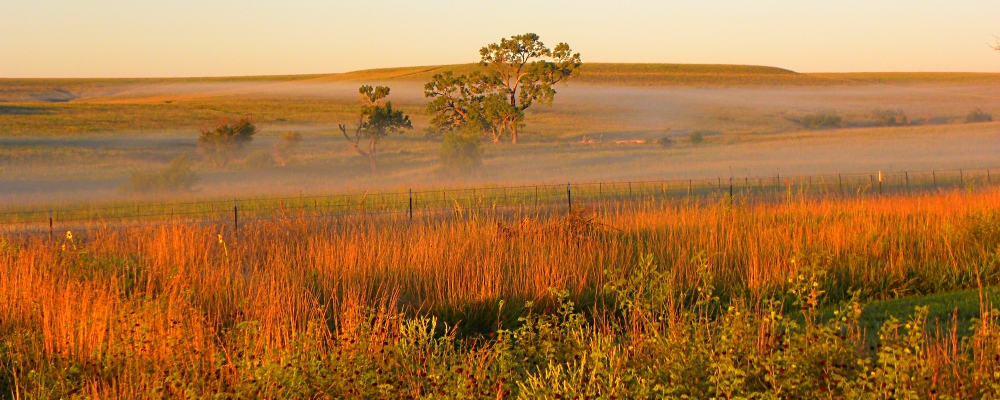
The Flint Hills Ecoregion is designated as a distinct region because it has the densest coverage of intact tallgrass prairie in North America. Due to its rocky soil, the early settlers were unable to plow the area, resulting in the prevalence of cattle ranches as opposed to the crop land more typical of the Great Plains. These ranches rely on annual controlled burns conducted by ranchers every spring to renew the prairie grasses for cattle to graze.
The Flint Hills is a region of rolling hills with relatively narrow steep valleys, and is composed of shale and cherty limestone with rocky soils. In contrast to surrounding ecological regions that are mostly in cropland, most of the Flint Hills region is grazed by beef cattle.
The Flint Hills mark the western edge of the tallgrass prairie, and contain the largest remaining intact tallgrass prairie in the Great Plains.

Tallgrass Prairie National Preserve
Tallgrass Prairie National Preserve is a US National Preserve located in the Flint Hills region of Kansas, north of Strong City. The preserve protects a nationally significant example of the once vast tallgrass prairie ecosystem. Of the 400,000 square miles of tallgrass prairie that once covered the North American continent, less than four percent remains, primarily in the Flint Hills.
Since 2009, the preserve has been home to the growing Tallgrass Prairie bison herd.

NNN Information:
Description:
Location:
Coordinates:
Elevation: feet
Geographical Region: GGG
Ecoregion: EEE

The Ancients
Ancient Steps:
First Wayƒarer

The Earth
Geological:
Wonders:
Parks:

The Modern Man

The Steps
Pathway Journeys:
Steps Afoot
Footpath Journeys:

Steps Afield
Roadpath Journeys:

The Appendixes
Campgrounds:

The 2013 Journey, Flint Hills Go Down Go Up
Tuesday, 03 September 2013, Tallgrass Prairie National Preserve, KS.
(Day 187 JO) 49°F. 6:00 am, clear
Overnighting in a parking lot
The Flint Hills Ecoregion
The Tall Grass Prairie The Flint Hills Ecoregion
The Tall Grass Prairie
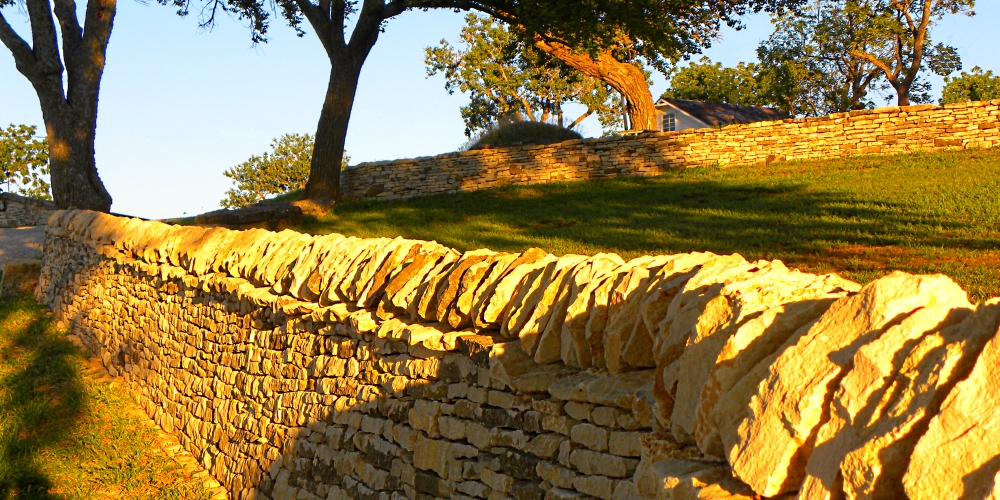
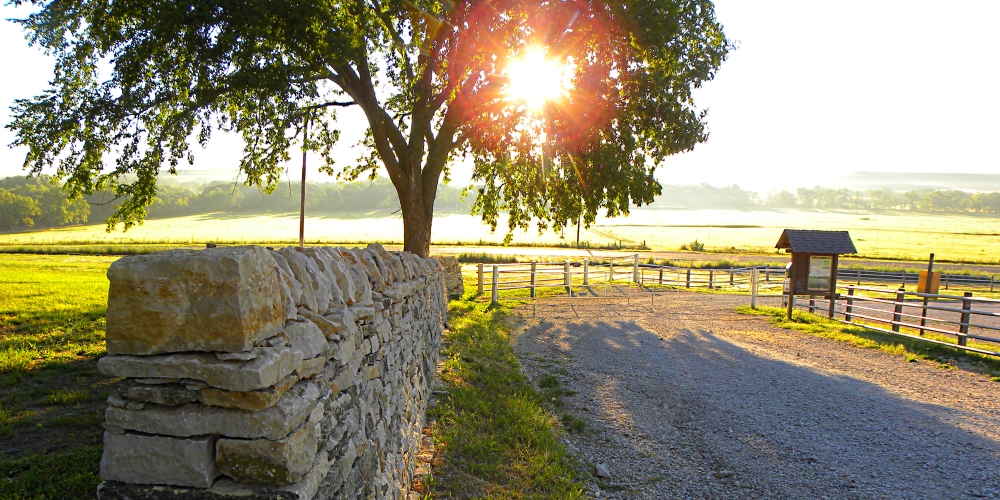
(m2cont-nam-geog-09-ks-9g-2013-0903.0524) The Tall Grass Prairie Homestead
The Flint Hills Ecoregion
The Tall Grass Prairie The Flint Hills Ecoregion
The Tall Grass Prairie
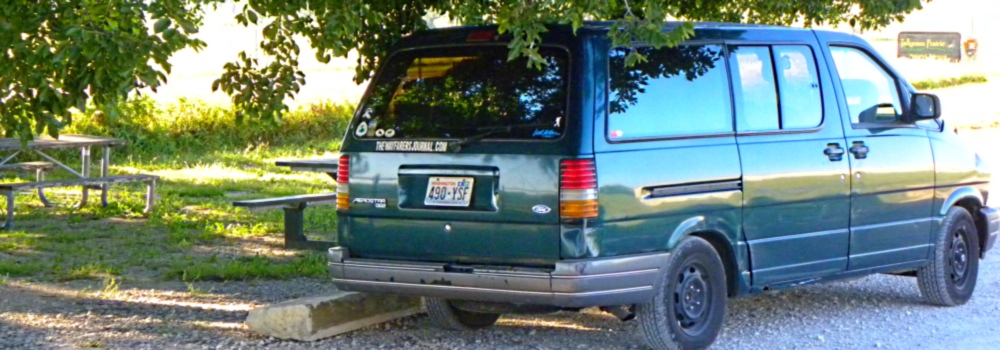
(m2cont-nam-geog-09-ks-9g-2013-0903.0655) Time for breakfast at the Tall Grass Prairie

To go back to the Gallery Index, click on down arrow. Go Back Go to previous section
on this page

Thank you for visiting The Wayƒarers Journal.

See Ya above the Treeline!

This Page Last Updated: 31 May 2026


To continue to the next Episode Level page, Click here go to top
 
The Wayƒarers Journal © ::: Come Join the Journey ™
by Thom Buras
Come Join the Journey ™