|

|
|
|

|

|
|
|
The
Wichita Mountains


|
|
|
The History of the Wichita
The word Wichita is derived from two archaic Wichita native American words: Weets, which means man and ee-taw which signifies of the north.
The Wichitas believed their ancestors lived on the rocky points of these mountains, which rank among the oldest ranges on earth. Formation of these mountains began some 500 million years ago when stratified layers of eroded silt were deposited. Through the ages climatic forces have chiseled and sculptured the mountains until all that remain of the once lofty escarpments are weather-reduced knobs and domes.
The mountains are rich in lore. Spanish traders bartered with several native American tribes for hides and other artifacts and legends persist of hidden treasures of Spanish gold. Colonel Henry Dodge made the first American contact with the tribes when he and a troop of dragoons visited the area in 1834 in an effort to halt tribal raids of the Santa Fe Trail.
Indian Wars
Marauding bands of Comanches used the mountains as a resting and hiding site after pillaging in Texas and Mexico. Then, in 1843, President Sam Houston of Texas commissioned J.C. Eldredge to make a treaty with the Comanches. Eldredge found them camped in the mountains and that is where the negotiations took place.
Other Notable Visitors
In 1852, Captain R. B. Marcy was directed to explore the source of the Red River, and in doing so, investigated the Wichitas. While in the Wichitas, he collected specimens of flora and fauna, noted geological formations and named Mount Scott.
Philip Sheridan, a Union General of civil war fame, shot elk near the mountain which now bears his name.
The Mountain Peaks
The highest mountain in the refuge is Mount Pinchot which rises to 2,479 feet (756m). Mount Pinchot was named in honor of Gifford Pinchot who served as the first Chief of the United States Forest Service.
A narrow winding road rises steeply to the Mount Scott summit, (2,464 feet, 751 m), with a view that encompasses the whole refuge. Although the mountains rise only 800 to 1000 feet above the surrounding prairie, they are steep and rocky.

(m2mo-wic.20170505.0909) The View from the Mount Scott Summit Road
The Geology of the Wichita
The fist known geological event occurred about 550-600 million years ago (mya), when the land from the top of Texas across Oklahoma to the city of Lawton sank and formed a basin which filled with sea water. Then, rivers carried clay, sand and gravel into this sea and thick layers of sediment was formed. Later, this area was uplifted thousands of feet by lava which formed the granite, rhyolite, and gabbro which solidified beneath the surface of the earth and constitute much of the Wichita Mountain range. Too, this uplifting was accompanied by erosion which removed much of the sediments.
The next geological event occurred about 500-550 mya during the
Cambian period when lava flows at considerable depth was forced upward into the overlying gabbro and in part, reaching the surface through volcanic vents. The cooling of this lava formed a red granite which is the most extensive rock in the refuge, Mount Scott being composed entirely of this red granite.

(m2mo-wic.20161107.0928) The Rocky Terrain which Defeated the Plow
Then during the second half of the Carboniferian Period,
1 between 330 to 290 mya, the region was uplifted to heights much greater than at present and the uplifting was accompanied by large folds and faulting.
During the Permian Period (299-252 mya) weathering and erosion stripped the upper parts of the mountains and deposited this material as gravel deposits in the intervening flats, thus reducing the average heights of the mountains to between 400 and 1,000 feet and lessoning the depths of the intervening flats.

(m2mo-wic.20161106.1627) A rainbow over the Wichita Mountain Wildlife Refuge
|
| |
|
The
Wichita Mountain Wildlife Refuge
|
|
|
Wichita Mountain Wildlife Refuge, Oklahoma
The Wichita Mountains Wildlife Refuge was established in 1901 to protect wildlife species that were in grave danger of extinction, and to restore species that had been eliminated from the area.
Bison were reintroduced, along with elk and wild turkey. More recent reintroductions include the prairie dog, the river otter, and burrowing owls.
The wildlife refuge, located near Lawton, Oklahoma in the southwestern area of the state, has protected unique wildlife habitats and is the oldest managed wildlife facility in the United States Fish and Wildlife Service system.

(m2mo-wic.20170505.0647) Quanah Parker Lake from Environmental Center trail
This refuge has over 59,000 acres which hosts a rare piece of the past, a remnant mixed grass prairie. This island of natural grasslands escaped destruction because the rocks just underfoot defeated the plow.
The refuge provides habitat for large native grazing animals such as American bison, Rocky Mountain elk, and white-tailed deer. Texas longhorn cattle also share the refuge rangelands as a cultural and historical legacy species. More than 50 mammal, 240 bird, 64 reptile and amphibian, 36 fish, and 806 plant species thrive in this important refuge.
Camping in the Refuge
The Wichita Mountains Wildlife Refuge offers a variety of camping opportunities including backcountry camping, youth group camping and a recreational campground with individual and group sites.
Individual campsites at
Doris Campground are on a first-come, first-served basis and are not available for reservations. For group camping reservations at any refuge campsite, contact the Visitor Center.
The Wildlife
The refuge provides habitat for large native grazing animals such as American bison, Rocky Mountain elk, and white-tailed deer.
Texas longhorn cattle also share the refuge rangelands as a cultural and historical legacy species.
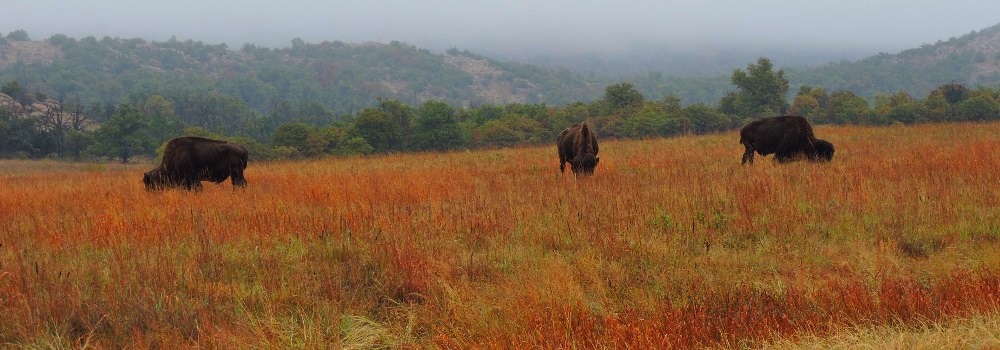
(m4camp-08-doris-20161107.1126) Buffalo on the grassland at Wichita Mountain
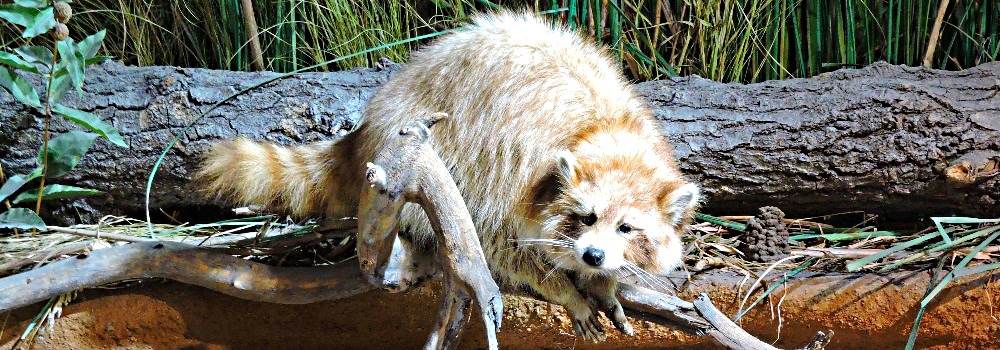
(m4camp-08-doris-20170505.0734) Raccoon on the hunt for food in Wichita Mountain
More than 50 mammal, 240 bird, 64 reptile and amphibian, 36 fish, and 806 plant species thrive in the Wichita Mountain refuge.
|
| |
|
The
CCC and Wichita Mountains
|
|
|
The Civilian Conservation Corps, 1933 - 1942
The Civilian Conservation Corps, organized by President F. D. Roosevelt during the Great Depression provided employment for nearly three million young, unemployed, unmarried men ages 17 to 26 and served to enhance and preserve the natural resources of this nation.
Corpsmen were paid $30.00 per month for their work, $25 of which was sent home to their families in an effort to relieve the burdens arising from the depression. The workers were provided housing, food, medical and dental care as well as educational training.
The CCC Program improved the lives of those who worked on the many conservation and recreational projects on the Refuge. Their unparalleled accomplishements in preserving this irreplaceable, natural resource stand as permanent symbols to the dedication and productivity of the men of the Civilian Conservation Corps.
The Civilian Conservation Corps in Wichita Refuge, 1933 - 1941
The Wichita Mountains Wildlife Refuge hosted three CCC Companies: Camp 812 - Buffalo Springs; Camp 859 - Panther Creek; and Camp 870 - Elm Island.
Work projects in the Refuge credited to these camps included dams, roads, buildings, fences, trails, and many of the recreational facilities still in use today.

(m2mo-wic.20170505.0746) The CCC built Dam in the Wichita Mountains

(m2mo-wic.20170505.0747) The CCC built Tower in the Wichita Mountains

(m2mo-wic.20170505.0910) The CCC built Road in the Wichita Mountains
|
| |
| |
| |
|
To go back to the Gallery Index, click on down arrow.
|
|
|
Thank you for visiting
The Wayƒarers Journal.
| |
See Ya above the Treeline!
| |
This Page Last Updated: 31 August 2026
|
|
|
|
To continue to the next Episode Level page,
Click here

|
|
| |



