The Karankawa were a nomadic band of the descendants of Chief Coahuilteco, who was a son of
Diklah, one of the indigenous people descending from Joktan. The nation of Diklah, whose original homeland was in the Central Low Plains ecoregion of the
Interior Lowlands Region east of the Mississippi River at the present day ruins site of
Cahokia Mounds.
Chief Coahuiltico had three sons, his firstborn, who was named after himself, his second born, Karankawa and his third son, Tonkawa. When each of his sons grew to be a warrior, they took for themselves a wife and then departed from the home of their father, Chief Coahuiltico. The second son, Karankawa traveled to the southeast and came upon a large flat coastland, now known as the
Gulf Coast of Texas, and here made this their homeland. In fact, their main habitation was in the Western Gulf Coastal Plains Ecoregion between Galveston Bay in the
Upper Gulf Coast and Corpus Christi Bay in the
Lower Gulf Coast.
The Karankawa were not Cannibals.
When I was a youth camping with the Boy Scouts along the Texas Coastal Plains, I was told about one of the areas where we were camping, " This is where the Karankawa lived, who were the only known cannibals in Texas." What I have since come to find out, was that belief, long held by many throughout Texas, was not true. Furthermore, the current information about the lives and customs of these ancient indigenous people, from very recent research, is that their cannibalism was a falsehood created by the Spanish at the missionaries of
Presidio La Bahía and
Refugio, a lie told by the missionaries when the Karankawa refused to convert to Catholicism. In fact, most all of the existing documents concerning the Karankawa were written by the enemies of that tribe, most of which had been written by the missionaries of the church.
In fact, I believe now that the Karankawa, decedents of Diklah, were never cannibals, but instead were no different than the
Caddo, their cousins to the north; nor were they any different than the
Choctaw, their cousins to the east; nor were they any different than the
Tonkawa their closest relatives and neighbors. Moreover, I deeply believe from my heart of hearts, that most all people here on this Earth are very much alike, in that we just want to live our lives peacefully, have somewhere comfortable to sleep at night, enjoy tasty food to eat with our families, be fulfilled doing rewarding, meaningful work, raise happy children and then pass on our possessions and any wisdom we acquire to those children.
The New Campsite:
The Karankawa migrated seasonally along the coastal lands, traveling in family groups using dugout canoes which they made from trees that existed in the coastal forests. About once a month, they would pack out of the campsite and move to a different location.
The new campsite was always on the land close to the shoreline of the coastal waters and upon arriving at the new site, the men would haul the boats onto the shore.
The women would begin gathering the materials and then set up the ba′ak, a domed, round shelter similar to a wigwam made with a frame of arched willow branches, and interlocking them in a wickerwork. When the framework was completed, it was covered with the skins of different types of animals, including bear deer, panthers, wildcat and others to provide the roofing materials.
Finally, with the firesticks that were carried in a deerhide throng, a fire was built in the middle of their dwelling and kept burning day and night. Other animal pelts were used to sit and sleep upon within the dwelling.
Karankawa Life:
The Karankawa hunted and gathered their food mostly from the rivers that they traveled by. The food that was hunted included rabbit, fish, fowl, oysters, shellfish, turtles, venison and other animals, which were seasoned with chile. The food that was gathered included: berries, persinnons, nopales, nuts and sea-bird eggs.
They made ceramic pots in which they boiled some of the food and stored liquids, including water of which they were skilled at obtaining pure, fresh water.
The Karankawa were noted for their skill of communicating with each other over long distances using smoke, which smoke was intelligible to them as language.
The Karankawa kept dogs which accompanied them on hunts, swims and recreational events. These dogs were voiceless, had straight ears and fox like snouts.
Recreation:
The Karankawa had three different musical instruments: 1. a gourd filled with stones that was shaken: 2. a flute which was softly blown into; and 3. a fluted piece of wood that a stick was drawn over to make sound.
The Karankawa enjoyed recreation wrestling, hatchet throwing, knife fights and some ball games. These indigenous people also were noted for their remarkable physical feats such as continuing to fight after being wounded in battle, swimming in freezing water and breaking ice with their bodies.
Their most notable skill was archery which they engaged in both for hunting and recreation. They made their own bows from red cedar wood and arrows tipped with steel. They were renown for their accuracy despite being on land or in a boat on water.
The Karankawa were more than likely a loose-knit tribe living in small groups under separate chiefs who were only united by a common language and shared war expeditions.
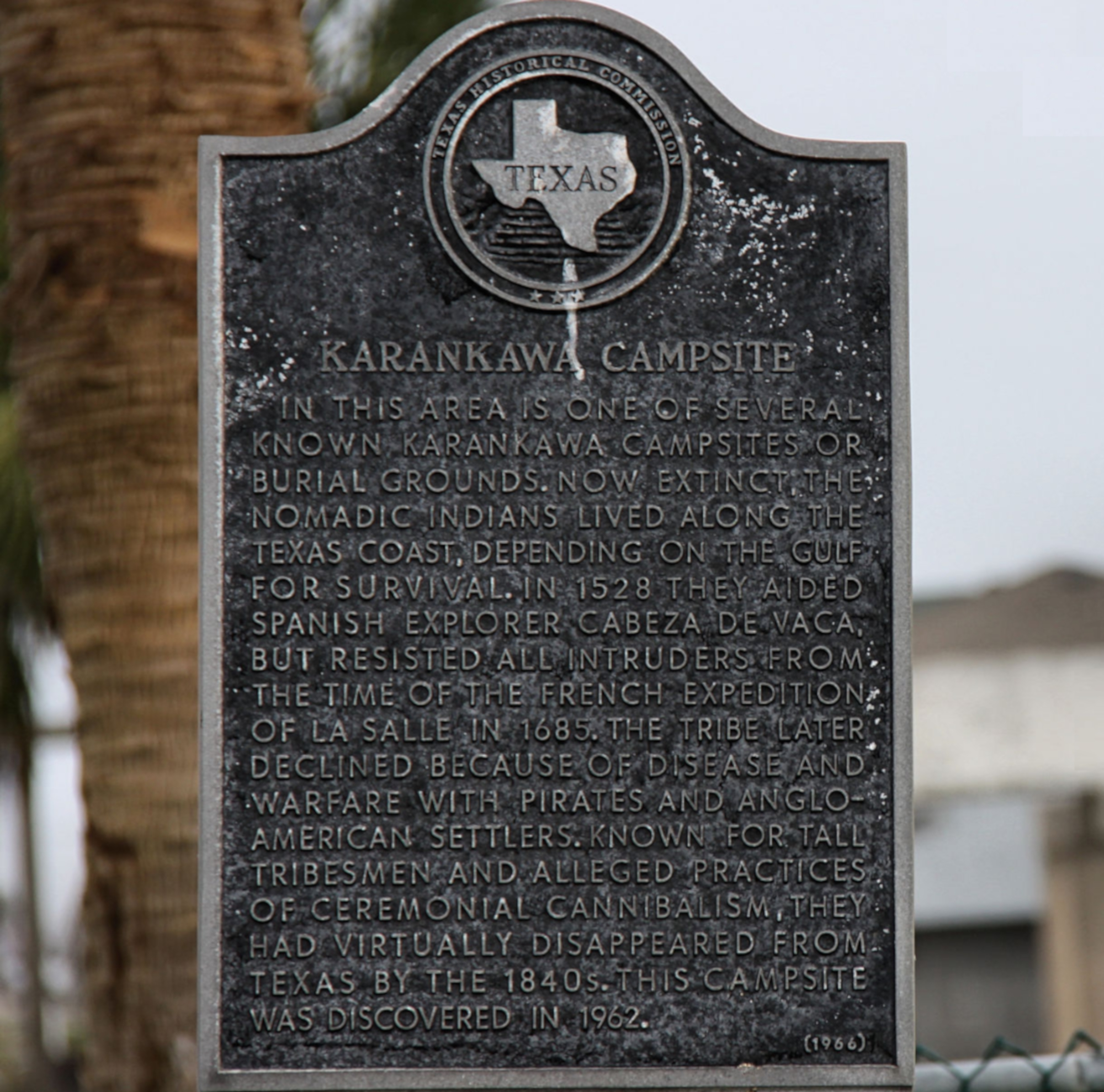
(m1-first-fm-diklah-karankawa) The Sons of Diklah, The Karanakawa People
|