|
Order: Anseriformes, Family: Anatiidae
Genus: Cygnus, Species: Columbianus, L 52 inches
Range
Summers are spent along the north tundra coastal areas of the continent in Canada and Alaska. Winter range is divided into three separate ranges, western, central and eastern.
The western winter range is all of the western states of California, Oregon, Washington and extreme south British Columbia with migration through the eastern area of those states together with Nevada and Yukon to the coastal areas of Alaska and western Canada.
The central winter range is inland parts of Texas, New Mexico, and Oklahoma with migrating directly northward to Hudson Bay and northern coastal Canada. This range may be dissipating as few bird fly to Texas.
The eastern winter range is along the coasts of North Carolina, Virginia up through the upper Chesapeake Bay, with migrating directly northward to Hudson Bay and the Northwest Passage areas.
Habitat
Flocks in the winter and during migration to shallow fresh water especially to coastal estuaries and nearby grain fields. Usually hold it′s neck straight when swimming. Flies in straight lines as well as in Vs.
Description
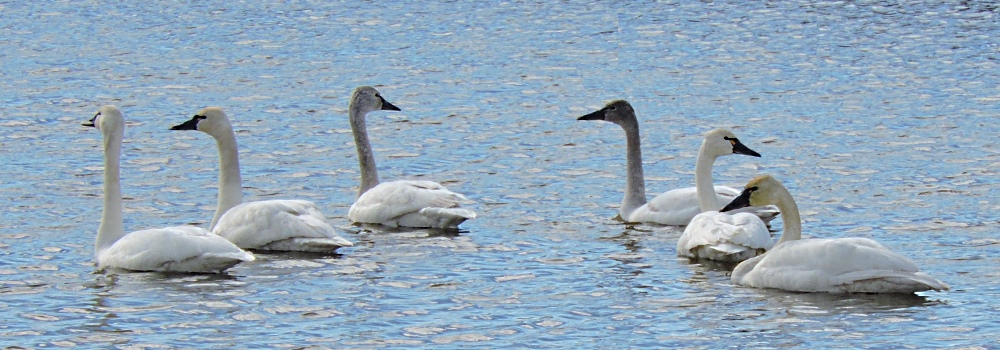
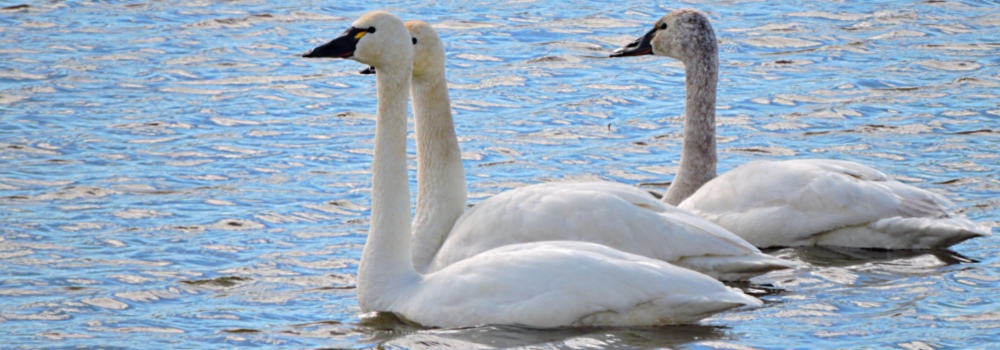
Smaller than the trumpeter swam but is often hard to distinguish except by voice, Tundra voice is high, less harsh than trumpeter. Also, the tundra swan has a yellow lore spot on upper bill. Immature, like the trumpeter swan are gray-brown with bills and legs marked with pink, but white by the first spring.
|