|
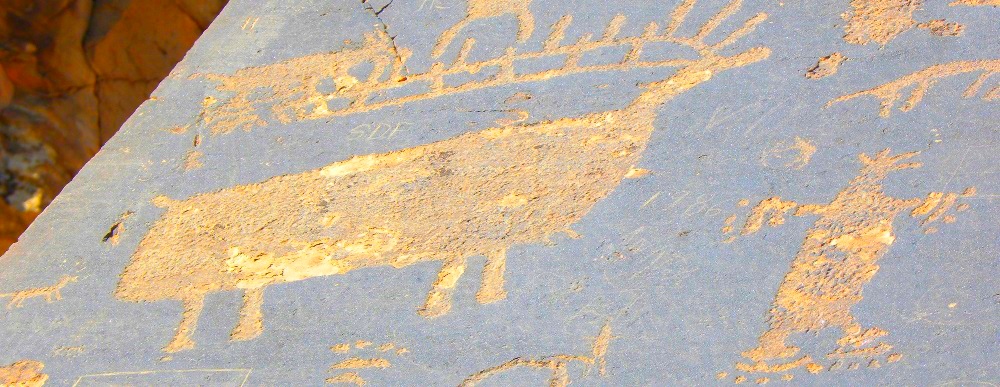
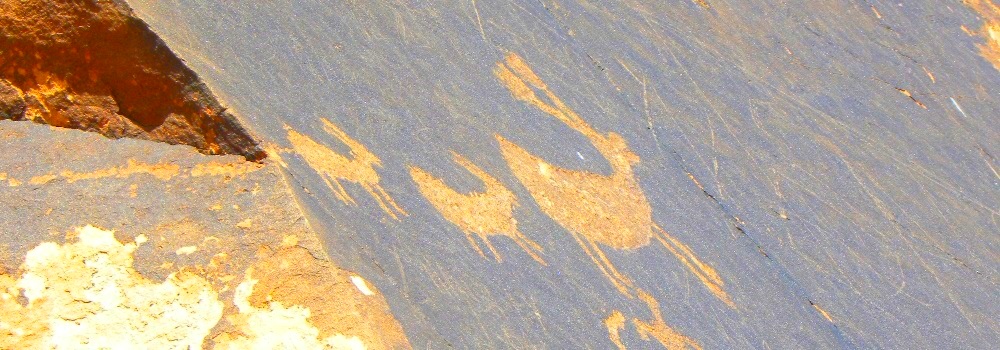
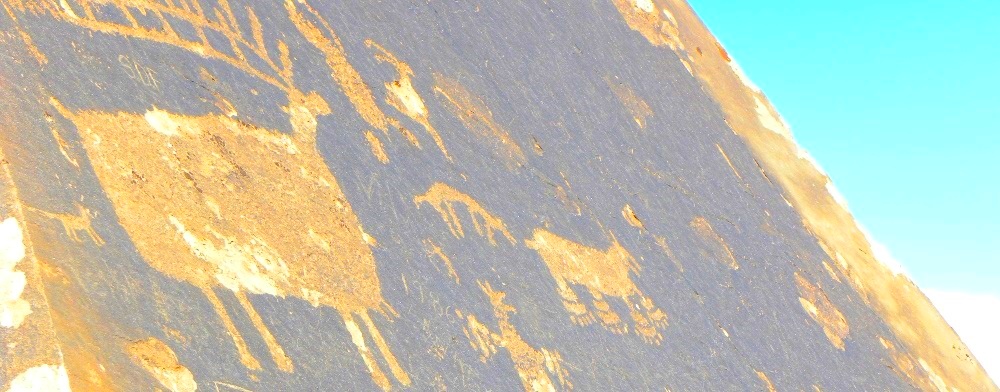
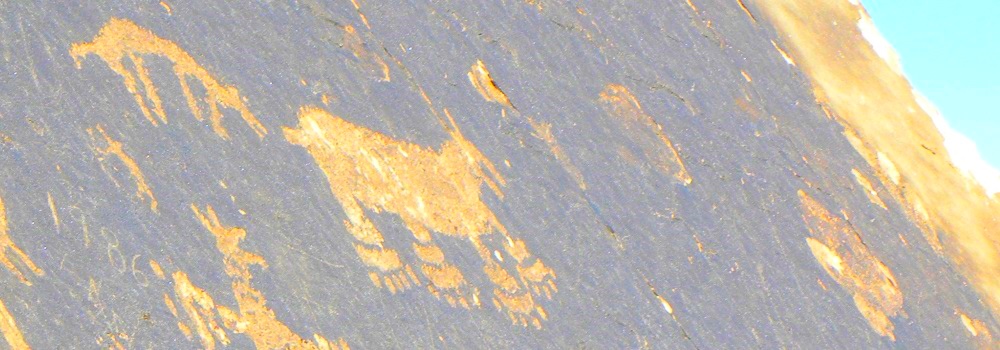
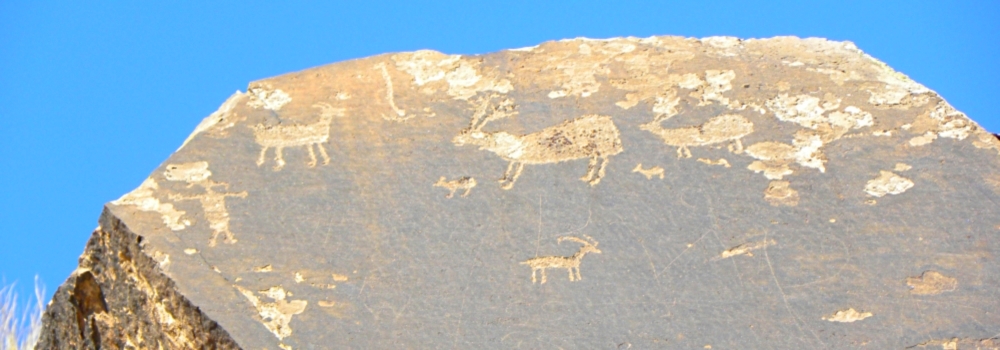
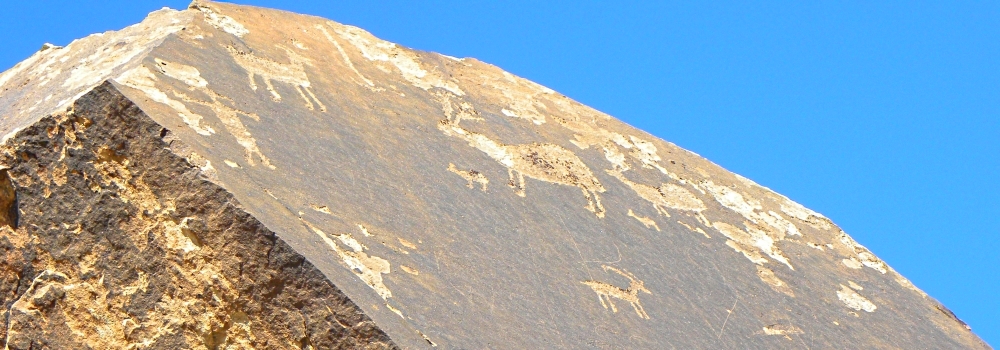
The Colorado River Petroglyph is a collection of several rock panels along SH 279 (also called Potash Road) that had been incised by archaic indigenous people who were most likely of the
Fremont Culture.
Colorado River Petroglyph Information:
Description:
Potash Petroglyph and Dinosaur Tracks
The Potash Road Petroglyph are a road side attraction and this rockart can be viewed from in or out of your car, which makes this rockart accessible to everyone.
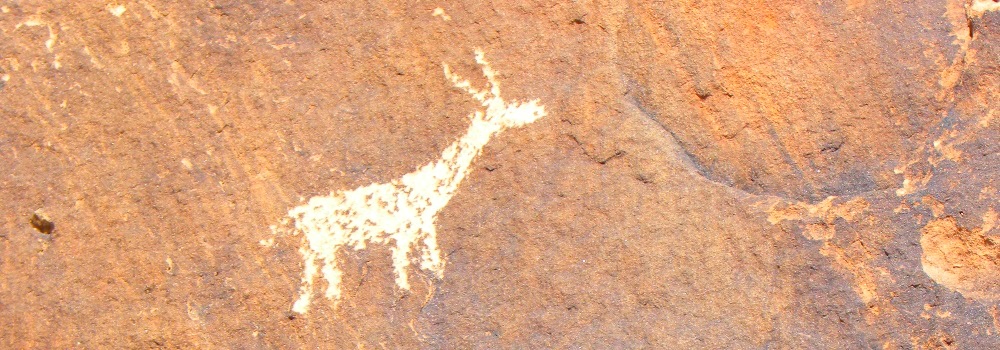
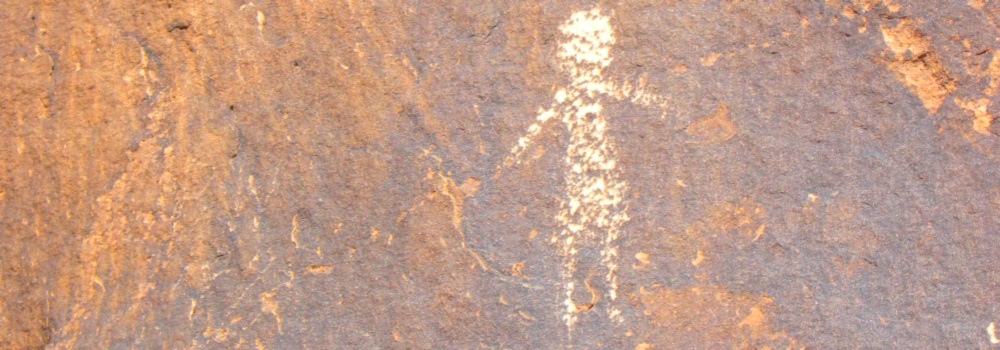
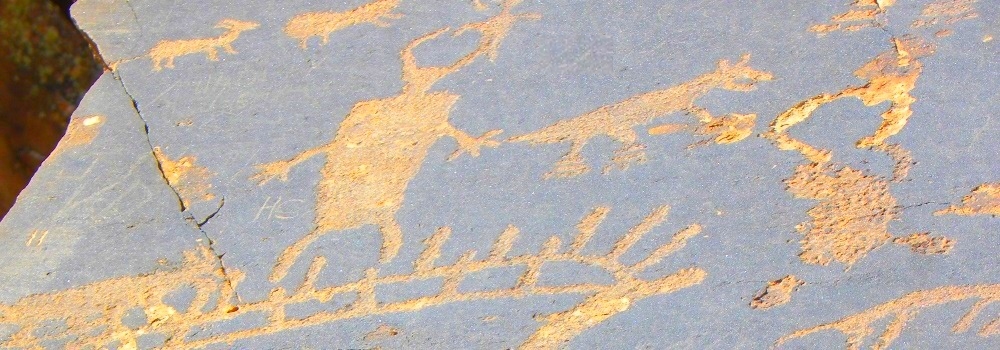
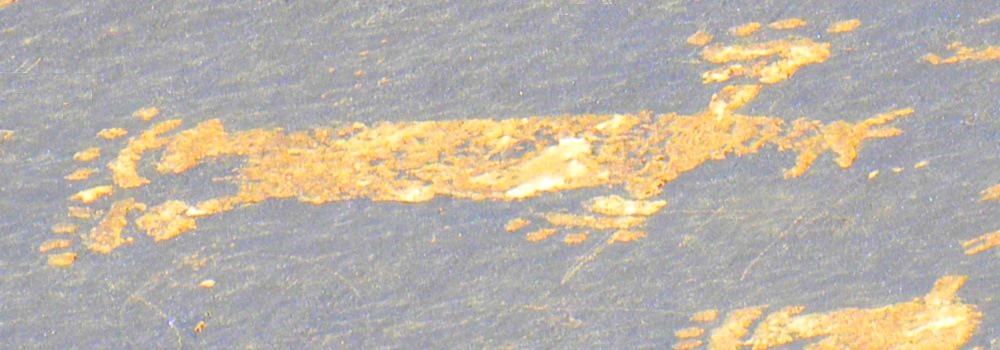
Archaeologists believe that most the petroglyph in this area were created by the people of the Fremont culture, which flourished between in this area from 600 CE and 1300 CE. The rockart includes older portrayals of animals, lines of hand-holding men and triangular figures with horns, spears and shields.
However, the Potash Dinosaur tracks require a 200-yard stroll across a rocky hill side. There are no fences or guard rails on this hill side climb and thus, you are the protector of this environment.
Location:
There are several locations in this area, but probably the one most visited is on SR 279 (Potash Road) five miles from US 191, an intersection that is located just north of the US 191
Colorado River crossing.
Too, the intersection of SR 279 and US 191 is located north of Moab, Utah and just before arriving to Arches National Park.
Coordinates:
38.544475, -109.600029
Elevation:
3954 feet
Geographical Region
Crossing the Big River at the Ford
(An excerpt from an Ancient Journal, c. 1000 BCE Early Fall)
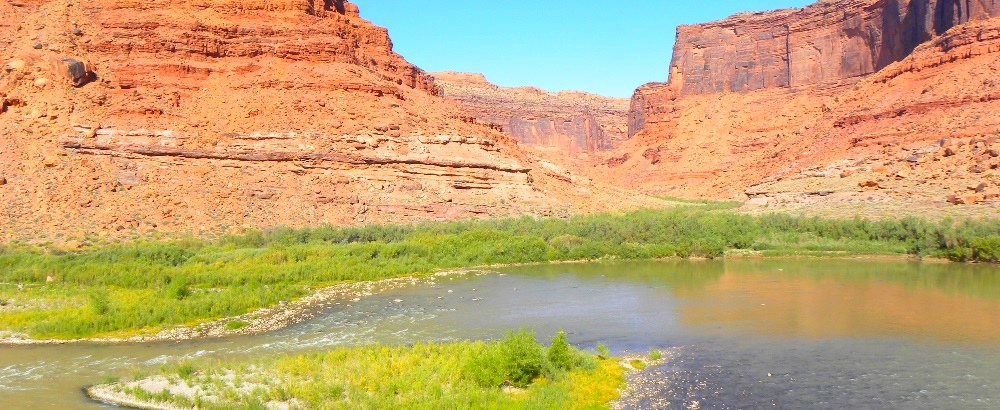
We came to this big river two days ago and have been walking upstream to find a place to cross it where the water is not too deep nor too swift. Finally, in the late afternoon, we find this location with an island in the middle making the water shallow enough to cross. It takes about an hour to get all of the family and our gear across.
We had just finished crossing from the north to the south side of the largest river
(Colorado) we have found on the desert plateau and we climbed a short way up the bank to rest. Then, not long after we crossed the river, a herd of big cattle come across at the same low water ford, so we arm ourselves with our spears so as to take one of the cattle down. This animal fights so hard with it′s two horns that it seems to us that the animal has many more than two horns but God helps us with this effort to acquire food for our family and we are able to take this wild animal down.
We make camp here by the river to dress and smoke the meat which will provide food for us for a full moon during our journey. Too, the hide will make good garments for the upcoming cold winter. Truly, God has blessed us here at this water.
Later in the day, while I am walking upstream, I find this large bolder with a black covering, one perfect for my art palette. I will begin first thing in the morning recording our passage through this great land.
BLM Campgrounds: $20 per night, $10 with senior pass
Above Moab, SH 128
BLM Goose Island Campground (38.611945, -109.557215)
BLM Grandstaff Campground (38.613604, -109.530889)
BLM Drinks Canyon Campground (38.632814, -109.486497)
BLM Hal Canyon Campground (38.641748, -109.476554)
BLM Oak Grove Campground (38.644253, -109.476226)
BLM Big Bend Campground (38.649024, -109.479616)
BLM Upper Big Bend Campground (38.649302, -109.488366)
Red Cliffs Lodge (38.678837, -109.446307)
BLM Lower Onion Creek Campground (38.737476, -109.356963)
BLM Hittle Bottom Campground Campground (38.759186, -109.323991)
BLM Dewey Bridge Campground (38.810447, -109.307609)
Below Moab, SH 279
BLM Jaycee Campground (38.556486, -109.590248)
Petroglyph Rockface
BLM Williams Bottom Campground (38.5383947, -109.603583)
BLM Gold Bar Group Campground (38.576464, -109.634194)
Red Cliffs Canyon (38.678650, -109.446300)
Pathway Journeys:
Footpath Journeys
Roadpath Journeys
|