|
Taxonomy:
Kingdom:
Animalia
Phylum:
Chordata
Class:
Aves
Order:
Passerifomes
Family:
Corvidae
Genus:
Corvus
Species:
C. Brachyrhynchos
Common Name:
American Crow
Conservation Status:
LC
Subspecies:
3 to 5
C. b. brackyrhynchos, eastern crow. NE USA, E CAN
C. b. hesperis, western crow. W NAM ex ARC.
C. b. caurinus, northwest crow. (variation of c. b. hesperius)
C. b. pasuus, Florida crow FL. Southern USA
C. b. paulus, southern crow,
Description
The birds of the crow family are very intelligent and easily adapt to human environments.
Length:
16 to 20 inches
Wingspan:
33 to 39 inches
Male:
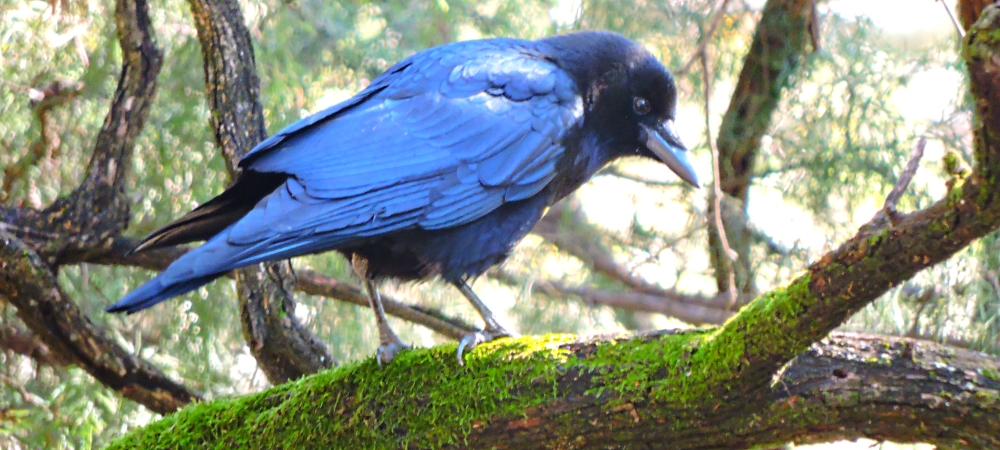
A large bird with all black iridescent feathers and blunt tail. The crow has a hoarse, cawing voice and looks much like other all black birds of the covid family. Average lifespan in the wild is between 7 and 8 years, but captive birds are known to live up to 30 years.
A flock of crows is called a murder.
Female:
Tends to be smaller than male.
Juvenile:
Young American crows do not breed until they are at least two years old and most do not breed until thay are four years old.
Habitat:
Numerous and widespread in all types of country including: farmland, fields, empty beaches, river groves, shores, town centers, major cities parks and wilderness and open woodlands.
An exception is in tundra areas where it was replaced by the
common raven. Other exceptions included: hot desert zones and mature forest.
Range:
Year-round:
Continentally widespread year round.
Breeding:
Throughout most of non-boreal Canada.
Wintering
Wintering on west coast of Canada or southwest areas of US. Crows congregate in large number in winter to sleep in communal roosts.
Canadian birds migrate some distances southward in winter.
|