|
Taxonomy:
Kingdom:
Animalia
Phylum:
Chordata
Class:
Aves
Order:
Passeiformes
Family:
Corvidae (covids)
Genus:
Corvus
Species:
C. corax
Common Name:
Common Raven
Conservation Status:
LC
Subspecies:
8 to 11
C. c. corax, N. Eurasian raven, N. EUR, N. IRN
C. c. kamtaschaticus, Kamchatkan raven, NE ASI
C. c. principalis, northern raven, N. NAM, GRL
C. c. sinuatus, western raven, SW. USA, NW MEX
C. c. subcorax, S. Eurasian raven, GRC, NW IND, Cn. ASI, CHN.
C. c. tibetanus, Tibetan raven, Himalayas
C. c. tingitanus, N. African raven, N. AFC, Canary Is. (CNR)
C. c. varius, N Atlantic raven, ISL, FRO
Description
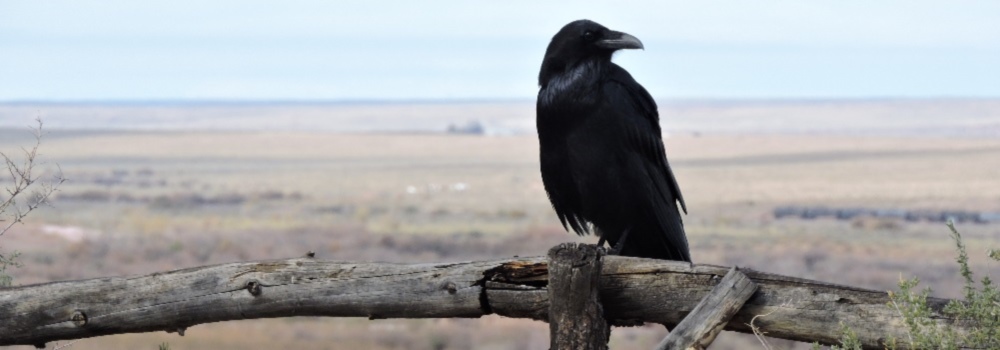
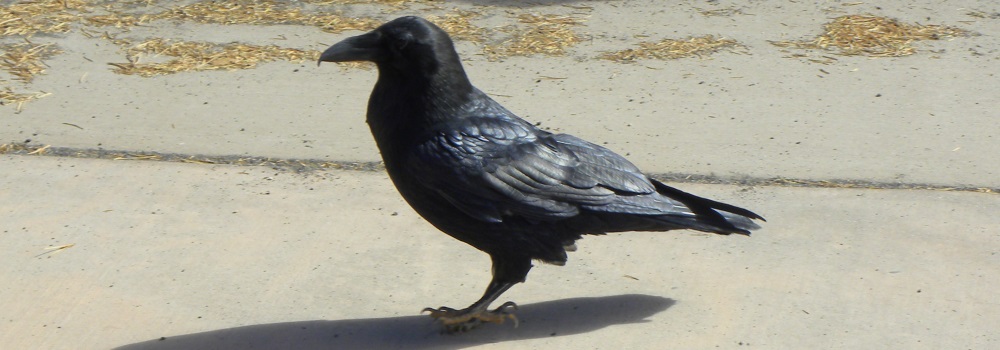
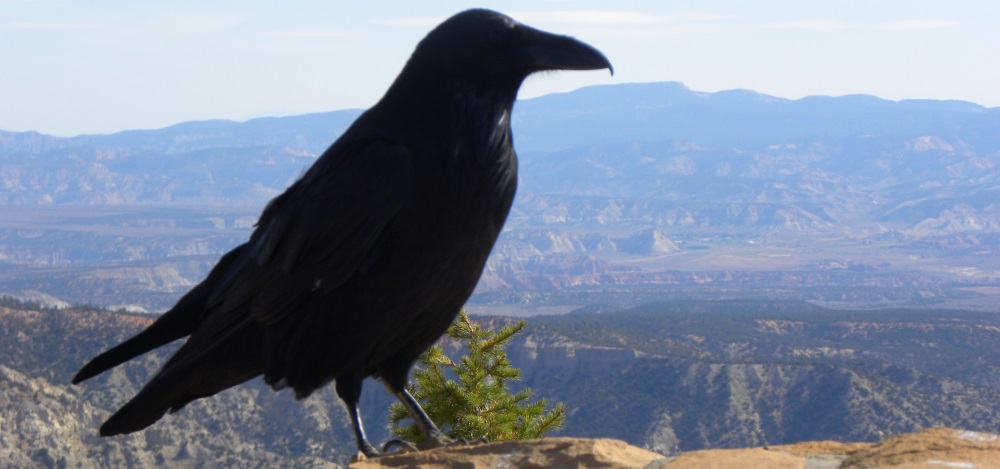
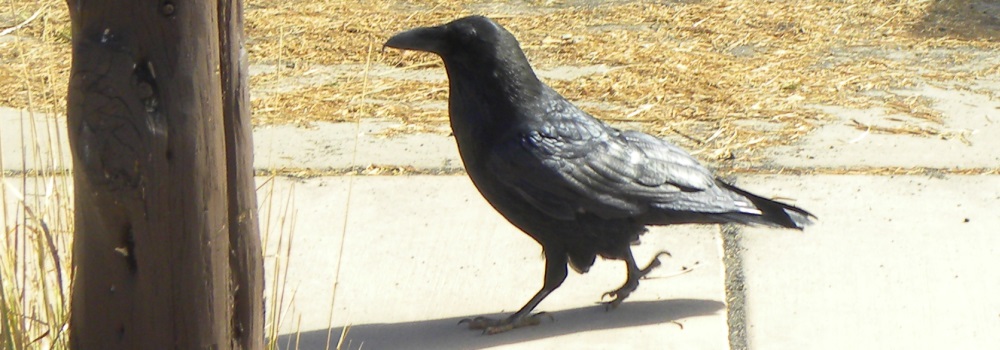
The common raven is a large all black member of the crow family is the most widely distributed of the covids. Common ravens are omnivorus and are extremely opportunistic in finding food. They are found as a year round resident across most all of the northern hemisphere. The common raven, with its several sub-species is known by many names, most of which have little variations in appearance.
Although the typical lifespan is shorter, common ravens can live upwards of twenty-five years in the wild. Young birds travel in flocks and later mate for life, with each mated pair defending their territory.
Collective nouns for a group of common ravens include unkindness and conspiracy
The Name:
The common raven is the type species for the genus Corvus, which name is derived from the Latin word for raven. The specific epithet corax is the latinized form of the Greek word Korax meaning raven
Length:
21 to 28 inches, average 25 inches
Wingspan:
46 to 60 inches
Male:
The bill is large, (heavier than the crows) which is slightly curved and is from 2.2 to 3.3 inches and this bird has a dark brown iris. The tail is long and strongly graduated and wedge-shaped. The plumage is black and can display a blue or purple iridescence sheen. Neck feathers are pale brownish grey.
Flying ravens are distinguished from crows by their tail shape, large wing area and more stable soaring style, which generally involves less wing flapping.
Female:
Juvenile:
Similar to male but duller with a blue-grey iris.
First Year:
Habitat:
Common ravens are numerous and widespread from the arctic to deserts. Increasing in the Appalachians. Common ravens are found in flocks, except during nesting season.
Range:
Year-round:
All year in the Pacific Coast region, Basin and Range region, Rocky Mountains region of both Canada and the United States. Also, in Canada, this species is found in most of the rest of Canada except for the Canadian Great Plains region.
Also, the common raven is found in the northern Appalachian Mountains from the extreme north Georgia through Maine, northern Michigan and Minnesota.
Breeding:
Breeding pairs must have a territory of their own before they begin nest-building and reproduction, and thus they aggressively defend a territory and its food resources
Wintering
|