|
Taxonomy:
Kingdom:
Animalia
Phylum:
Chordata
Class:
Aves
Order:
Piciformes
Family:
Picidae
Genus:
Colaptes
Species:
C. auratus
Common Name:
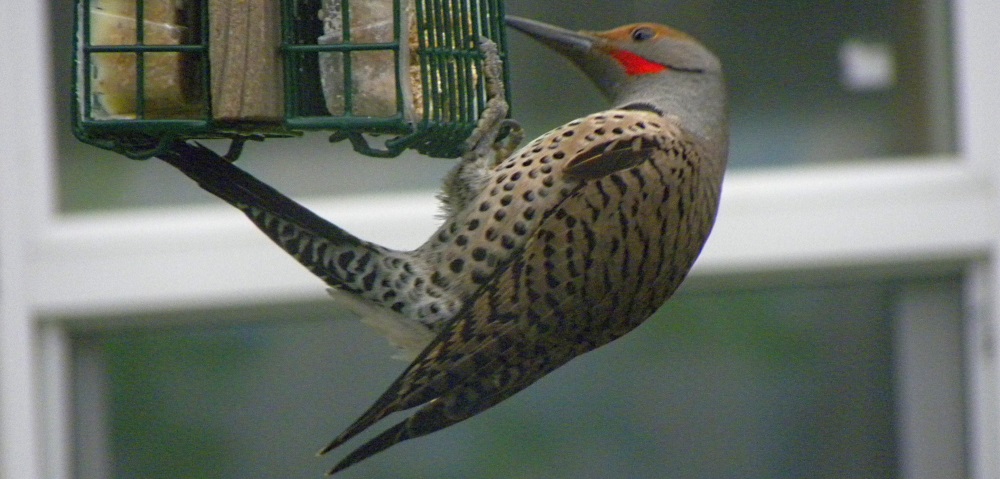
Northern Flicker (Red-shafted Form)
Conservation Status:
LC
Subspecies:
ten
Yellow-shafted group
southern yellow-shafted flicker (C. a. auratus)
northern yellow-shafted flicker (C. a. luteus)
cuban yellow-shafted flicker (C. a. chrysocaulosus)
Grand Cayman yellow-shafted flicker (C. a. gundlachi)
Red-shafted group
western red-shafted flicker (C. a. cafer)
coastal red-shafted flicker (C. a. collaris)
dwarf red-shafted flicker (C. a. nanus)
Mexican red-shafted flicker (C. a. mexicanus)
Guatemalan red-shafted flicker (C. a. mexicanoides)
Guadalupe red-shafted flicker (C. a. rufipileus) EX
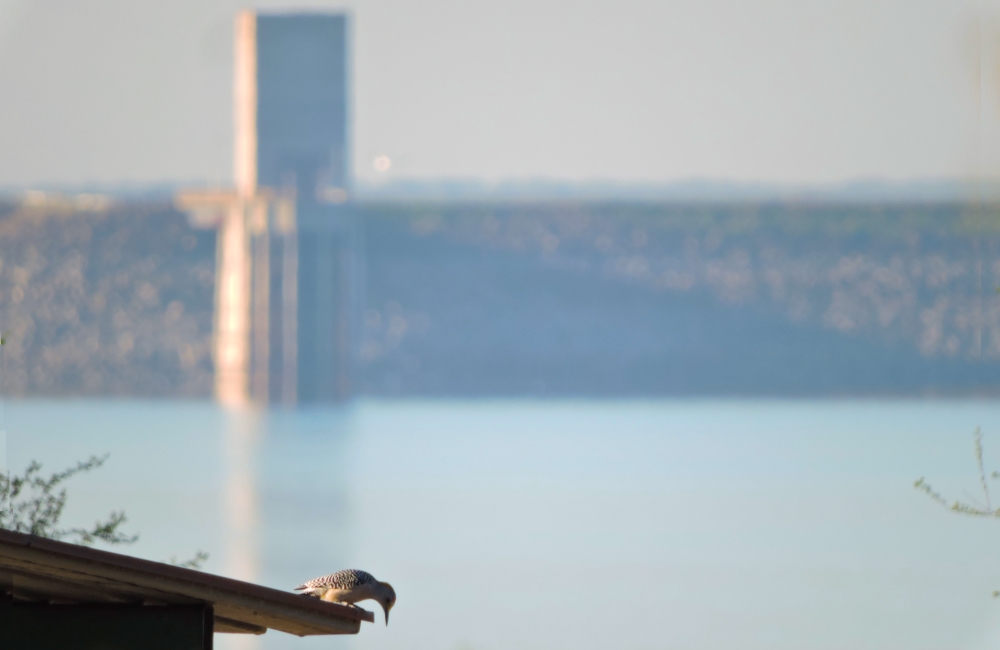
The northern flicker is a medium sized bird and is native to most of North America, parts of Central America, Cuba, and the Cayman Island. The flickers are the only woodpecker that frequently feed on the ground, probing with beaks, to find insects, especially ants.
The northern flicker is the state bird of Alabama where it is known by its colloquial name, Yellowhammer.
Description
Length:
11 to 14 inches
Wingspan:
16.5 to 21.5 inches
Male:
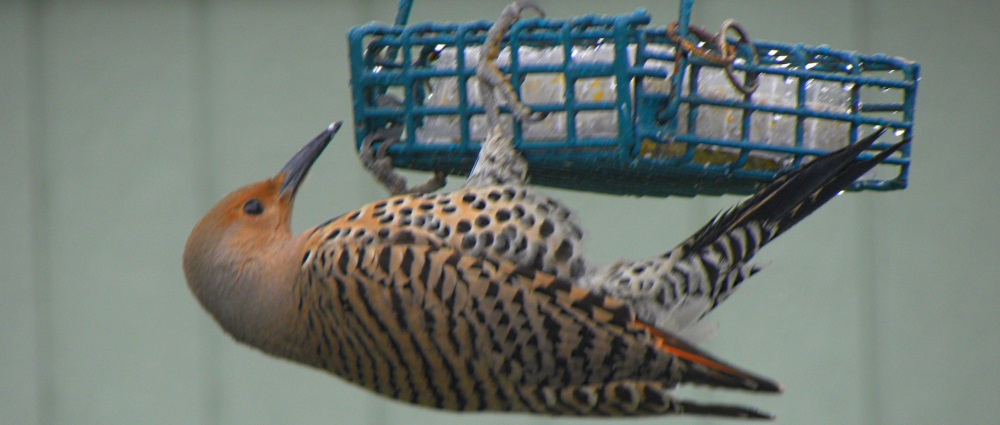
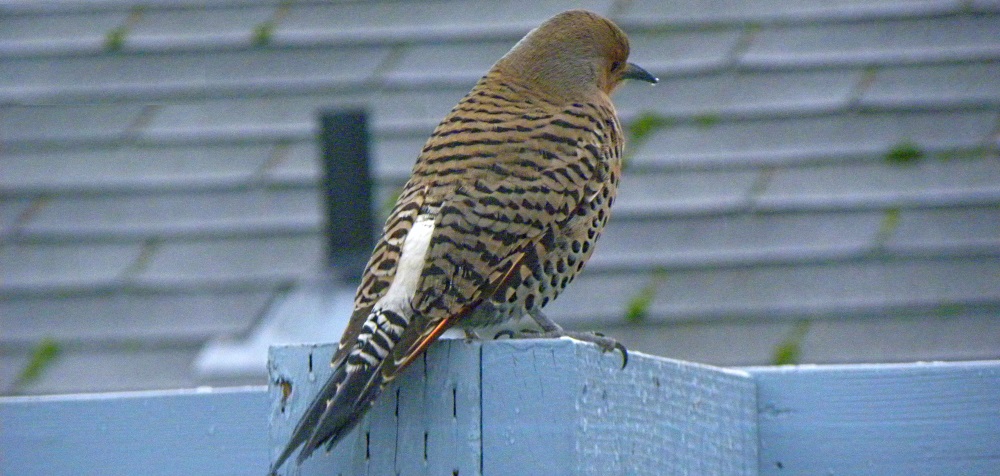
Adults are brown with black bars on the back and wings.
The largest bodied specimens are from the northern reaches of its range.
The smallest specimens are found in the Cayman Island.
A necklace-like black patch occupies the upper breast,
while the lower breast and belly are beige with black spots.
Western males have a red mustachial stripe at the base of the beak.
Eastern males have a black mustachial strip at the base of the beak.
Tail is dark on top, transitioning to a white rump which is conspicuous in flight.
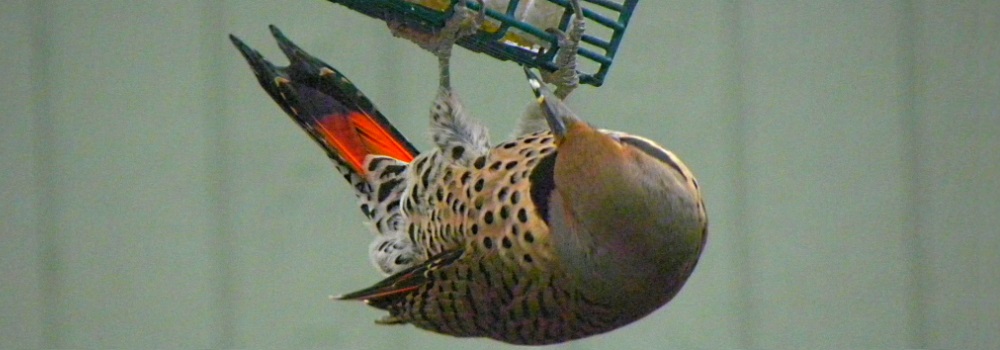
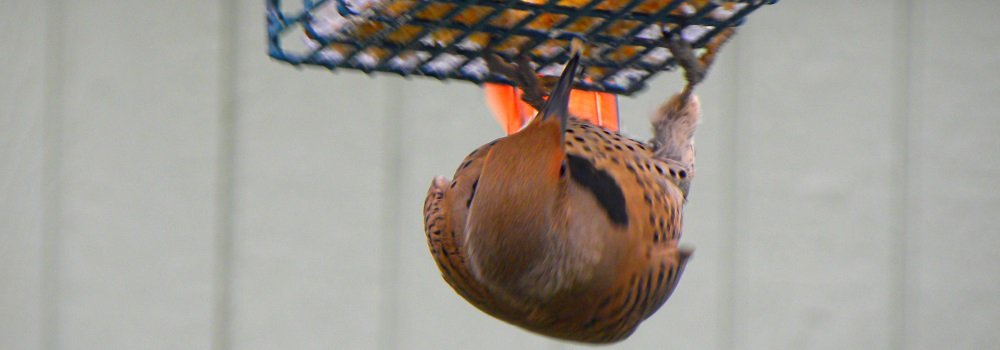
Tail underside is bright red or yellow
Flight of the northern flicker is undulating.
Brown back with black barring, white rumps, spotted under parts with black breast crescent. Red-shafted form has salmon in wings and under tail.
Crown is brown without a nape patch like the yellow-shafted form. Male has a red mustache.
Feeds heavily on ground ants and feed in trees like other woodpeckers.
Female:
Resembles male except for mustachial strip
Juvenile:
First Year:
Habitat:
Numerous and widespread in open woods.
Range:
The red-shafted form lives in the western parts of the continent including wintering in west Texas, summering in northern Utah, northeastern Colorado, western Wyoming, western Montana, eastern Oregon, eastern Washington and most of British Columbia. Too, this species can be seen in between this northern and southern extremes all year.
Once widely separated by open plains from yellow-shafted form, now, due to extensive tree planting, the two forms meet along the front ranges of the Rocky mountains and interbreed. Overlap of forms occur well behind the zone of contact.
Year-round:
All of the US contiguous states, Central MEX. Some areas in Central America and Caribbean Islands.
Breeding:
Northernmost range: AK, CAN (except boreal areas) and Cascade mountains.
Wintering
Texas, S. NM,; S. CA, N. Mex.
|