|
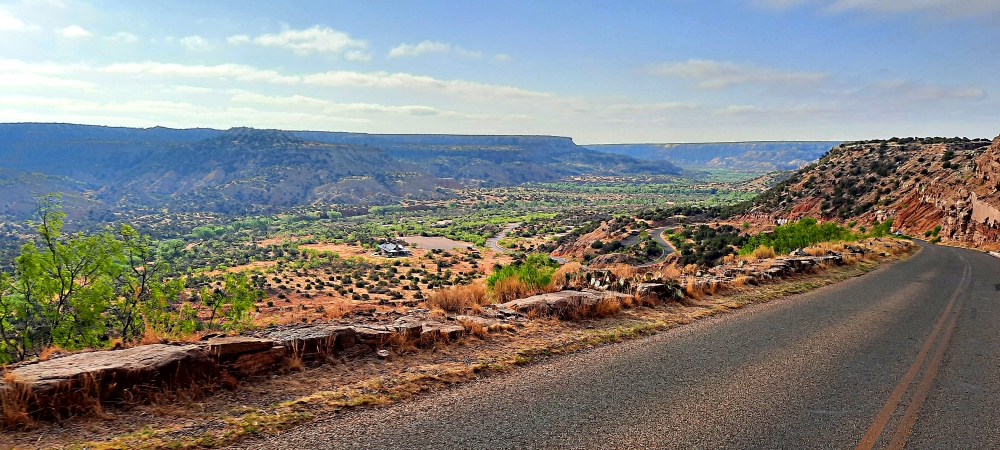
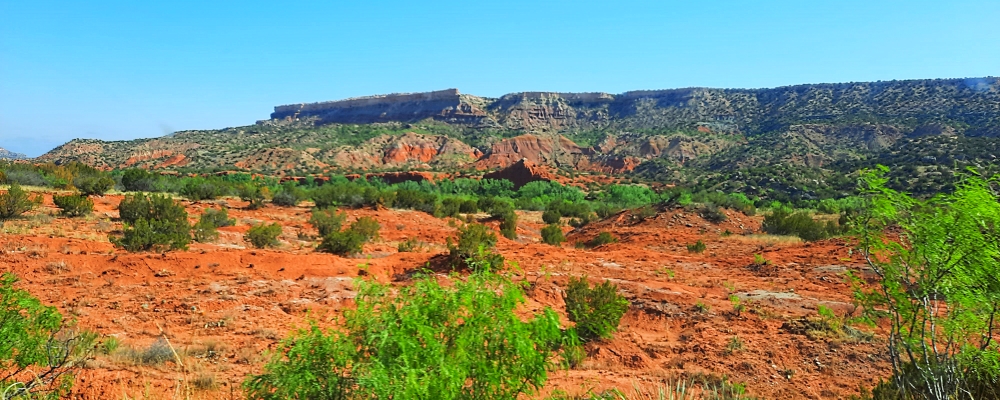
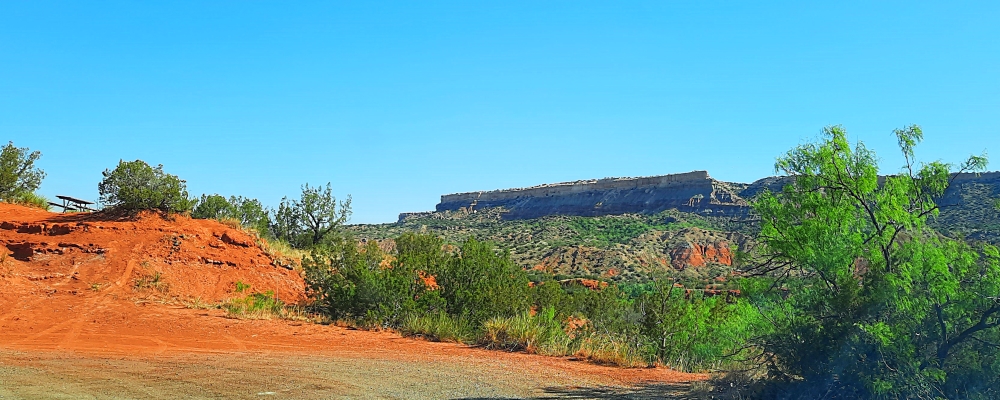
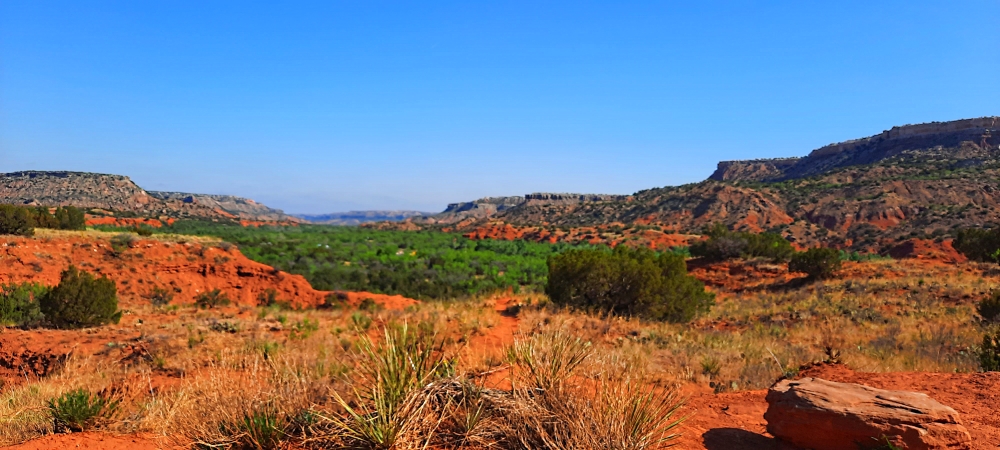
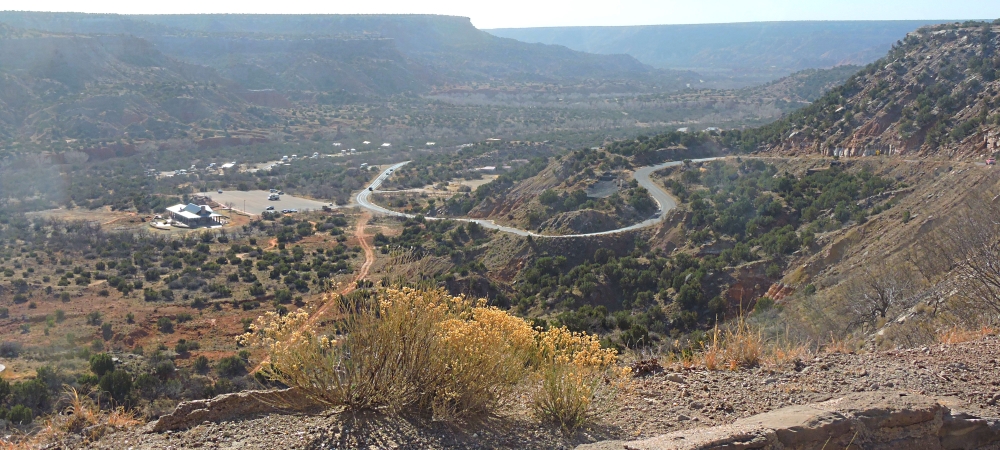
The Palo Duro Canyon in the Texas Panhandle near the cities of Amarillo and Canyon is a canyon system of the Caprock Escarpment. At about 120 miles long and an average width of 6 miles (but in some locations reaches a width of 20 miles), Palo Duro is the second-largest canyon in the United States. The depth of Palo Duro canyon is about 820 feet in most places, however, in some locations, it increases to 1,000 feet in depth.
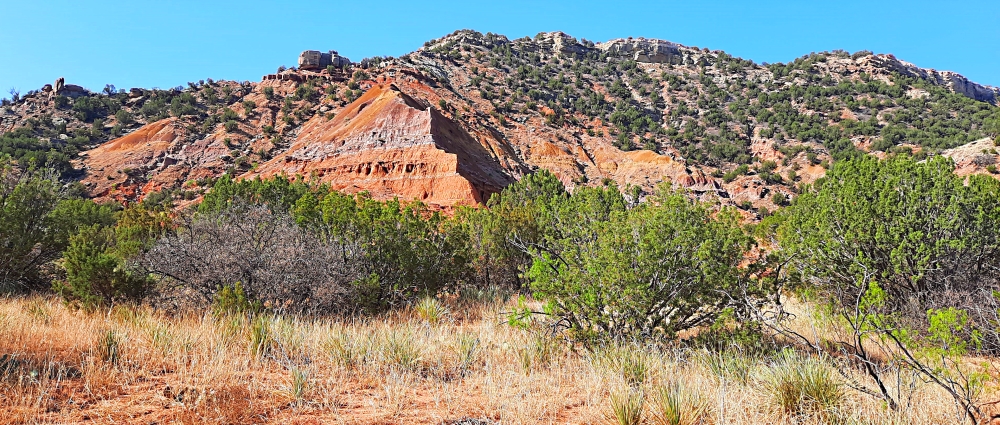
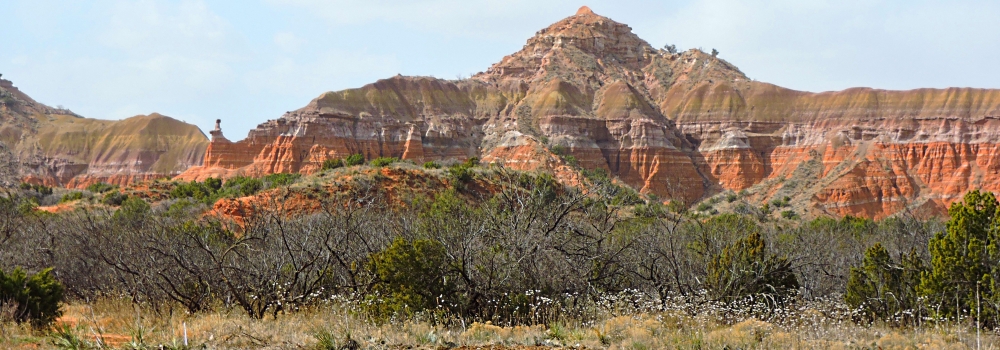
From it large size and its dramatic geological features which include many multicolored layers or rock and steep mesa walls similar to those in the Grand Canyon, Palo Duro Canyon has been nicknamed The Grand Canyon of Texas.
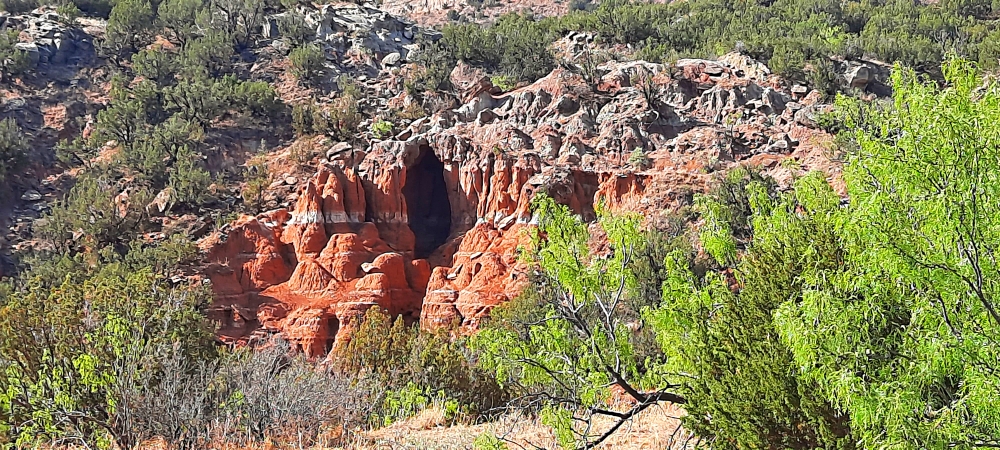
Notable canyon formations include caves and hoodoos. One of the best-known hoodoo and the major signature feature of the canyon is the Lighthouse Rock. A multiple-use, 6 mile round-trip loop trail is dedicated to the formation.
Palo Duro is from the Spanish and in English can be translated to: hard stick.
Geology
The Palo Duro canyon was formed by the Prairie Dog Town Fork Red River, a tributary of the Red River which confluence is at 34.5764, -99.965 with and elevation of 1535 feet, and which is considered the source of the Red River. Too, this confluence is very near the eastern panhandle border with the state of Oklahoma which border is at the 100 meridian.
The Prairie Dog Town Fork Red River initially winds along the level surface of the Llano Estacado of West Texas, but then suddenly and dramatically runs off the Caprock Escarpment. Water erosion over the millennia has shaped the geological formations of the Palo Duro canyon.
Palo Duro Canyon was downcut by the Prairie Dog Town Fork Red River, during the
Pleistocene epoch less than 2 mya, when the whole region was uplifted. Most of the strata visible in the canyon were deposited during the Permian and Triassic periods about 250 mya.
History
The first evidence of human habitation of the canyon dates back to some time after the flood of Noah′s day, which occurred in 2370 BCE, and the canyon seems to have been continuously inhabited to the present day. The indigenous people apparently were attracted to the water of the Prairie Dog Town Fork Red River, as well as the consequent ample game, edible plants, and protection from the weather the canyon provided.
The first European explorers to discover the canyon were members of the Coronado expedition, who visited the canyon in 1541. Apache Indians lived in Palo Duro during that time, but were later displaced by Comanche and Kiowa tribes, who had the advantage of owning horses brought over by the Spanish. They had contact with traders, called Comancheros, in nearby New Mexico.
In 1852, during a search for the headwaters of the Red River, Captain Randolph Marcy with a US military team mapped the canyon. Then, in 1874, another military expedition under Colonel Ranald Mackenzie was sent to gather the native Americans living in the canyon and remove them to reservations in Oklahoma. During the Battle of Palo Duro Canyon, Mackenzie and his expedition captured about 1,200 of the horses that belonged to the Comanche and Kiowa in Palo Duro, and slaughtered them in Tule Canyon.
Not long after, in 1876, Charles Goodnight and John Adair established the JA Ranch in the Palo Duro Canyon and Colonel Goodnight helped manage the ranch until as late as 1890. Most of the canyon remained in the hands of private owners for then next fifty years. Nevertheless, the canyon was becoming an increasingly popular tourist spot for local residents.
Then, in 1905, Charles Gould made a geologic map of the canyon and gave names to many of the formations.
In 1931, public access was allowed with a two year contract between a landowner and a local chamber of commerce. This lead to the upper part of the canyon to be purchased by the State of Texas in 1934, who turn about twenty thousand acres of land into the Palo Duro Canyon State Park.
Civilian Conservation Corps
At about the same time that the state park was established, the federal government began sending units of the Civilian Conservation Corps to develop the park. The CCC were in the canyon during the years of 1933 through 1937. The first three companies make up of World War I veterans arrived by train in Amarillo during July 1933 and set up their camp. Next, they began working on construction of the road from the rim of the canyon to the canyon floor. The fourth veterans company arrive in December 1933 to aid in the road building. Then, in August 1935, two companies of segregated African American enrollees arrived from east Texas and soon after a final group of workers comprised of youth members arrive.
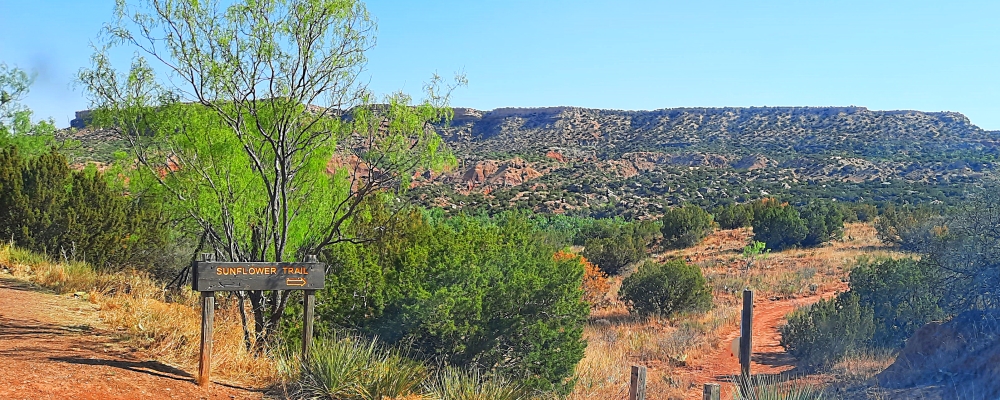
The four groups of veterans, two groups of African Americans, and one junior group, took part in various construction projects, starting with the construction of Park Road 5, a two-lane road from the rim to the floor of the canyon. Other projects included the headquarters building, culverts, low-water crossings, bridges, a spring house, a well house, the Coronado Lodge interpretive center, four overnight cabins known as Cow Camp, hiking and bridle trails and the three rim cabins. In addition, picnic and camping areas were built, complete with tables, seats, fireplaces and garbage receptacles. Many of the structures constructed by the CCC are still in use today/
When the CCC left the park in December 1937, the project at Palo Duro Canyon was one of the very few projects in the nation to include worker from each of the three special groups: Veterans; African Americans; and Juveniles.
In 1976, Palo Duro Canyon State Park was designated as a National Natural Landmark by the National Park service.
|