|
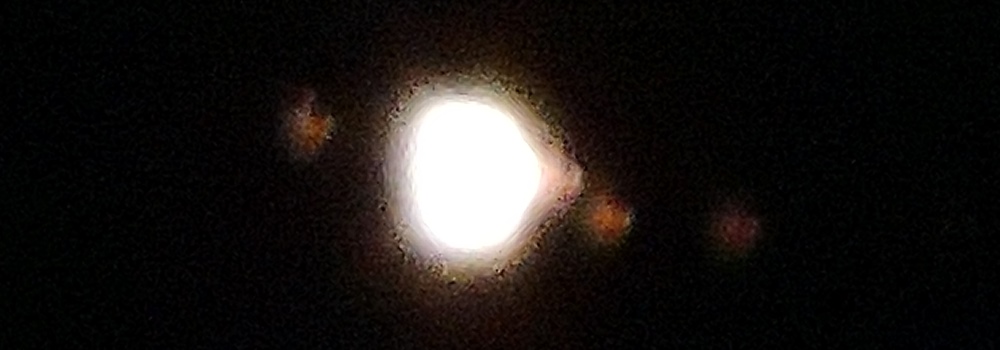
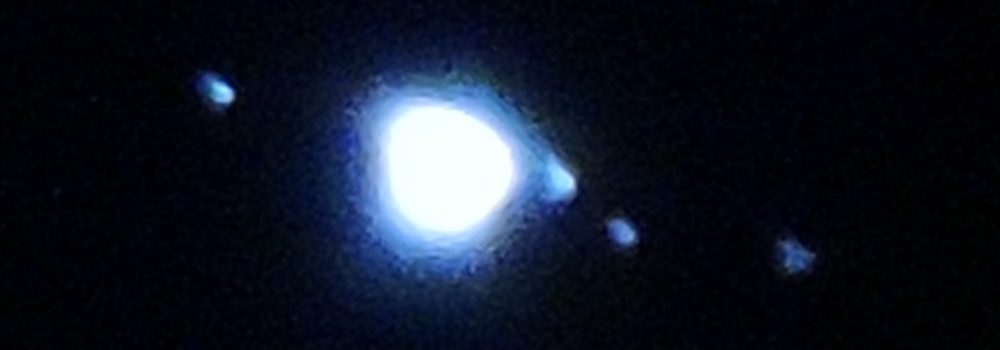
Jupiter has a long history surprising the men of the earth, and these surprises go all the way back to 1610 when Galileo Galilei found the first moons beyond Earth. That discovery changed the way we see the universe. That discovery by astronomer Galileo Galilei, using a new invention called a telescope to look at Jupiter to discover the first moons known to exist beyond Earth. His discovery ended the inaccurate belief that everything orbited the Earth.
Now, there is a spacecraft, which is called NASA′s Juno orbiter which is currently exploring this giant world.
Jupiter is the fifth planet out from the Sun, but is by far, the largest planet in the solar system, and, in fact, has more than twice as mass as all the other planets combined together.
The planet Jupiter is seen as a planet covered with stripes and swirls, these surface ornamentations are actually cold, windy clouds of ammonia and water, floating in an atmosphere of hydrogen and helium. The great red spot on the surface of Jupiter is no more that a giant storm of these gasses that has raged for hundreds of years. This red spot alone is about twice the size of than Earth.
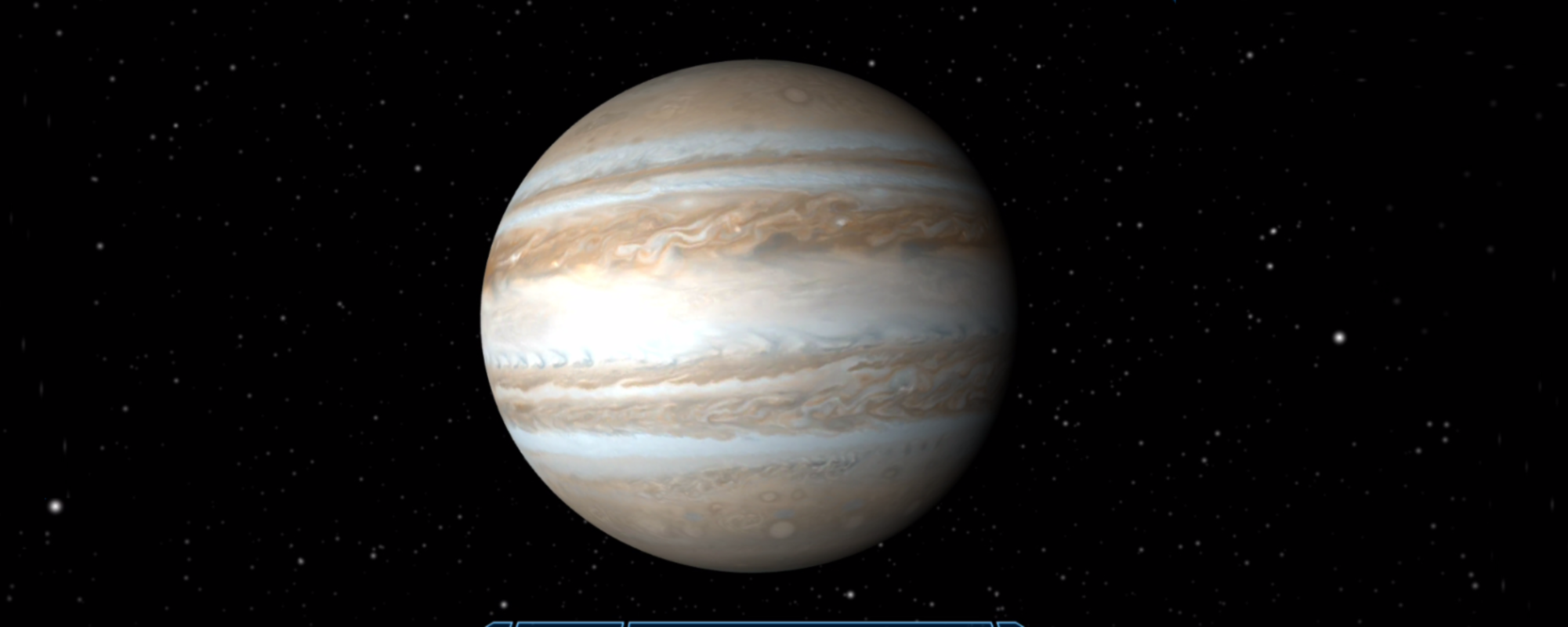
(m5pr-planet-jupiter) The Planets, Jupiter
Credit: Solar System Scope
Facts
Discovered: Known to the Ancients
Planet Type: Gas Giant
Average Distance from Sun: 485 million miles
Equatorial Diameter: 88,846 miles (142,984 km)
Axil Tilt (to orbit): 3.13°
Inclination to Ecliptic: 1.31°
Length of Day (rotation period): 9 hours 55 minutes (9.93 hours)
Length of Year (orbital period): 11.86 Earth Years or 4333 Earth days
Orbital Eccentricity: `0.048
Surface Gravity (amount times Earth gravity): 2.4
Surface Temperature: -169°Fahrenheit (-110°C)
Moons: 79 confirmed (as of 2018)
Rings: Yes, made of dust.
About Jupiter
The largest planet of the solar system, Jupiter has a diameter eleven times the diameter of the Earth and it′s mass id 317 times the mass of the Earth. The mass of Jupiter is 2.5 times greater than all of the rest of the planets combined.
The orbit of Jupiter is about 5.2 times the distance from the sun as it the 485 million miles from the Sun; Earth is about 93 million miles from the Sun.
The atmosphere of Jupiter is made up of hydrogen and helium. Jupiter is a gas giant which lacks the surface that is here on the Earth. If Jupiter did have an inner core, it is likely that it is about the size of the earth.
Aspect relation to Jupiter are called Jovian. Despite the large sise of Jupiter, it has the shortest day of all the other planets; a Jovial day is about ten hours. The time for the planet to rotate on it′s axis. A Jovian year is about twelve times the Earth year, or 4333 earth days.
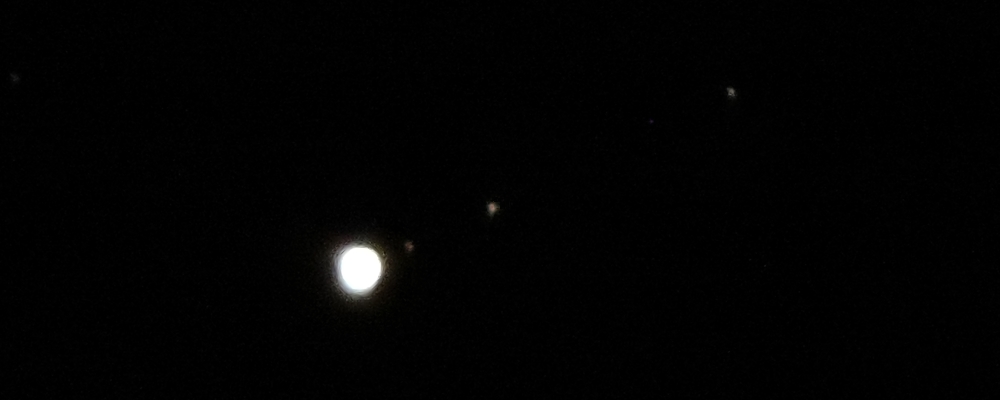
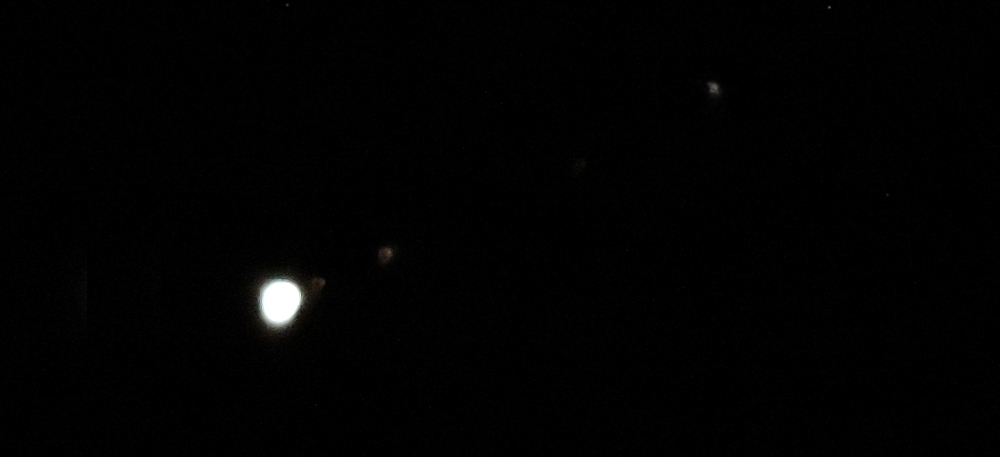
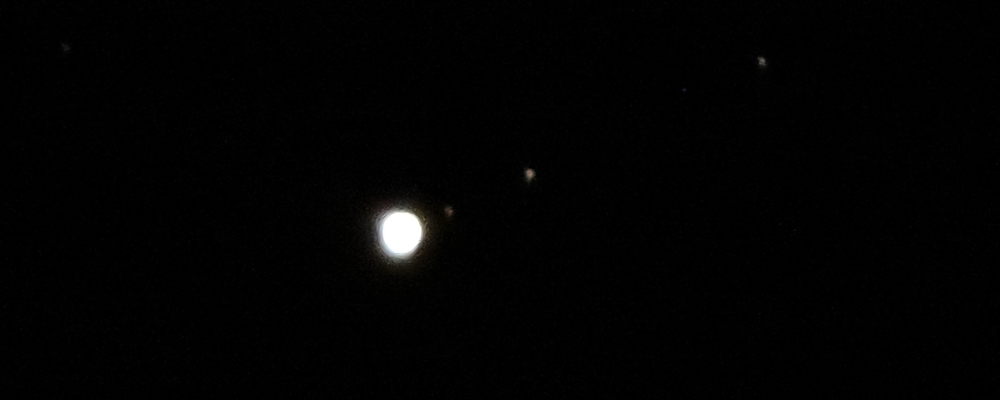
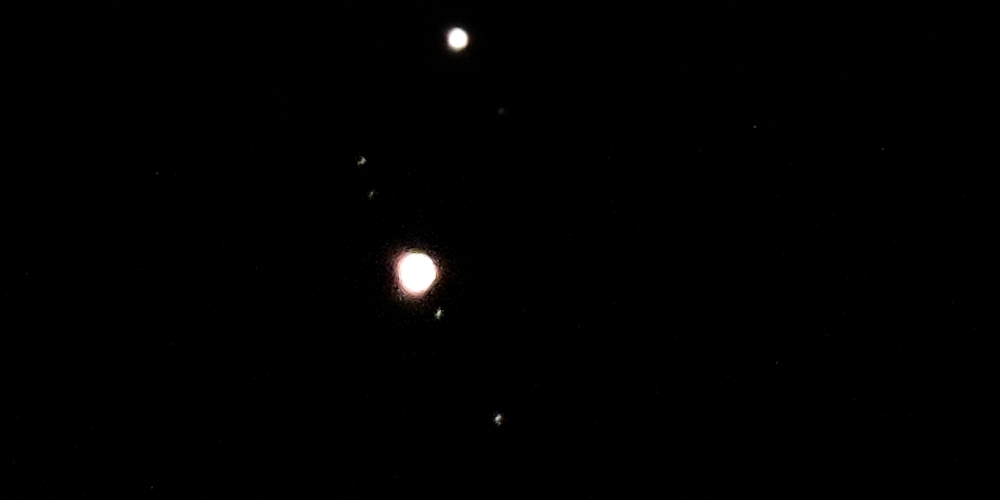
Jupiter has about 75 or more moons, the largest being the Galilein Moons: Callisto, Io, Europa, and Ganymede.
In 1962, the intense gravity of Jupiter was used to hurl spacecraft into the farthest regions of the solar system. Prior to that, the rockets we use to leave Earth were not powerful enough to hurl a spacecraft into the outer solar system and beyond. Since employing Jupiter to aid to the outward bound spacecraft, these mechanical explorers have been traveling farther and faster since.
Spacecraft
Nine spacecraft have visited the planet Jupiter, seven of which have flew by and two that have orbited the gas giant, the latest being the Juno spacecraft now in orbit.
Pioneer 10 was the first fly by spacecraft. It was followed by Pioneer 11, Voyager 1, and Voyager 2 all of which were flybys.
One of Voyager spacecraft discovered the faint ring system of Jupiter. In fact, all four giant planets in our solar system, Jupiter, Saturn, Uranus and Neptune have ring systems. The rings of Jupiter are very faint and made of dust, not ice.
Galileo spacecraft was the first spacecraft to orbit Jupiter and to send an atmospheric probe into the surface clouds.
The international Ulysses mission used the gravity of Jupiter to hurl itself into orbital passes of the northern and southern poles of the Sun.
After studying Jupiter, the Cassini spacecraft also used the gravity of Jupiter to hurl itself to Saturn to this planet.
The spacecraft New Horizons was next to study Jupiter and then hurl itself further out to study Pluto and the Kuiper Belt.
Two additional missions are being planned to study the moons of Jupiter, the spacecraft Europa Clipper and the spacecraft JUICE (Jupiter Icy Moons Explorer)
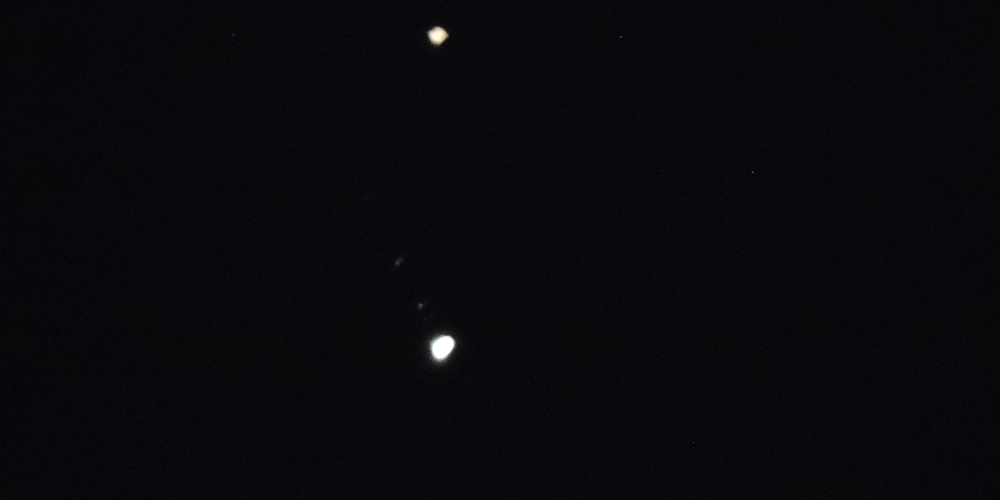
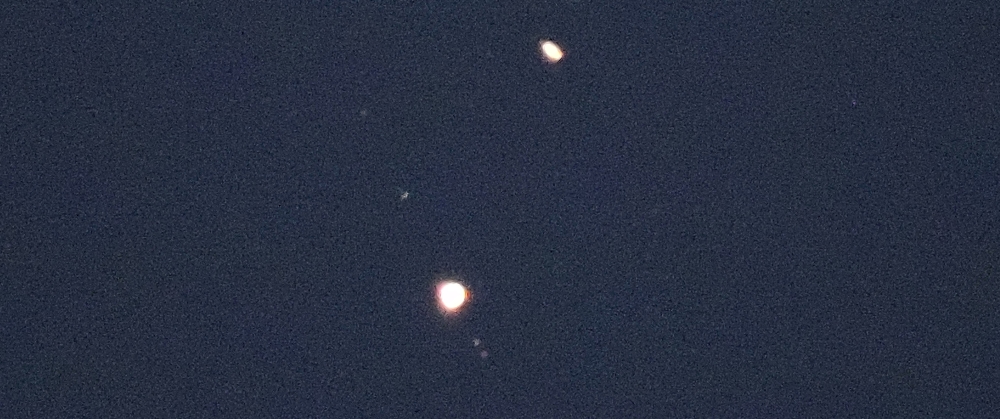
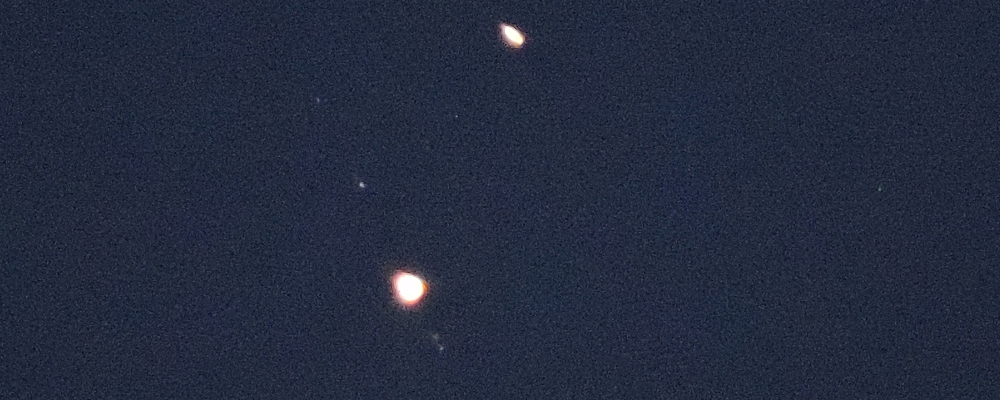
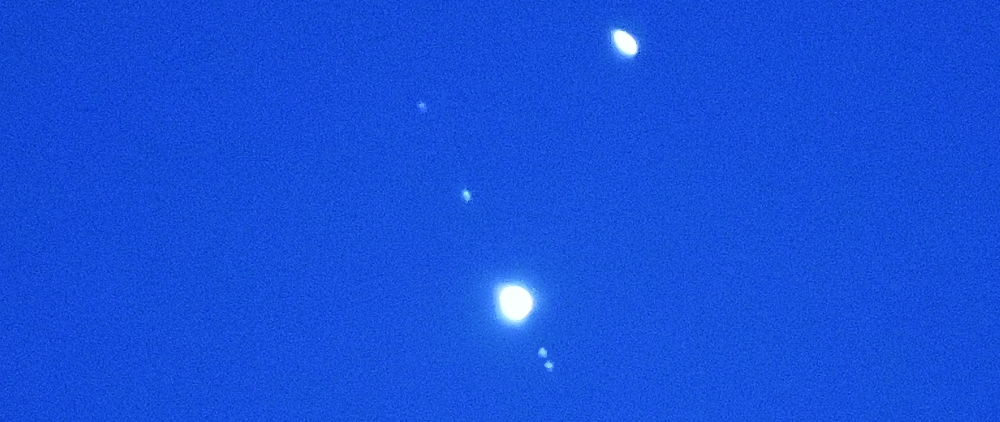
Jupiter controls the largest number of moons of any planet with the 2020 current total being at 79 moons. The four largest are the Galilean moons know as :
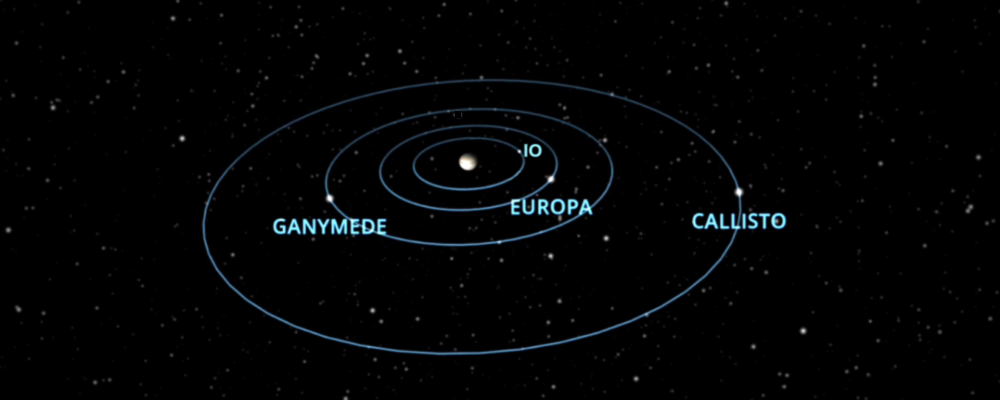
(m5pr-planet-jupiter.moons) Galilean Moons of Jupiter
Photo Credit: Solar System scope
|