|

|
|
|

|

|
|
|
The Order
Poales


|
|
|
Poales
The Order Poales is a large order of flowering plants in the class monocotyledons, and includes families of plants such as the grasses, bromeliads, rushes and sedges. There are 14 families contained in this order as well as 1,017 genera and some 23,700 species.
The flowers are typically small, enclosed by bracts, and arranged in inflorescences (except in three species of the genus Mayaca, which possess very reduced, one-flowered inflorescences). The flowers of many species are wind pollinated and their seeds usually contain starch.
Seven of the previous sixteen families are considered to be families of the grass group, which include: Ecdeiocoleaceae, Flagellariaceae, Joinvilleaceae, Poaceae, and Restionaceae (which is merged with the two former families Anarthriaceae, Centrolepidaceae). Generally, the plants within this grass group have simplified flowers with a one to three chambered ovary containing only one pendulous ovule per chamber. Too, there is one to three male pollen-producing structures in all of the above families except, Flagellarieaceae which species have six male pollen-producing structures.
|
| |
|
The Poales
Taxonomy
|
|
|
Taxonomy:
Kingdom:
Plantea
Phylum:
Angiosperm
Class:
Monocotyledon
Order:
Poales
Family:
Bromeliaceae (Bromeliads)
8 subfamilies, 80 genera, 3700 species
Family:
Cyperaceae (sedges)
90 genera, 5500 species
Family:
Ecdeiocoleaceae (grases)
2 genera, 3 species
Family:
Eriocaulaceae (pipewort)
17 genera, 1207 species
Family:
Flagellariaceae (grases)
1 genus, 5 species
Family:
Joinvilleaceae (grases)
1 genus, 4 species
Family:
Juncaceae (rushes)
7 genera, 464 species
Family:
Mayacaceae
1 genus, 5 species
Family:
Poaceae (grasses, bamboo, reeds)
12 subfamilies, 780 genera, 12,000 species
Family:
Rapateaceae
16 genera, 94 species
Family:
Restionaceae (grases)
Includes former families: Anarthriaceae and Centrolepidaceae
51 genera, 572 species
Family:
Thurniaceae
2 genera, 4 species
Family:
Typhaceae (cattails)
2 genera, 51 species
Family:
Xyridaceae (yellow-eyed grasses)
5 genera, 400 species
|
|
The Poales
Gallery
|
|
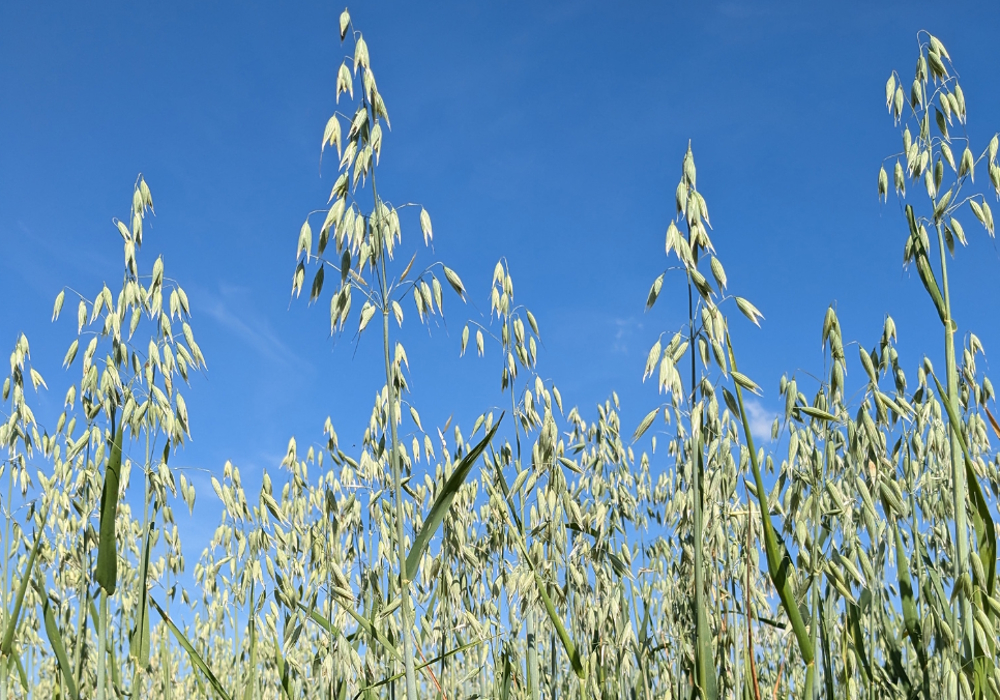
Family:
Poaceae
Genus:
Avena
Species:
A.sativa
Common Name:
Oats
Conservation Status:
LC
Anti-nutrients
All grains and legumes contain components called prostaglandins, also known as anti-nutrients, most of which promote inflammation. When these components are consumed on a regular basis, the result of eating such food will be chronic inflammation, which thereafter will contribute to a wide variety of diseases.
"Why does this happen?" and "Is there anything that can be done to prevent and/or stop the health problems cause by these
prostaglandins?"
Find answers to these questions by clicking on the above link.
Description:
The oat is a tall stout grass, a member of the family Poaceae; it can grow to a height of 6 feet (1.8 metres) tall. The leaves are long, narrow, and pointed, and grow upwards; they can be some 6 to 16 inches (15 to 40 centimetres) in length, and around 0.2 to 0.6 inches (5 to 15 millimetres) in width. Leaf blades emerge first from nodes in the stalk, then the sheath. New leaves grow upwards on nodes further from the ground, leaves on the old nodes gradually brown and wilt.
At the top of the stem, the plant branches into a loose cluster or panicle of spikelets. These contain the wind-pollinated flowers, which mature into the oat seeds or grains. The grain, like other cereal grains, contains the outer husk (or bran), the starchy food store (or endosperm) which occupies most of the seed and the protein-rich germ which if planted in soil is likely to grow into a new plant. All oats have edible seeds, though they are small and hard to harvest in most species.
The oat (genus Avena and species sativa) is sometimes called the common oat, a species of cereal grass which is grown for fodder and for its seed, known by the same name but in the plural (oats) or sometimes when in the whole grain form is called groats. Oats, which include some species that have been cultivated for thousands of years as a food source for humans and livestock, appear to have been domesticated as a secondary crop, as their seeds resembled those of other cereals closely enough for them to be included as crops by early cultivators. Collectively known as the oats, as well as wild oats or the common oat (Avena.sativa) A.sativa is the Type Species for this genus.
Habitat:
Range:
Avena is a genus of Eurasian and African plants in the grass family, and the species Avena sativa, also know as the wild oat, are widespread throughout Europe, Asia and northwest Africa. Several species have become naturalized in many parts of the world, and are regarded as invasive weeds where they compete with domestic oat crop production.
|
| |
| |
|
To Go Back to Class Index, click on the down arrow.
|
|
|
Thank you for visiting
The Wayƒarers Journal.
| |
See Ya above the Treeline!
| |
This Page Last Updated: 31 October 2026
|
|
|
|
To continue to the next Episode Level page,
Click here

|
|
| |



