|
Genus Japonolirion
Japonolirion is a genus of plants in the family Petrosaviaceae. There is only one known species in this genus, Japonolirion osense, which species is endemic to Japan.
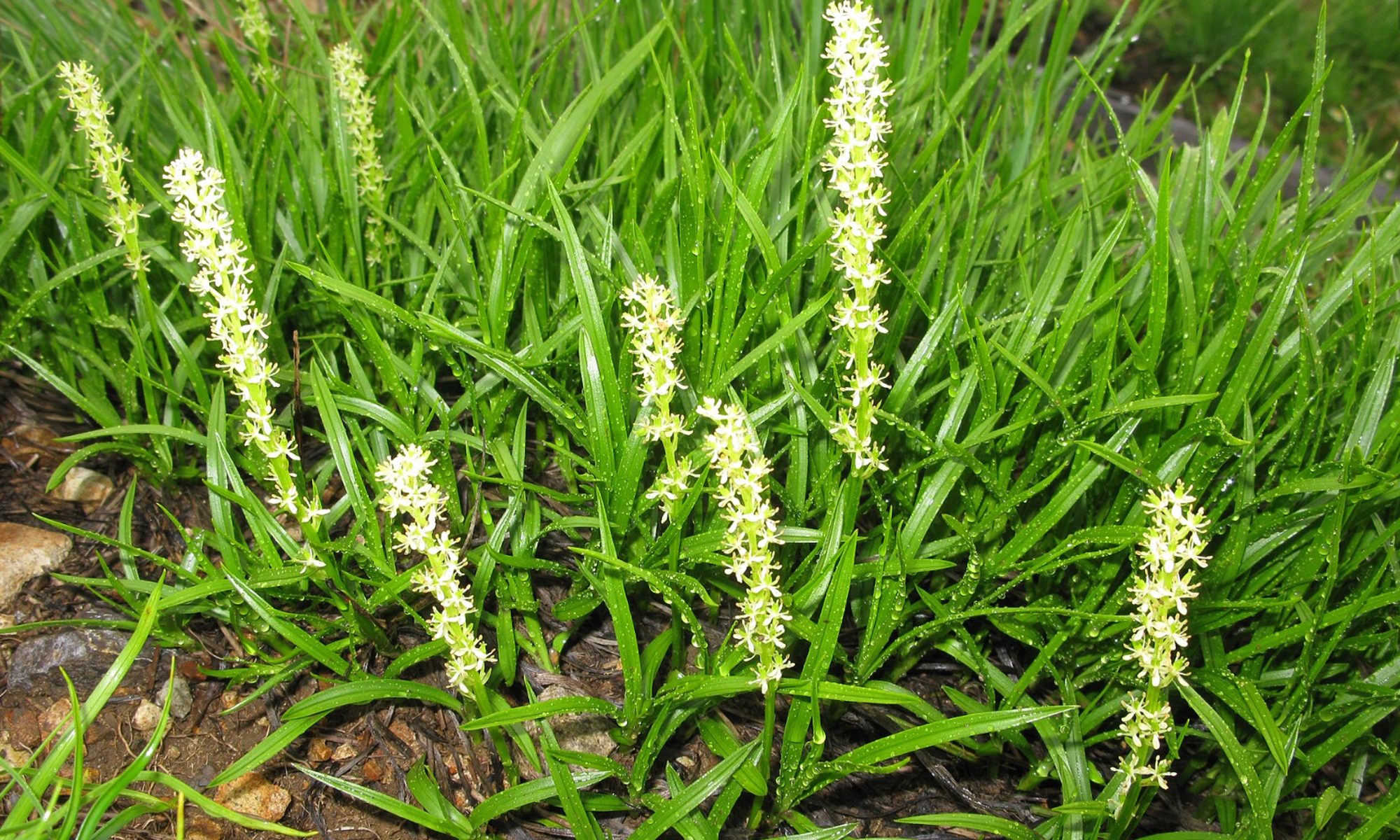
(m3pl-ang-mono-petro-ZZZ-image) Order Petrosaviales, Family FFF
Photo Credit:
Qwert1234
Order:
Petrosaviales
Family:
Petrosaviaceae
Genus:
Japonolirion
Species:
J. osense
Common Name:
Ozesou
Japanese false Lily of the Valley
Conservation Status:
LC
Description:
Japonolirion osense is a herbaceous, perennial plant with subterranean creeping rootstocks. Its green, linear leaves are set in a rosette, and are from 1.2 to 8.0 inches (3–20 centimeters) long and from .04 to 0.16 inches (1–4 millimeters) wide, with 7-9 veins, and rough margins. The leaf base encloses the younger leaves. The flowers are facing upwards and are set with 20–40 in a raceme of 1.2 to 3.1 inches (3–8 centimeters) long, on an inflorescence stalk of about 4 to 8 inches (10–20 centimeters) long that carries membranous bracts.
The flower stalks emerge from shoots that carried leaves during the previous year, so it stands separately from the current leaf rosette. Each flower consists of 6 cream-coloured tepals, the outer 3 about .06 inches (1.5 millimeters) long and the inner about .1 inch) (2.5 millimeters) long. There are 6 stamens of about .06 inches (1.5 mm) long, each carrying a yellow anther. The ovary matures into three free green carpels that later develop into oval capsules of about .1 inch (2.5 millimeters) in length.
Flowering occurs in July and August.
Habitat:
The Japonolirion osense is found in grasslands, wetlands and alpine meadows.
Range:
The Japonolirion osense is endemic to Japan.
|