|
(Day 873 TN) 50°F. 7:00 am, sunny and clear
Journey On, Day 24
Collier Memorial State Park, campsite # A-32
Coordinates: 42.6416468, -121.8744372
Elevation: 4202 feet
Awake just before my alarm this morning, step out of the jammer and walk to the shower house for some hot water, my first one here. I find it steamy hot and just perfect for what I need this morning. I then return to the jammer, get out my stove and begin boiling water for my two hot drinks, one coffee, one tea. Finally, I wash the cookpot, stow it back in its place, put the stove away and then climb inside the jammer to eat my morning meal.
Then, with my cup of hot coffee in hand, I slowly drive out of space A-32, then to the trash receptacle to dump my garbage, and then continue back out the state park to the highway.
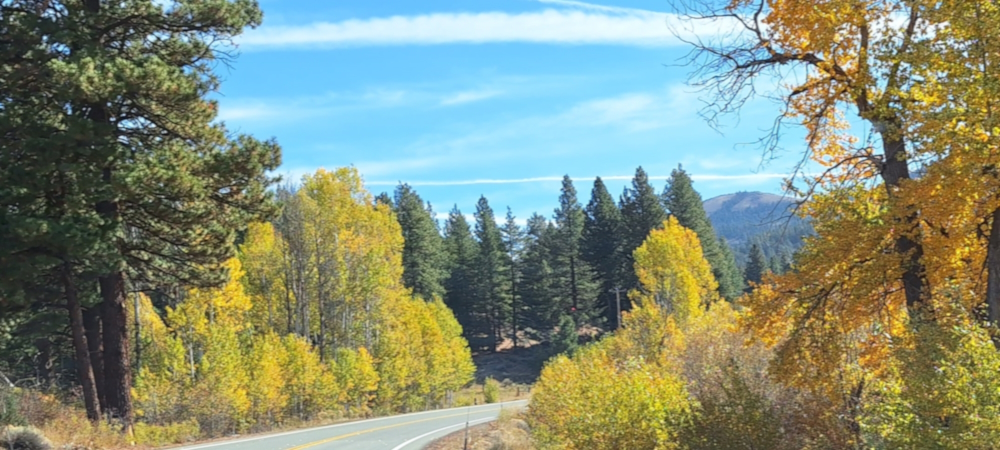
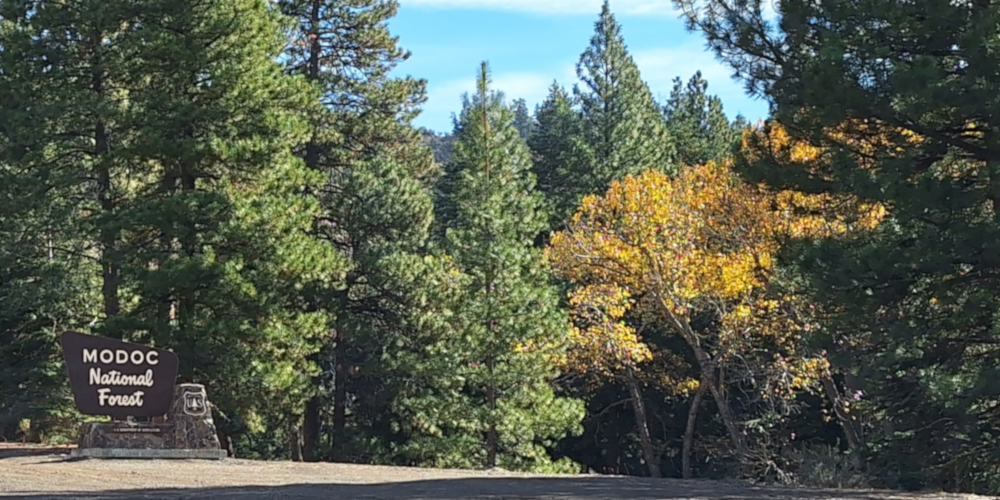
After looking both direction and seeing that it is still too early for any other traffic, I put out of the state park, turn south on US 97 and begin my drive to Klamath Falls, Oregon. Along the route of US 97, I stop several times to take photos of the scenery, including Upper Klamath Lake which is quite large, the national forest and the surrounding mountains. One mountain that rises above the rest is Mount McLoughlin at elevation 9394 feet.
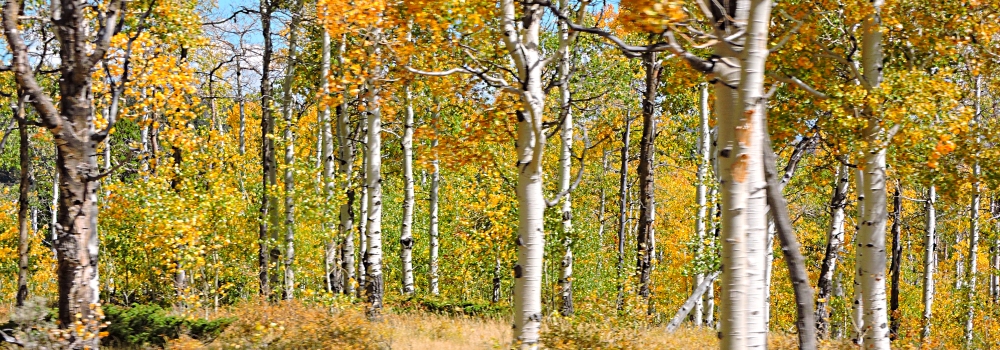
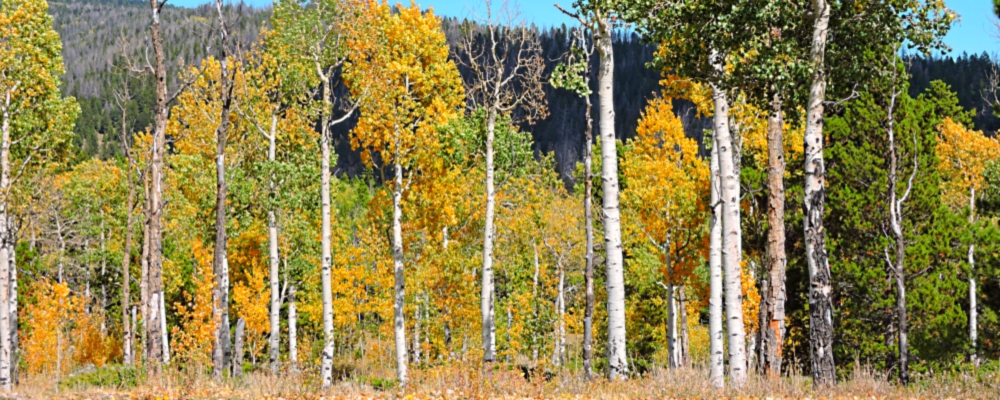
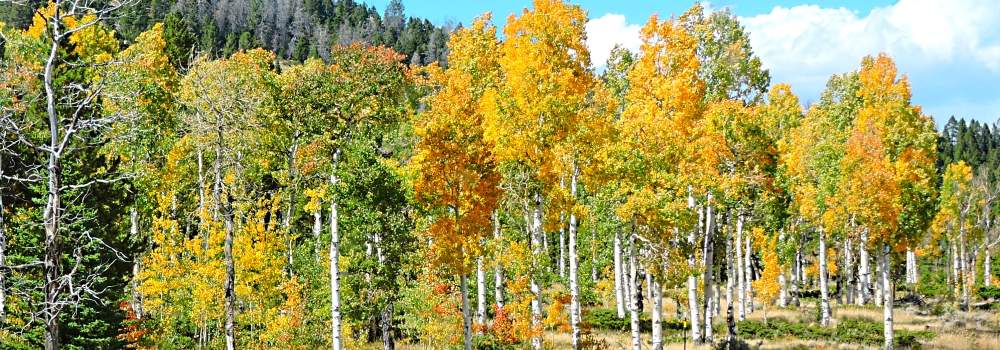
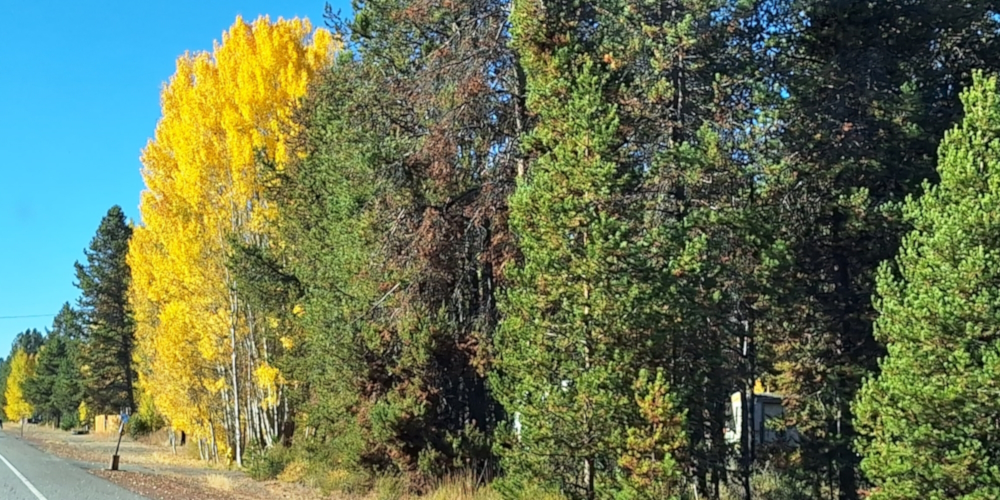
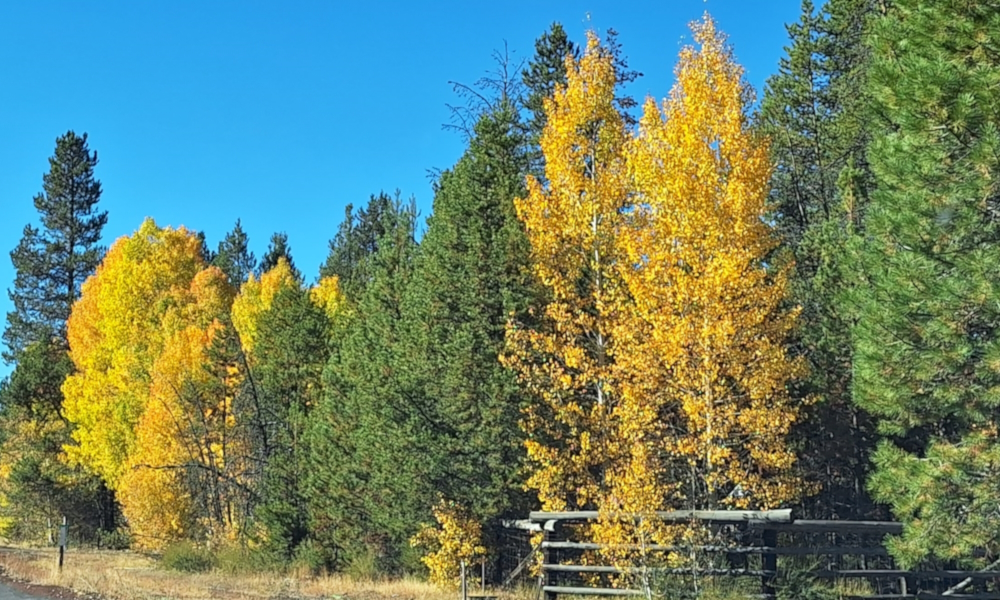
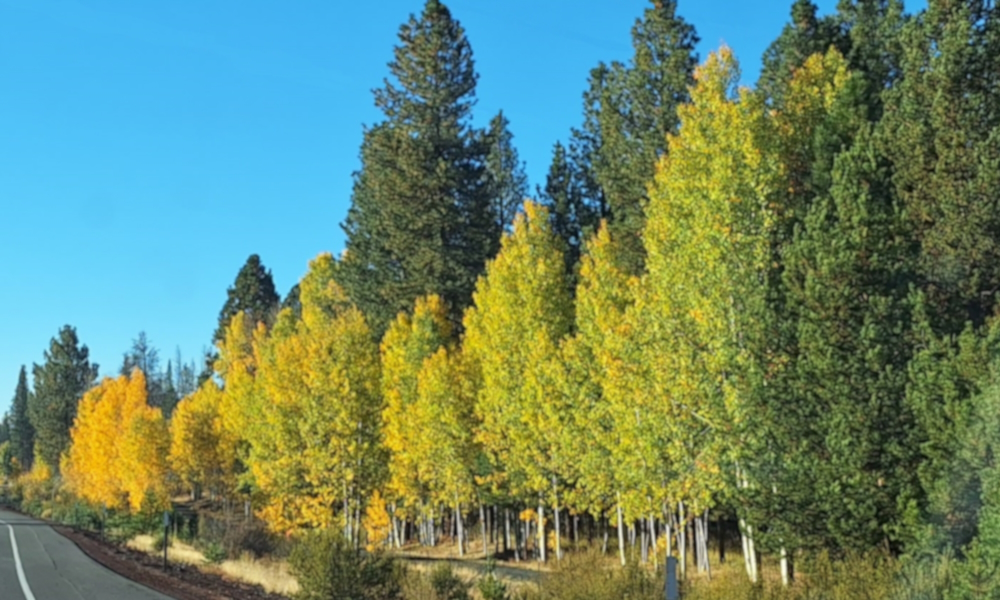
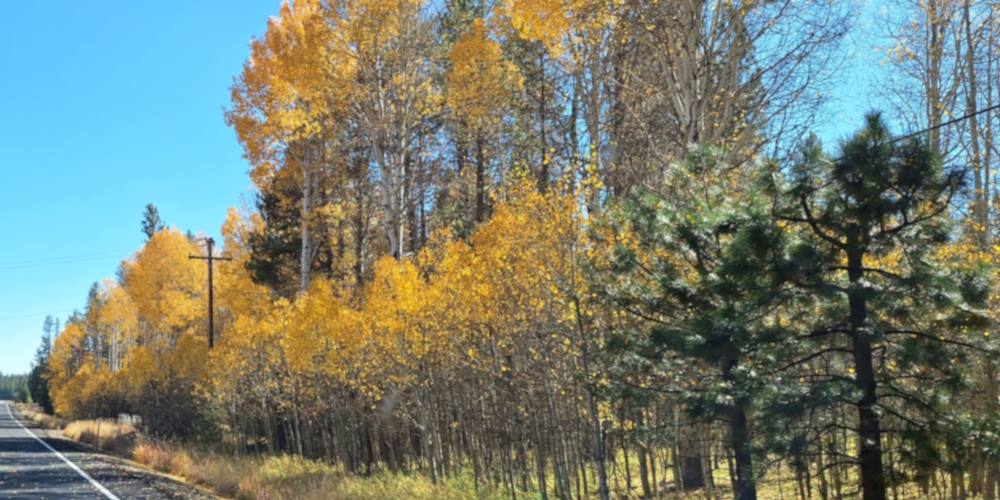
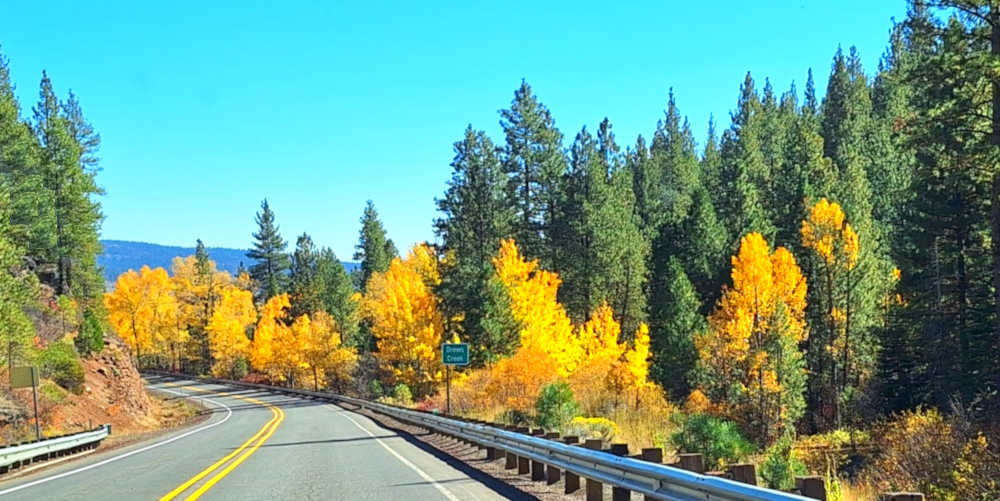
Another item of special interest along my path today are the many stands of American Aspen (Populus tremuloides) along the side of the highway that are currently in full autumn foliage.
In western the areas of Oregon, the presence of Aspen is somewhat scarce, however, this beautiful, unique tree species can be found growing in the upper Oregon Cascades and eastward onto the high desert plateau. This species can there be seen along mountain streams, in openings in the woods, and near the edges of mountain lakes, meadows and streams.
As I continue on my southbound annual migration I am to see more and more of these trees alongside the highway.
Genus:
Populus
Section:
Populus
Species:
P. tremuloides
Common Name:
American Aspen,
Conservation Status:
LC
Subspecies:
None
Description
The American Aspen, (Populus tremuloides) also called the quaking aspen, trembling aspen, golden aspen and other names is is a deciduous tree native to cooler areas of North America, one of several species referred to by the common name aspen.
This species have tall trunks, up to about 82 feet tall (25 meters), with smooth pale to white bark which is scarred with black marks. The glossy green leaves, dull beneath, become golden to yellow, rarely red, in autumn.
The Aspen often propagates through its roots to form large clonal groves originating from a shared root system. These roots are not rhizomes or modified plant stems, but instead develops new growth from adventitious buds on the original parent root system (the ortet), from which a clone derives.
Habitat:
The American Aspen grow well in wetlands, riparian areas, forests, meadows, and disturbed areas. However, it is found to grow most abundantly on warm south and southwest aspects in Alaska and western Canada. It is common on all aspects in the western mountains of the United States and grows well wherever soil moisture is not limiting.
The American Aspen grows more slowly in the dry conditions of western North America than it does in the more humid east and also lives longer—ages of 80–100 years are typical, with some individuals living 200 years; the root system can live much longer. In the east, stands decay faster, sometimes in 60 years or less depending on the region.
Range:
Populus tremuloides is the most widely distributed tree species in North America, being found from Canada, through the US and down into central Mexico.
This tree grows from Alaska to California (including British Columbia) and east to the Atlantic coast. This tree grows on both sides of the Cascade crest and at the coast in Washington.
Canada
American aspen occurs in all provinces and territories of Canada with the exception of regions north of James Bay islands in the territory of Nunavut.
It is called the defining species of the aspen parkland biome in the Prairie Provinces of Canada and extreme northwest Minnesota.
United States
American aspen are found in the northern foothills of the Brooks Range in Alaska. It occurs in low elevations as far south as northern Nebraska and central Indiana. In the western parts of the US, this tree, due to the hot summers, rarely survives at elevation lower than 1500 feet, but is generally found at elevations between 5000 and 12000 feet.
Mexico
American aspen are found at high altitudes as far south as Guanauato, Mexico
Uses:
Indigenous people of North America used the bark to extract a substance similar to quinine for use in the treatment of malaria due to the parasite Plasmodium falciparum.
As for use as a fuel wood, aspen are not the first choice due to their drying slowly, rotting quickly and not providing much heat. However, aspen wood is widely used in campgrounds due to the fact the wood is cheap and plentiful.
Aspen wood is often used for pulp products, such as the production of paper for books, newsprint and printing paper. Also, due to its light weight, it is used for boxes, crates, plywood, waferboard and wall panels.
|