The Wayƒarers Journal ©

The Journal

The Wayƒarers

The Selƒ

The Journey

The Burden

The Mountain

   The Ancients
   The Earth
   The Life

     The Animals

       Annelida
       Arthropoda
       Chordata

         Amphibians
         Birds
         Fish
         Mammals

           Aardvarks
           Armadillos
           Bats
           Carnivores
           Elephants
           Hedgehogs
           Hyraxes
           Manatees
           Marsupials
           Platypus
           Primates
           Rabbits
           Rodents
           Sloths
           Ungulate-Even

             Pronghorns
             Bovids
             Camelids
             Cervids

               Moose
               Elk
               Deer

             Giraffe, Okapi
             Hippos
             Musk Deer
             Hogs, Pigs
             Peccary
             Mouse Deer

           Ungulate-Odd
           Whales

         Reptiles

       Cnidaria
       Echinodermata
       Mollusca
       Nematoda
       Platyhelminthes
       Porifera

     The Archaea
     The Bacteria
     The Chromista
     The Fungi
     The Plants
     The Protozoa

   The Modern Man
   The Nonpareils
   The Steps
   The Way

The Appendix

The Wayƒarer
The Mountain
Go to bottom of this page
THE CERVIDS
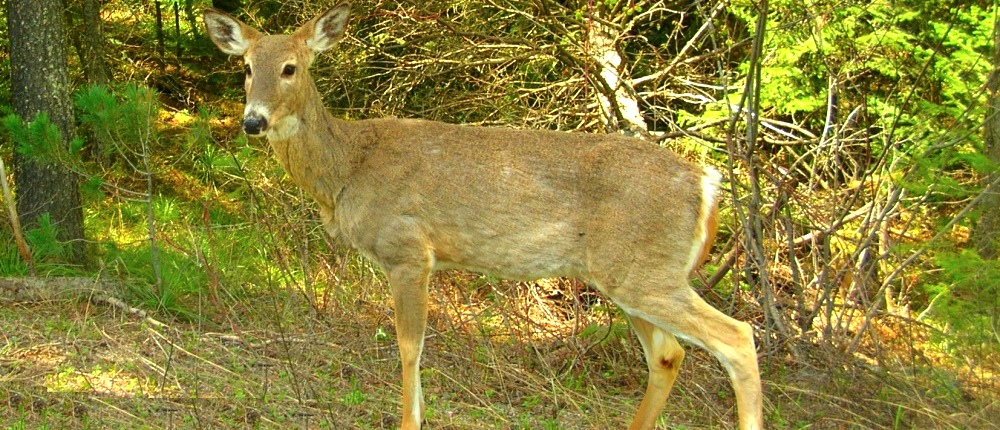
The White-tailed Deer

The Genus Odocoileus Go Down Go Back
Taxonomy:
Kingdom: Animalia
Phylum: Cordata
Class: Mamalia
Order: Atiodactyal
Family: Cervidae
Sub-family: Capreolinae
Genus: Odocoileus
Odocoileus is a genus of medium-sized deer of the family Cervidae, containing two species native to the Americas. The name is sometimes spelled odocoeleus and the word is from a contraction of the odonto- and coelus meaning hollow-tooth.
Species: O. virginianus
Common Name: White-tailed Deer
Range: North America, Central America and Northern South America
Adult Height at Shoulder: 1.7 to 3.9 feet
Adult Mass in Summer: Male: 150 lbs, Female: 100 lbs
Description:
White-tailed deer have an all white tail and ears that are much smaller than
their black-tailed cousins. Also, their antlers are truly unique because not two
deer have look a like antlers, which branch from a single main beam. Antlers
begin growing in March or April and reach maturity in August. While antlers
are growing, they′re covered in a living vascular skin called velvet, which
supplies the bone with oxygen and nutrients. After the antlers reach maturity,
the velvet is shed and the bone dies which then becomes the mature antler.
Habitat:
These deer are a highly adaptable species which thrive in a large variety of
habitats. Some areas that provide the most suitable environment include a
mixture of hardwoods, croplands, brushlands, pasturelands and a habitat
interspersed with brushy areas, croplands, meadows, and forested woodlots.
Subspecies
Florida Key deer (Odocoilues virginianus clavium)
Virginia white-tail (Odocoilues virginianus virginianus)
Seneca White Deer (Odocoilues virginianus leucism)
A small herd (about 300) of white, white-tailed deer in Seneca, New York.
Now living in a commercial Nature Park opened in 2017. These deer are
not albino, but instead have leucism, which is an abnormal genetic
condition that carries a set of recessive genes for all-white coats.
There are numerous other sub-species, too numerous to list here.

The 2015 Journey, White-tail Deer Go Down Go Up
The Cervids
Deer
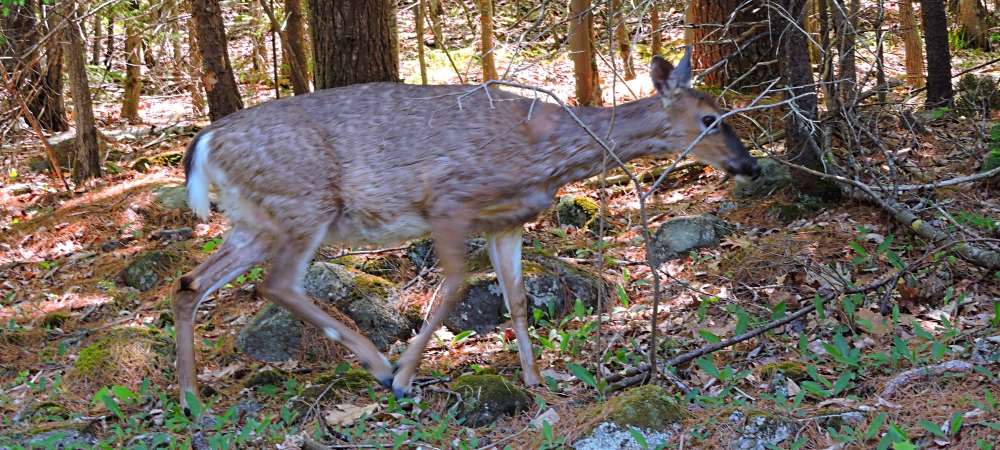
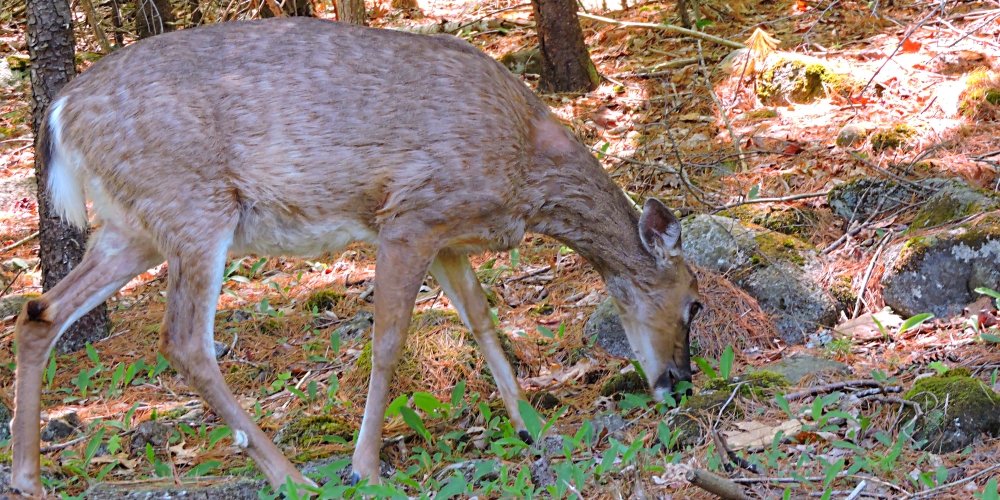
(m3an-chm-cede-2015-0528.1100) White-tailed Deer at Acadia National Park
The Cervids
Deer
(m3an-chm-cede-2015-0528.1100) White-tailed Deer at Acadia National Park

The 2009 Journey, White-tailed Deer Go Down Go Up
The Cervids
Deer
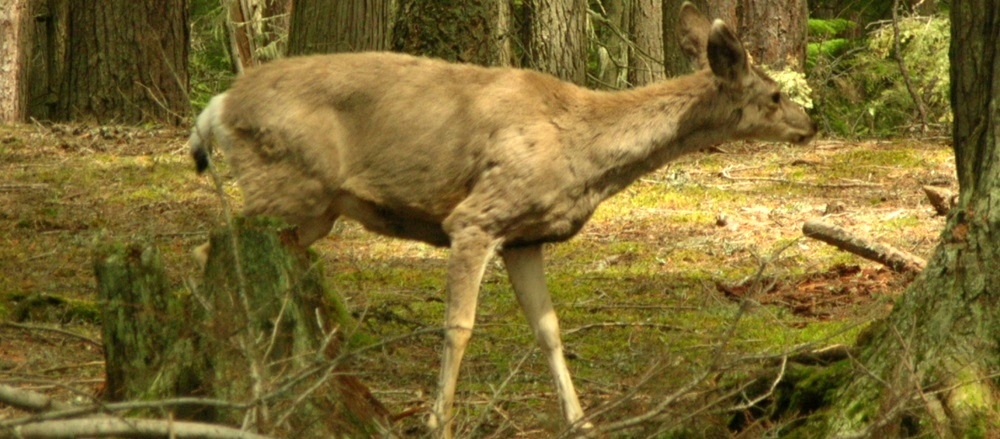
(m3an-chm-cede-2009-0516.1055) White-tailed Deer, Glacier National Park
The Cervids
Deer
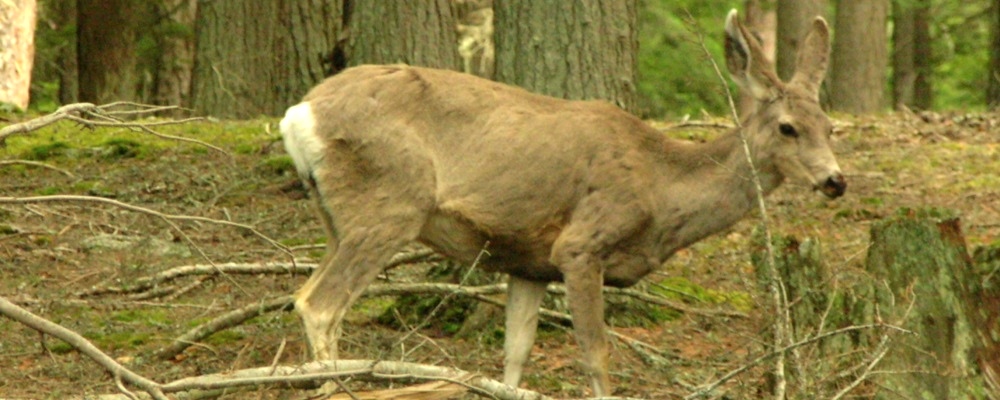
(m3an-chm-cede-2009-0516.1056) White-tailed Deer, Glacier National Park
The Cervids
Deer
(m3an-chm-cede-2009-0516.1153) White-tailed Deer, Glacier National Park

To go back to the Genus Index Page, click on down arrow. Go Back Go to previous section
on this page

Thank you for visiting The Wayƒarers Journal.

See Ya above the Treeline!

This Page Last Updated: 28 February 2026


To continue to the next Episode Level page, Click here go to top
 
The Wayƒarers Journal © ::: Come Join the Journey ™
by Thom Buras
Come Join the Journey ™