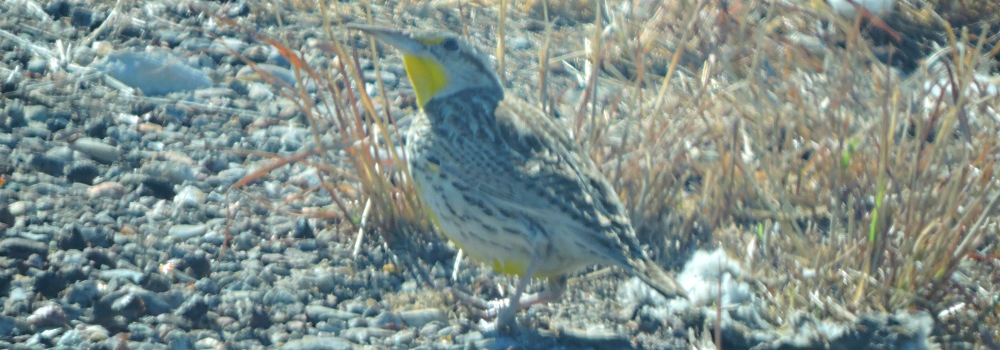
|
Order: Passerifomes, Family: Icteridae,
Genus: Sturnella, The Meadowlark
The meadowlark is actually two or perhaps three species, and the species are best separated and identified by their song and range, not by their appearance.
Species: Neglecta, L 9 1/2 inches
Range
The western side of the continent, year round are often found in the southwest, with the summer and nesting area increasing northward as far as southern Canada and the into the Great Lakes area of the US. Winter range is in south Texas, Louisiana, Mississippi, eastern Alabama and south Arkansas. During Spring and Fall, migrating birds can be seen as far east as southern Missouri, northing Arkansas, Ohio, Kentucky, Tennessee, eastern Alabama and extreme west Florida.
Habitat
Numerous in fields, meadow and grasslands.
Description
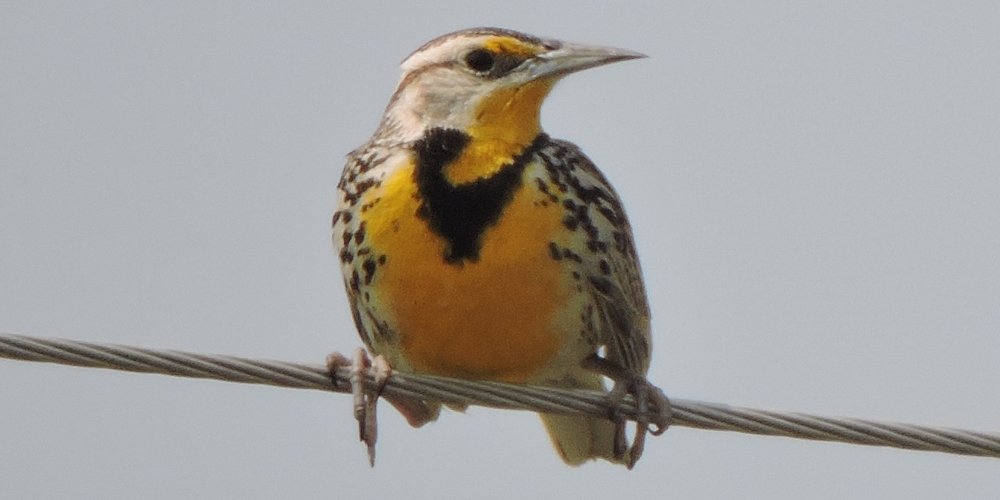
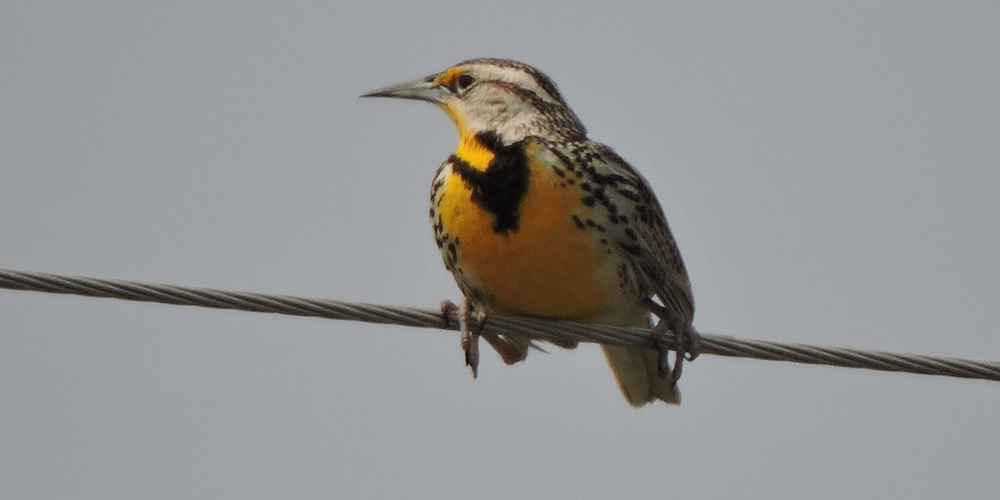
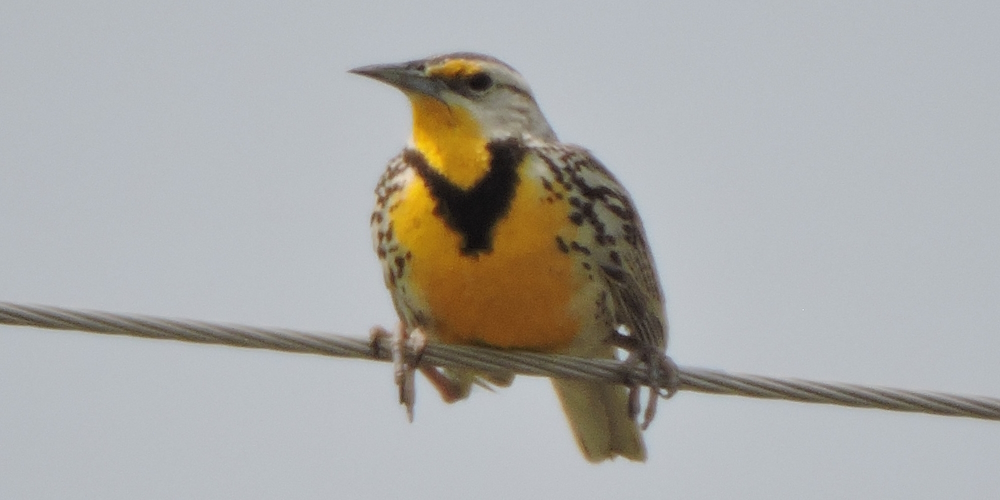
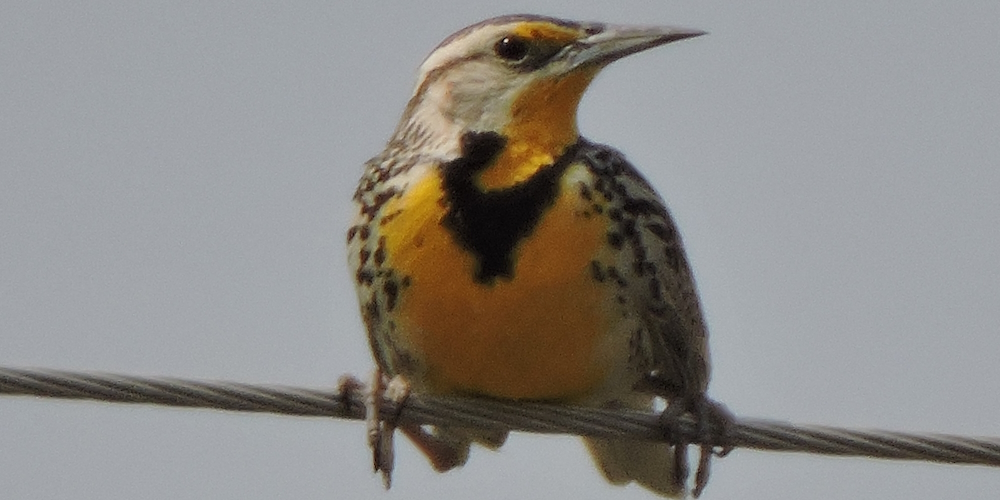
The Western Meadowlark is nearly identical to the eastern species in appearance with the exception of its tail feathers which have darker edging. The western species are browner than most all eastern species and have a darker face.
The yellow on the face extends slightly farther onto the face than the eastern but is obscured in winter plumage.
Note: field identification by plumage is nearly impossible
Song:
This meadowlark has a rich flute like song, accelerating at the end.
Call:
The call is a low, throaty chuck.
Species: Magna, L 9 1/2 inches
Range
Eastern half of continent, year round in the south, summer and nest in the northern states.
Habitat
Numerous in fields, meadows and grasslands.
Description
Brown and black dappled back and wings serve as camouflage. Signature black V on a yellow breast, duller in female. Blackish head stripes, sharply pointed bill, short tail with white outer tail feathers. White sides with black spots.
Song:
Whistled song - See-you, see-yeer
Call:
The call is a raspy, dzzrt.
Species: Magna, Subspecies: Lilanae, L 9 1/2 inches
Range
The range of this meadowlark, which crosses into both the Western and Easter meadowlark ranges in the area of west Texas, south New Mexico and primary southeast but also nearly all of Arizona.
These meadowlarks can also be found in bordering towns in Mexico.
Habitat
Found in fields, meadows and grasslands,
Description:
The brightness of this form varies greatly within its range, with the southwestern areas or its range being paler, duller than most all other birds and more white in the tail.
The Lilian′s meadowlark has a smaller black throat patch than those of other species.
Song:
When using the meadowlark flute-like song, the Lilian′s meadowlark song is higher and shorter. Instead of a short staccato at the end, the Lilian’s song ends with a lingering final note that drops off naturally.
Call:
The Lilian′s meadowlark has a series of chatters and buzzing notes that can sometime sound like an insect.
|