|
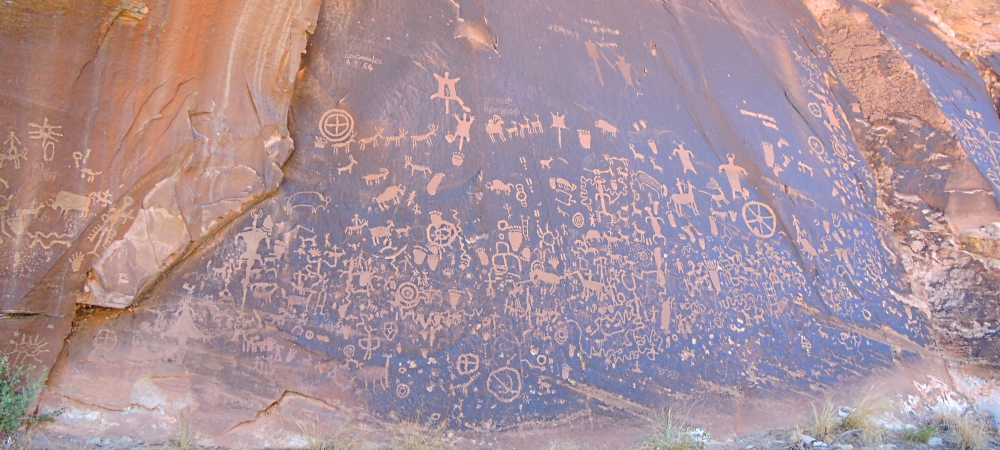
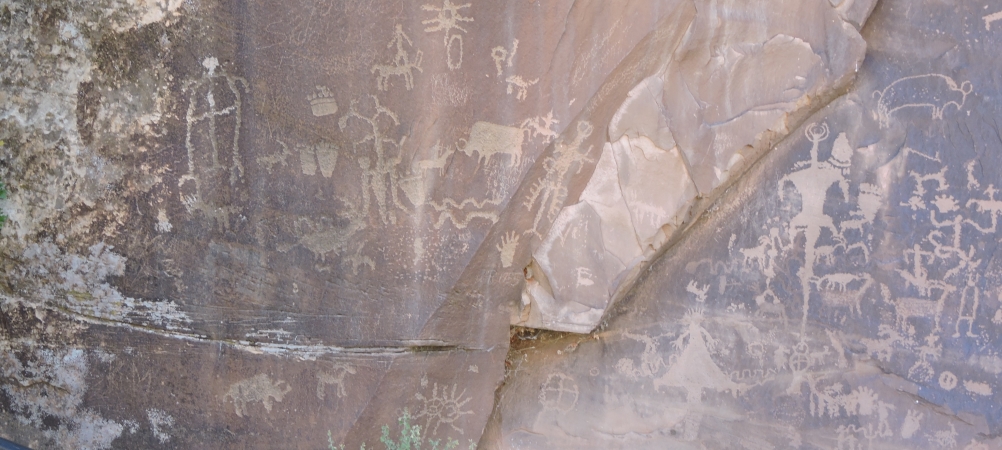
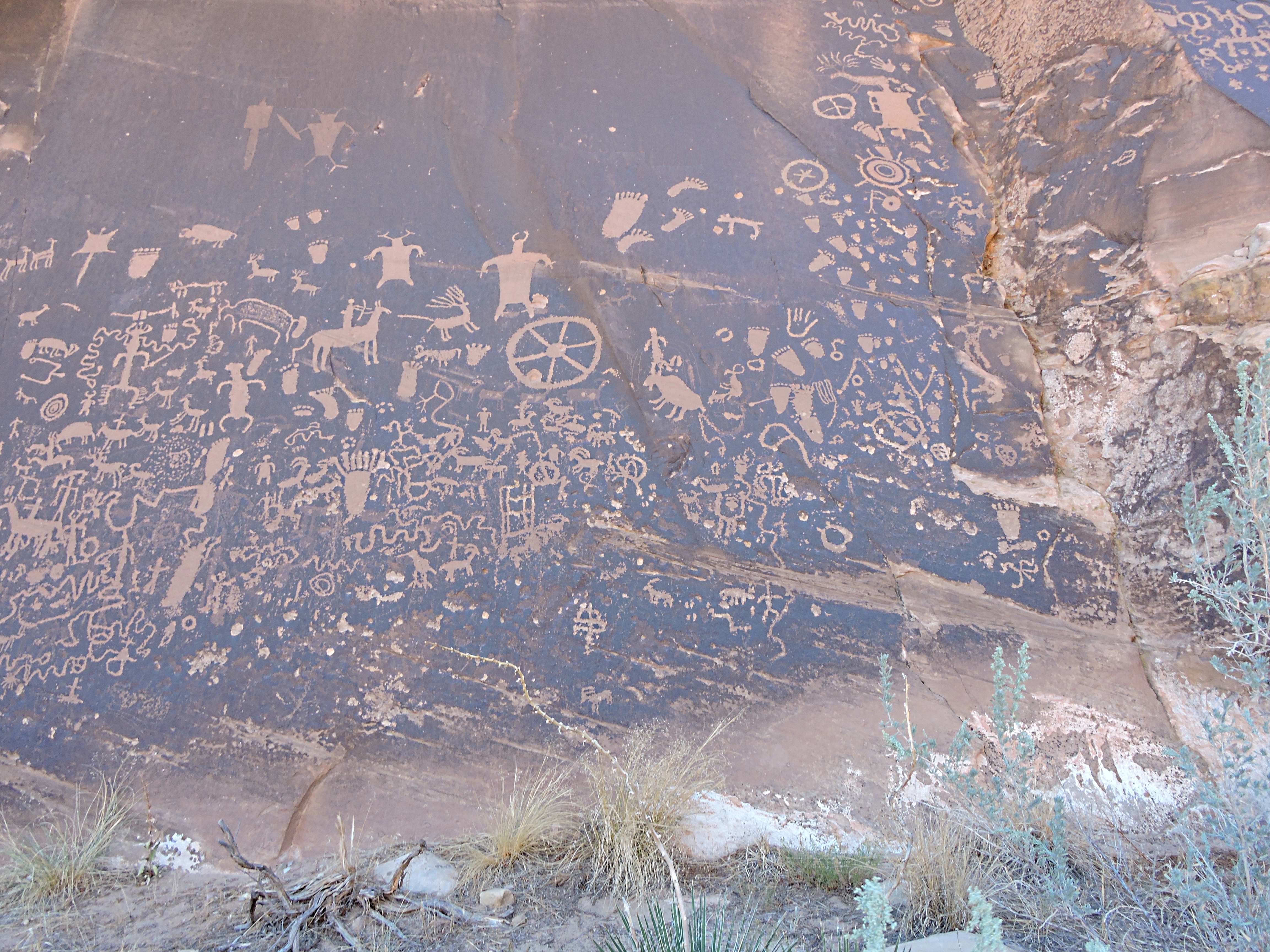
The Newspaper Rock State Historical Monument is a Utah State monument featuring a rock panel with petroglyph carved from the dark surface of desert varnish, (also considered a type of patina,) to expose the underlying lighter rock color. The Newspaper Rock has one of the largest known collections of petroglyph.
The Varnish
The petroglyph at Newspaper Rock were inscribed into the dark surface coating of the rock, which is called by most: desert varnish. The varnish is mainly made up about seventy percent of clay materials and gets its blackish color from iron and manganese oxide deposits that gradually form on exposed sandstone cliff faces. The formation of the desert varnish is also owing in part to the action of rainfall and bacteria.
The ancient artists produced the many types of figures and patterns by carefully chipping the coated rock surfaces with sharpened tools to remove the desert varnish and expose the lighter rock beneath. Older figures are themselves becoming darker in color as new varnish slowly develops.
Newspaper Rock Petroglyph Information:
Description:
The rock is about 200 square-feet in area and is a part of the vertical Wingate sandstone cliffs that enclose the upper end of Indian Creek Canyon. The rock is covered by hundreds of petroglyph and is one of the largest, best preserved and easily accessed groups in the Southwest.
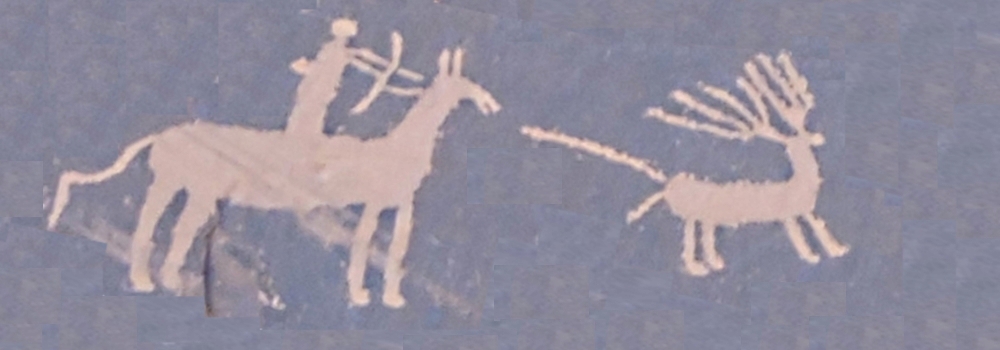
There are petroglyph of animals, men, shamen, geographic shapes and some that I thought was somewhat odd, which are the several instances of men riding what to me looks like horses.
Some of the petroglyph appear to be depicting polydactyly, which is the condition of having more than five fingers or toes on one or both hands or feet.
Location:
This ancient historical site is located on SH 211 near The
Needles District of Canyonland National Park. From the intersection of US 491 (Center Street) and US 191(Main Street) in Monticello, Utah, drive north on US 191 14.25 miles to SR 211 at Church Rock, then turn left (west) on SR 211, drive towards the national park entrance and in 12.3 miles arrive at the Newspaper Rock parking lot on the right.
The
Canyonlands National Park is located about another thirty miles further west on SR 211, this same route.
Coordinates:
37.988250, -109.518150
Elevation:
6144 feet
Geographical Region:
Basin and Range
Ecoregion:
Colorado Plateau Ecoregion
The first carving at Newspaper Rock site are estimated to have been made between 100 BCE and 100 BC by the archaic cultures who came to this area after crossing over the Beringia Land Bridge. The arrival of these indigenous people is believed to have been part of the second of three major migrations that came from the Mesopotamia.
Too, the people, who first arrived in this area to make this their homeland were most likely those of the
Anasazi Culture and/or possibly of the
Fremont Culture.
Canyonlands National Park, The Needle District
|