|
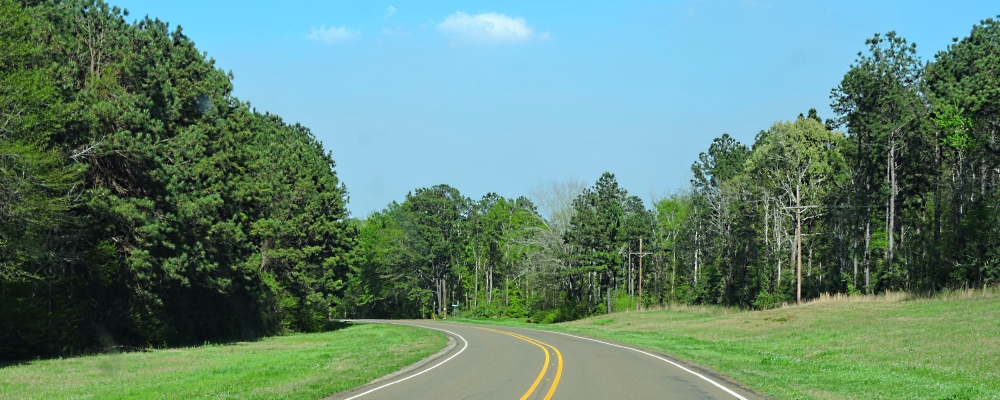
The Caddoan Mounds are found on Texas SH 21, which is on the same route taken during the Spanish Colonial period known as El Camino Real
de Los Tejas.
These mounds are in the
Coastal Plains region of the American continent and specifically in the
Pine Belt area of northeast Texas, just southwest of Alta, Texas.
Caddoan Mounds, The Western Extreme
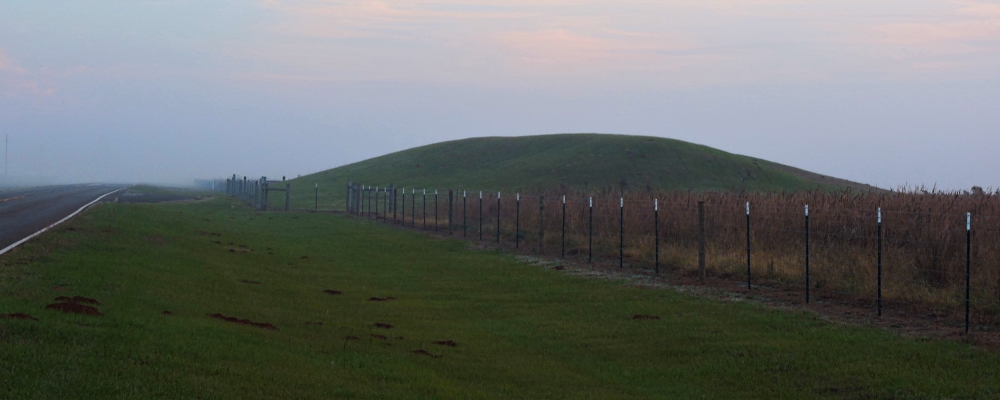
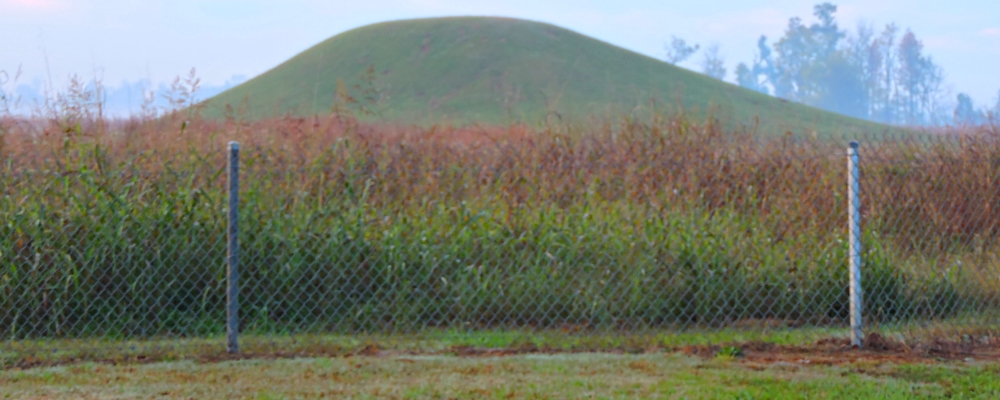
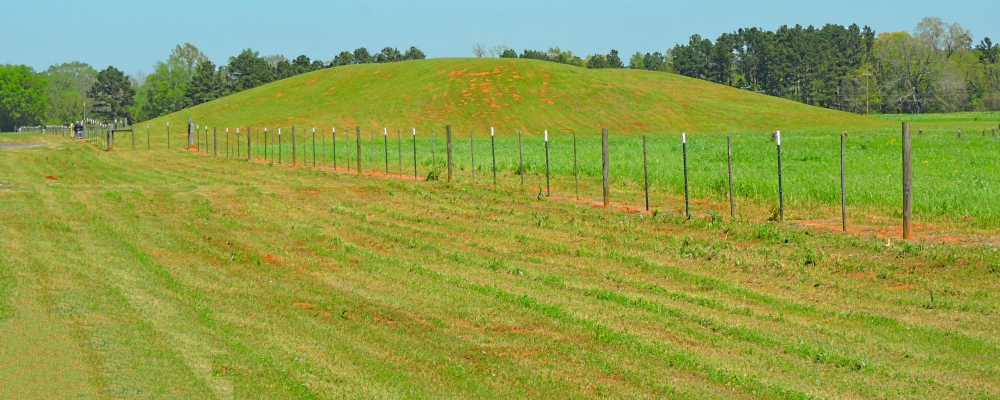
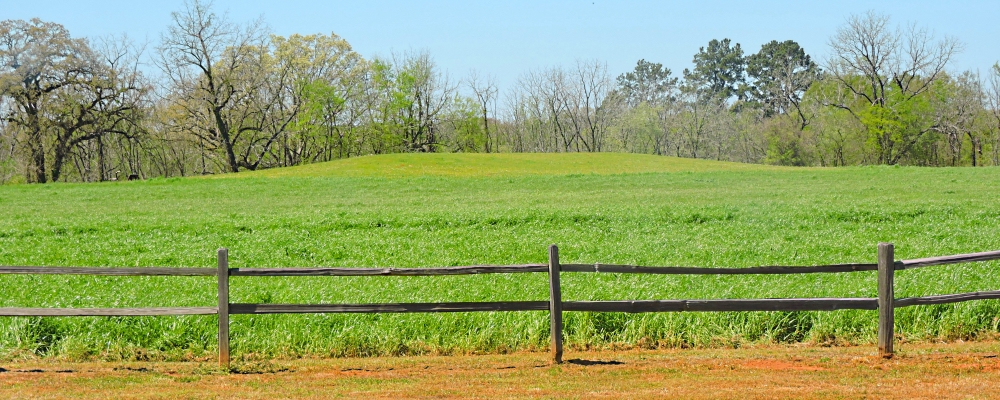
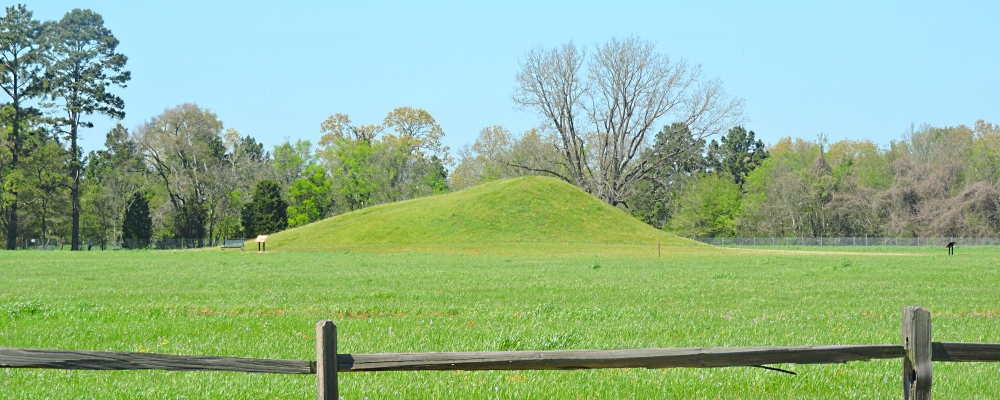
These mounds in eastern Texas lay near the extreme southwest edge of the great mound building culture called the Mississippian Culture. Today, three prehistoric mounds interrupt the prevailing flat terrain and have long been overgrown with grasses, but in the past, these mounds and the adjacent village covered about 100 acres where they were populated by the Hasinai branch of the Caddoan Culture.
The villages were most likely of round houses that resembled giant beehives, in which areas, thousands of pot fragments, some pipes, charred corncobs, many nuts and flint points were found.
Centuries later, long after the villages were abandoned, this region was once again a center of civilization when in 1690, the first Spanish mission in east Texas was built to minister to the Tejas indians.
Excavation during 1939-1941 and again in 1968-1969 revealed that two of the mounds had ceremonial purposes, one of which was capped with bright yellow clay, and both appeared to have supported temples. The third mound was the tallest reaching a height of about twenty feet and during the excavations revealed several burial sites.
|