|
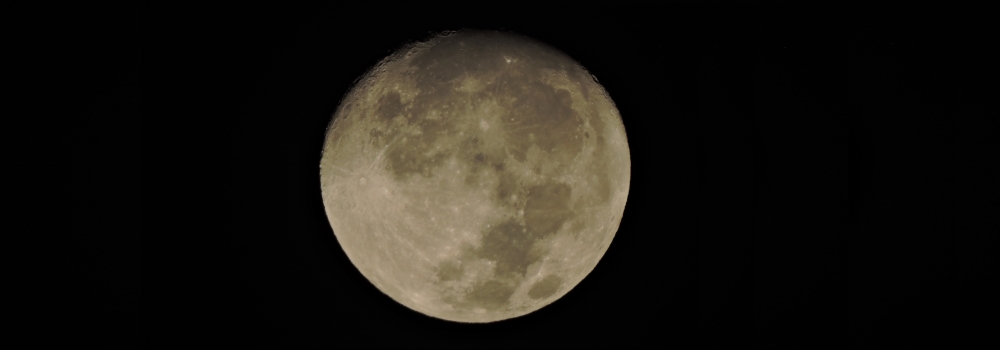
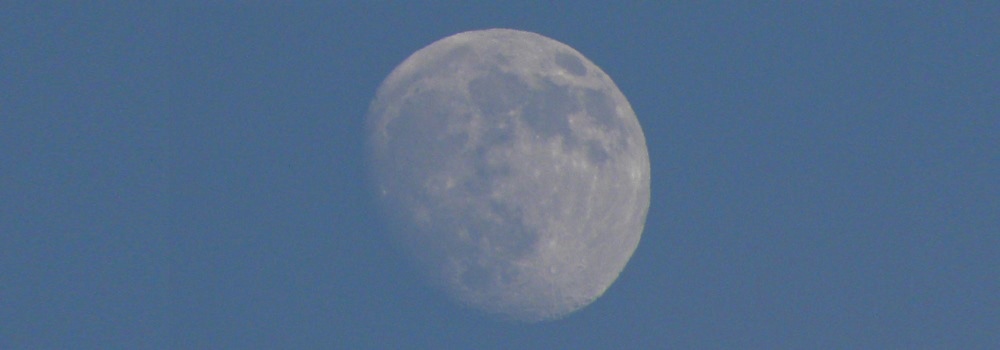
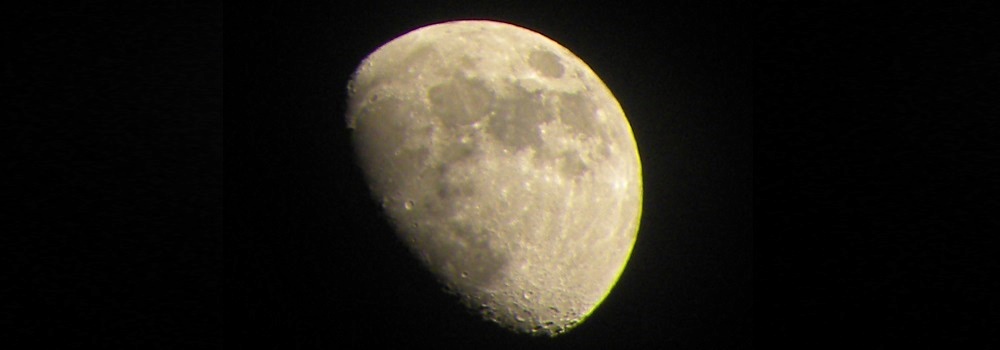
What does it mean when you hear the term gibbous moon?
A gibbous moon is when, from the perspective as viewed from the Earth, the Moon is more than half full in appearance, but not quite fully illuminated or rounded.
To understand why the shape of the moon changes has to do with how the Moon orbits the Earth and it′s changing angle with relationship to the sun.
New Moon
When the Moon is in between the Earth and the Sun, at the moment with all three objects perfectly aligned, then the angle between the Moon and the Sun is considered to be zero degrees. At this moment, the moon is said to be a new moon, which is when the Moon, as viewed from the Earth, is not illuminated at all.
Immediately after the new moon, when you begin to see a sliver of illumination, this is when the moon is said to be a Waxing Crescent Moon. The crescent moon will continue to grow on average, for 7.38 days until the moment of the first quarter.
First Quarter
The moment of the first Quarter, when the Moon arrives at a 90-degree angle with the Sun, from the perspective as viewed from Earth, it changes from a crescent moon as it grows larger that a half moon, at which time, it is said to be a Waxing Gibbous Moon. The moon will continue gibbous for 7.38 days until the full moon.
Second Quarter
When at the precise moment. the Moon′s angle comes to the point 180 degrees, (from the perspective as view from Earth) that is when it is a Full Moon and fully illuminated. Too, at this precise moment, the Moon and the Sun are on the opposite sides of the Earth. Immediately after this moment, the moon becomes a Waning Gibbous Moon and will continue to grow smaller for 7.38 days or until it reaches the angle of 270 degrees with relation to the sun in it′s orbit.
Third Quarter
At the precise moment the moon in it′s orbit, reaches the angle of 270 degrees with relation to the sun, it will enter the moment when is appears to be a half moon again. Then, from this moment and for another 7.38 days, it will become a Waning Crescent Moon until it decreases in size and reaches the moment of the fourth quarter when it becomes a new moon again.
Forth Quarter
At the moment that the forth quarter begins, the moon returns to the New Moon and disappears from the view of earth bound viewers. The new moon begin the next set of four phases or 29.53 days. Again, this length of four phases is an average due to the fact that the orbit of the moon is elliptical, instead of circular.
For more about the
phases of the moon, please return to the Moon Information Gallery Page.
|