|
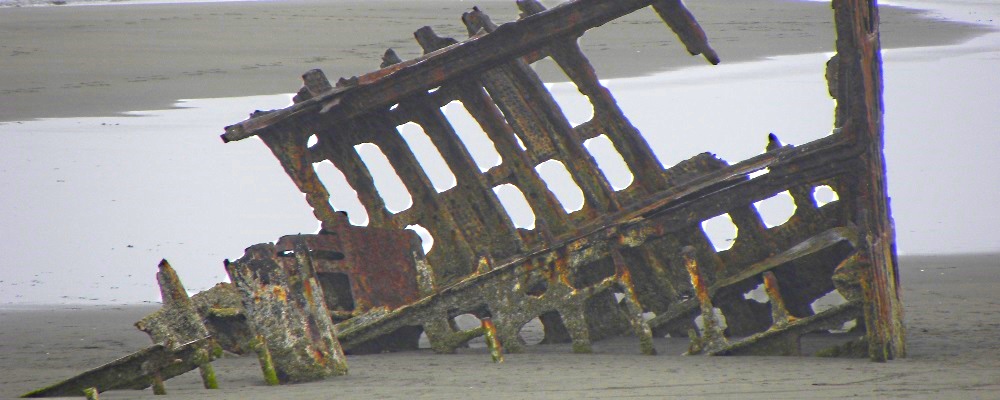
The Peter Iredale was a four masted barque, three fore masts with square sales and one aft mast with triangular sails. It was 287 feet in length, thirty feet wide and 23 feet deep, built by Riston of Mayport, England and used to transport grain from the Pacific Northwest to Austrailia.
The Peter Iredale was a
windjammer, built and christened in 1890 during the transitional period before wooden sail powered ships were replaced with all metal steamships. Still, this windjammer was constructed of steel plates over iron frames, steel masts, and a partial iron deck, a typical example of technology in transition. Many of the existing steel hulled ships built in the early 1900s were converted to steam, however, the Peter Iredale had already been in service for sixteen years and would have soon been retired had the ship not run aground.
On October 25, 1906, with an empty cargo hold and after sailing twenty-eight days from Salina Cruz, Mexico, the Peter Iredale ran aground. It had been bound for Portland for a new load of cargo and Captain H. Lawrence offered the crew a bonus if they cut five days off the normal sailing time. The sailing conditions had been perfect and the ship made good time but nearing their destination, they encountered a strong southwest storm and the Captain gave the order to stand off the mouth of the Columbia river. A few hours after midnight, a gust of wind pushed the Peter Iredale towards the surging waves breaking on shore and soon, the ship raked the sand, causing sections of the main mast, rigging, blocks and tackle to crash onto the deck. Striking bottom for good, the remaining mast snapped as the Peter Iredale came to rest on the beach at Clatsop Spit.
Remarkably, during the shower of riggings pounding the deck, no hands were lost, and the crew of the Peter Iredale took refuge at Fort Stevens. The ship, however, was declared a total loss, and the wreck was deemed unremarkable, only reflecting navigational problems in bad weather.
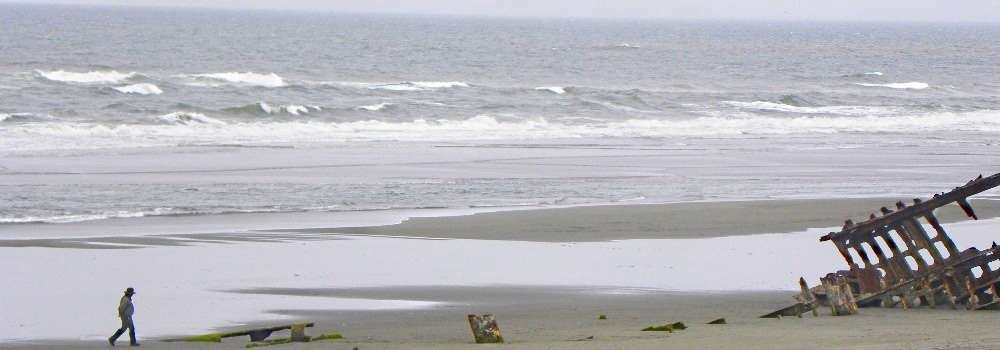
The Peter Iredale is visible today, however deteriorating, within the boundaries of Fort Stevens State Park, and is a popular attraction that lives on as a well-known landmark on the North Coast of Oregon.
Fort Stevens State Park, campsite # E143 CRS:6.0
After raining all night, the rain stops early this morning which allow me to heat water for coffee and make my Daystart breakfast. At ten, I walk across the road to the amphitheater for a junior ranger program about Safari held by Ranger Patrick. He tells us that safari is a African word that means to go on a journey and usually one to find animals. He then describes several different ways to determine if an animal has been where you are.
I work on my journal until quarter til one pm and then head for the ranger program at the wreck of the Peter Ireadale. When I arrive at the beach, it is cold, windy and raining so Ranger Patrick tells me that he is not going to give the program due to the bad weather and since I am the only person who showed up. He does show me a large picture of the shipwreck that was taken a day after it ran aground.

(m4boat-or-peteriredale-2013) Peter Iredale, Run aground on North Coast of Oregon
|