Genus: Equus, Species: africanus
Subspecies: asinus
Conservation Status: Domesticated
The Domesticated Donkey
Description
Donkeys vary considerably in size, depending on breed and management. The height at the withers ranges from 7.3 to 15.3 hands (31 to 63 inches), and the weight from 180 to 1,060 pounds. Working donkeys in the poorest countries have a life expectancy of 12 to 15 years and in more prosperous countries, they may have a lifespan of 30 to 50 years.
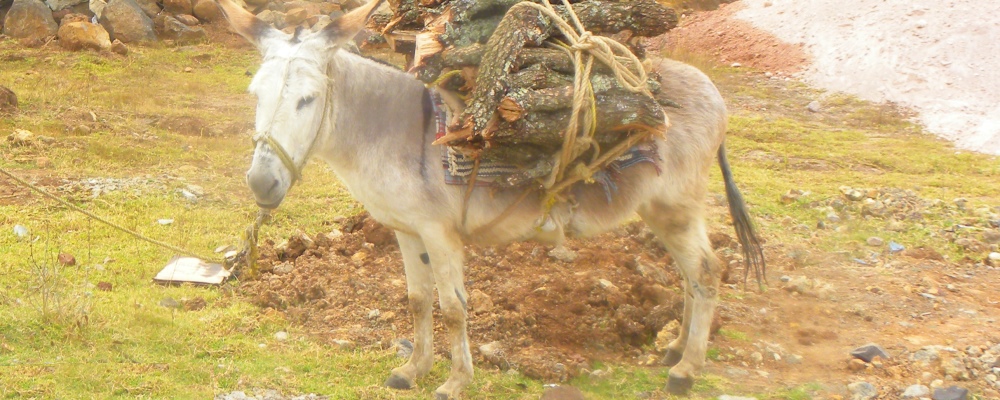
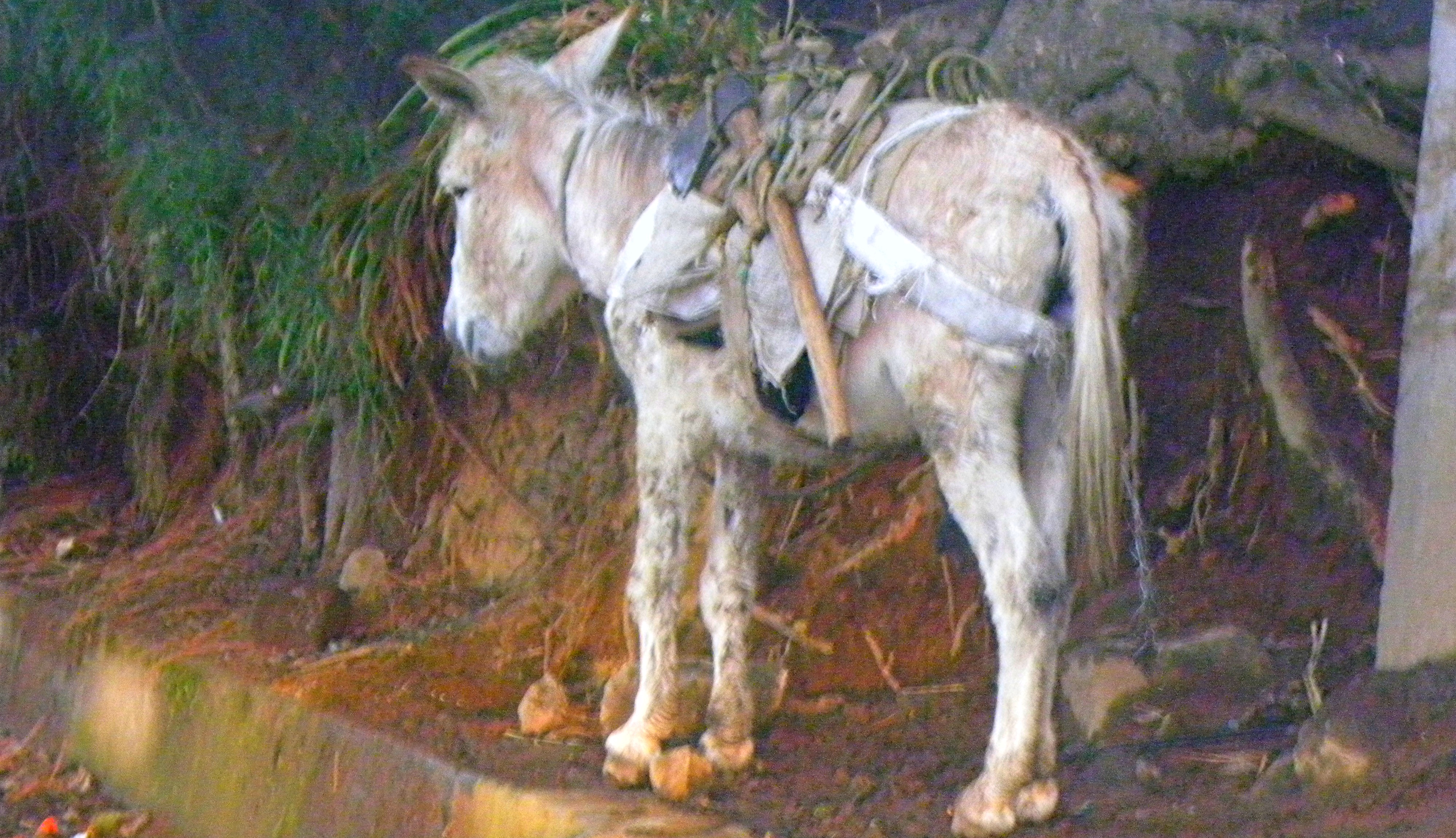
The donkey, also called an ass, is a domesticated member of the horse family, Equidae and has been used as a working animal for several millennia. There is estimated to be more than 40 million donkeys in the world, most of which are in underdeveloped countries, where they are used principally as draught or pack animals. These working donkeys are often associated with those living at or below subsistence levels.
Asses were first domesticated about 3000 BCE, most likely in Egypt or Mesopotamia, and have spread around the world, continuing to fill important roles in many lands today. While domesticated species are increasing in numbers, the African wild ass is an endangered species.
A male donkey or ass is called a jack, a female is called a jenny or jennet and a young donkey is a foal. Jack donkeys are often used to mate with female horses to produce mules. The biological reciprocal of a mule, an animal having a stallion and jenny as its parents, is called a hinny.
Range
Donkeys are found in most of the world but primarily in underdeveloped countries. Small numbers of donkeys are kept for breeding or as pets in developed countries.
In some areas domestic donkeys have returned to the wild and established feral populations such as those of the Burro of North America and the Asinara donkey of Sardinia, Italy, both of which have protected status.
In Australia, where there may be 5 million feral donkeys, they are considered as an invasive pest and have a serious impact on the environment by competing with livestock and native animals for resources, spreading weeds and diseases, fouling or damage watering holes and causing erosion.
The Burro
In the Iberian Peninsula as well as in the Americas, a burro is a small donkey. The Domestic Animal Diversity Information System (DAD-IS) of the FAO lists the burro as a specific breed of ass. In Mexico, the donkey population is estimated at three million, many of which are burros. There are also substantial burro populations in El Salvador, Guatemala, and Nicaragua.
Burro is the Spanish and Portuguese word for donkey. In Spanish, burros may also be called burro mexicano (Mexican donkey), burro criollo (Criollo donkey), or burro criollo mexicano.
In the United States, burro is used as a loan word by English speakers to describe any small donkey used primarily as a pack animal, as well as to describe the feral donkeys that live in Arizona, California, Oregon, Utah, Texas and Nevada.
Wild Asses
The only asses within this species, that are considered to be Wild Asses are those of the Subspecies: Africanus. All other asses of this species are either domesticated or feral, which, if they are feral, at one point, were domesticated and escaped into the wild.