|
(Day 238 BR) 33°F.
(Day 663 in Port)
Overnighting in the garage
With it looking like the building of the new hall could get under way as early as the end of next Month or soon thereafter, I now have something that could occupy my time as well as my mind while I am waiting for my home to sell.
However, I still can hardly keep from packing out and hitting the road now. So, to keep me from going totally wacky, I am planning another short journey south along the Oregon coast and hopefully, it will begin sometime before the end of this month with me arriving back on the island in plenty of time for the commencement of the new hall building.
Until, then, I want to get my garden soil ready for the spring garden by adding some compost and then put some of my vegetables in the ground.
(Day 215 BR) 41°F.
(Day 686 in Port)
Overnighting in the garage
After getting an early start this morning, I drive the interstate down through Seattle and i am through this city before the commuter traffic even begins, the through Olympia and then through Portland without any traffic slowdowns and do not leave IH 5 until Grants Pass where I turn towards the coast using US 199, drive through Cave Junction to Crescent City California and then turn north on US 101 to Brookings, Oregon.
It is a long day of driving, over six hundred miles, but I have decided that since the last search for light on the Oregon coast ended up with me spending most of my time in Oregon on the north and central portions of the coast, this time I will drive right to the south coast and begin my exploration from the bottom of Oregon, driving back to Washington from there.
I make it to Harris Beach state park just as the sun is setting, check in, drive to my space and prepare for the evening. I end up getting horizontal shortly after, only have some walnuts and almond milk.
(Day 214 BR) 45°F.
(Day 687 in Port)
Harris Beach State Park CRS: 9.0
Up early, walk to the shower house to take a hot shower and then make a cup of hot tea. Then, I pack out and drive into Brookings to locate the lighthouse. After asking, I find out that the best view is from the harbor parking lot where it can be seen on the bluff overlooking the harbor.
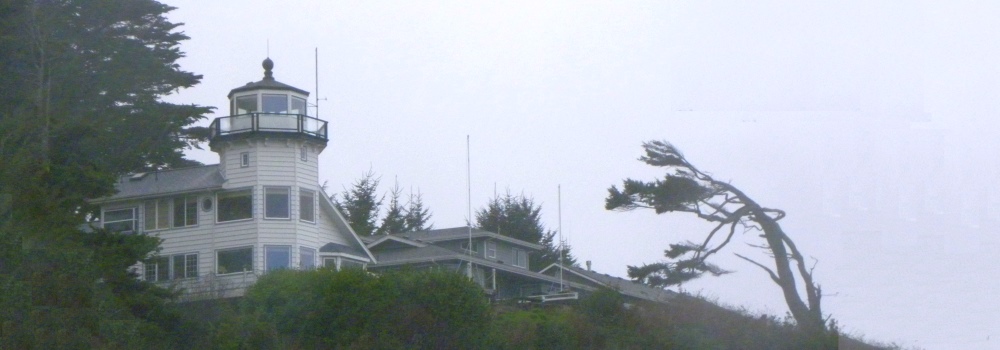
(b1a07.38.d.20120229.1801) Pelican Bay Lighthouse, Brookings, OR (1997)
Pelican Bay Light is a small privately owned lighthouse on a 100 foot cliff overlooking the port of Brookings harbor at the mouth of the Chetco River. The light is 141 feet above sea level, operated and maintained by Bid Cady and family who lives in the residence adjacent to the light. The light has a fixed acrylic Fresnel lens which has a range of eleven nautical miles (about 12.6 miles). This lighthouse is the newest lighthouse in the United States and the second private lighthouse on the Oregon Coast.
After taking several photos, I drive to the w-mart to check com and purchase a cup of hot coffee. Shortly after that, I leave Brookings heading north on US 101 to North Bend where I drive to the hall for the meeting tonight. There is two halls here and I find the one with the English Congregation. Going inside, i find the friends to be very warm, many of whom greet me.
Afterwards, I drive to the d-mart where I climb into the back of the jammer and get horizontal.
(Day 213 BR) 44°F.
(Day 688 in Port)
Overnighting in a parking lot
After sleeping in this morning, I head for the w-mart for coffee and to work online for a short time and end up spending the entire morning on my computer.
Then, in the afternoon, I decide to go to the coast to see the wave action because I several here have told me that the surf is very large today. I drive 13 mile south of Coos Bay on the Cape Arago highway to Shore Acres state park.
After finding a parking spot, I walk to the cliff pavilion, then to the railed view point at edge of the cliff for the view of the ocean.
What I was told earlier I find to be true, the sea is very heavy today.

(b1a07.38.d.20120229.1515) View from Shore Acres state park cliffs

(b1a07.38.d.20120229.1516) View from Shore Acres state park cliffs
I stay here on the edge of the cliff for some time as I am very impressed with the shear power the ocean displays as it pounds the rocky coast here.
Later, I drive back to the d-mart and park for the evening.
(Day 212 BR) 47°F.
(Day 689 in Port)
Overnighting in a parking lot
I rise early this morning, drive to the w-mart for a cup of coffee and then head to the coast arriving shortly after eight this morning. The first stop is at Sunset Bay state park where I see some rocks offshore that call to me to photograph. It takes several tries before I am able to capture the exploding waves on the rocks.
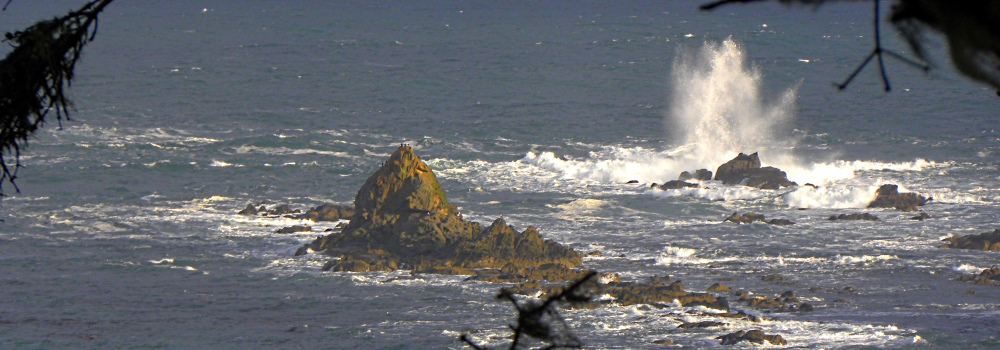
(b1a07.38.d.image) Off-shore Rocks at Sunset Bay state park
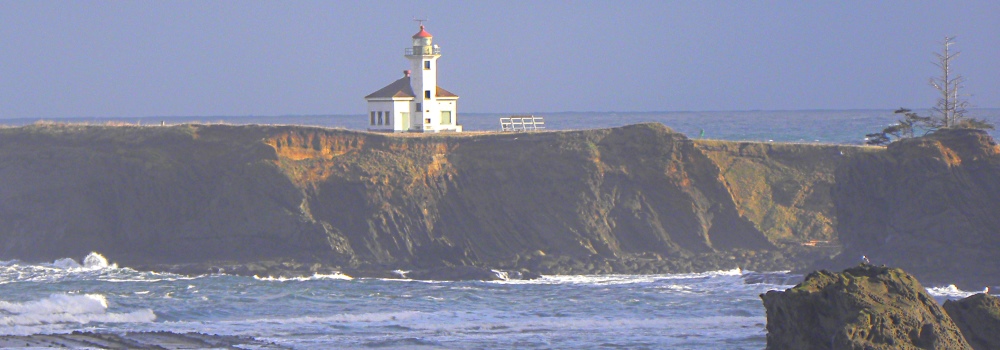
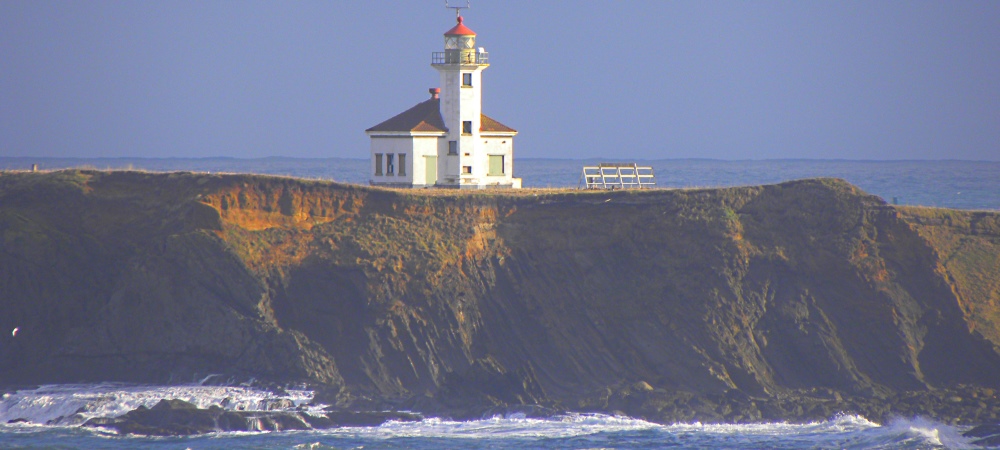
Next, I find a location where I can photograph the lighthouse. I start taking photos but I notice an area of sunlight coming through a hole in the clouds which is moving towards the lighthouse, so I wait.
When it arrives directly on the lighthouse, I take quite a few photos.
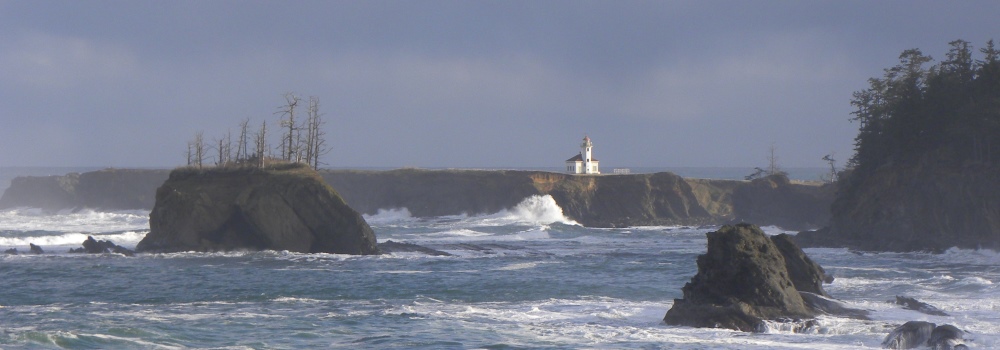
(b1a07.38.d.20120301.0920) Cape Arago Lighthouse from Sunset Bay state park
(b1a07.38.d.20120301.0921) Cape Arago Lighthouse from Sunset Bay state park
(b1a07.38.d.20120301.0922) Cape Arago Lighthouse near Sunset Bay state park
Cape Arago Light which is on an offshore island called by the native Coos Indians, Chiefs Island. The first light was lit in 1866 which lasted until 1906 when the second light in a wooden structure was built and subsequently lit. Erosion eventually threatened the second light and a third light in a concrete structure was built. It was first lit in 1934. The tower stood 44 feet high and the forth order Fresnel lens that had been in the second light was used. The third light could be seen 14 nautical miles (16 miles) offshore. It was decommissioned on January 01, 2006.
During the winter of 2012-2013, the original wood bridge that you see in the next photo accessing the light was eroded away by the sea.
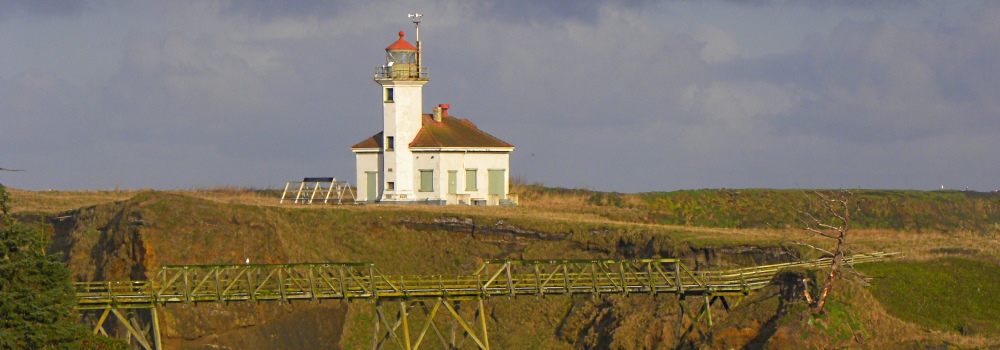
(b1a07.38.d.20120301.0929) Cape Arago Light from Cape Arago Highway
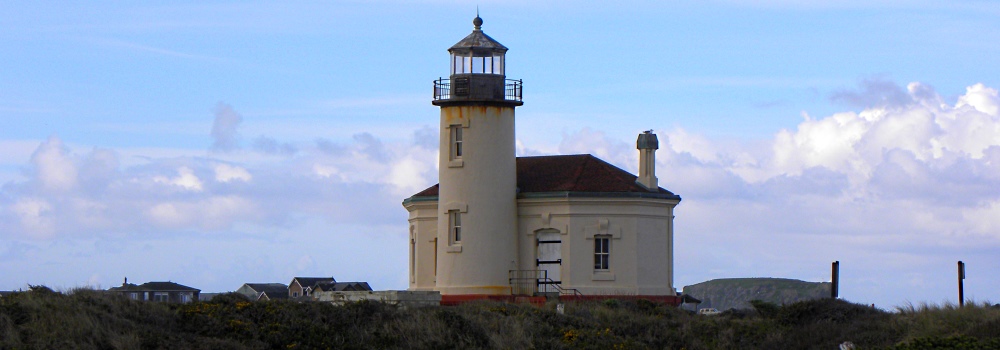
(b1a07.38.d.20120301.1027) Coquille River Light, Brandon, Oregon. (1896)
Originally named Bandon Light (43.123911° -124.424222°), the Coquille River Light was commissioned in 1895 and first lit on February 29, 1896. The light had a forth order Fresnel lens which was mounted in a 40 foot conical tower, 47 feet above sea level. The light was deactivated in 1939 but now supports a solar lens which is visible only from the nearby area and Brandon, Oregon.
When walking near the lighthouse, I see two eagles perched on driftwood and just can not miss this opportunity to take several photographs of the eagles.
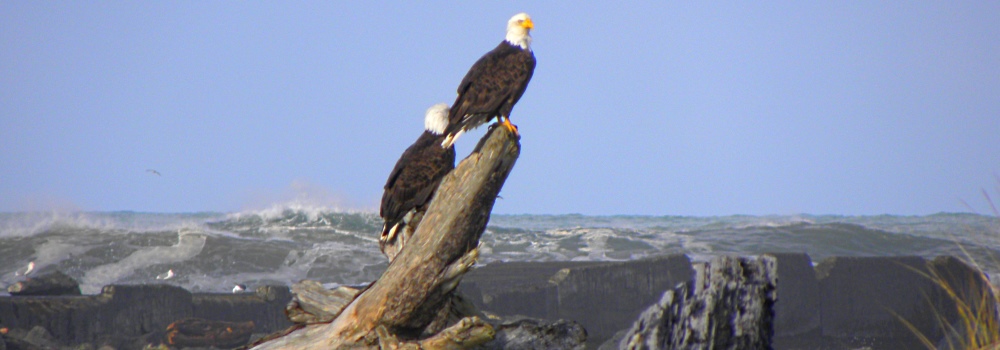
(m3an-chb-laae-070ba.20120301.1032) Eagles on driftwood near Coquille river

(m3an-chb-laae-070ba..20120301.1040) Eagles on driftwood near Coquille river
Then, I leave the north side of the Coquille river, drive the twelve miles on Bullards beach road from the lighthouse back to US 101, then cross the river, drive through Brandon and make my way to the end of Jetty road where I can photograph the lighthouse from the south jetty.
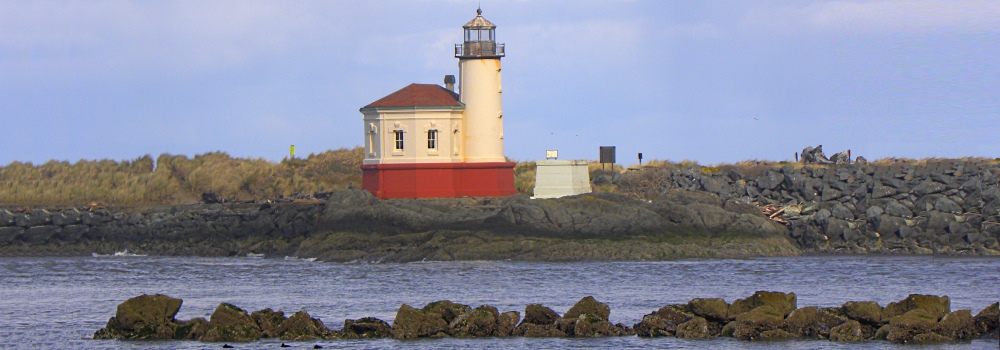
(b1a07.38.d.20120301.1121) Coquille River Light from the South Jetty park
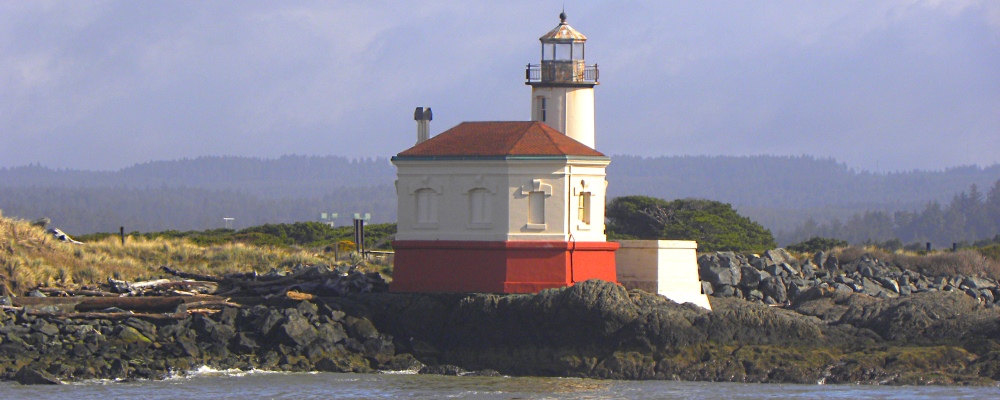
(b1a07.38.d.20120301.1124) Coquille River Light from the South Jetty park
Upon arriving at Brandon South Jetty Park, methinks the view and photos of the light are much better from the south side of the Coquille river.
Then, I leave Brandon, drive further south on US 101 and arrive in the town of Sixes, Oregon, cross the Sixes river and then continue south on US 101 almost a mile and arrive at Cape Blanco road where I turn west and drive through the state park to Cape Blanco where the next lighthouse waits for me to visit.
The light juts out one and a half miles into the Pacific Ocean from the southern Oregon coast, the most westerly point in Oregon and terminates in a large headland with 200 foot cliffs along most of its perimeter.
These cliffs are chalky white and are what prompted early Spanish explorers to name this landmark Cape Blanco (White Cape).
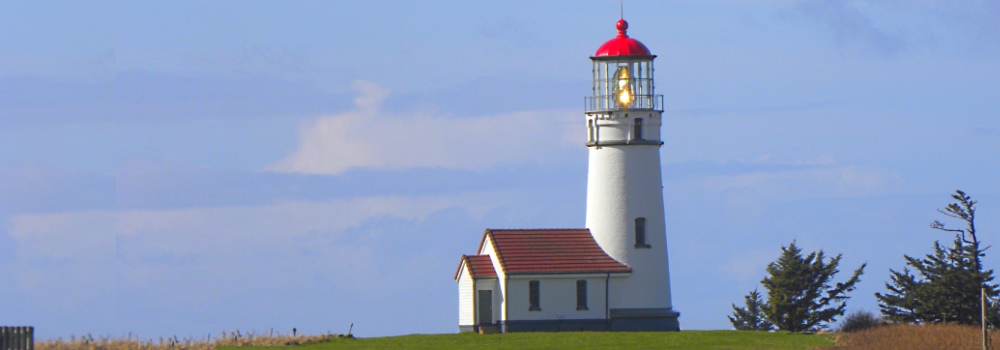
(b1a07.38.d.20120301.1446) Cape Blanco Lighthouse (1870)
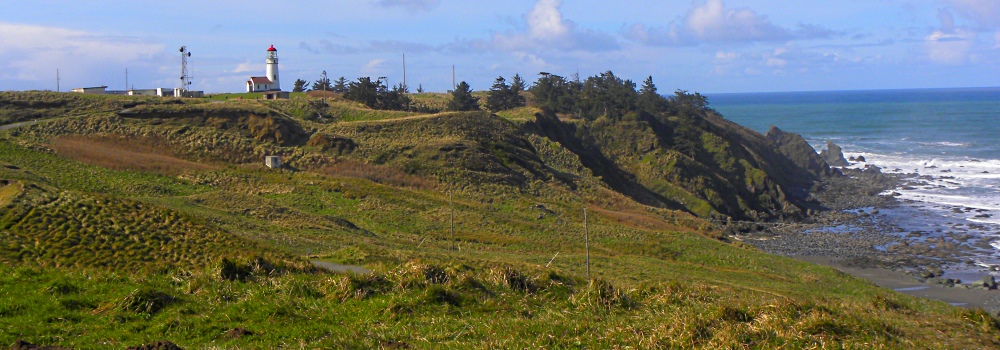
(b1a07.38.d.20120301.1447) Cape Blanco headlands with Light atop
The Cape Blanco Light was constructed in 1870 with brick, has a conical tower attached to a workroom and first lit on December 20, 1870. The 59 foot white tower has a red dome and a green light 256 feet above sea level. The original first order Fresnel when moved to Astoria in 1936, was replaced with a second order Fresnel lens which has a range of 23 nautical miles (26 miles).
After my visit to this light, this completes all the lights on the southern coast below Coos Bay, so I return to the US 101 and drive back to North Bend where I will again overnight before moving to more lights further north.
However, while in North Bend, I would like to visit my brother Robert, his wife Ellen and their kids, so I stop at the d-mart to purchase some small die-cast cars and a jump ramp for Wyatt which I know he will love.
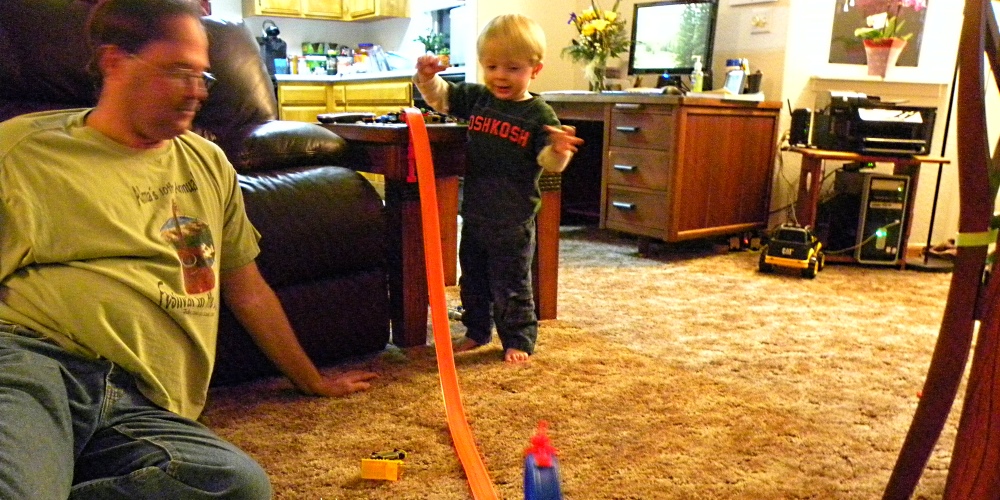
(b1a07.38.d.20120301.1939) Like all kids, Pops and Wyatt both love Hotwheels
Upon leaving Robert and his family, I head for the d-mart, find a place to park and climb into the back for the night.
(Day 211 BR) 49°F.
(Day 690 in Port)
Overnighting in a parking lot
After rising early, I drive to a w-mart for a cup of hot and checking my com before starting my drive north. Then, I leave North Bend, cross the high bridge over Coos Bay and continue north along the Oregon Dunes National Recreation Area and soon arrive at the next light on the Umpqua River. (43.662291° -124.198476°)
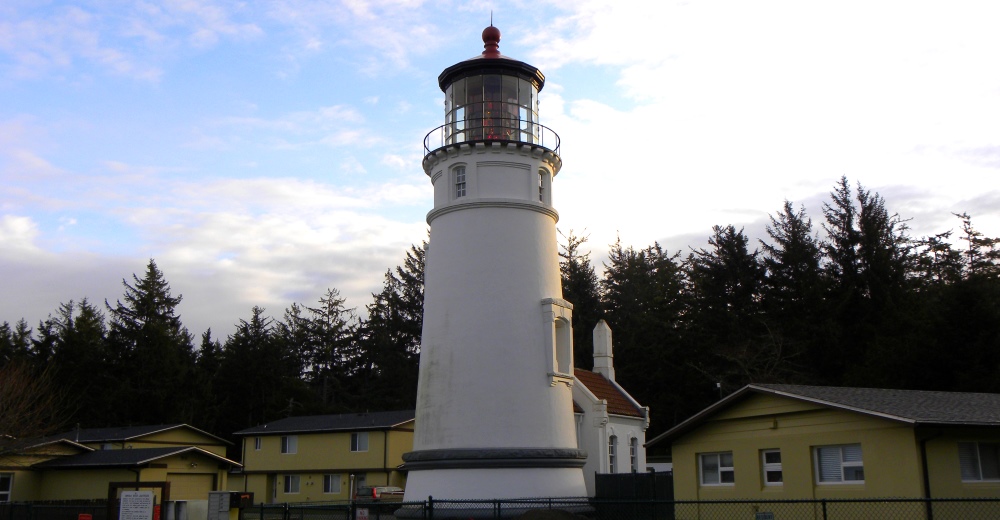
(b1a07.38.d.20120302.0852) Umpqua River Lighthouse (1894)
The first lighthouse in Oregon was lit in 1857 closer to the mouth of the river but was undermined and the destroyed by flood in 1864 and rebuild here in 1891. The conical tower is 61 feet tall with an attached workroom.
The light is a first order Fresnel which is 165 feet above sea level and has a 21 nautical mile (24 miles) range. The lighthouse is open for tours.
After driving past the Oregon Dunes, I soon cross the Siuslaw river, drive through Florence, Oregon and I see a restaurant with old Chevys on the roof, from 1954 through 1962. I go inside and there are more hot rods used as dining tables.
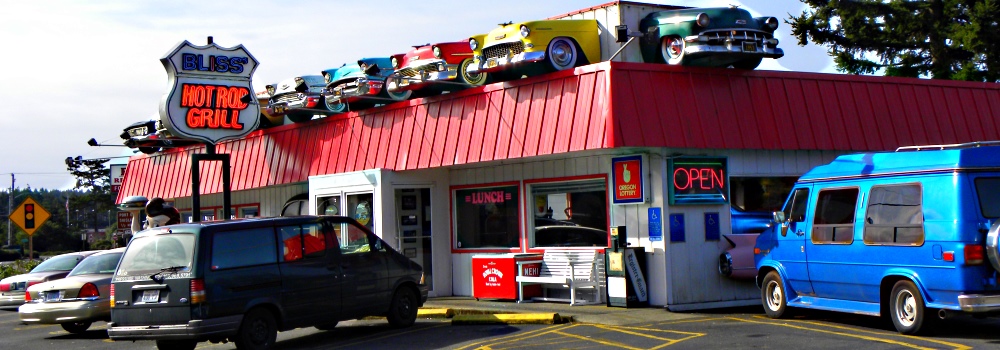
(b1a07.38.d.20120302.1128) Just had to stop and check this out.
Leaving Florence, I continue into the Siuslaw national forest and then make my first stop at Sea Lions Cave. Upon walking inside, I see a popcorn machine near the front counter with a sign which reads We make our popcorn with coconut oil. I buy a bag and enjoy some really good popcorn.
After walking through the store and purchasing a couple of embroidered patches, I then go outside and notice to the north that the Heceta Head lighthouse is visible from here, so I grab my camera an take a couple of photos.
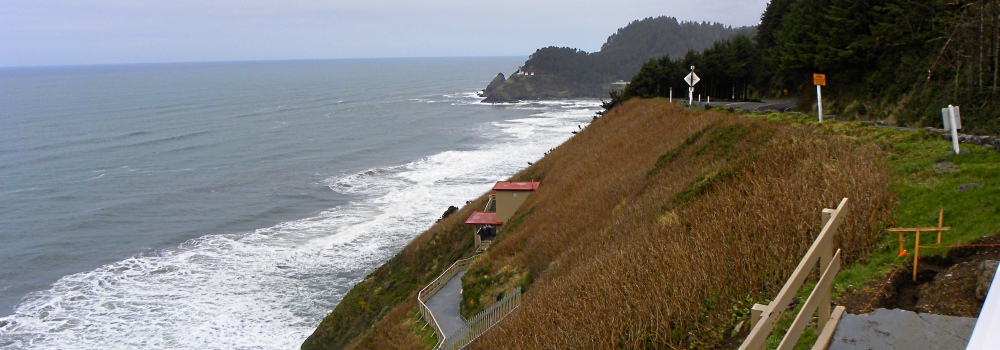
(b1a07.38.d.20120302.1217) Heceta Head Light from the Sea Lions Cave
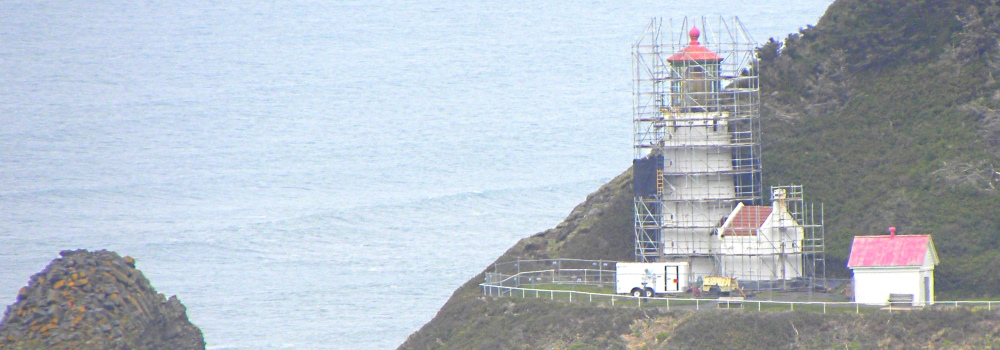
(b1a07.38.d.20120302.1218) Heceta Head Light, currently being refurbished
I get back into the jammer, drive a little further north on US 101 and come to another viewpoint for the Heceta Head light where I pull over and take photos.
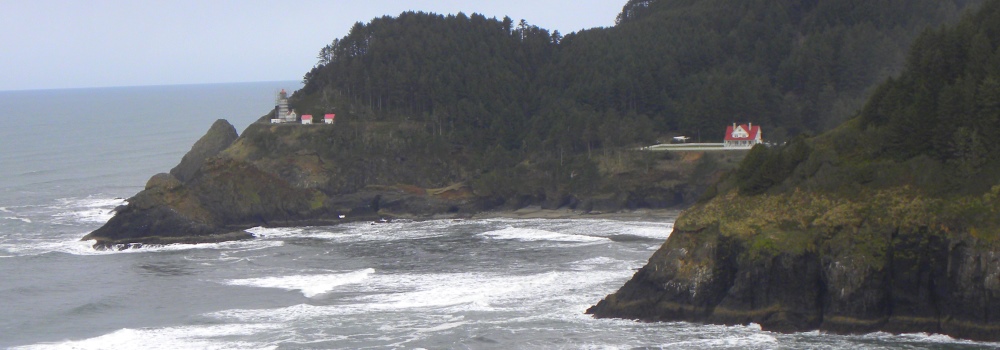
(b1a07.38.d.20120302.1222) Heceta Head Light (1894) 44.13737° -124.127835°
The construction of Haceta Head Lighthouse began in 1892 and it was lit in 1894. The conical 56 foot tower is constructed from brick with an attached work room. The light is a first order Fresnel lens at 205 feet above sea level and has a range of 21 nautical miles (24 miles), the strongest light on the Oregon coast.
Leaving the viewpoint, I continue my drive towards Washington on US 101 and just on the north side of Cape Perpetua, still in Siuslaw national forest and just south of Yachats, Oregon, I stop at a viewpoint aside the highway were I can photograph the private lighthouse know as Cleft of the Rock.
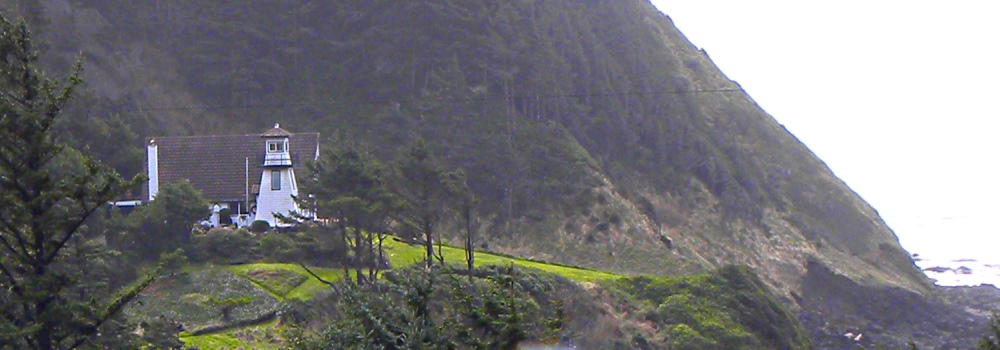
(b1a07.38.d.20120302.1337) Cleft of the Rock Light,
Built in 1976 by former lighthouse keeper and noted maritime historian Jim Gibbs, Cleft of the Rock Lighthouse takes its name from a hymn which included the words He Hideth My Soul in the Cleft of the Rock, which is roughly based on the Bible verse at Exodus 33:22 in the American Standard Version.
The tower stands 34 feet high and serves as the entrance to the home. The light is 110 feet above sea level, has two forth order Fresnel lenses and a range of 16 miles. The Coast Guard made the light an official aid to navigation in 1979.
The builder and owner, Jim Gibbs, a former Tillamook Rock Light attendant and historian died at home on 30 April 2010, after which the lighthouse has been maintained by his daughter and son-in-law and remains closed to the public.
Then, I leave the Cleft of the Rock, continue north on US 101, through Waldport, past Seal Rock and then arrive in Newport where I stop at the Yaquina Bay Lighthouse finding it open.
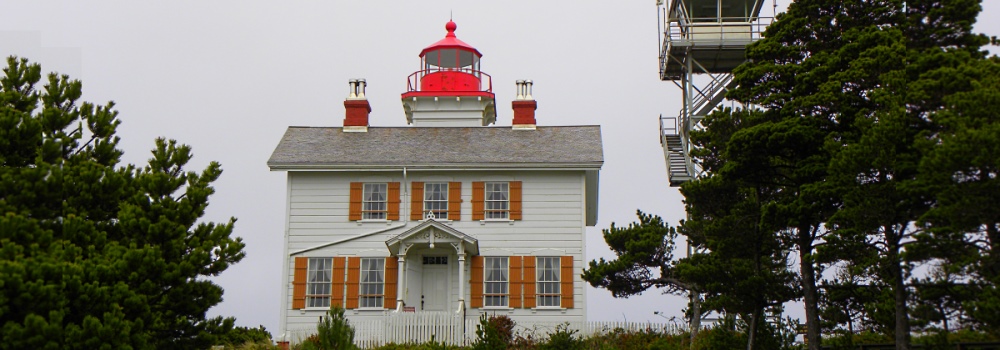
(b1a07.38.d.20120302.1446) Yaquina Bay Lighthouse, Newport, OR. (1871)
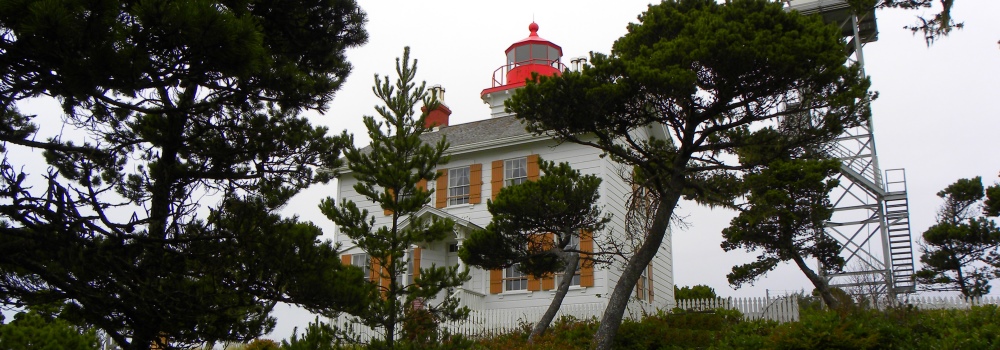
(b1a07.38.d.20120302.1526) Yaquina Bay Lighthouse, Newport, OR.
The lighthouse was only active for three years, from Movember 3, 1871 until October 1, 1894. The Yaquina Bay Light was decommissioned because the Yaquina Head Light which was first lit on August 20, 1873 made it obsolete and the lens was move to another light in California.
However, the Bay Light building was used by the Army Corp of Engineers as a living quarters between 1888 and 1896. The Coast Guard also used it a a living quarters from 1905 to 1915 and the steel observation tower was built at that time. In 1934, the lighthouse was purchased as a state park. The lighthouse was re-lit on December 07, 1996 with a lens on loan from lighthouse historian Jim Gibbs.
Currently, the light is maintained by the Coast Guard as a navigational aid and its light has a range of six mile. It is open for public viewing. The Yaquina Bay Light is the only lighthouse in Oregon in which the living quarters are housed in the same building as the light.
With such good weather that I have had today, I decide that I can go to one more lighthouse today and head for the Yaquina Head Light arriving here shortly after three-thirty. (44.676778 -124.079417)
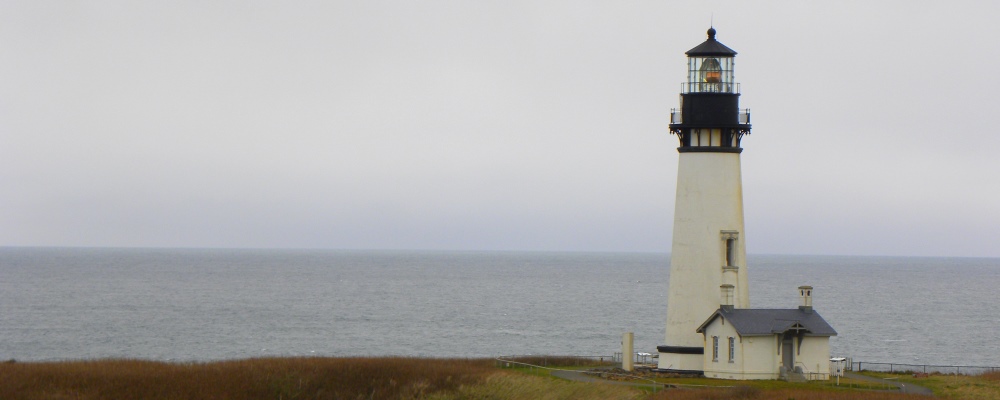
(b1a07.38.d.20120302.1542) Yaquina Head Lighthouse, Newport, OR. (1873)
The Yaquina Head Light, also known early in its existence as the Cape Foulweather Lighthouse, is located a short distance north of the mouth of the Yaquina River and the port of Newport on Yaquina Head.
The light was lit on August 20, 1873, has a first order 1868 French-made fixed Fresnel lens with an 18.5 nautical miles (21.3 miles) range. The conical tower with attached oil house is white with a black top, built with brick and stands 93 feet tall, making it the tallest lighthouse in Oregon. The lighthouse is open for tours.
After leaving Yaquina Head Light, I drive north on US 101 five miles to Beverly Beach state park, check in, drive to my space and set up for the night.
(Day 210 BR) 47°F.
(Day 691 in Port)
Beverly Beach State Park, OR. CRS: 6.0
This is not my favorite Oregon state park campground, mainly because it has quite a lot of swampy areas that the campsites occupy. Methinks that this park would rate much less than what I have rated it if I had come during a warmer period, simply because the swampy area would be replete with insects.
Leaving out in the morning, I drive north on US 101 and come to a place where the old US route runs closer to the coast and I choose to drive the old highway.
This route brings me to Otter Crest state scenic viewpoint where there is a lookout and gift shop which calls the viewpoint, Cape Foulweather. I stop and walk to the end of the walkway to check out the view and in doing so find that I can see Yaquina Head Lighthouse from here, but far in the distance.

(b1a07.38.d.20120303.1300) Yaquina Head Light from Cape Foulweather
I continue north on US 101 through Depoe Bay, Lincoln City, Neskowin, and then take three capes scenic drive to the west from US 101 and drive (methinks the old 101 highway) through Pacific City, past Cape Kiwanda, Cape Lookout, and Cape Meares where I stop to see the lighthouse here.
When I arrive at the Cape Meares Lighthouse, the entire cape is socked in with fog and cold wind. I still walk the 1000 foot walkway (one-way) out to lighthouse to get a photo of the light. (45.486474° -123.978309°)

(b1a07.38.d.20120303.1548) Cape Meares Lighthouse (1890)
The Light was built in 1890, houses a first order Fresnel lens with a 21 nautical miles (24 mile) range. The octagonal tower and attached workroom is is thirty-eight feet in height but sits on a cliff 200 feet above the ocean making the light 223 feet above sea level. The light was decommissioned in 1963.
I leave Cape Meares, continue on the scenic route back to US 101 in Tillamook, Oregon where I turn north, drive through Garibaldi, Rockaway Beach, Nehalem, and arrive at Haystack Rock right before the sun sets, about six-thirty pm. I pull into Cannon Beach, drive to the viewpoint and get out with my camera.
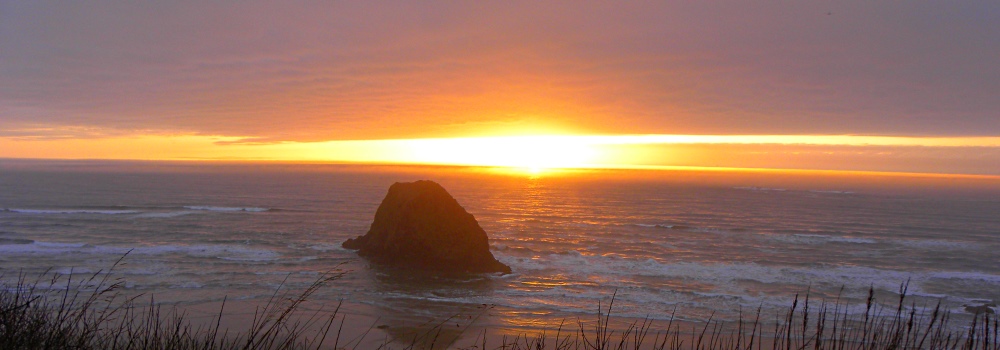
(b1a07.38.d.20120303.1850) Haystack Rock at Sunset, Cannon Beach, Oregon

(b1a07.38.d.20120303.1853) Haystack Rock at Sunset, Three minutes later

(b1a07.38.d.20120303.1856) Haystack Rock at Sunset, Three minutes later
I am back on US 101 heading north in just thirty minutes, right at seven pm. I leave Cannon Beach, drive through Seaside, Gearhart and arrive at Fort Stevens state park at seven-thirty pm. I drive to the entrance station, complete a camping permit, choose a camp site, return to the entrance station, drop the permit into the drop slot and then head to the camp site all before eight pm and go right to the shower house.
I then park the jammer plug in my electric cord and begin charging my batteries and writing my journal entry for today but before I finish the journal, I get horizontal and I am asleep by nine pm.
(Day 209 BR) 45°F.
(Day 692 in Port)
Overnighting in a parking lot
Fort Stevens State Park CRS: 6.0
I am awake early this morning because I want to tour both the state park and the national park that are nearby. After I boil a pot of water and make a cup of hot, I then prepare my meal, a cup of
daystart.
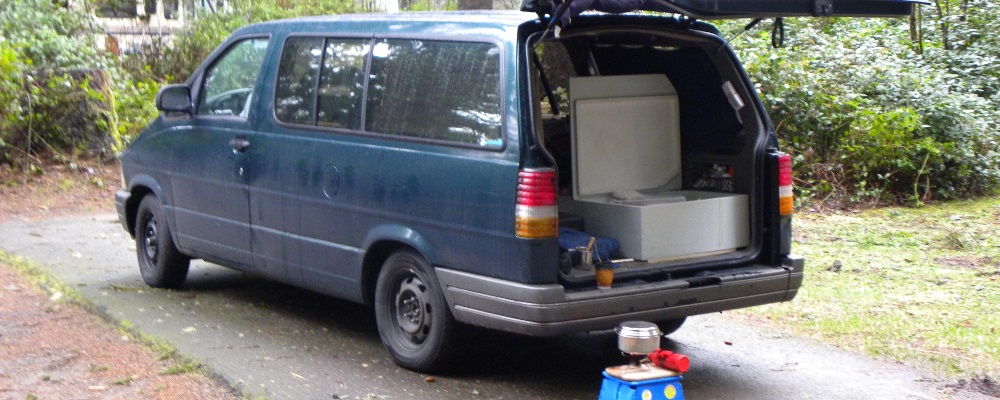
(b1a07.38.d.20120304.0909) Camping in Fort Stevens
Soon after, I am driving through
Fort Stevens and visit a few of the defense installation used to stop the Japanese submarines during World War II.
On the night of 21–22 June 1942, the Japanese submarine I-25 surfaced off Fort Stevens and fired 17 shells from her deck gun, making Fort Stevens the second military installation in the continental United States to come under enemy fire in World War II. (The first, eighteen days earlier, was Dutch Harbor in the Aleutian Islands of Alaska.) The Japanese attack caused no damage to the fort itself, only the backstop of the baseball field in the fort was destroyed.
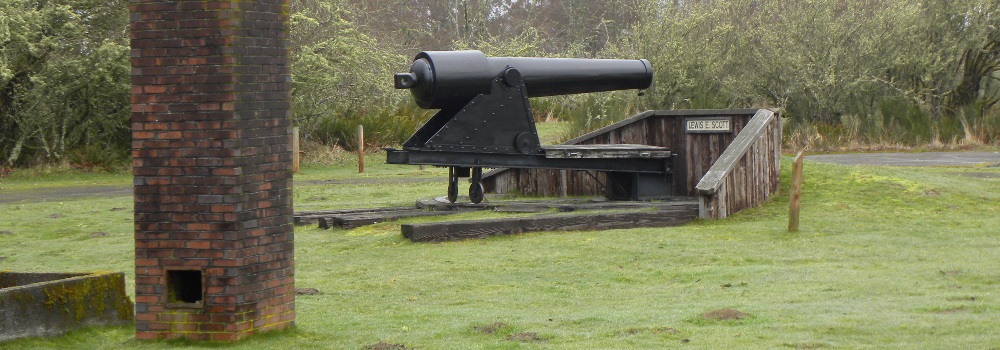
(b1a07.38.d.20120304.1024) The Big Gun
In the afternoon, I leave Fort Stevens and drive to
Fort Clatsop, a replica of the fort that was built by Lewis and Clark during their winter stay on the Oregon Coast.
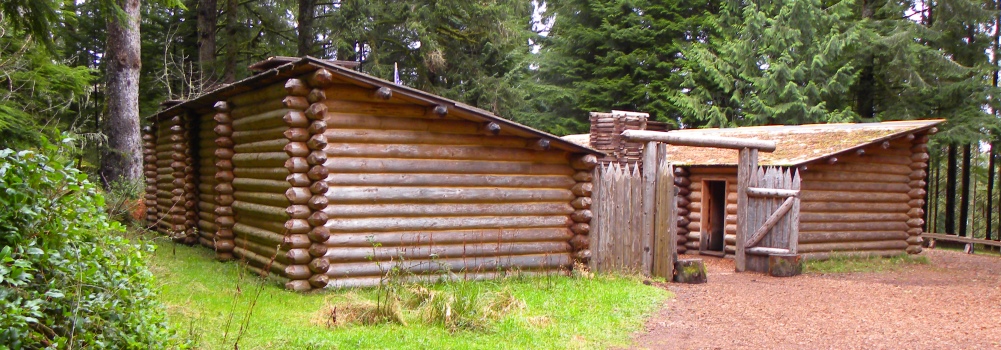
(b1a07.38.d.20120304.1346) Fort Clatsop, originally built by Lewis and Clark
Fort Clatsop was the encampment of the Lewis and Clark Expedition in the Oregon Country near the mouth of the Columbia River from December 08, 1805 through March 23, 1806. Located along the Lewis and Clark River at the north end of the Clatsop Plains approximately 5 miles southwest of Astoria, the fort was the last encampment of the Corps of Discovery, before embarking on their return trip east to St. Louis.
And this is my last encampment before returning north to Oak Harbor to get ready for the building on the new hall there.
(Day 200 BR) 40°F.
(Day 701 in Port)
Overnighting in the garage
s and drive to the beach to see the remains of the Peter Iredale, a sailing ship that sunk here in 1906
Notably, today makes two hundred days until officially starting retirement, a note worthy day indeed and truly a triple digit midget. However, more exceedingly momentous is what day it will be on the upcoming summer solstice, June 21.
That day will be the last triple digit day on this toilsomely long wait since the triple digits began on the sixth of January, 2010 with 999 BR.
It amazes me that the 100 day mark falls on the summer solstice; and it wasn′t even planned to do so. Thus, the twenty-second of June will be a momentous day indeed as it commences the first of the double digit days that will occur during this wait. To be a double digit giant will not be a bad thing with only 99 BR
On a spiritual note, we have been notified that the RBC is coming this Saturday to meet with the servants in both of the Oak Harbor Congregations.
3 This will be our first congregation meeting with the RBC and should find out all the details of the upcoming building project. There is much to do in the upcoming weeks and I am sure all in the Oak Harbor congregations are looking forward to it.
(Day 196 BR) 49°F.
(Day 705 in Port)
Overnighting in the garage
I was busy working on the project to move my web sites to a new host, a move that has proven it is be better for me to update the html code to a newer version when suddenly it came to me that there was a meeting today at three pm. I got up quickly to see what time it was and found it was just two. I was relieved that I had not worked past the start of the meeting with the RBC. I also began to wonder what the meeting would be about because this would be our first one.
Just back from the meeting and I learned quite a bit. The meeting was for the elders and ministerial servants of both the English and Spanish congregations, only a few not being present. As the meeting progressed, each of the RBC brothers had a specific part as outlined on the two-sided handout. One thing that I appreciated was that there were ample opportunities for questions and answers; the brothers from the Oak Harbor Congregation made good use of this provision. Too, at the beginning, each of those who arrived were given a copy of the floor plan to the new hall. I asked if there was a plot plan available but one RBC brother told me he had one but did not make extra copies. One of the early parts included the setting up elders as local contacts: one as accountant, one for attendance, flagging and security department; one for the food services department; one for the rooming department; one for the first aid and safety department and one for the contact department as a contact for the local city offices. There were other assignment and most of the elders received one.
Next, the discussion turned to the financial and accounting, then the status of drawings and permits, needs for the site work, and finally the closing notes which included information and requests about insurance, construction schedule and encouragement to continue with the congregation meeting schedules.
(Day 189 BR) 33°F.
(Day 712 in Port)
Overnighting in the garage
Today is the first day of a two day circuit assembly having the theme Let God′s name be Sanctified that I will attend. I have truly enjoyed this first day of talks. I will park the Windjammer at the nearest Mart store and by not driving back home this evening I am able to save a substantial amount of gasoline and really, it does not matter to me where I sleep at night because I have been sleeping in the Windjammer for some time now. So, I drive to a nearby mart-store to spend the evening.
There are several already parked for the night when I arrive and one arrives shortly after I do. When I try to make conversation with the new comer, he just shrugs me off and goes into his trailer, not to be seen again. This is not anything like the camping that I grew up with in the south during the sixties where we always visited our neighbor to say hello and sometimes we would get an invite to have supper or in the least, a cup of coffee or even a cookie.
I suppose the world was friendlier then, people were much nicer and eager to get to know their neighbors. Now, it seems that no one wants to befriend anyone anymore, let alone their neighbors in the trailer ten feet away on either side. What most do now is climb out of their pickup, walk back to the trailer and are not seen until they climb back into their pickup to drive away the next morning.
Now that I am on my soap box, I would like to voice another grip! The people who do this call it camping (those who drive in their pickup, pulling a trailer and stop in a parking lot) but I say that it is anything but camping.
Even if they pull their trailer to a state or national park, I still say that it is not camping. What then should it be called? I call it overnighting, and I would define overnighting as taking your possessions on a road trip, nothing else. Too, overnighting is more akin to staying in a motel than it is to camping.
Even though I know people who think staying in a motel is roughing it... never could you say that staying in a motel is camping by any stretch of the imagination.
Yes, I grew up in a time when camping was defined as going out into the forest regardless of the means how you get there. Once there, you would set up a tent, dig a fire pit and a latrine and cook your meals on an open flame. The only flame that most of today′s so called campers have is the lighter for their cigarettes.
Back then, even when we were car camping, we still set up a tent, lit a camp fire so as to enjoyed the outdoors. Now, most so called campers go into their trailers to cook supper in a well equipped kitchen, enjoy their meal with a glass of wine while watching a movie, take a hot shower and then go to sleep in a comfortable bed in a thermostat controlled bedroom.
These self professed modern day campers never have to, nor do they normally ever leave the luxury of the trailer even to go to the latrine. To be perfectly honest, I don′t think any of these modern day campers even know what a latrine is.
To accommodate an entirely new group of so called campers, some state parks have set up Yurts to provide a camping experience to those who don′t have the over-the-road luxury camping vehicles. Yes, just drive to your nearby State Park, pay the overnight fee, obtain the key and then drive into the parking space next to your modern State Park camping experience. Many of the Yurts are equipped with stove and microwave, refrigerator, toilet, shower and some parks even have dishes, soap and towels.
And to spite the fact that this is no where near anything like real camping, they advertise it to be "A true camping experience!" To be honest, once every year or two, I may even fork over the forty or fifty bucks to stay in a Yurt, but please, stop calling it a camping experience. It is no more a camping experience as is the pickup pulling the trailer or a stop at Hotel 99.95, but instead, these are at best, just paying for luxury accommodations in the woods.
And the saddest part about this true camping experience is, after most people check in, the only time they go out into the woods again is when they check out.
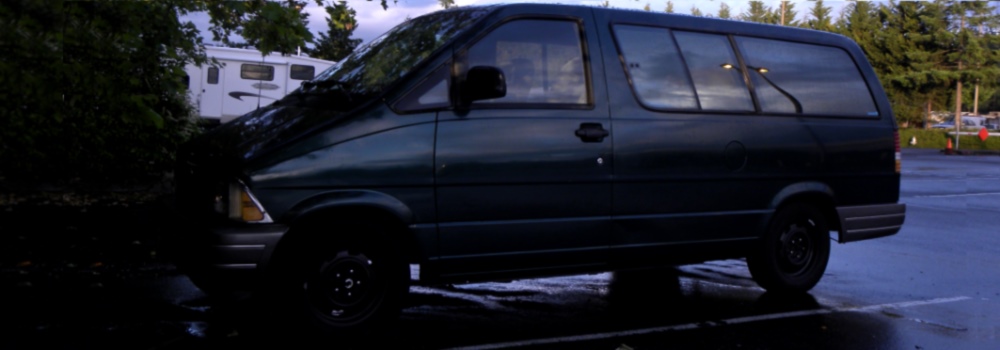
Nevertheless, I travel in a way similar to those above, because I drive the Windjammer, which is more like a mini-motor home than anything else. Inside this motor home, I have a storage for tools and auto supplies, storage for personal items such as clothing and toiletries, a rack to hang suits and coats, a food pantry, a kitchen which includes my backpacking stove, sleeping accommodations and a cockpit and battery charging center all built into the Windjammer.
What, you say is the difference between how the others travel and myselƒ? The difference that I experience is that I have never called this camping, not even roughing it as I consider my vehicle just as luxurious as any other type of modern motorized accommodation. Only, I just do it more compactly in a mini van and I might add, a lot less expensive.
A fellow wayƒarer and good friend once told me that if it has wheels and a door, it is not camping, instead, it is just overnighting in in the woods.
To each his own, but please, stop annoy me by calling this camping!
(Day 187 BR) 47°F. 6:00 am, clear
Overnighting in the garage
I arrived back from the assembly last evening and pulled into the garage to ready myself for the night′s rest. However, before I climb into the jammer, I go inside for a hot shower. It is nice to have how water on my body after a weekend trip.
Awake early this morning and clean up the jammer after my short time away. Too, I take off the front grill so that I can install some electrical 110 volt wiring to provide electricity to the inside of the jammer. I will have an electric three prong plug accessible for using an extension cord to plug the jammer in to an electrical outlet.
Later, I go to the hall to see what is going on there and find some prep work being done for the upcoming demolition of the old structure and a new hall build.

(b4wheels-1994.20120326.1647) Back in Oak Harbor for Hall Build
Afterwards, I go to the w-mart to get online, out to the Mexican restaurnat and then back home to overnight in the garage.
(Day 185 BR) 48°F.
(Day 716 in Port)
Overnighting in the garage
Normally, by this time of the year, I would already have some vegetables in the ground, but because it has been a very wet and cold spring, nothing has been planted. I did buy some lettuce about two weeks ago but they remain located in a warm spot still unplanted.
Since the sun is bright and it is not raining today, I will purchase a few more vegetables and finish preparing the ground so as to plant them. Last year, neither the lettuce nor the spinach did any good, however, I was able to grow about forty nice size onions, all the size of a tennis ball.
Also, of the five tomato plants I put in, three did very well. Too, last year, I bought a parsley plant that did not grow much but it did overwinter and is already responding to the spring sun.
(Day 177 BR) 52°F.
(Days 724 in Port)
Overnighting in the garage
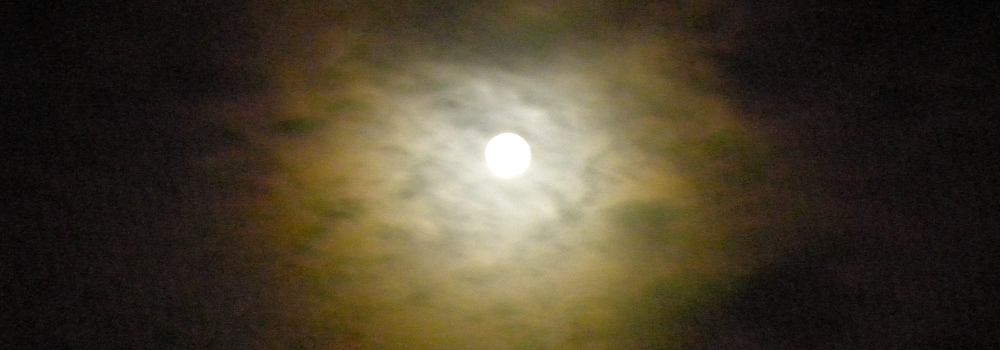
Full Moon. Memorial of Christ′s Death.
|