|
Venus is the second planet from the Sun. It is the second-brightest natural object in Earth's night sky after the Moon, Venus can cast shadows and can be, on rare occasion, visible to the naked eye in broad daylight. Venus lies inside of the orbit of the Earth, and so never appears to venture far from the Sun, either setting in the west just after dusk or rising in the east a bit before dawn. Venus has a rotation period of 243 Earth days and takes longer to rotate about its axis than any other planet in the Solar System by far, and does so in the opposite direction to all but Uranus (meaning the Sun rises in the west and sets in the east).
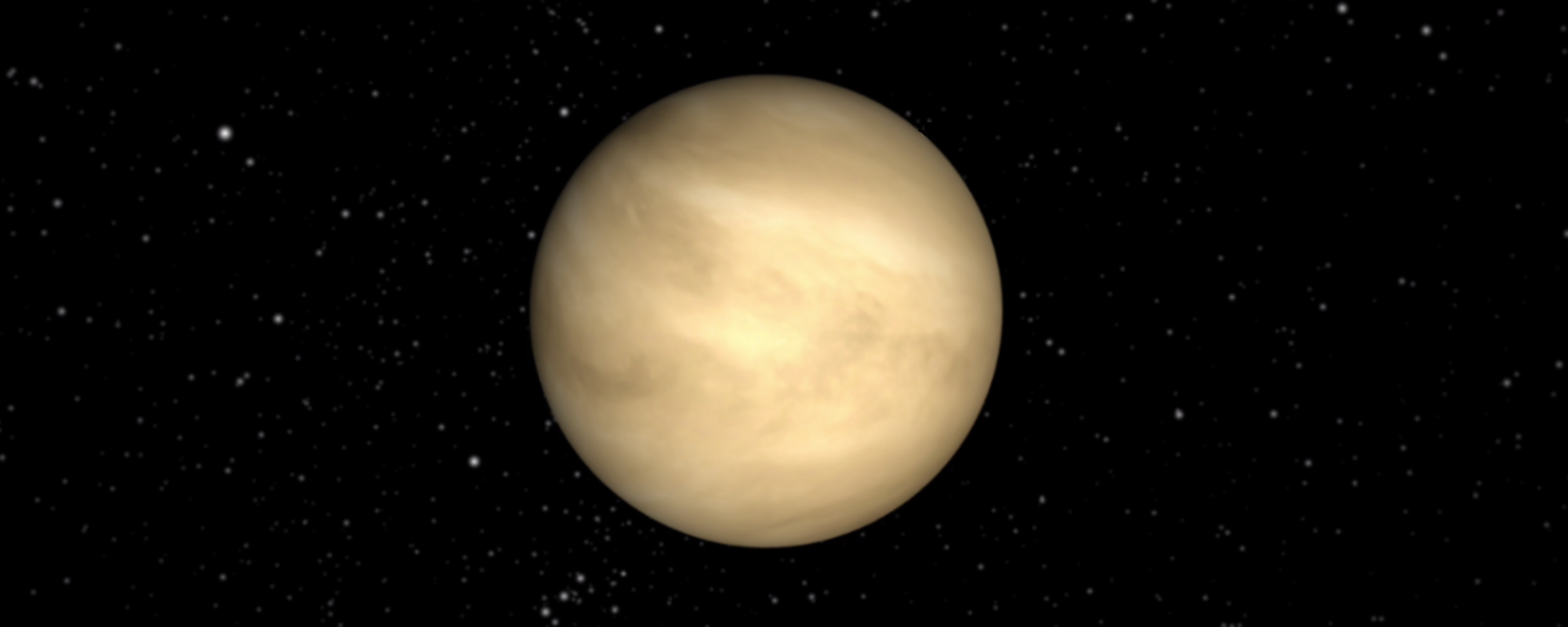
(m5pr-planet-venus.venus) The Planets, Venus
Credit: Solar System Scope
Facts about Venus
Discovered: Known by the Ancients
Planet Type: Terrestrial planet
Average Distance from Sun: 67.24 million miles
Equatorial Diameter: 7521 miles
Axil Tilt (to orbit): 177.36 °
Inclination to Ecliptic: 3.39458 °
Length of Day (rotation period): 243 days
Length of Year (orbital period): 224.701 days
Orbital Eccentricity: ~0.007
Surface Gravity (amount times Earth gravity):
Surface Temperature: 867 ° F.
Moons: None
Rings: None
|