|
Uranus is the seventh planet from the Sun. It has the third-largest planetary radius and fourth-largest planetary mass in the Solar System. Uranus is similar in composition to Neptune, and both have bulk chemical compositions which differ from that of the larger gas giants Jupiter and Saturn. For this reason, scientists often classify Uranus and Neptune as "ice giants" to distinguish them from the other gas giants.
During the 2nd century BCE, Hipparchos – the Greek astronomer, mathematician and founder of trigonometry – apparently recorded the planet as a star in his star catalogue which he completed in 129 BCE.
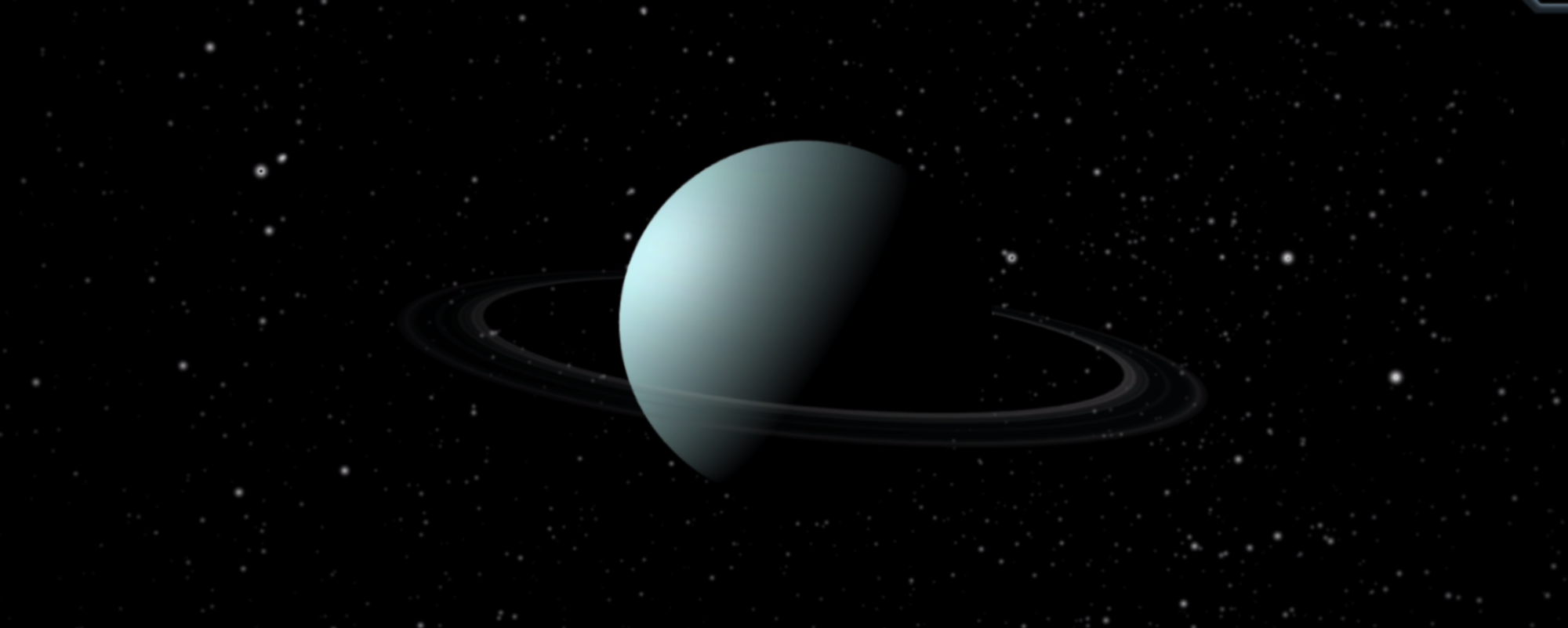
(m5pr-planet-uranus-aa.image) The Planets, Uranus
Credit: Solar System Scope
Facts about Uranus
Discovered: William Herschel
Date Discovered: 13 March 1781
Planet Type: Gas-Ice Giants
Average Distance from Sun: 1.79 billion miles
Equatorial Diameter: 15,882 miles
Axil Tilt (to orbit): 97.77 °
Inclination to Ecliptic: .773 °
Length of Day (rotation period):
Length of Year (orbital period): 84 years
Orbital Eccentricity: ~0.047
Surface Gravity (amount times Earth gravity):
Surface Temperature: -243 ° F. to -370 ° F.
Moons: 27
Rings: Yes, faint
Moons of Uranus
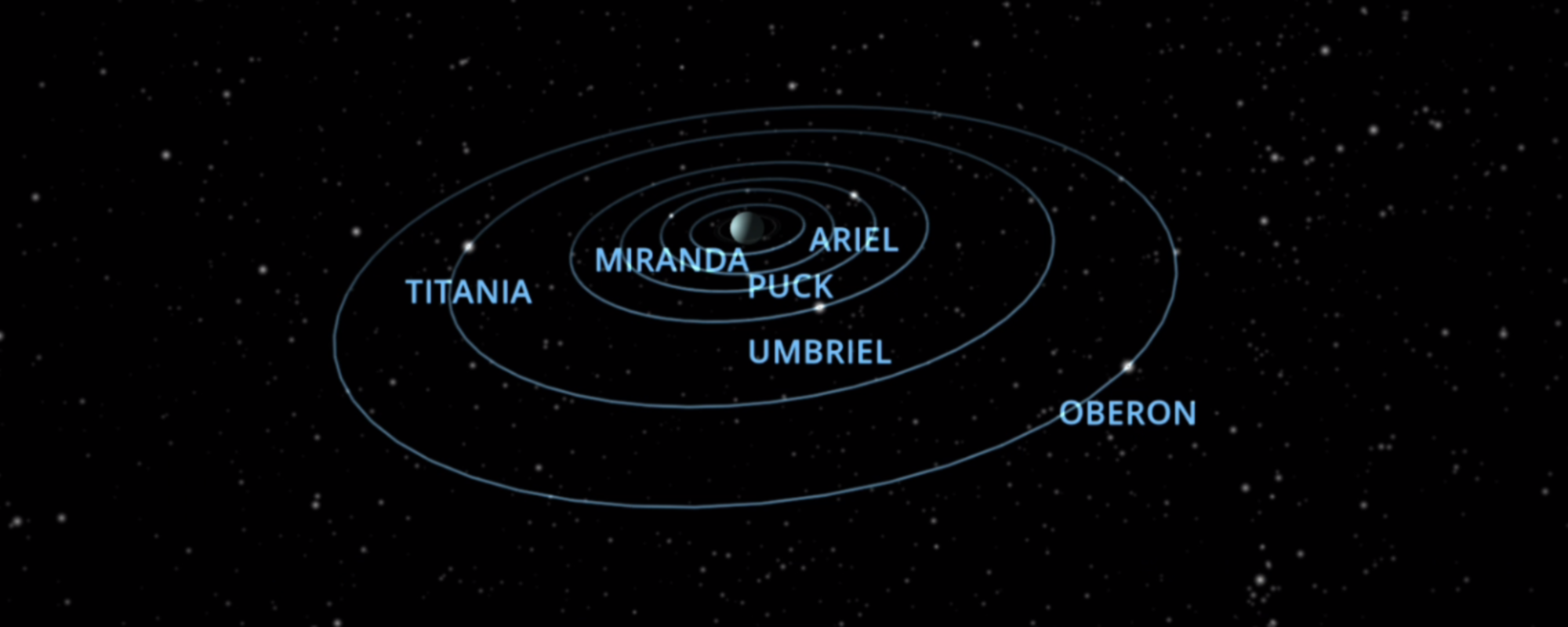
(m5pr-planet-uranus-aa.image) Moons of Uranus
Credit: Solar System Scope
|