|
Saturn is the sixth planet from the Sun and the second largest in the Solar System, after Jupiter. It has average radius of about nine times that of Earth. It only has one-eighth the average density of Earth, however, with its larger volume, Saturn is about 95 times more massive than the Earth. The Romans named the seventh day of the week Saturday after the planet Saturn, some time no later than the 2nd century.
The most famous feature of this planet is its prominent ring system, which is composed mostly of ice particles and a smaller amount of rocky debris and dust.
At least 82 moons are known to orbit Saturn, of which 53 are officially named. However, this does not include the hundreds of moon-lets in its rings.
Titan, the largest moon orbiting Saturn, is the second-largest in the Solar System. Titan is larger than the planet Mercury, although less massive, and is the only moon in the Solar System to have a substantial atmosphere.
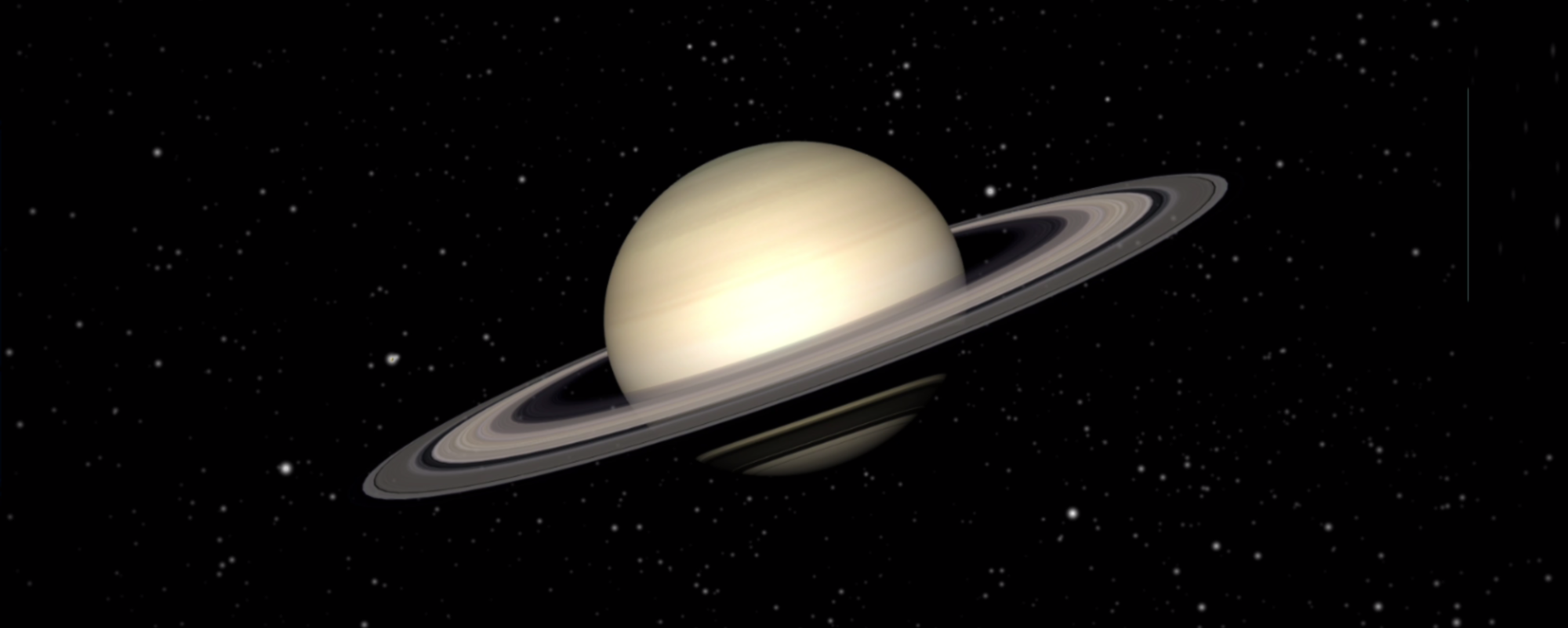
(m5pr-planet-saturn.saturn) The Planets, Saturn
Credit: Solar System Scope
Facts about Saturn
Discovered: Known to the Ancients
Planet Type: Gas Giant
Average Distance from Sun: 886 million miles
Equatorial Diameter: 74,898 miles
Axil Tilt (to orbit): 26.73 °
Inclination to Ecliptic: 2.485 °
Length of Day (rotation period): 10 hours 33 minutes 38 seconds
Length of Year (orbital period): 29.4571 years
Orbital Eccentricity: ~0.054
Surface Gravity (amount times Earth gravity): .91
Surface Temperature: -300 ° F.
Moons: 53 confirmed, 29 provisional
Rings: Yes, ice, rock and dust
|