|
USS Texas Story, (BB-35):
USS Texas, identified as the 35th Battleship (BB), was a New York class battleship built in the United States, commissioned from 1914 to 1948 and is currently a museum ship owned by the Texas Historical Foundation. This boat is the last dreadnought of its class that remains intact. There was one previous USS Texas battleship (B) which was a pre-dreadnought battleship and was commissioned from 1895 to 1911.
Two other warships were commissioned in the United States and named after the state of Texas. The first was the USS Texas, CGN-39 (1977-1993), the CGN-39 was the second nuclear-powered guided-missile cruiser of the Virginia class. The second was the USS Texas, SSN-775 (2006 to date) which was the second nuclear submarine of the Virginia class.
Note: the class of a ship referrs to the first built ship of that type. In the case of the Battleship Texas, there were two ships built, the first one, built in the Brooklyn Shipyard was the USS New York, BB34 and the second one was the USS Texas, BB35. Both ships were of the super-dreadnought battleship type.
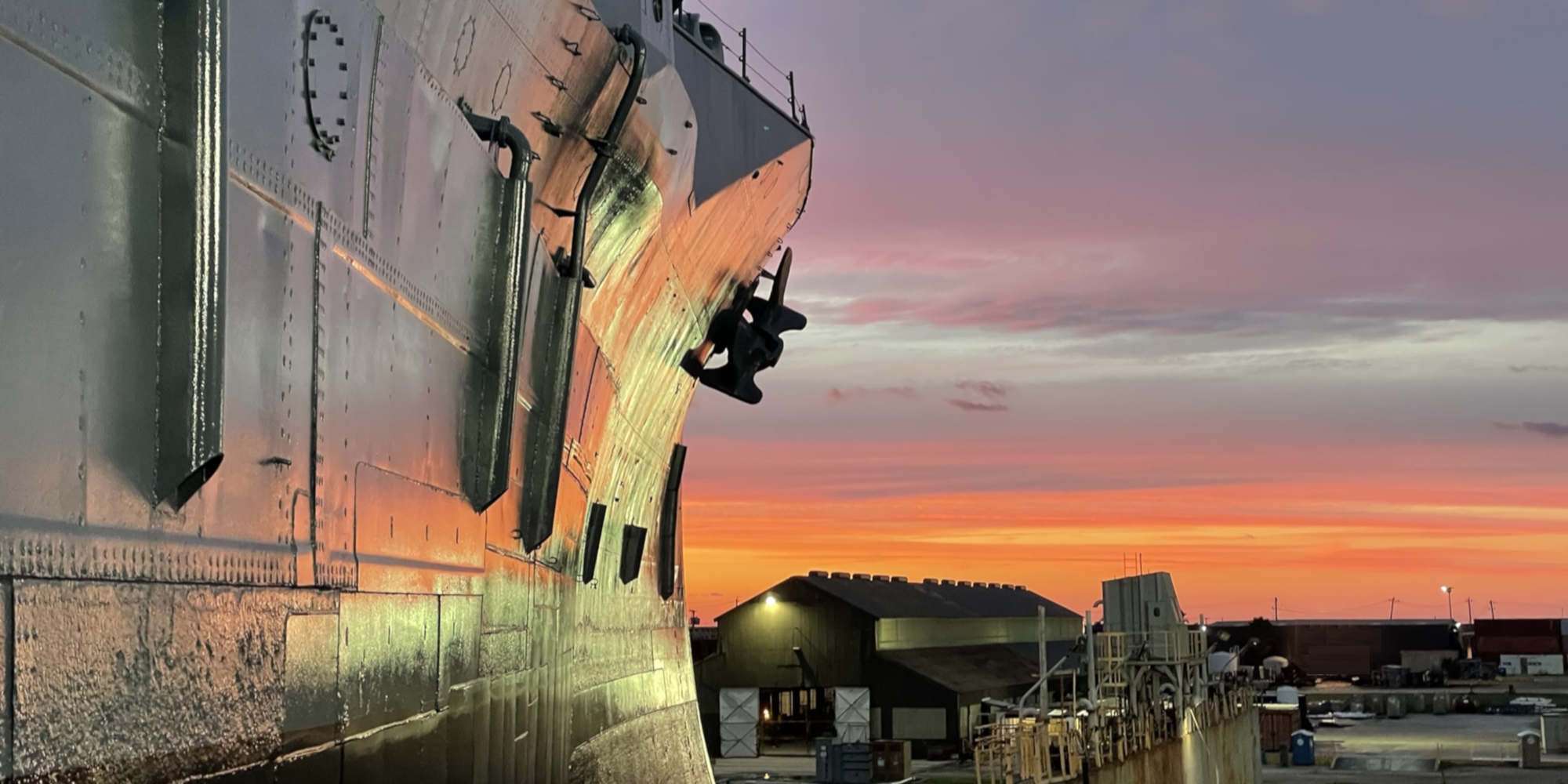
(m4boat-tx-bb35-2024-bb35-sunset) Battleship Texas
Photo Credit: Battleship Texas Foundation
Location:
2022-2024 Driving Directions:
After crossing the Galveston Causeway bridge (IH 45) onto Galveston Island, take the first exit (exit 1C, SH 275, Harborside Dr, Teichman Rd) and continue on Broadway Street to Harbor Drive-Teichman Road underpass. Turn left onto SH 275 and drive 2.75 miles along Harborside Drive to 51st Street. Turn left at 51st Street onto Pelican Island Causeway and drive onto Pelican Island where the road becomes Sea Wolf Parkway and continue for two miles to Bradner-Todd Road. Turn right, drive 3/4 mile to where the road turns left and becomes Todd Road, continue another 3/4 mile to 2920 Todd Road which is the parking lot for Gulf Copper Dry Dock and Rig Repair. Look for signs directing you where to park
Coordinates:
29.3156161, -94.7976721
Elevation:
5 feet
Built:
Builder:
Newport News Shipbuilding
Site:
Norfolk Navy Yard
Cost to Build:
$5,830,000.00 million
Boat Specification
Boat Type-Designation:
Battleship - BB-35
Date Commissioned
12 March 1914
Date De-commissioned:
21 April 1948
Class and Type:
New York-class Super-dreadnought Battleship
Displacement:
27,000 long tons, (27,443 tons)
Full Load: 28,367 long tons, (28,822 tons)
Overall Length:
573 feet (175 m)
Waterline Length:
565 feet (172 m)
Beam:
95 feet 2.5 inches (29.020 m)
Draft Mean:
28 feet 6 inches (8.69 m)
Draft Maximum:
29 feet 7 inches (9.02 m)
Installed Power:
14 each Babcock & Wilcox water-tube boilers
28,100 shaft horsepower
Propulsion:
2 each triple-expansion steam engines, w/ 2 each screw propellers
Speed:
21 knots (38.9 km/h, 24.1 mph)
Range:
8,125 miles (13,075 km, 7060 nmi)
Complement:
1042 officers and men
Armament:
History:
After leaving the Norfolk Navy Yard, BB-35 set course for New York Navy Yard and spent three weeks there undergoing installation of fire control equipment. During this time, President Wilson ordered a number of ships to Mexican water for what has been called the "Tampico Incident". Due to the intensity of the situation USS Texas put to sea on 13 May 1914 and went directly into operational duty without a shakedown cruise. The Texas arrived in Mexican water on 26 May and remained there until 08 August 1914, when she sailed to Nipe Bay, Cuba and from there steamed to New York, returning to the Navy Yard on 21 August. Later that month, the Texas returned to the Mexican coast until 04 November when the ship sailed to Galveston. In Galveston, the then Governor Colquitt presented the ship′s silver service to Captain Grant. That service was purchased for $10,000.00 by the Men′s Business League of Waco, Texas.
After returning to New York Navy Yard for repairs, the next service was in helping to rescue passengers of the damaged Holland America Line passenger ship on 25 May 1915. In 1916, the Texas became the first US battleship to mount anti-aircraft guns by adding two 3 inch 50 caliber guns on platforms atop the boat cranes and the first to use the analog forerunners of today′s computers.
WWI
In April 1917, the US was pressured into the ongoing war due to unrestricted submarine water in the North Atlantic. Thus, when the US declared war, the Texas was found riding at anchor in the mouth of the York River with other Atlantic battleships. Then, on 30 January 1918, the Texas left New York, crossed the Atlantic and joined the Battleship Division 9 which had joined the Britain&prim;s 6th Battle Squadron on duty with the British Grand Fleet in the North Sea. For the remainder of the war, the Texas and other US battleships continued to operate with the Grand Fleet until the Armistice ended hostilities on 11 November 1918. After accompanying the Grand Fleet to meet the surrendering German Fleet, the American contingent arrived in Portland Harbour, England on 04 December 1918. Later, on 14 December, Texas and the other US ships departed to return to the United States.
On 10 March 1919, the Texas became the first battleship to launch an airplane off of the deck when it was in Guantanamo Bay. Then, on 26 July 1919, the Texas entered the newly form Pacific Fleet where it stayed for the next five and a half years. It was not until 17 July 1919 until the Navy′s adopted the new alpha-numeric designation system that the Texas was designated BB-35.
On 31 July 1925, the Texas entered Norfolk Navy Yard to receive a major modernization overhaul. This overhaul replaced the 14 coal-fired boilers with Bureau Express oil-fired boilers, added the anti-torpedo blisters and upgraded the fire control equipment, all of which was completed by 23 November 1926. Too, the armament rearranged and increased, and the torpedo tubes were removed. After this overhaul, the Texas was designated the flagship of the US Fleet and resumed duty along the eastern seaboard. Then in December 1938, the Texas received for testing the first ship borne radar, and then in 1941 was one of fourteen ships to be fitted with the newest CXAM-1 radar system.
WWII
When war broke out during September 1939 in Europe, the Texas began operating on what was the United States attempt to keep the war out of the Western Hemisphere, an operation called Neutrality Patrol. In February 1941, the US 1st Marine Division was activated aboard the Texas. Later that year, the Texas was stalked unsuccessfully by the German submarine U-202, probably due to the fact that the sub′s maximum speed was 17 knots and no match for the Texas.
On Sunday, 07 December 1941, the infamous day of the Japanese attack at Pearl Harbor, the Texas was at Casco Bay Maine undergoing a rest port period.
Nearly a year later, the Texas embarked upon its first major combat operation by joining in on the invasion of North Africa. The Texas entered the battle when the Army requested fire upon an ammunition dump near Port Lyauey. The last mission of the Texas was on 10 November 1941 when the Texas expended 273 14 inch round and six 5 inch rounds in Operation Torch. Then after the cease fire in Africa on 11 November, the Texas left on 16 November to return to the United States.
Walter Cronkite was a war correspondent attached to the Texas during the Operation Torch and was the first to issue an uncensored news report to be published about the war in Africa. His experiences aboard the Texas launched his career as a war correspondent.
Ongoing War in Europe
As the war in Europe continued on, the Texas participated in more ongoing operations.
More to come soon.
Museum Commission:
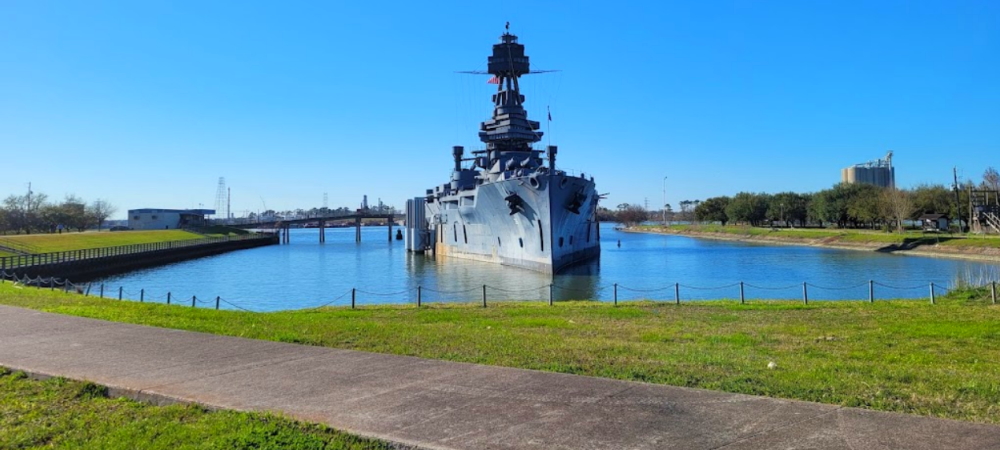
On 17 April 1947, the Battleship Texas Commission was established by the Texas Legislature to care for the ship. The first task was to tow the ship from Baltimore to San Jacinto Battleground which was at a cost of $225,000.00. Then, on 17 March 1948, the Texas began its journey to the new anchorage which was set to be along the Houston Ship Channel near to the San Jacinto Monument at the San Jacinto State Park. The Texas arrived on 20 April 1948 to be turned over to the state of Texas to serve as a permanent memorial.
Then, on 21 April 1948, the boat was ceremoniously decommissioned and then nine days later, on 30 April 1948, the name USS Texas was struck from the Naval Vessel Register and became the first permanent battleship memorial museum in the United States. When the Texas was presented to the State of Texas, it was commissioned as the Flagship of the Texas Navy.
However, it seems that the state of Texas was not up to the task of maintaining the ship. The paint began to deteriorate, the hull slowly corroded, water began to intrude, the steel deteriorated and the wooden main deck of the ship was so rotted that rain water was leaking through into the interior of the ship and pooling in various compartment. At the same time, pipes open to the sea ultimately failed, flooding various voids and bunkers.
In 1968, the wooden main deck was removed and replaced with concrete, however, the concrete eventually cracked and again, rainwater began to leak into the spaces below. Despite three local charitable institutions contributing $50,000 to enable the Commission to sandblast and pain the hull, this was not enough to save the ship. Newspaper articles reported that the Texas was loosing the battle from neglect and insufficient funding.
Nevertheless, the Texas was, in 1975 designated a National Historical Mechanical Engineering Landmark by the American Society of Mechanical Engineers. A year later, the National Park Service designated the Texas as a National Historic Landmark.
Texas Parks and Wildlife:
By 1983, because of concerns with the leadership of the Battleship Texas Commission led to the State Legislature to transfer control of the Texas to the Texas Parks and Wildlife Department (TPWD) and in doing so, abolished the commission effective 31 August 1983.
The first action of the TPWD was to hire a firm of naval architects to survey the ship, assess its condition and make recommendations as to what actions should be take to preserve the ship. The survey revealed that the ship's watertight integrity was badly compromised, the hull was open to the sea in many places, and many compartments were full of standing rain water. The architects determined that the ship needed to go to dry dock for major repairs to the hull and to keep rain water from coming through the porous concrete deck.
As part of this plan, serious consideration was given to protecting sensitive fabrics and restoring the interior of the ship.[75] After a five-year-long fund-raising campaign, $15 million was collected to dry dock the ship and complete necessary repairs.
Dry Dock 1988-1990:
On 13 December 1988, Texas was pulled from her berth with great difficulty over the course of six hours by six large tugboats to begin the 56-mile trip from her San Jacinto Battleground berth to Todd Shipyards in Galveston, Texas. Once under tow in the Houston Ship Channel she started taking on water, with a serious breach just forward of the engine rooms. The crew had three 4-inch pumps and two 2-inch pumps in continuous service to combat the flooding. During the nine-plus hour transit, the ship′s draft increased by 18 to 20 in the stern. Just after 10 pm that evening, during high tide, the Texas entered the floating dry dock with just six inches to spare.
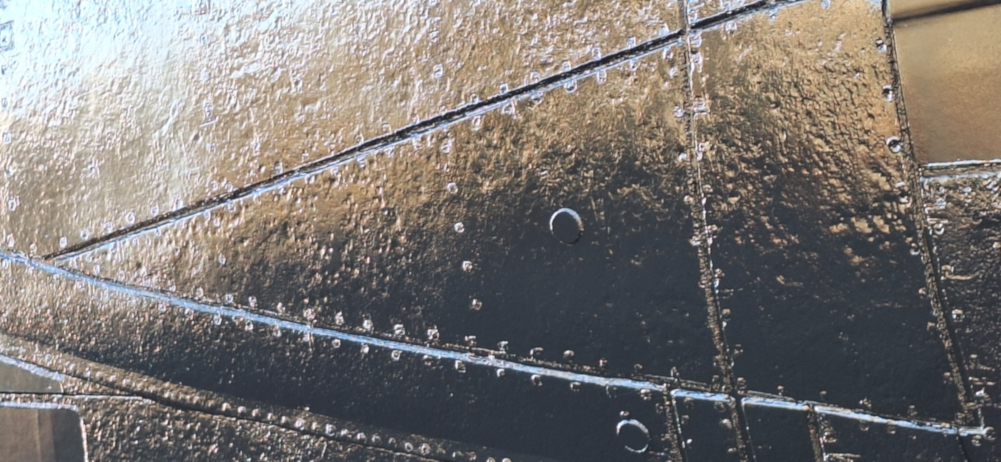
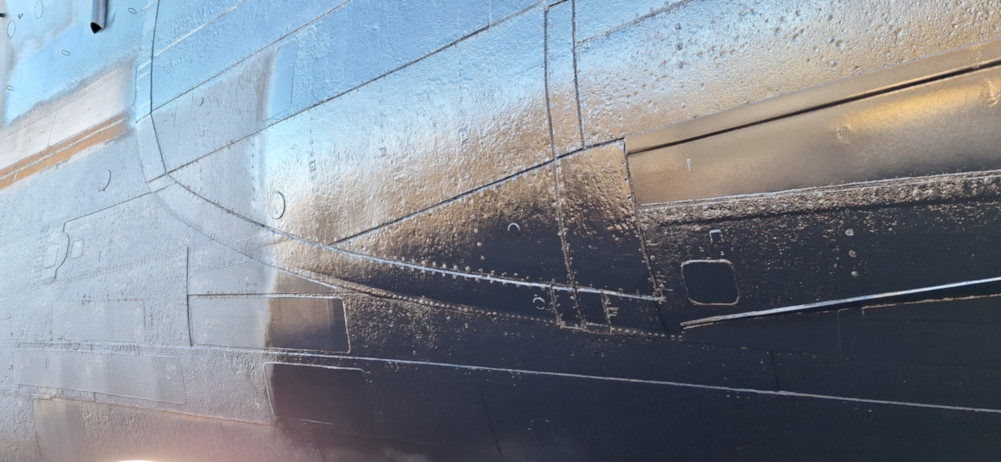
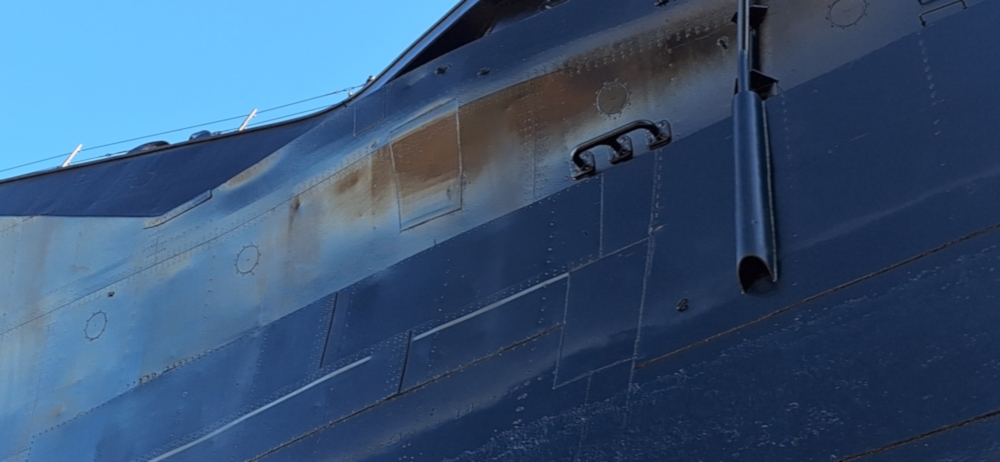
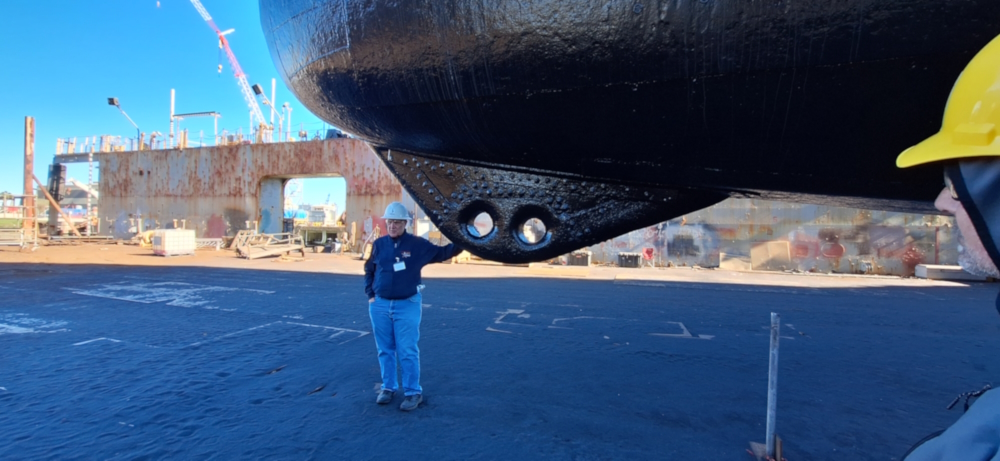
During this stay in dry dock, the Texas had more than 375,000 pounds of steel, about fifteen percent of the ships total hull replaced and more than forty thousand rivets were seal-welded on the underwater hull. Too, workers removed the concrete from the main deck in preparation of an installation of a new wood deck.
On 24 February 1990, the Texas was move to a fabrication facility on Green′s Bayou for further repairs. It was here that the wood deck was installed. Also, the Texas received replacement guns from the recently decommission Missouri as well as a new repaint with the 1945 dark blue paint scheme.
Repairs complete, the ship officially reopened to the public on 8 September 1990. Since returning to her slip at San Jacinto, members of the ship's staff and volunteers have worked to restore the interior spaces.
2022 Restoration Assessment:
$35 million
In 2019, the Texas Legislature approved the $35 million bid to repair the hull and allotted one year to finish the hull repair. Further, the Battleship foundation is planning to make the remaining interior repairs that will still be required.
With the initial money and time allotments nearing their end, additional funds were then allocated for the work to continue there at the dry dock to continue on the USS Texas.
Dry Dock 2022 - 2024:
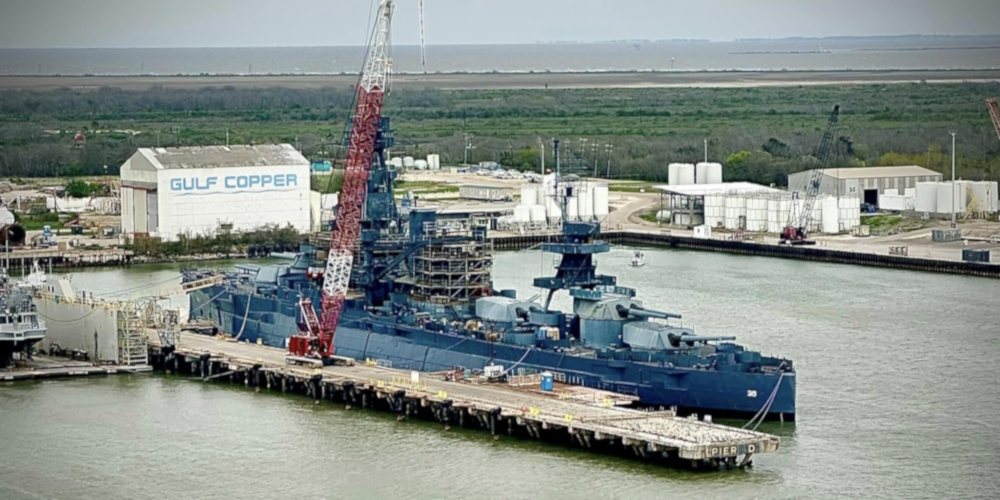
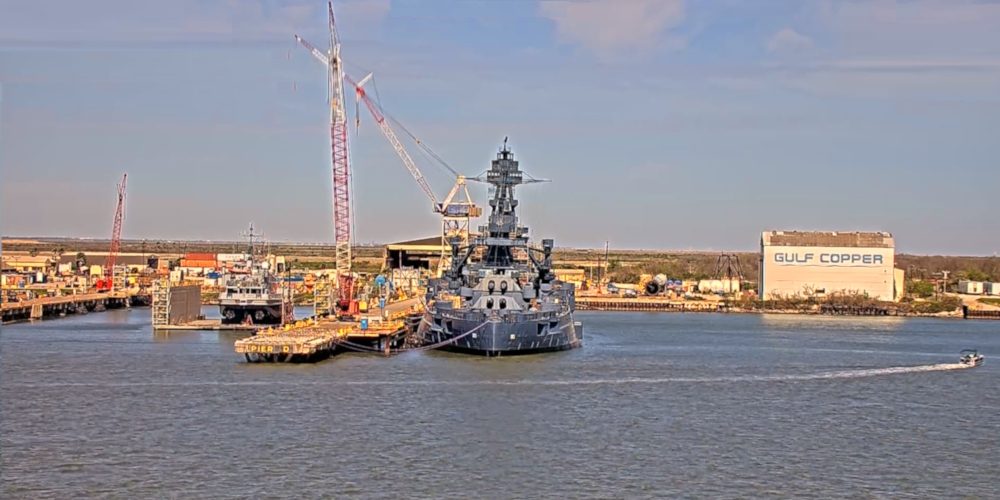
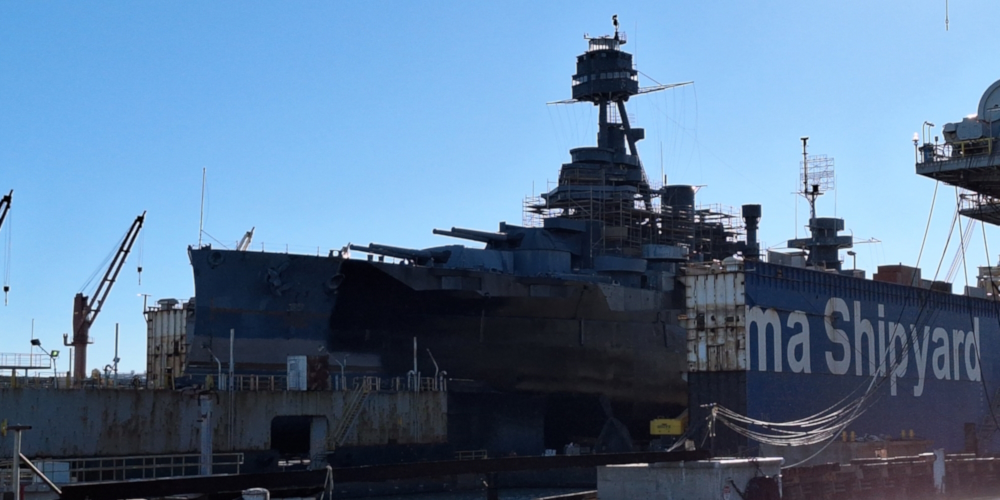
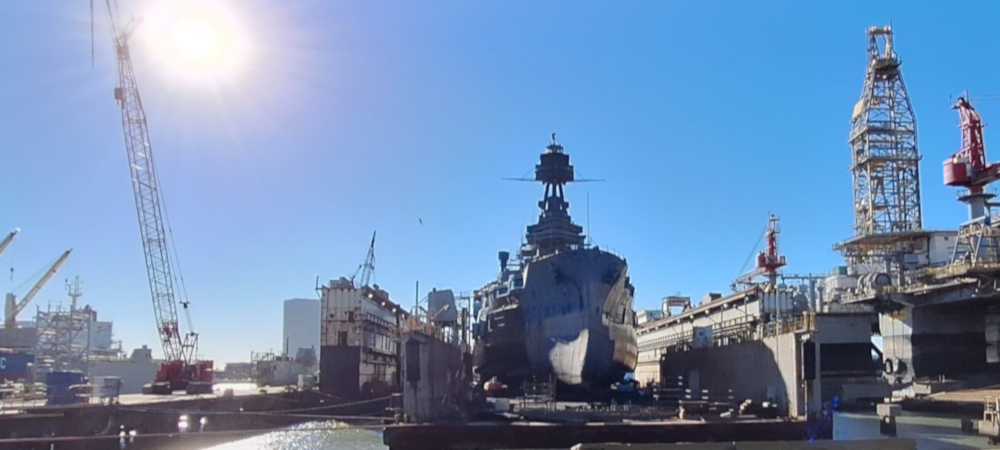
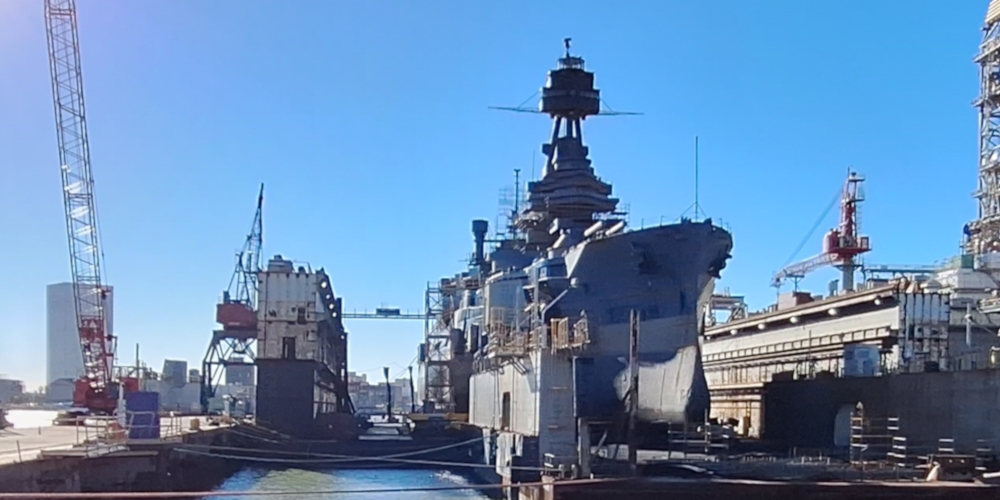
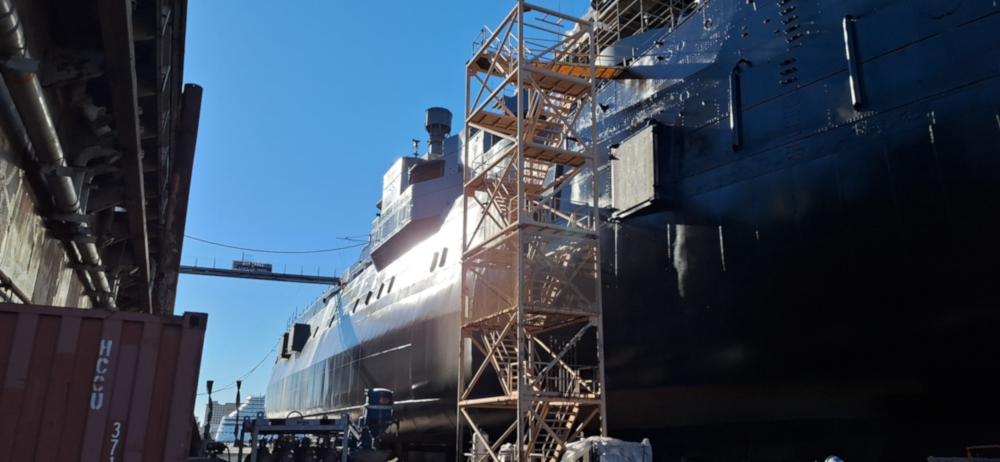
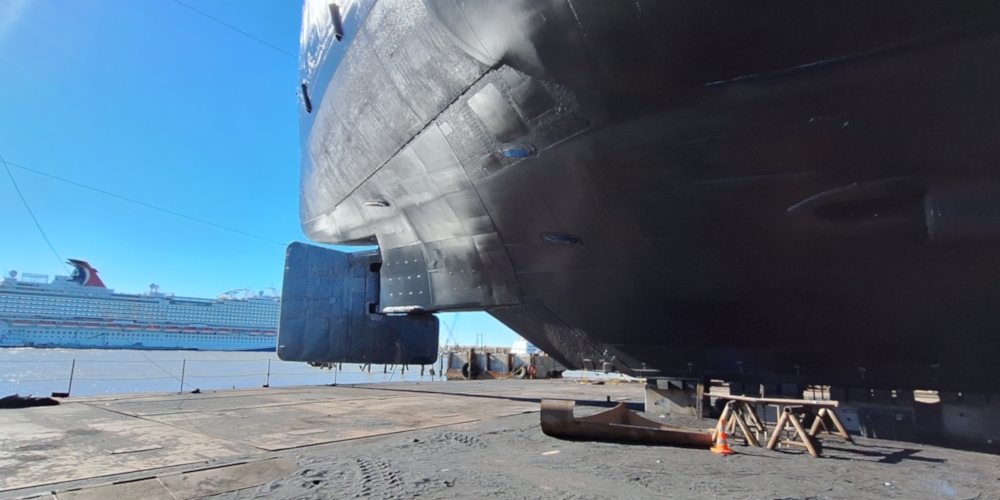
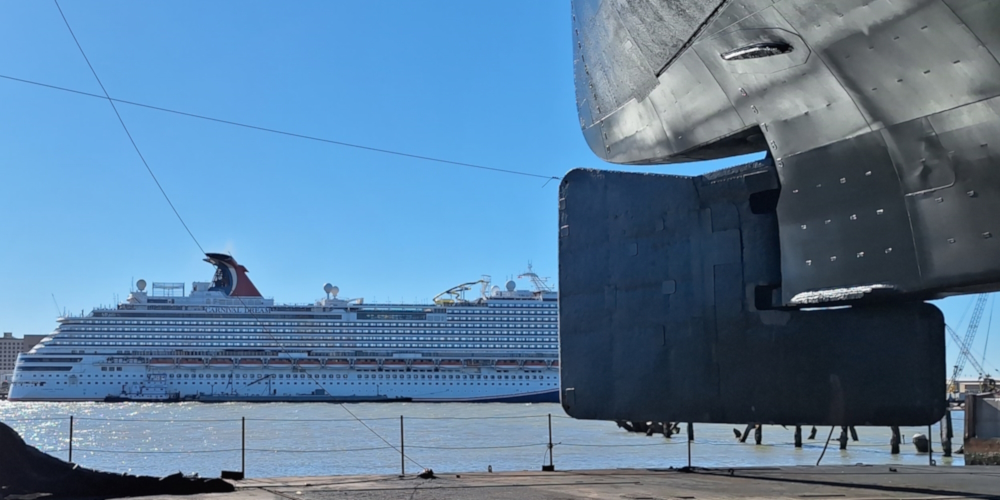
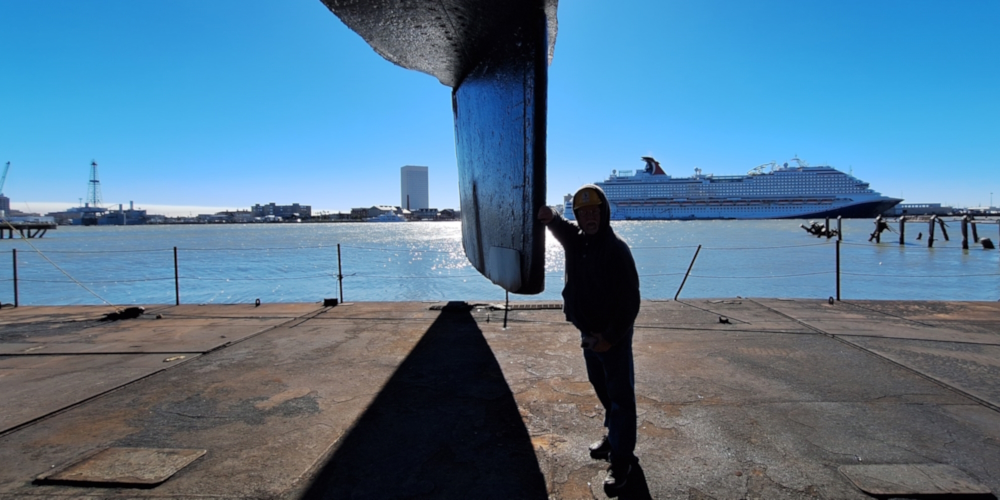
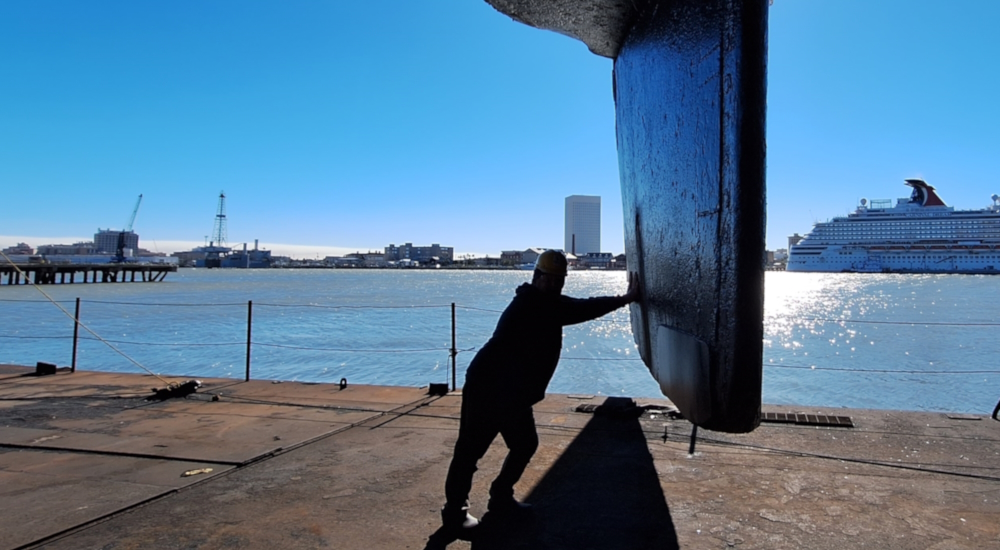
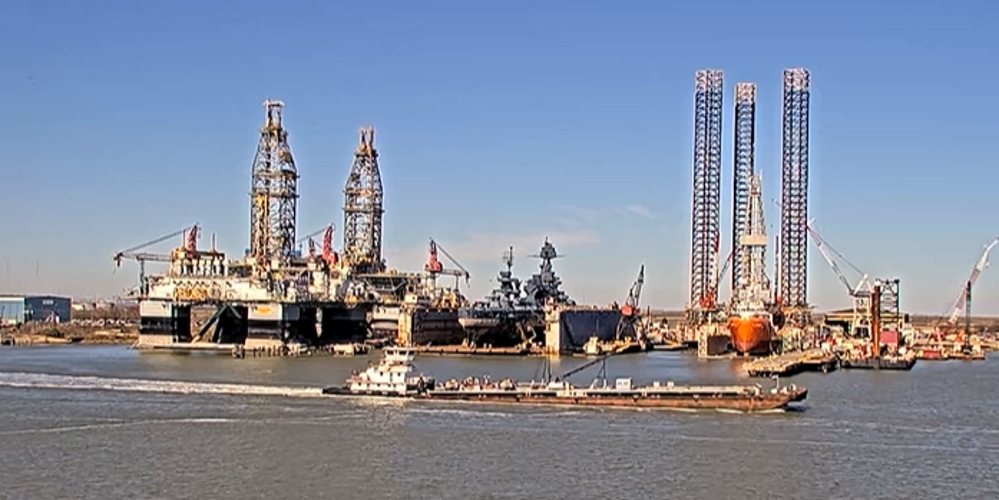
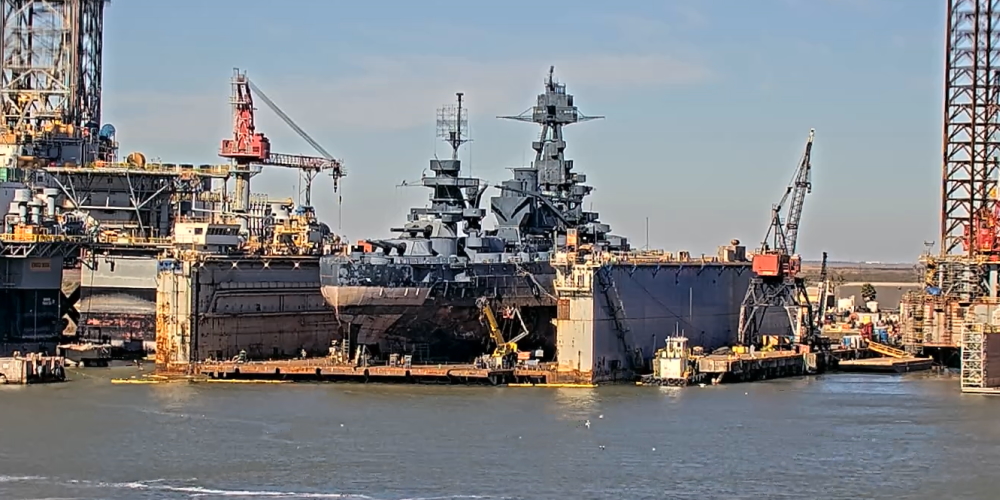
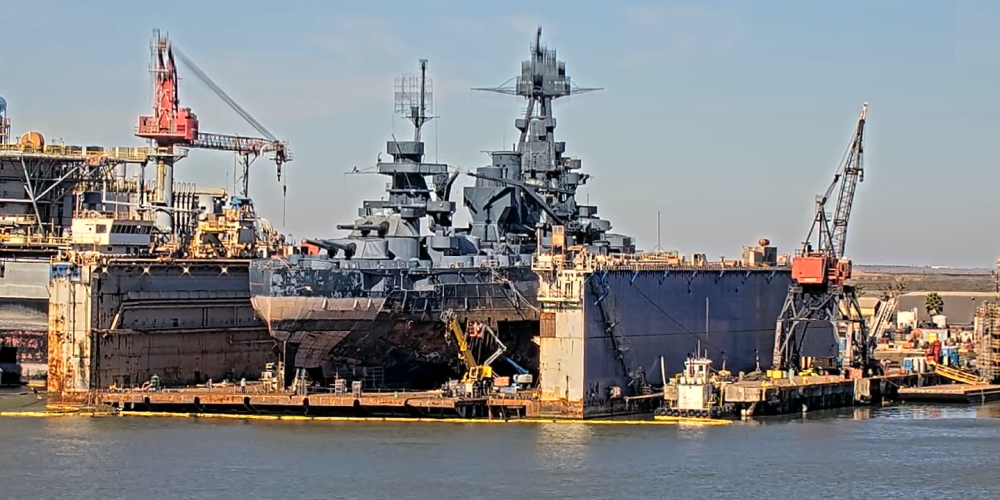
On 31 August 2022, the USS Texas is moved from its longtime home at San Jacinto Battleground and towed to a floating dry dock at Gulf Copper Dry Dock and Rig Repair in Galveston Texas for the hull repairs. The previous repair trip was to Galveston in 1988. The Battleship Texas will not be returned to San Jacinto Battleground and its new home has not been announced, however, it is rumored that it will be moored on the north side of Galveston Island across from where it is currently being rebuilt.
Removed from Drydock:
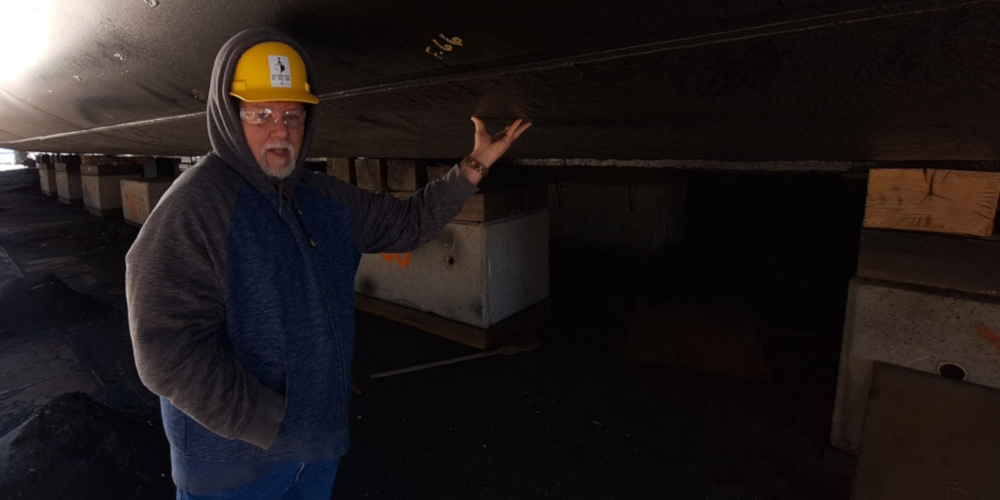
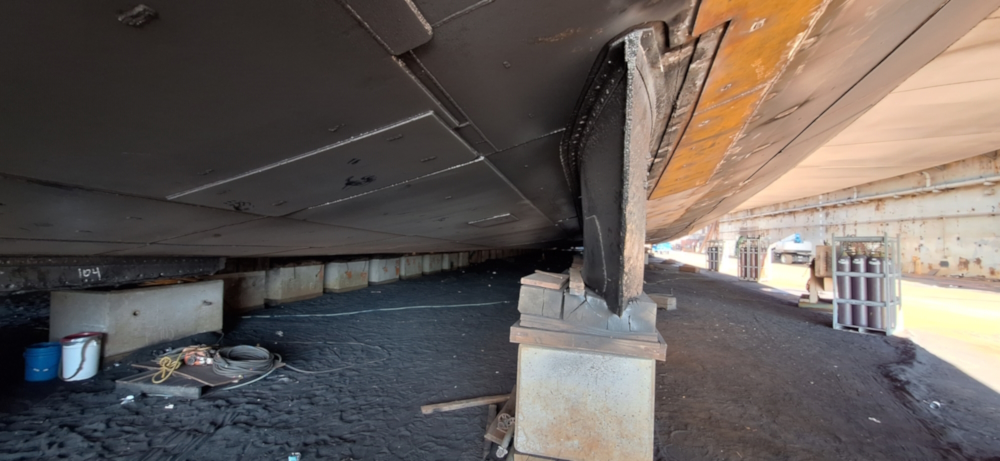
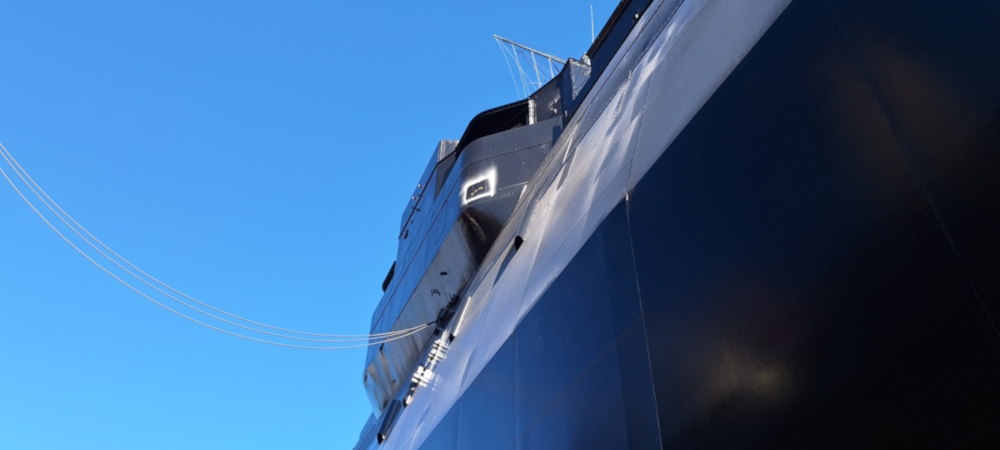
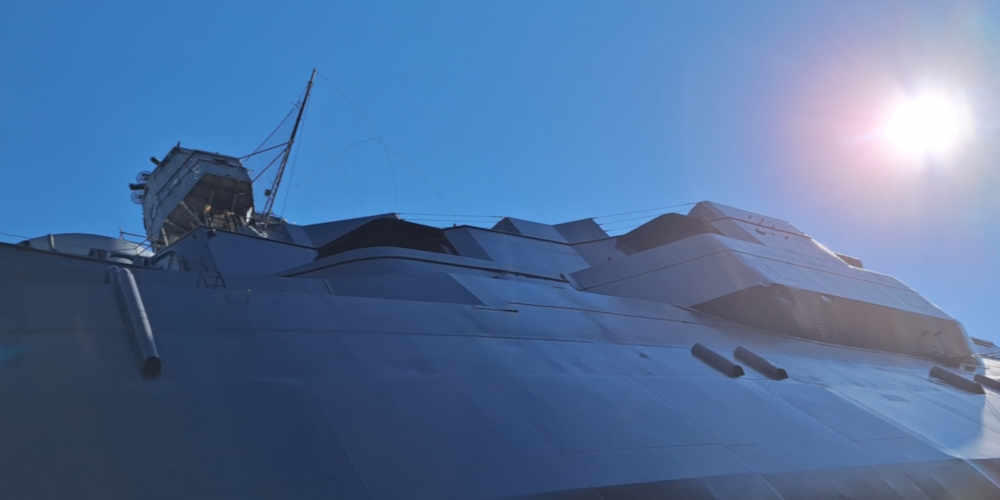
After more than eighteen months being supported upon a dry dock barge at the Gulf Copper Dry Dock & Rig Repair in Galveston, Texas, the 112 year old Battleship Texas (BB-35) has become ready to be re-floated.
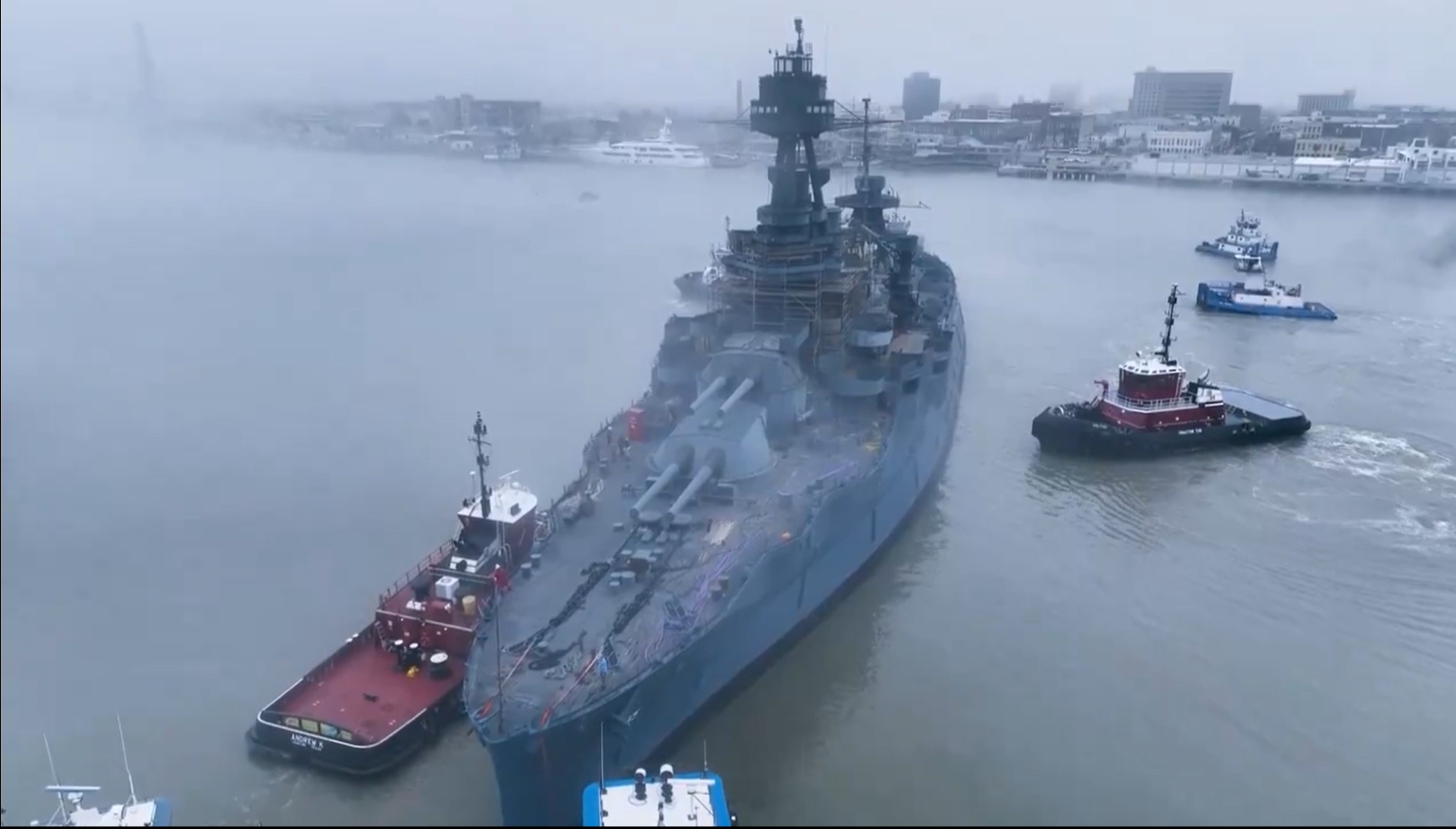
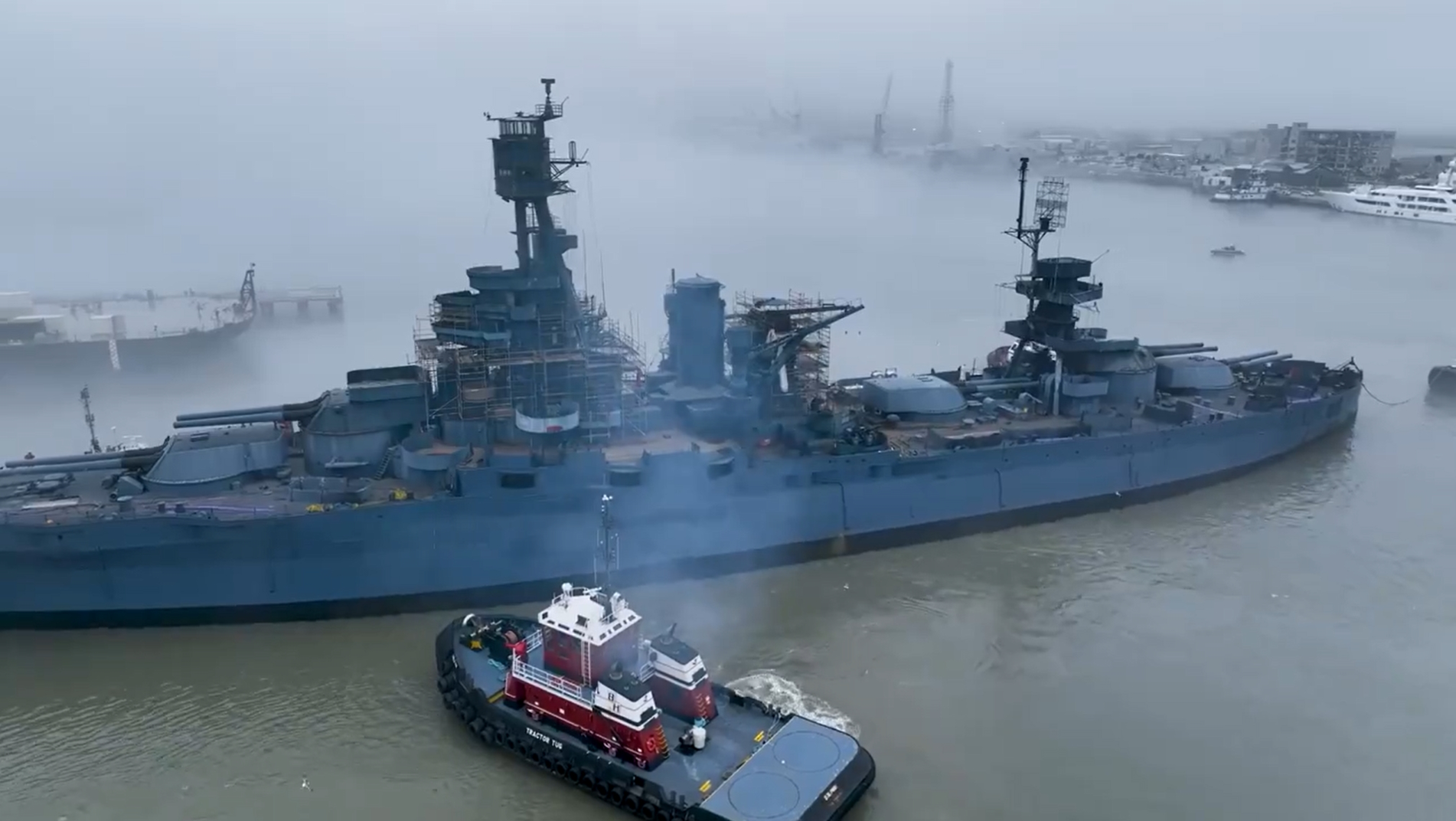
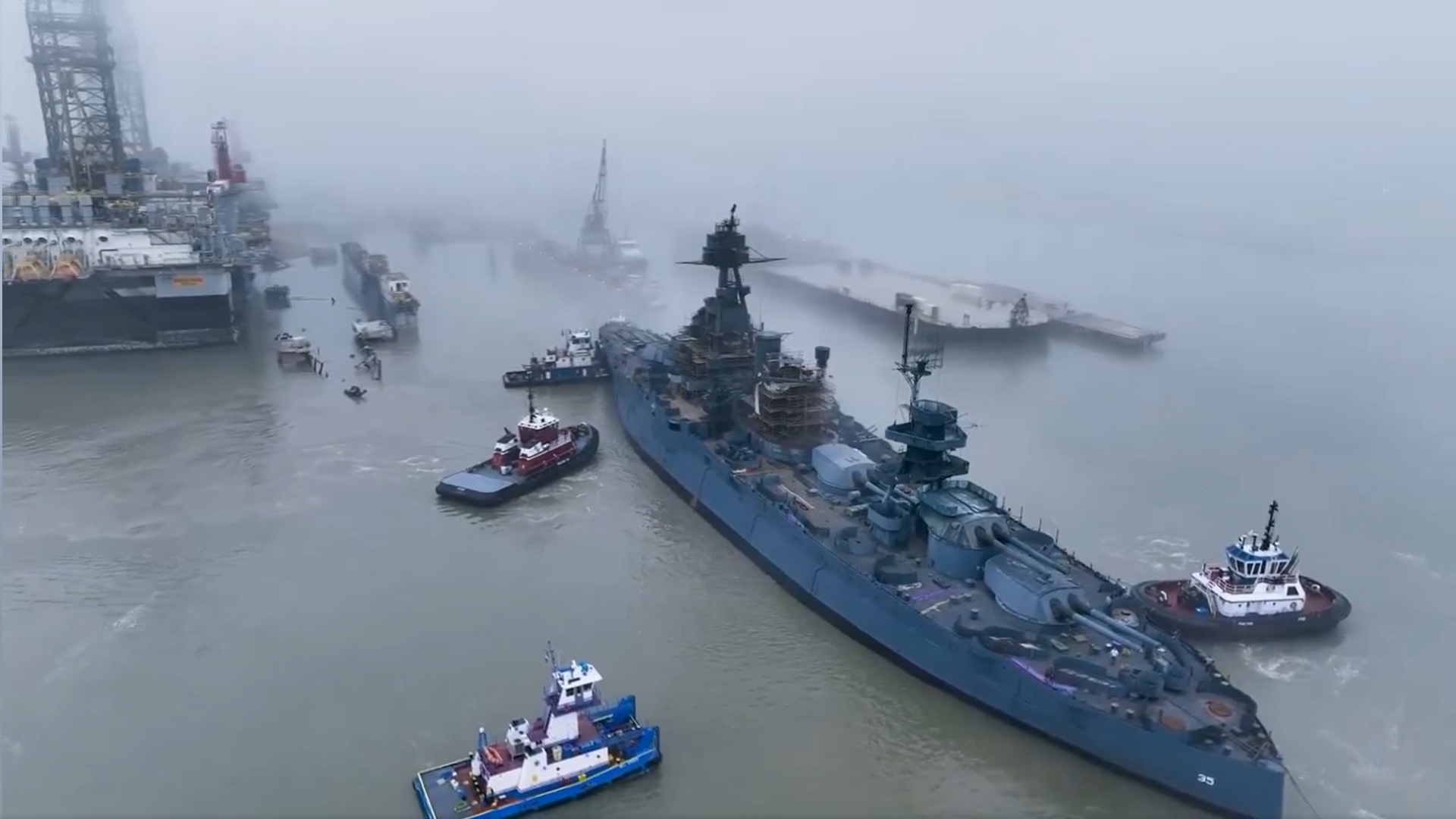
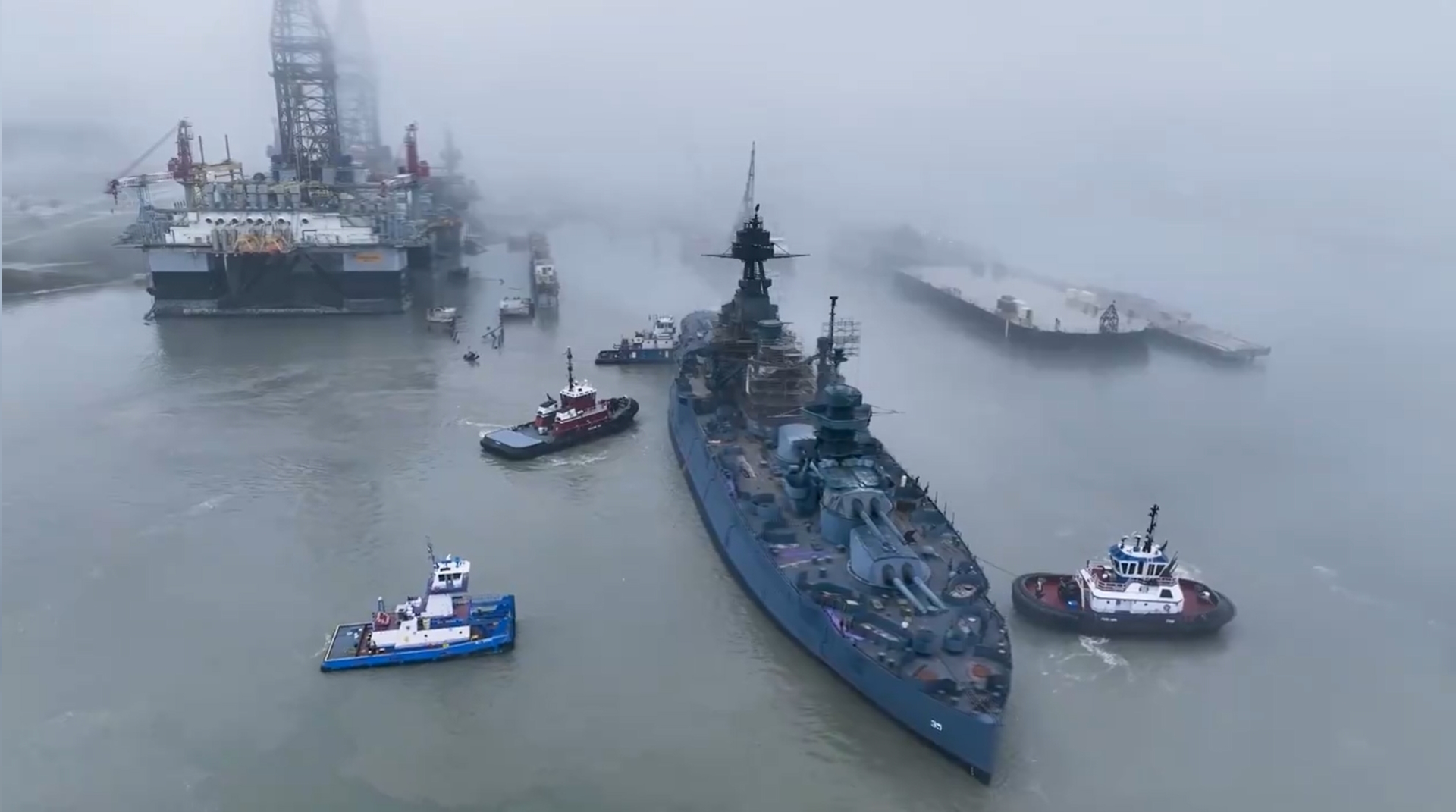
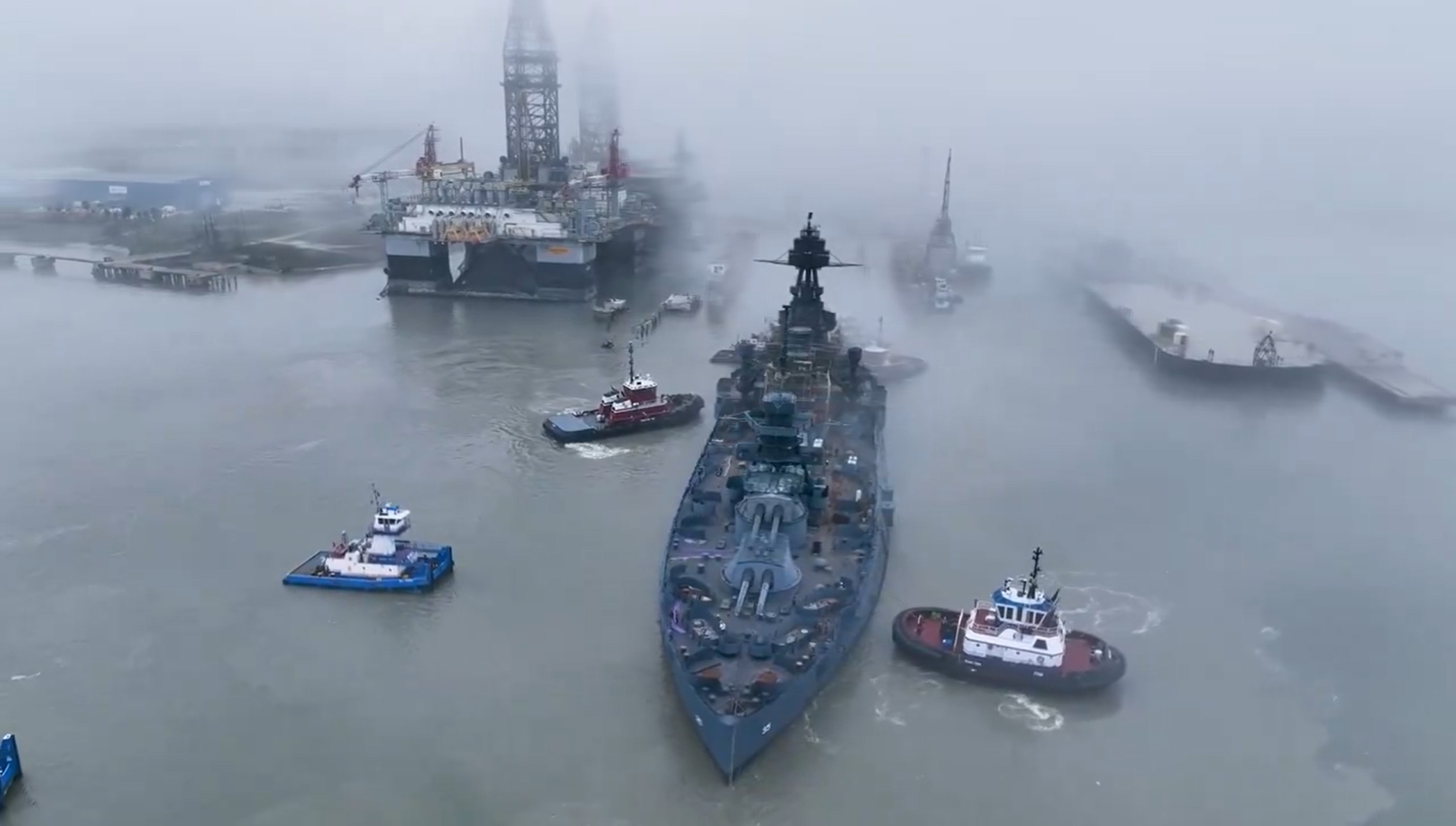
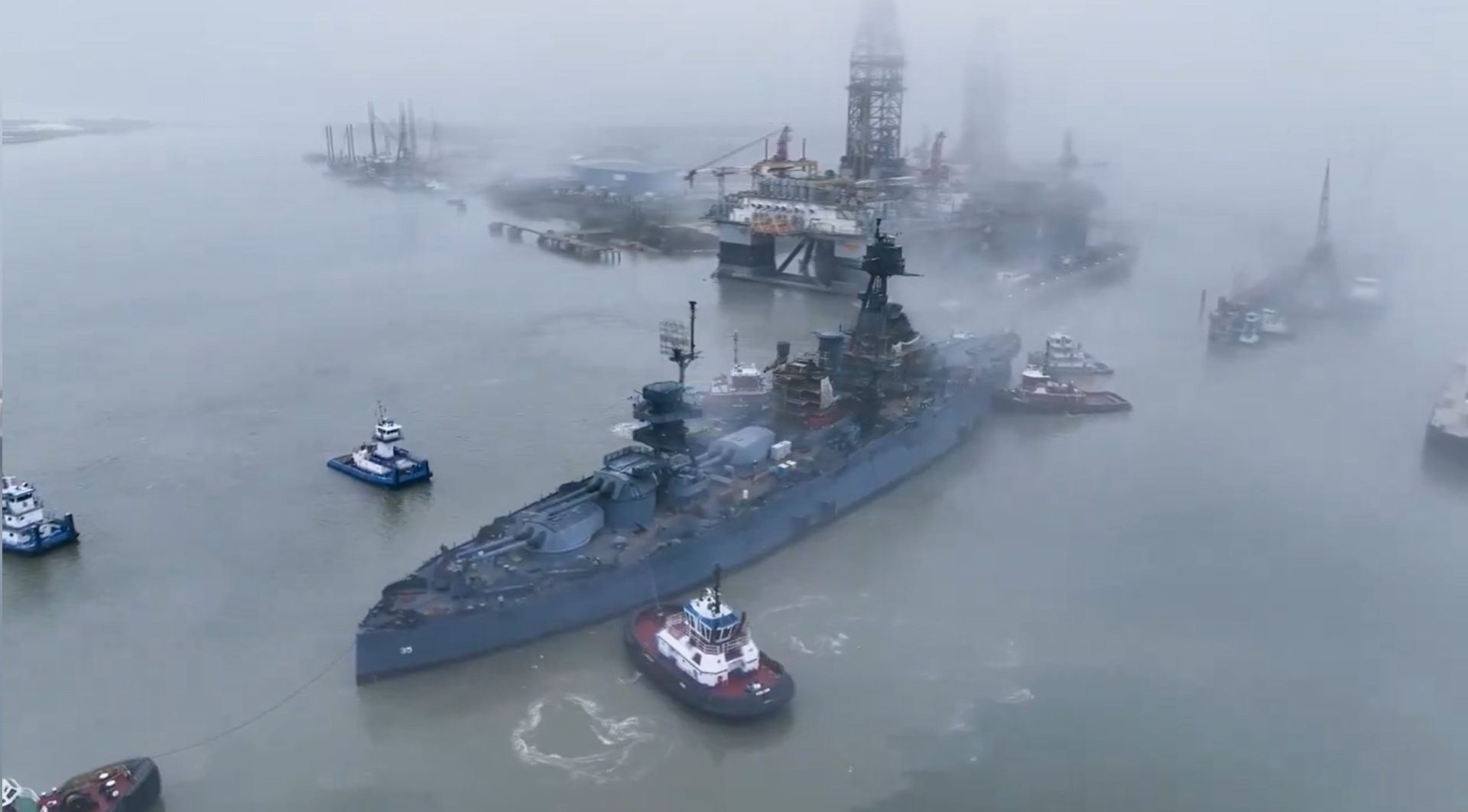
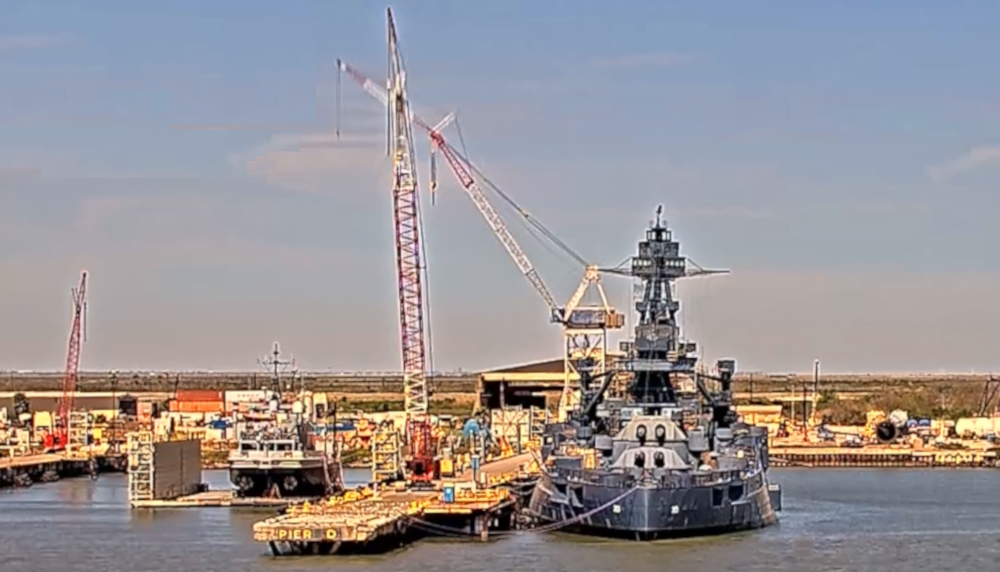
Therefore, on 05 March 2024, under cover of darkness and thick fog, the BB-35, was removed from the dry dock, re-floated, and made ready for the next leg of its journey.
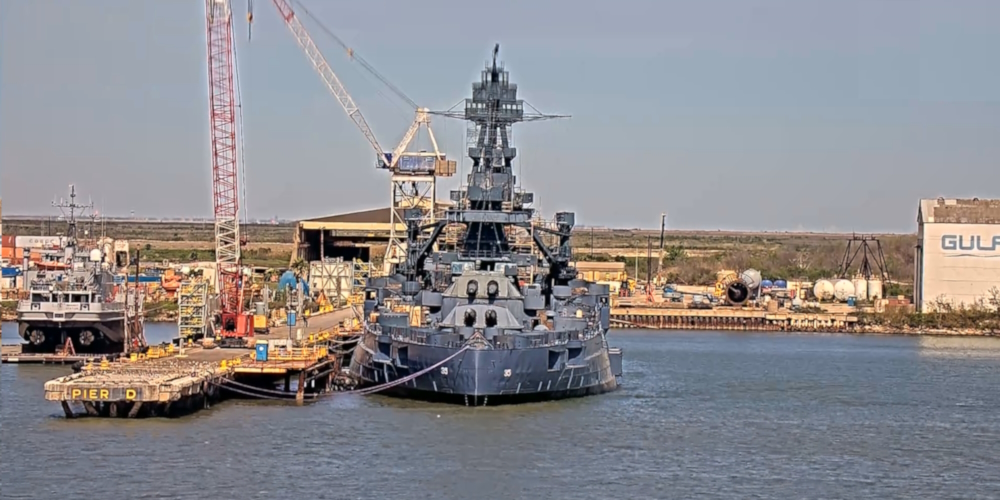
Early in the morning, getting ready long before seven am, the tugboats were in their position awaiting orders to begin the move from the dry dock berth. Then, by nine in the morning, several tugboats began to pull and push the 27,000 ton vessel, first out into the deeper waters of the Galveston channel, next along the channel just a couple hundred feet, then after a sharp turn, the BB-35 was pushed bow-first back along "PIER D" and then moored to its new temporary berth.
After it was moored, the BB-35 will remain at this location while it undergeos further restoration work. Then, at a later time, likely in the fall or winter of 2025, the BB-35 will be docked in a new berth more permanent berth where its will re-open to the public for tours.
Cost for Current Restoration:
$21.00 million
This amount was reported by several media sources, however, I have yet to have it confirmed by an official source.
Proposed Restoration Total Cost:
$70.00 million
|