The Wayƒarers Journal ©

The Journal

The Wayƒarers

The Selƒ

The Journey

The Burden

The Mountain

   The Ancients
   The Earth
   The Life

     The Animals

       Annelida
       Arthropoda
       Chordata

         Amphibians
         Birds
         Fish
         Mammals

           Aardvarks
           Armadillos
           Bats
           Carnivores
           Elephants
           Hedgehogs
           Hyraxes
           Manatees
           Marsupial
           Platypus
           Primates
           Rabbits
           Rodents
           Sloths
           Ungulate-Even
           Ungulate-Odd
           Whales

         Reptiles

       Cnidaria
       Echinodermata
       Mollusca
       Nematoda
       Platyhelminthes
       Porifera

     The Archaea
     The Bacteria
     The Chromista
     The Fungi
     The Plants
     The Protozoa

   The Modern Man
   The Nonpareils
   The Steps
   The Way

The Appendix

The Wayƒarer
The Mountain
Go to bottom of this page
THE RODENT FAMILIES
The Family Sciuridae

The Genus Cynomys Go Down Go Up
Prairie Dogs
These ground squirrels, along with the marmots, chipmunks, and several other genera belong to the ground squirrels tribe of Marmotini, which is part of the larger squirrel subfamily of Xerinae and the family of Sciuridae.
Prairie dogs are herbivorous burrowing mammals native to the grasslands of North America. Within the genus Cynomys, there are five species as listed below.
In the United States, they range primarily to the west of the Mississippi River, though they have also been introduced in a few eastern locales. They are also found in the Canadian Prairies.
In Mexico, prairie dogs are found primarily in the northern states, which lie near the southern end of the Great Plains in the Mexican states of: northeastern Sonora, north and northeastern Chihuahua, northern Coahuila, northern Nuevo León, and northern Tamaulipas.
Despite their common name, Prairie Dogs are not actually canines but are a large species of squirrel family, which are in the order of Rodents.

Taxonomy:
Class: Mammals
Order: Rodentia
Family: Sciuridae
Genus: Cynomys

The Genus Cynomys, Prairie Dog Species Go Down Go Up
Species: Gunnison′s prairie dog,
(Cynomys gunnisoni)
Conservation Status: Least Concern (LC)
Habitat:
Range: CO, UT, NM, AZ

Species: White-tailed prairie dog,
(Cynomys leucurus)
Conservation Status: Least Concern (LC)
Habitat:
Range: CO, WY, s. MT, e. UT

Species: Black-tailed prairie dog
(Cynomys ludovicianus)
This species is one of the two prairie dogs described by the Lewis and Clark Expedition in the journals of their expedition.
Conservation Status: Least Concern (LC)
Description:
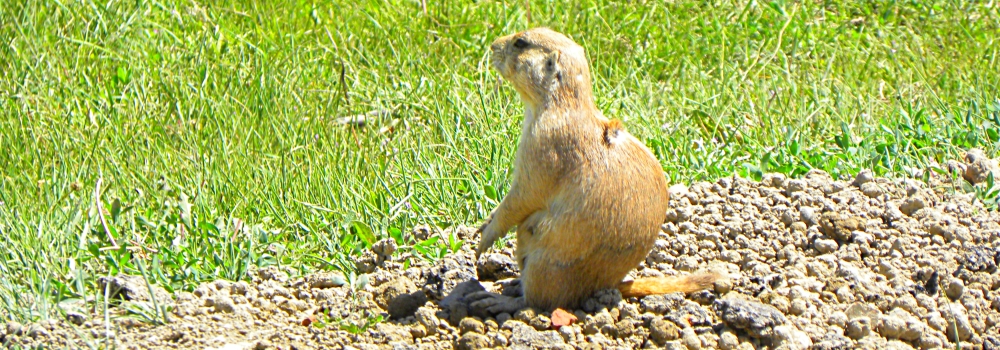
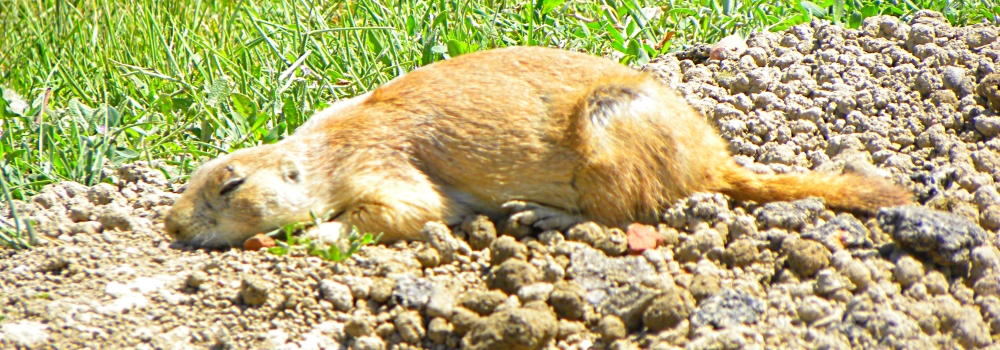
Black-tailed prairie dogs are tan in color, with lighter bellies. They may have color variation in their pelt, such as darker brown tones of fur on their back. Their tails have black tips, from which their name is derived.
Adults weigh from 1.5 pounds to 3.0 pounds with males typically heavier than females. Their body is compact, with a length from 14 inches to 17 inches and a tail if 3 to 4 inches. The ears are small and close to the head.
The claws of this species, used for digging, are long and black.
Habitat:
Black-tailed prairie dogs are native to grassland habitats in North America. They inhabit short-grass prairie, mixed-grass prairie, sagebrush steppe, and desert grassland. Colonies generally occur near rivers and creeks but can also be near reservoirs or even in flat areas.
Black-tailed prairie dogs are diurnal, or daytime active. Above-ground activity is reduced when rain or snow is falling and during days when the temperature exceeds 100 °F.
During the winter months, black-tailed prairie dogs do not fully hibernate, instead, they continue to leave the burrow to forage, but will enter a state of torpor at night to conserve energy. Torpor is categorized by a drop in metabolism, heart rate and respiration similar to hibernation, but is involuntary and shorter in duration. On average, black-tailed prairie dogs will lose twenty percent of their body weight during the fall and winter seasons when they go through bouts of torpor.
Range:
These ground squirrels can be found throughout the Great Plains region from the Canadian Grasslands southward through the US states of Montana North Dakota, South Dakota, Wyoming, Nebraska, Colorado, Kansas, New Mexico, Oklahoma, Texas, and into northern Mexico

Species: Mexican prairie dog
(Cynomys mexicanus)
Conservation Status: Endangered (EN)
Habitat:
Range: n. MEX

Species: Utah prairie dog
(Cynomys parvidens)
Conservation Status: Least Concern (LC)
Habitat:
Range: se UT

The 2013 Journey, Black-tailed Prairie Dog Go Down Go Up
Wednesday, 26 June 2013. Knife River Indian Village NHS, ND.
(Day 118 JO) 58°F.
Overnighting in a parking lot
After viewing the earth lodge, I return to the road west back to the southern unit of the Theodore Roosevelt National Park and drive the loop in this unit.
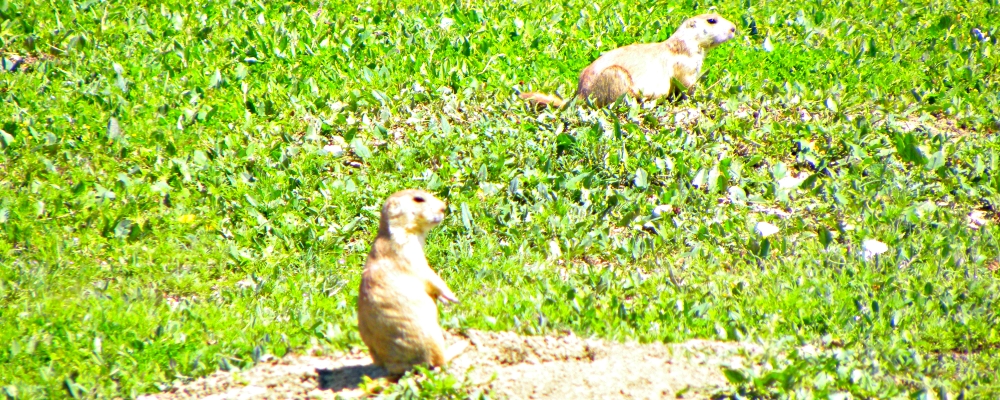
While I am touring this park, I see one bison, a few deer, numerous feral horses and many prairie dogs.

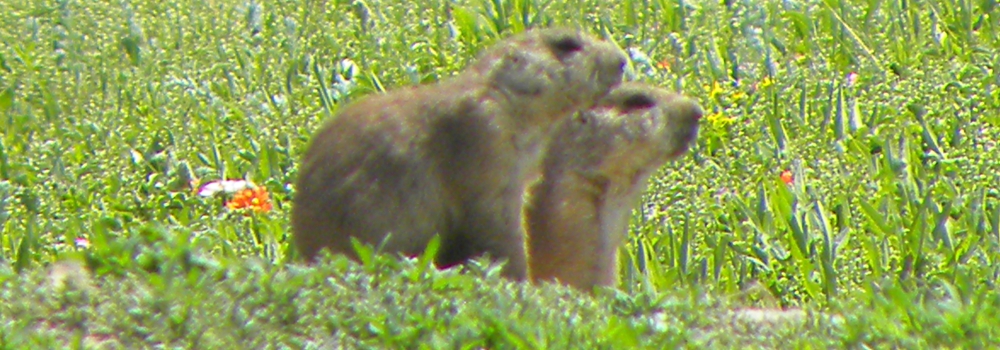
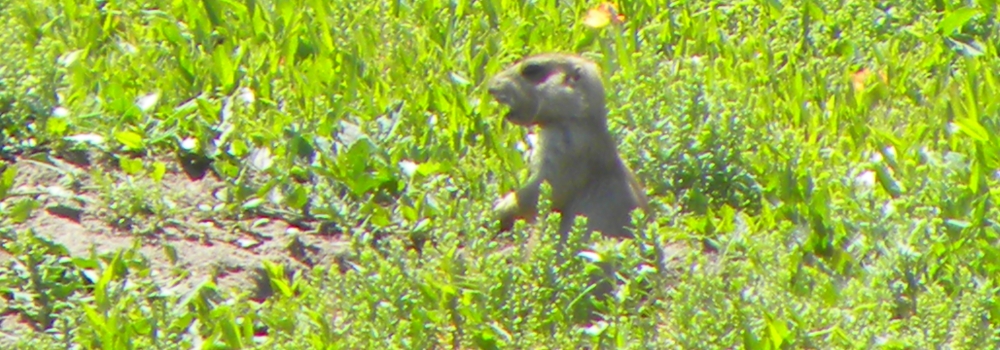
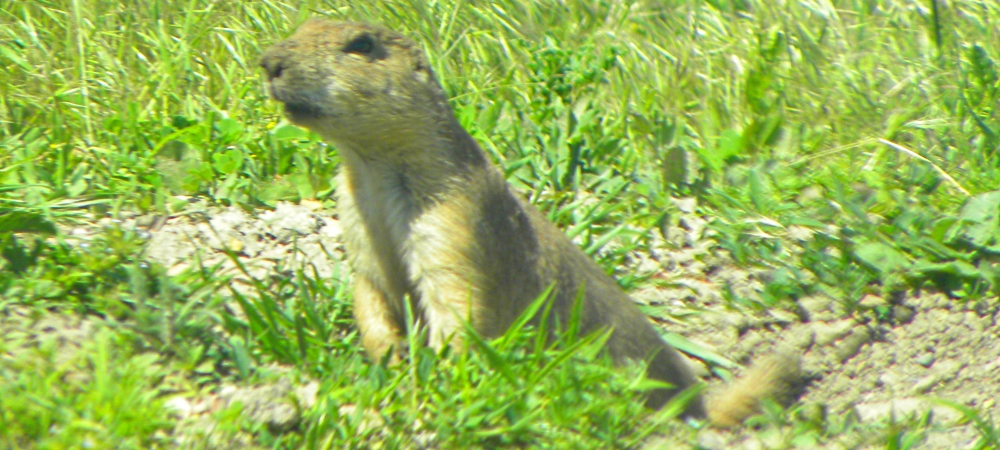
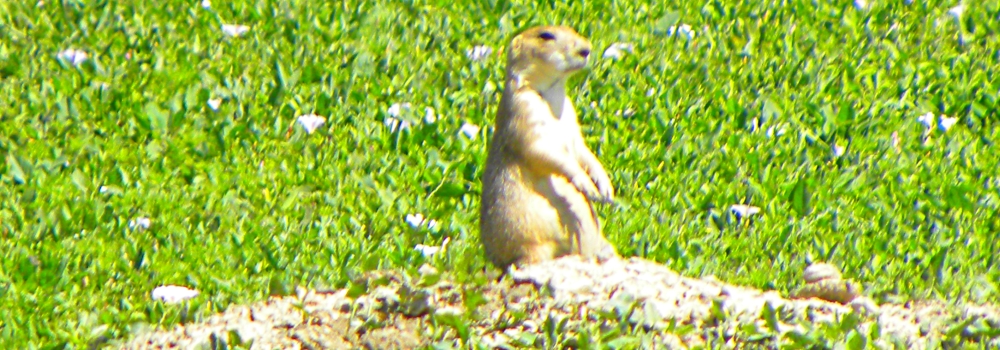
Species: Black-tailed prairie dog
(Cynomys ludovicianus)
Location: Theodore Roosevelt National Park
Geographic Region: Great Plains of North Dakota
The Rodentia: Sciuridae Family
The Prairie Dog The Rodentia: Sciuridae Family
The Prairie Dog

To go back to Rodentia Order Index, click on down arrow. Go Back Go to previous section
on this page

Thank you for visiting The Wayƒarers Journal.

See Ya above the Treeline!

This Page Last Updated: 31 May 2026


To continue to the next Episode Level page, Click here go to top
 
The Wayƒarers Journal © ::: Come Join the Journey ™
by Thom Buras
Come Join the Journey ™