Species:
Ursus americanus
Common Name:
Black Bear,
Conservation Status:
Least Concern (LC)
Subspecies:
U. a. altifrontalis – Olympic black (b.) bear (BC, WA, OR, n CA)
U. a. amblyceps – New Mexico b. bear (CO, NM, sw UT, w TX, e AZ, n MEX.)
U. a. americanus – Eastern b. bear (AK east thru Canada to ME, south to TX)
U. a. californiensis – California b. bear (s OR southward to s CA)
U. a. carlottae – Haida Gwaii b. bear (Queen Charlotte Islands, BC, and Alaska)
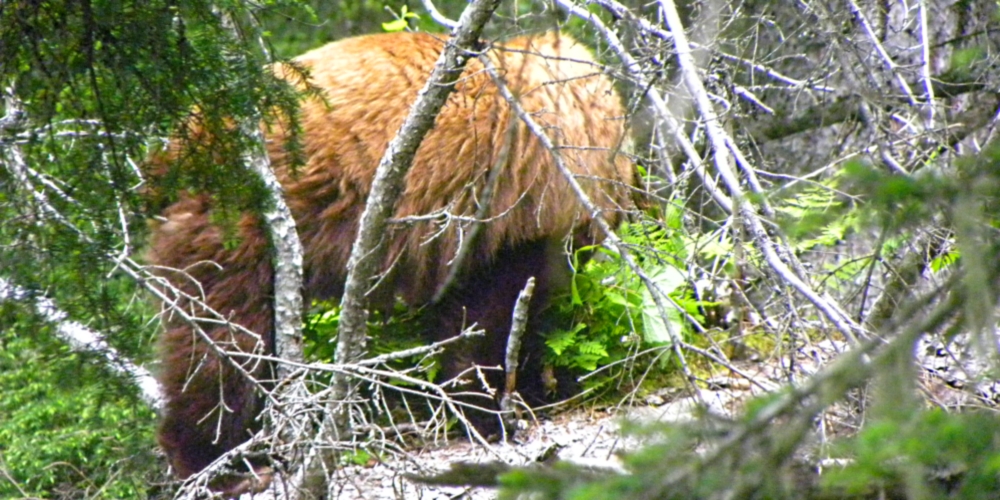
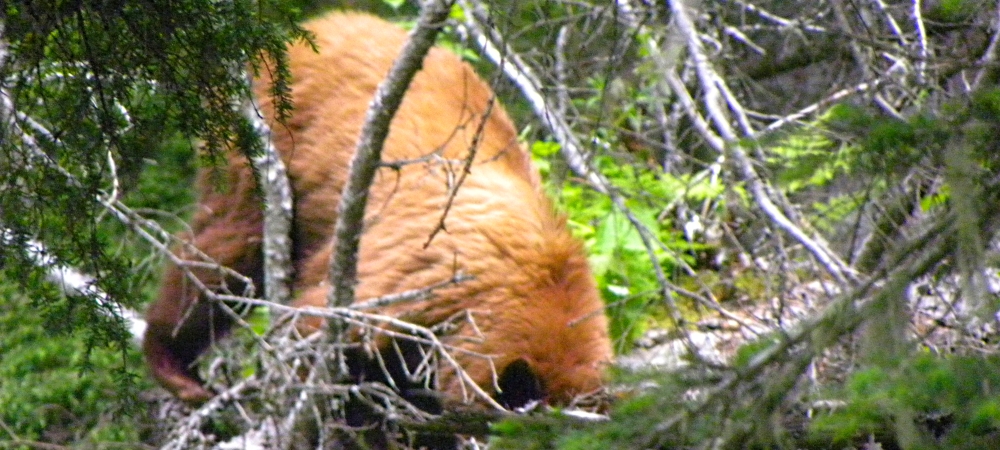
U. a. cinnamon – cinnamon bear (CO, ID, w MT, WY, e WA, OR, and ne UT)
U. a. emmonsii – Alaska glacier bear (Southeast Alaska)
U. a. eremicus – East Mexican b. bear (NE Mexico, US borderlands in TX)
U. a. floridanus – Florida b. bear (Southern Appalachian)
U. a. hamiltoni – Newfoundland b. bear
U. a. kermodei – Kermode bear or spirit bear (Brisish Columbia Central Coast)
U. a. luteolus – Louisiana black bear (east TX, LA, southern MS)
U. a. machetes – West Mexican black bear (North-central Mexico)
U. a. perniger – Alaska Kenai black bear (Alaska Kenai peninsular)
U. a. pugnax – Dall Island black bear (Alexander Archipelago, Alaska)
U. a. vancouveri – Vancouver black bear (Vancouver Island, British Columbia
Extinct Species:
Ursus spelaeus
Ursus deningeri
Range
From Northern Alaska to Mexico. Specifically most of Canada except northern Canadian Shield areas and above. In the lower forty-eight, found in most of the Pacific Coast Ranges, most of the Basin and Range region, all of the Rocky Mountains regions, and northern areas of the Interior Lowland region, most all of the Appalachian Mountains region and in some of the Interior Highlands region.
Not considered to by globally threatened with extinction.
Habitat
Black bears are usually solitary animals whose lifestyles are dictated by their biological need to consume large quantities of food. Bears only tolerate the presence of other bears during the breeding season, when a female is with her cubs, or when bears congregate in areas with concentrated food sources such as garbage dumps and salmon streams. Adult male bears are not part of the family unit.
Black bears are omnivorous with a diet varying greatly depending on season and location. They are typically forest dwellers but will leave the forest in search of food and because black bears have a excellent sense of smell, it will often be attracted to human communities because of the smell of food emanating from there. They may be diurnal or nocturnal and despite their heavy build and awkward gait, the are adept runners, climbers and swimmers.
Black bears, like most bears, use shelters such as caves and logs as their dens and most species occupy their dens during the winter for a long period of hibernation lasting up to 100 days.
Description
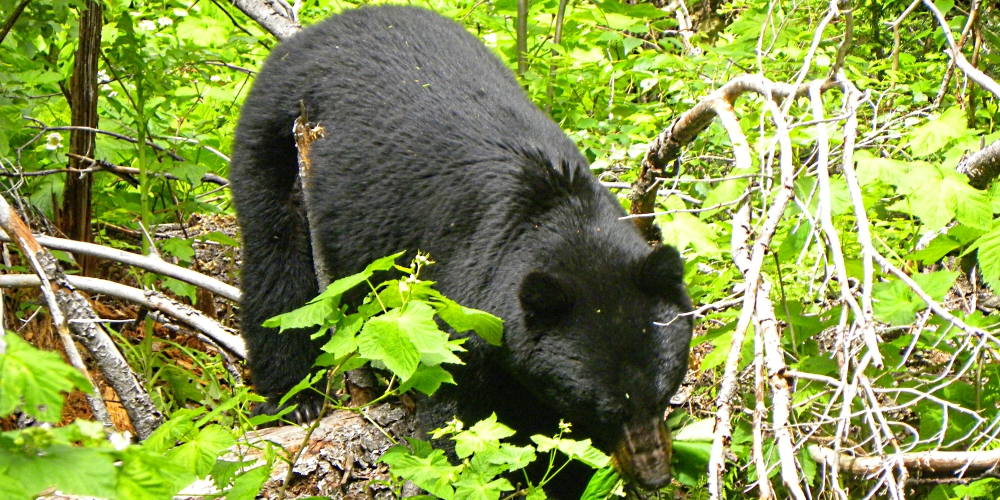
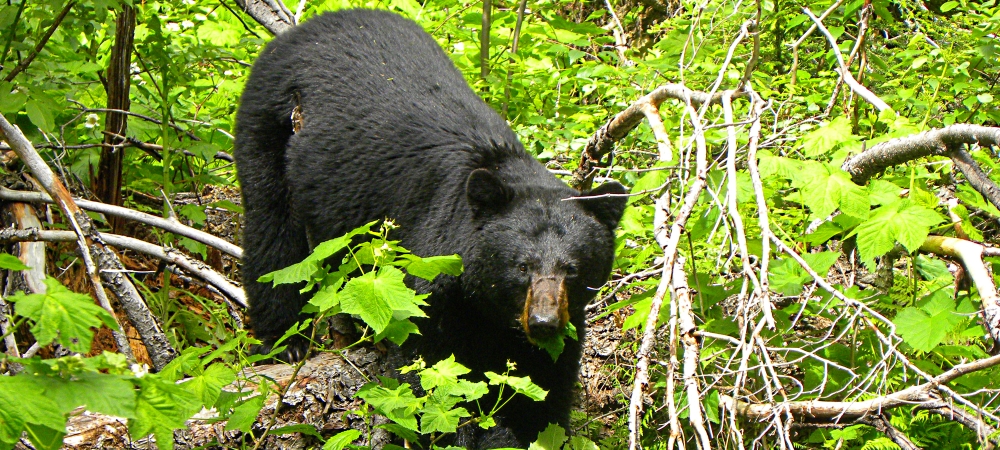
A medium size bear, smallest on the continent but most widely distributed. The skull of the black bear are broad with narrow muzzles, large jaw hinges. Females tend to have more pointed faces which are more slender than males.
American black bear weight varies according to age, sex, health and season. Adult males typically weigh between 126 to 551 pounds, while females weigh a third less at 90 to 375 pounds.
Their claws are typically black or grayish brown, short, rounded, thick at the base and tapering to a point. Both hind and front claws are nearly identical in length but foreclaws tend to be more sharply curved.
The soles of their feet are black or brownish and are naked, leathery and deeply wrinkled. The ears are small, rounded and set well back on the head.
Different between Black and Brown Bears
American black bears can be distinguished from brown bears by their smaller size, their less concave skull profiles, their shorter claws and the lack of a shoulder hump.
Another way to tell is by their skat.
Black bears have small round skat.
Brown bears have skat that smells like bear repellant and has small bells in it.