|
The Ailuridae is a mammal family in the order Carnivora which is an monotypic family, that is having only one genus and one extant species. The Ailuridae family does have seven extinct genera and numerous species.
Range
The red panda lives in Nepal, (the states of Sikkim, West Bengal), India (Arunachal Pradesh), Bhutan, southern Tibet, northern Myanmar and China (Sichuan and Yunnan provinces.) This is primarily in the eastern Himalayas and southwestern China.
The global potential habitat of the red panda has been estimated to comprise no more than about 18,200 square miles (47,100 km2). This habitat is located in the temperate climate zone of the Himalayas with a mean annual temperature range of 64-75°F (18–24°C). The red panda has been recorded in the above range at elevation of 6,600 to 14,100 feet, (2000-4,300 meters).
Habitat
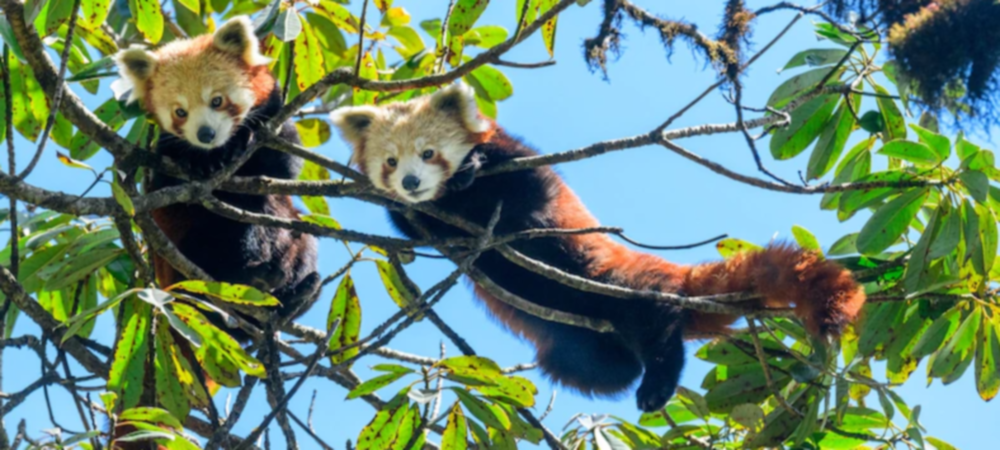
The red panda inhabits coniferous forests as well as temperate broadleaf and mixed forests, but favors steep slopes with dense bamboo cover, but usually close to water sources. It is solitary and largely prefers arboreal (living in trees.)
It feeds primarily on bamboo shoots and leaves, but also on fruits and blossoms. Red pandas mate in early spring, with the females giving birth to litters of up to four cubs in summer.
This mammal is nocturnal and crepuscular sleeping in between periods of activity at night.
It is threatened by poaching as well as destruction and fragmentation of habitat due to deforestation. The species has been listed as Endangered on the IUCN Red List since 2015. It is protected in all range countries.
Description
The coat of the red panda is mainly red or orange-brown with a black belly and legs. The muzzle, cheeks, brows and inner ear margins are mostly white while the bushy tail has red and buff ring patterns and a dark brown tip. These colors appears to serve as camouflage in habitat with red moss and white lichen-covered trees.
The outer layer of the coat hairs are longer and rougher while the dense undercoat is fluffier with shorter hairs. The outer hairs on the back have a circular cross-section and are about two inches long. The hair on the soles of the paws allows the animal to walk in snow.
It has moderately long whiskers around the mouth, lower jaw and chin.
|