|
Hudson′s Bay Company
The Hudson′s Bay Company (HBC) based in London, established Fort Vancouver in 1825 to serve as the company′s interior fur trade headquarters. The first fort built was located on the bluff northeast of the current location which was built four years later.
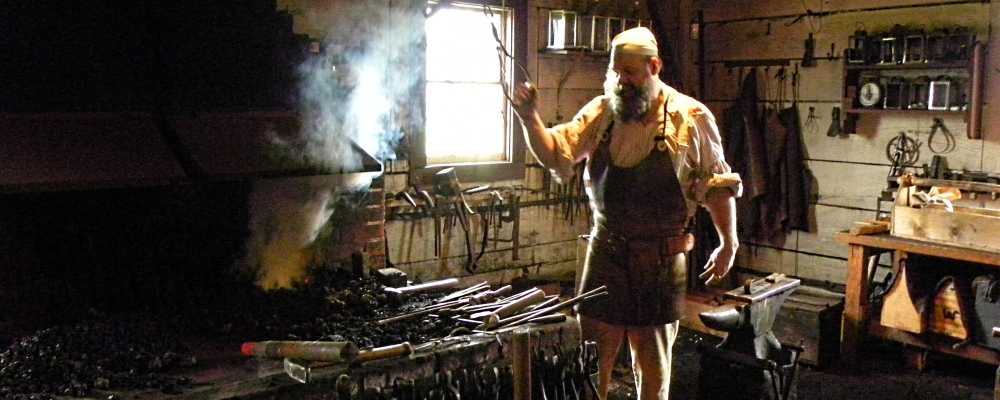
As the core of the HBC western operation and principle settlement in the Pacific Northwest, the fort was a major center of industry, trade, law and the fur business which came under total control reaching area from Russian Alaska to Mexican California, and from the Rocky Mountains to the Pacific coast.
Named for Captain George Vancouver (a British Officer of the Royal Navy, who in 1791-5 explored and charted the Pacific northwest), and was located on the northwest bank of the Columbia river in present day Vancouver, Washington.
This fort was the site of the arrival of annual trade goods from London which came by ship to the fort or to York Factory on Hudson Bay and then overland across Canada on the York Factory express route.
Supplies and trade goods were exchanged with many different Indigenous cultures for fur pelts. Furs from Fort Vancouver were often shipped to the Chinese port of Guangzhou where they were traded for Chinese manufactured goods for sale in the United Kingdom. At its pinnacle, Fort Vancouver watched over 34 outposts, 24 ports, six ships, and 600 employees.
Fort Vancouver, Washington
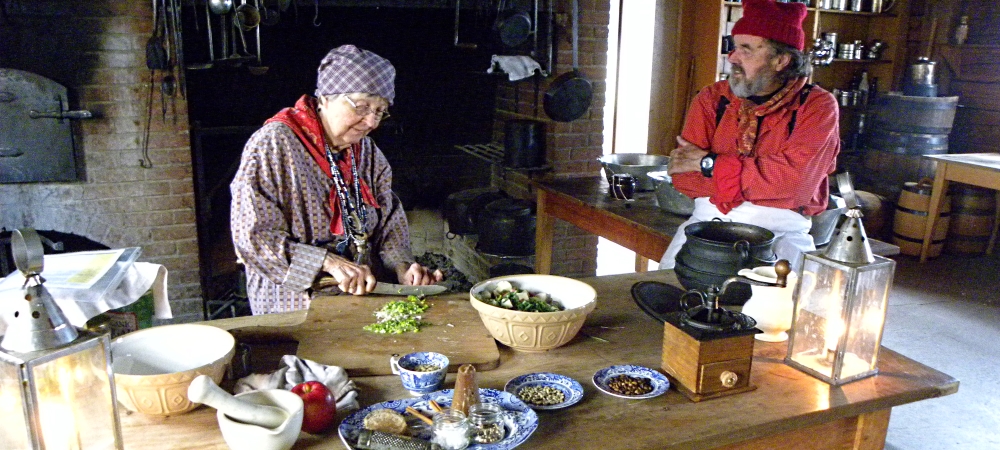
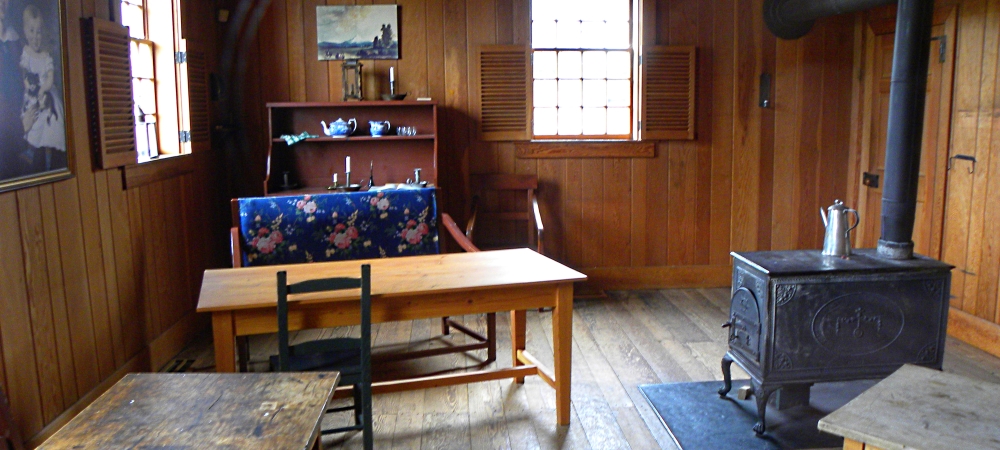
The Village to the west of the fort was Vancouver's first neighborhood. The employees of the Hudson's Bay Company lived there with their families in simple one or two room cabins.
The Village was incredibly diverse, a community of people whose homelands spanned half the globe.
The Border Dispute
The Treaty of 1818 made the resources of the vast northwest region free and open to citizens from either nation. The treaty was designed so that the joint occupancy of the Pacific Northwest was intended to prevent disputes between the two nations from arising.
In the ensuing years, the North West Company would continue to expand its operations in the Pacific Northwest. Skirmishes with its major competitor, the Hudson′s Bay Company, had already flared into the Pemmican War. The end of the conflict in 1821 when the British Government mandated that the NWC merge into the HBC.
During 1825 and 1826, British diplomats continued to offer the Americans plans to partition the Pacific northwest between the two nations. These plans included extending the border on the 49th parallel where it would then follow the Columbia or the Snake river to the Pacific ocean. The Americans wanted the 49th parallel to the ocean to be the border and the great difference between the two plans kept the dispute from being settled.
By 1838, American settlers were coming across the Rocky Mountains in such great numbers and arriving at Fort Vancouver was the last stop on the Oregon Trail to resupply before starting their homestead. During 1843, an estimated 1000 Americans settlers arrived by way of the Oregon Trail.
In 1846, the Oregon Treaty set the Canada–United States border at the 49th parallel north, putting Fort Vancouver solidly within American territory. Although the treaty ensured that the HBC could continue to operate and had free access to navigate the Strait of Juan de Fuca, Puget Sound, and the Columbia River.
HBC operations were effectively stifled by the treaty and subsequently became unprofitable. It was not long after that the Hudson Bay Company shut down there western operations and Fort Vancouver was closed down and abandoned. In 1866, the fort burned to the ground.
In 1947, the National Park Service was assigned with locating the original fort to be preserved by the NPS. Reconstruction of the fort began in the 1960′s and today, the fort can be seen from Tuesday through Saturday from 9 am to 5 pm, except some holidays.
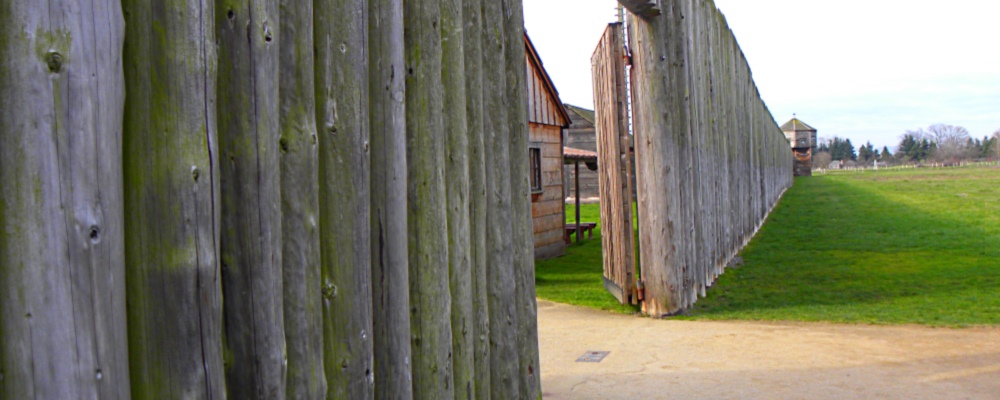
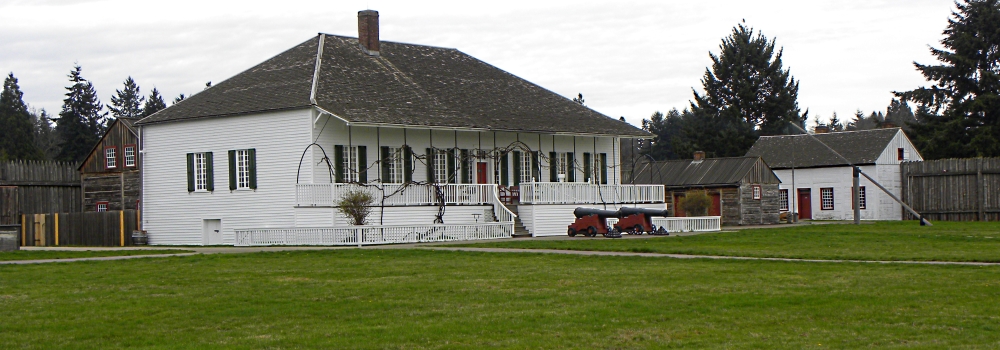
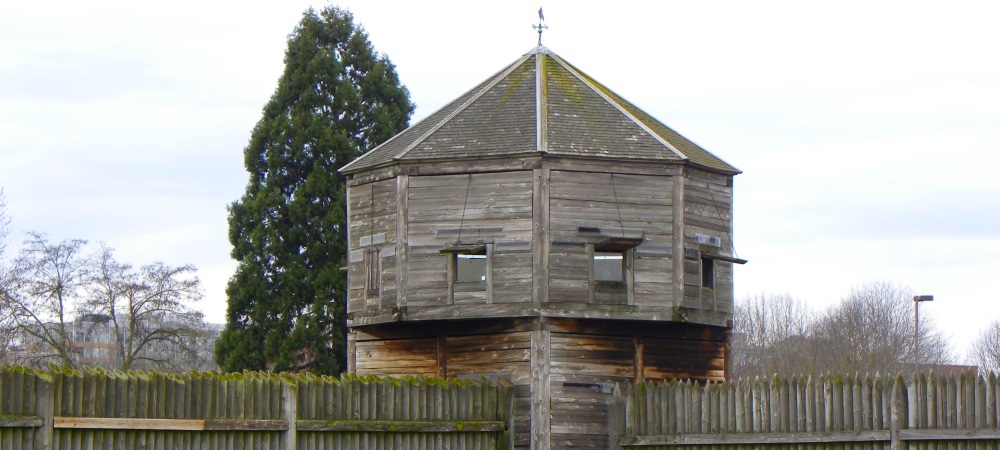
Today, a full-scale replica of the fort, with internal buildings, has been reconstructed, all built on the archaeological footprint of the original fort. The reconstructed fort is open free to the public as Fort Vancouver National Historic Site.
Fort Vancouver Information:
Year Built:
1824
Year Closed:
1866, Burned
Type Construction:
Wood Stockade
Location:
Coordinates:
45.6230658, -122.6619203
Elevation:
17 feet
Address:
1001 E. Fifth Street, Vancouver, WA 98661
Visitors Center: 1501 E Evergreen Blvd, Vancouver, WA 98661
Entrance Fee:
Adults: $10.00 per person; Children under 16: Free
Access, Military, Senior pass holders enter free
|