|
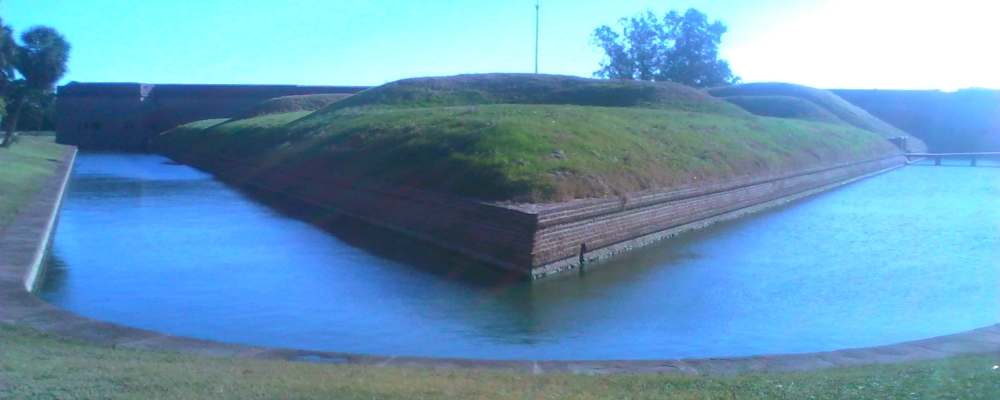
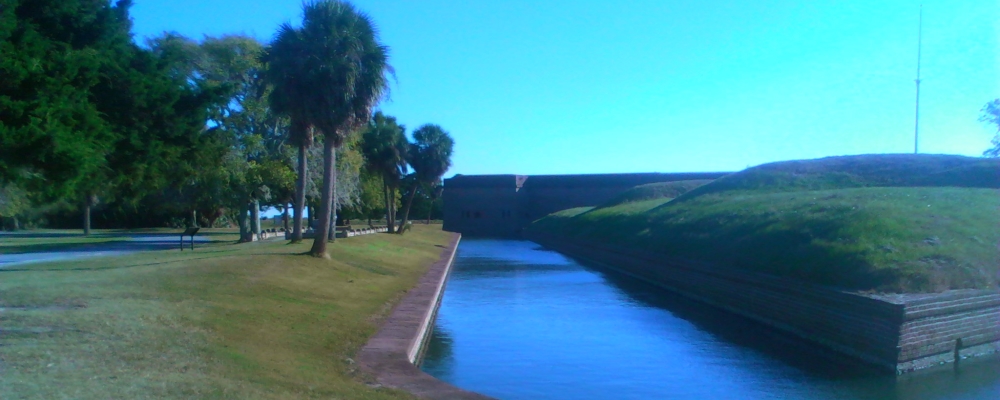
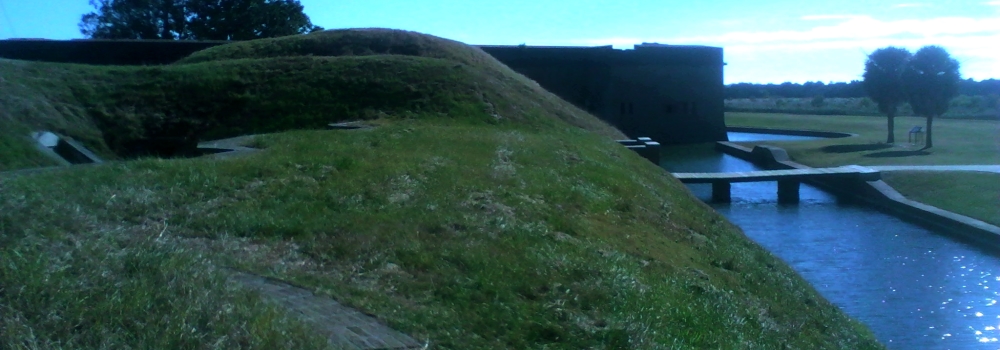
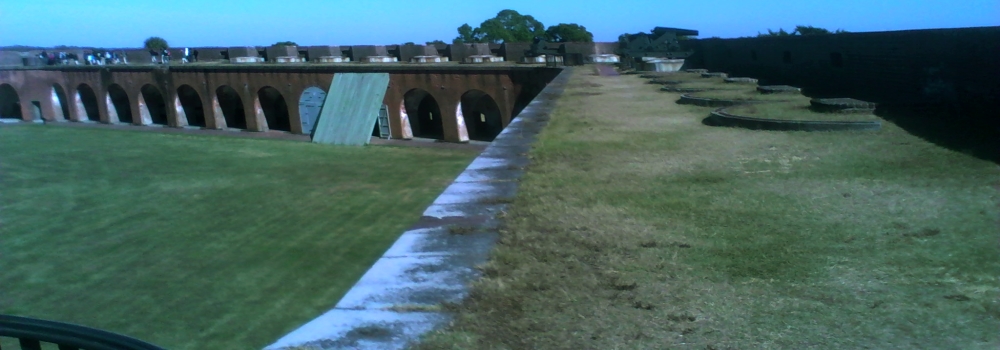
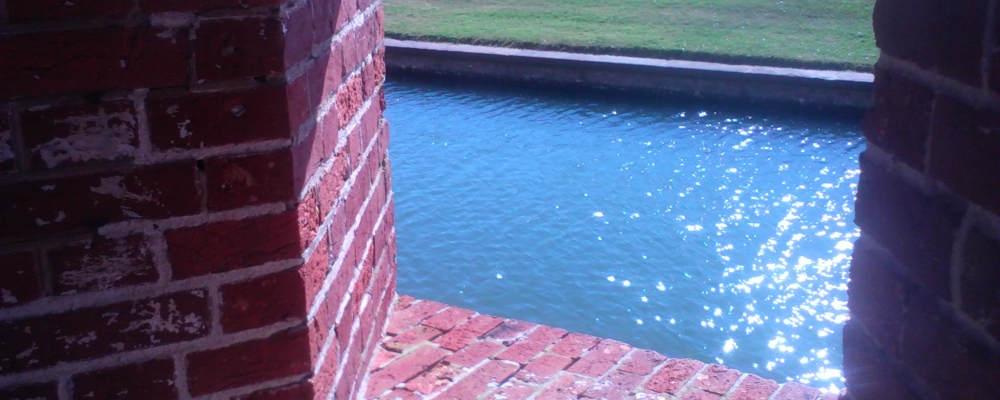
Fort Pulaski is located on Cockspur Island between Savannah and Tybee Island, Georgia. In 1862 during the American Civil War, the Union Army successfully tested rifled cannon in combat, the success of which rendered brick fortifications totally obsolete. The fort was also used as a prisoner-of-war camp.
Named in honor of Kazimierz Pulaski, a Polish soldier and military commander who fought in the American Revolution under the command of George Washington. He took part in the sieges of Charleston ans Savannah.
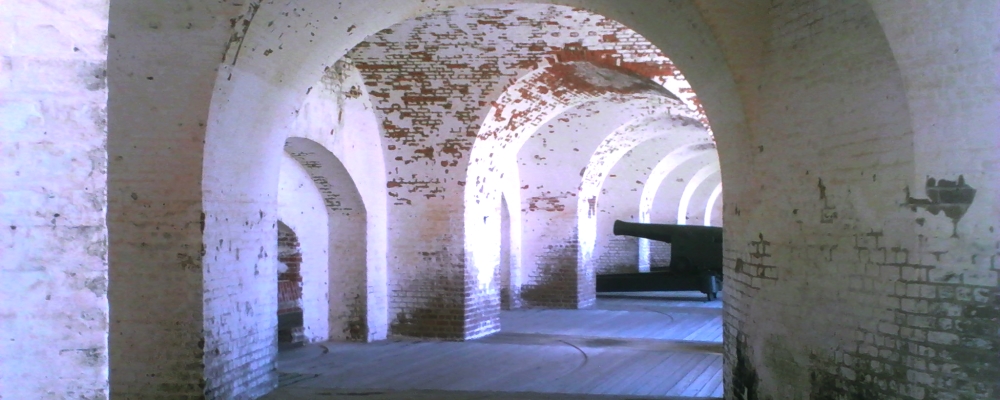
Fort Pulaski belonged to what in known as the Third System of coastal fortification characterized by greater structural durability than their predecessors. Construction began in 1829 and was completed in 1847 using 25 million bricks at a cost of one million dollars.
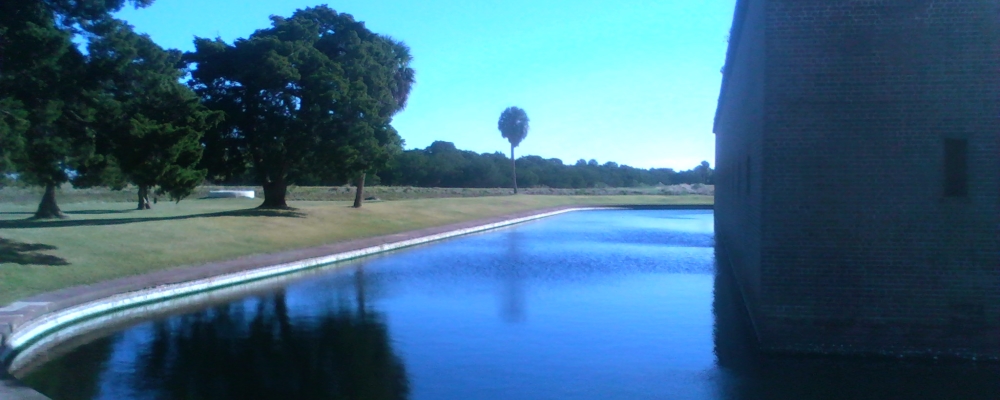
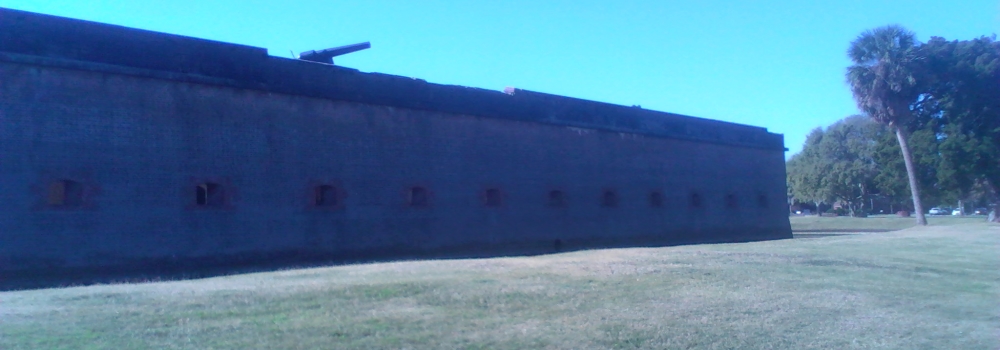
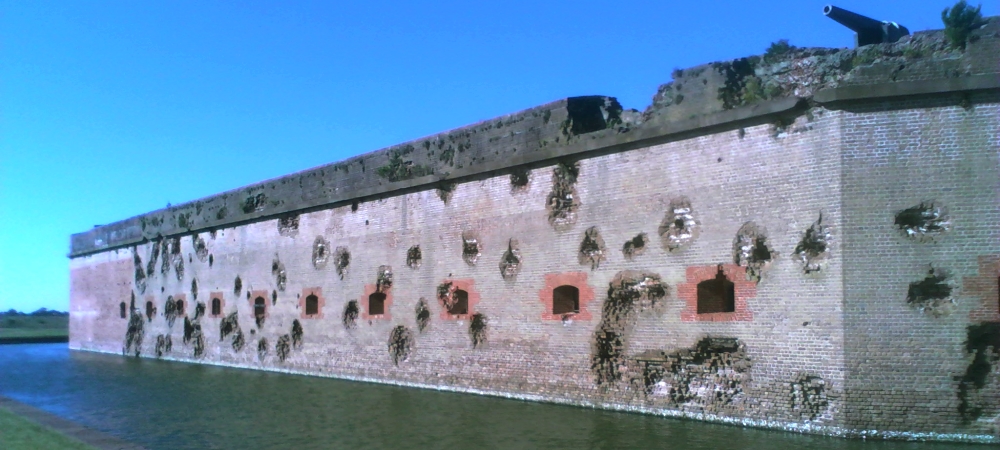
Walls were eleven feet thick and thought at the time to be impenetrable except by only the largest land artillery. Smooth bore cannons of the time had a range of only a half mile and the nearest land, which was Tybee Island was more than a mile. Second Lieutenant Robert E. Lee, a recent graduate of West Point said One might as well bombard the Rocky Mountains as Fort Pulaski.
The Civil War
Upon the secession of Georgia in February 1861, the state joined the Confederate States of American and soon moved into Fort Pulaski. Tybee Island was thought to be too isolated and was abandoned by Confederate forces. This allowed Union troops to gain a foothold across the Savannah River form Fort Pulaski where they constructed batteries along the beaches of Tybee.
On the morning of April 10, 1862, Union forces asked for surrender of the fort to prevent needless loss of life. The Confederate commander rejected the offer. Using 36 guns, including the new James Rifled Cannon and Parrott rifles, which projectiles could be accurately fired up to five miles, Union troops began the sustained bombardment of Fort Pulaski.
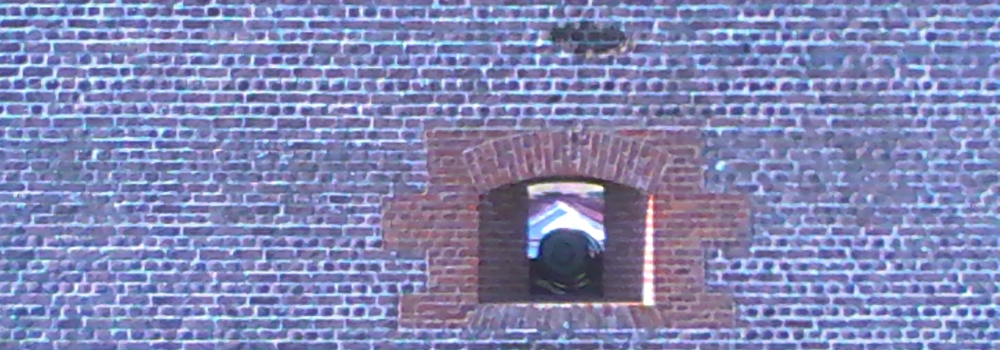
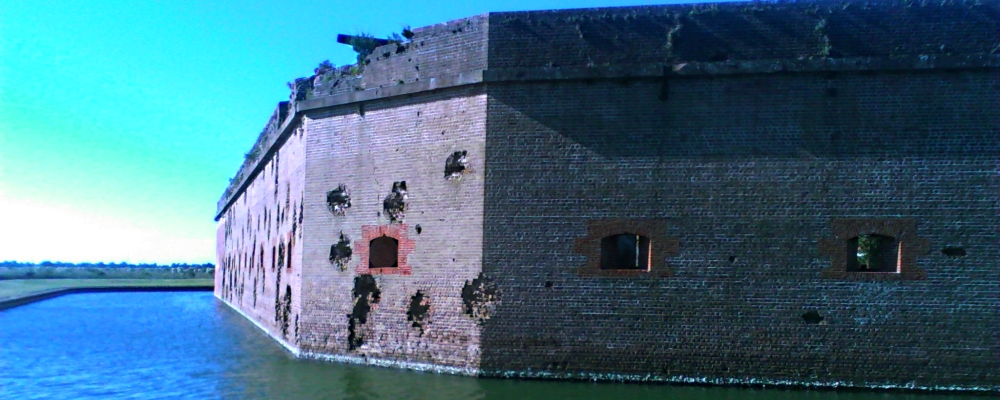
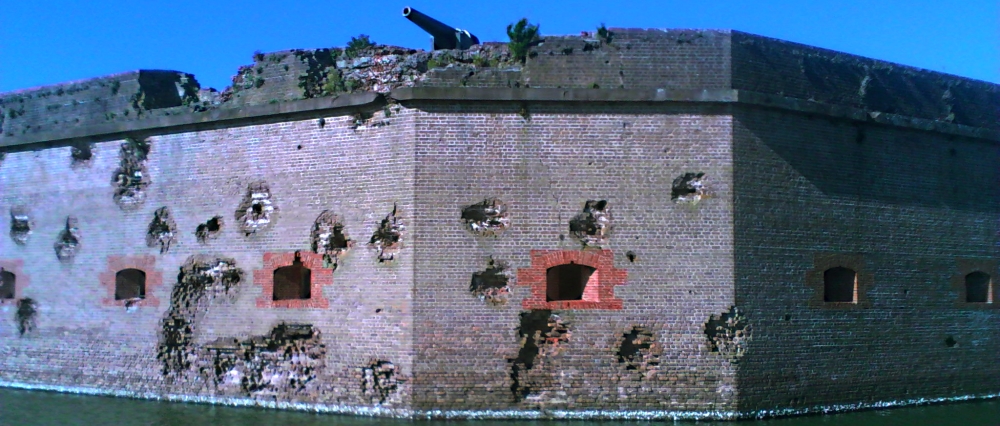
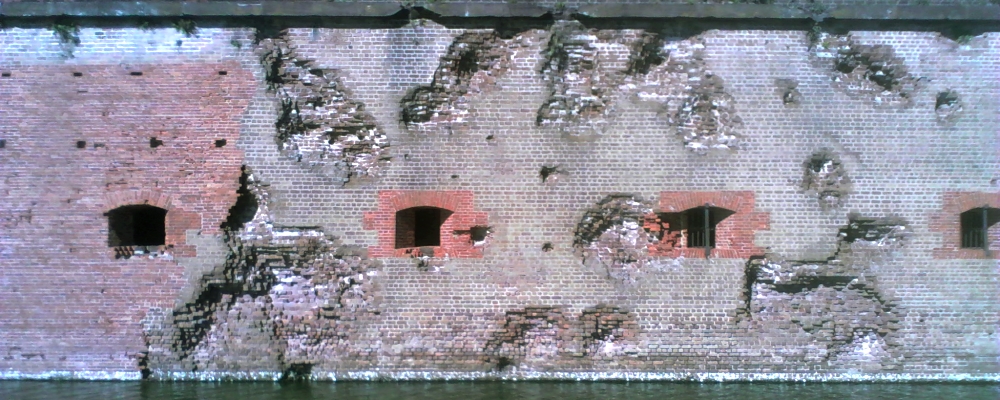
Within 30 hours, these new rifled cannons has breached one of the corners of the fort and the shells were now coming into the fort and exploding dangerously close to the main powder magazine.
The Confederate commander said, There are times when a soldier must hold his position to the last extremity, which means extermination, but this was not one of them. That the fort could and would be absolutely destroyed by the force of the enemy was a demonstrated fact,... while our own power to harm them had been reduced to a minimum,... I am still convinced that there was nothing else that could be done.
Invincible Fort
When it was completed in 1847, it was considered invincible. As the southern states succeeded, Georgia state troops seized the fort and transferred it to the Confederacy.
Soon after, the Union troops moved to an island just over a mile away and began to build batteries, to far out of range of most ordinance of the day. In fact at 700 yard, most smooth bore cannons had little effect against masonry and at 1000 yards had no effect whatsoever.
However, what the Confederate troops did not know is that the Union battery′s consisted of new experimental rifled cannon. These new guns gave the Union a three mile range with deadly accuracy and destructive power. The siege began and by noon of the second day, the southeast corner of Fort Pulaski was blown away leaving a large gap in the wall, through which explosive ordinance began passing and exploding close to the main powder magazine.
The Confederate commander surrendered in only thirty hours after the bombardment began. This battle was an end of an era, because, no longer could coastal defenses consist of brick and mortar, not even the eleven feet thick walls of Fort Pulaski were defendable against the new rifled cannons and all forts like Pulaski became relics of a bygone age.
Fort Pulaski Information:
Year Built:
1829 - 1847
Year Closed:
1860
Type Construction:
Brick
Location:
Coordinates:
32.027222, -80.890278
Address:
101 Fort Pulaski Rd, Savannah, GA 31410
Entrance Fee:
Adults 16 years and older: $7.00 per person
|