|
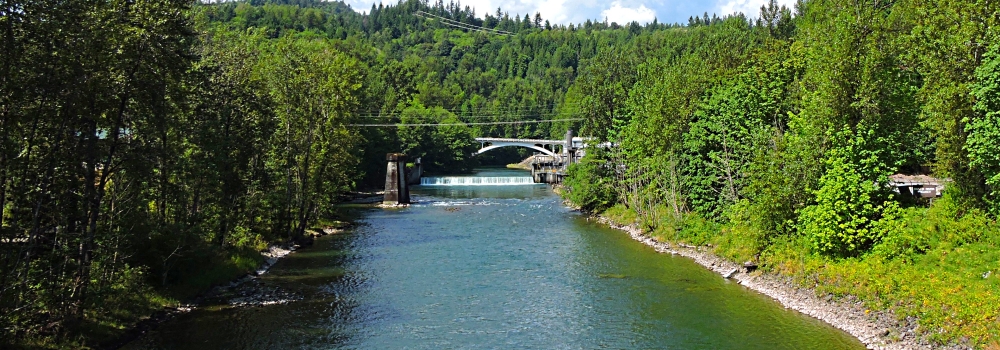
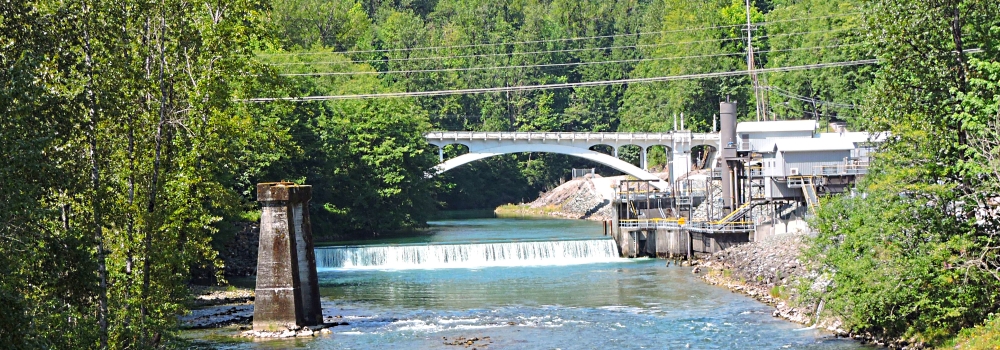
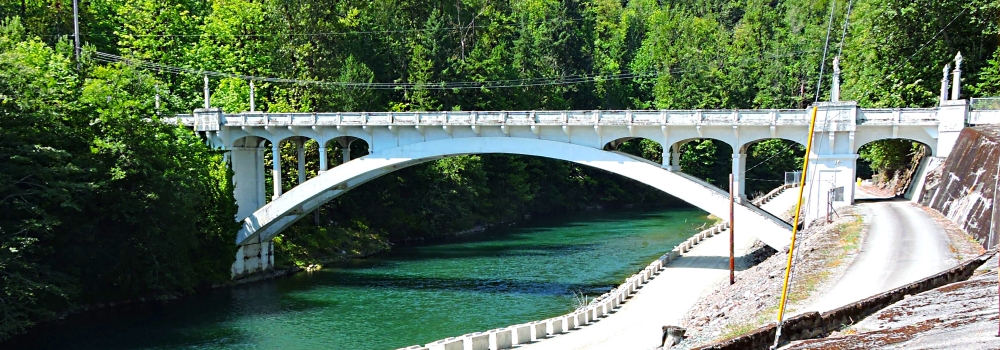
This concrete arch bridge, when it was open in 1918 was hailed as the longest single span concrete bridge in the world. Too, it was the first large concrete bridge in Skagit County, Washington, and it was a revolutionary design, intended to showcase the engineering potential, aesthetics and durability of Portland cement. The materials for the construction were donated by the two local cement plants.
Information:
Bridge Specification
Bridge Type:
Concrete Open-spandrel Arch Deck Bridge
Date Construction:
1916-1917
Date Open:
January 1918
Structure Replaced:
Steel-Wood Wagon Bridge
Year Bypassed:
1972 by the Lowell Peterson Concrete Beam Bridge
Total Length:
269 feet
Deck Width:
18 feet
Main Span Length:
195.9 feet
Total Height:
Crosses:
Baker River
Clearance Above:
(Vehicle Clearance) Open.
Clearance Below:
(Vessel Clearance) feet.
Cost to Build:
$22,000.00
Cost to Restore:
$1.2 million
Restored and refitted with new lights in 2004
Driving Directions:
The bridge carries a previous alignment of State Highway 20 over the Baker River, which at that time was Main Street in Concrete, Washington, and is located just north of the current alignment.
Location:
Coordinates:
48.5405178, -121.7441997
Elevation:
189 feet
Geographical Region:
Pacific Coast
History:
"At the time of the bridge construction, there was no dam on the Baker River, and its free flow carried large amounts of debris and logs during high water, as well as shingle bolts that were floated from upriver logging camps to the Baker River Lumber Company. A previous steel wagon bridge had crossed the river at a lower level, but was not durable enough and had been condemned by the county engineer. This new bridge was located upstream at a narrower spot in the canyon high above the river, anchored in bedrock, and designed to span the gorge in a single arch. J. R. Wood of Seattle contracted the design in 1916, for a bid of $21,740. Construction took longer than expected due to the complex engineering. At the dedication in 1918, it was named the Henry Thompson Bridge in honor of one of the Skagit County Commissioners responsible for the project. Commissioner Thompson was a local pioneer who brought his family from England to a homestead near Birdsview in 1891. He met his end in a tragic train crash in Sedro-Woolley in January, 1918, just before the bridge was completed.
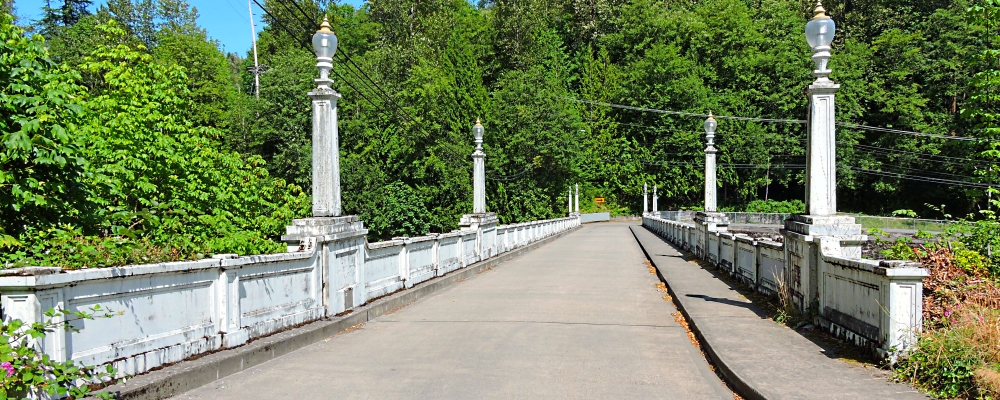
"State Route 20 originally followed the route of Main Street, through Concrete′s business district and across the Thompson Bridge as it headed east. Over the years, the growing volume of traffic and increasingly heavy and long loads of log trucks took their toll on the bridge as they rounded the sharp corners on each end. Tall light standards which had graced the original structure were knocked off, and the high railings were removed in 1954. Heavy vehicles left holes in the bridge deck, causing the reinforcing metal to deteriorate. In 2000 the Washington State Department of Transportation agreed to replace the upper bridge structure, and rehabilitate the historic bridge to match its original design, at a cost of $1.2 million. One of the original light standards had been salvaged from the river, and Puget Sound Energy had a set of duplicates made and installed. The bridge was re-dedicated in 2004."
1
|