|
The Washington state highway, known now as SR 821, was designated as the Yakima River Canyon Scenic Byway by the state government in 1967, recognizing its natural beauty and recreational opportunities. This scenic byway is visited by 1.1 million drivers annually, of which a third visit recreational areas and campgrounds along the route.
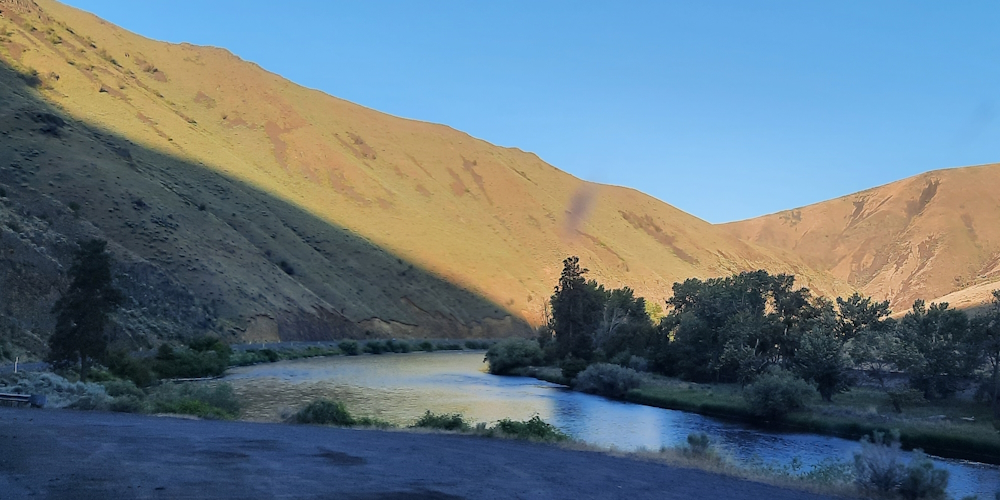
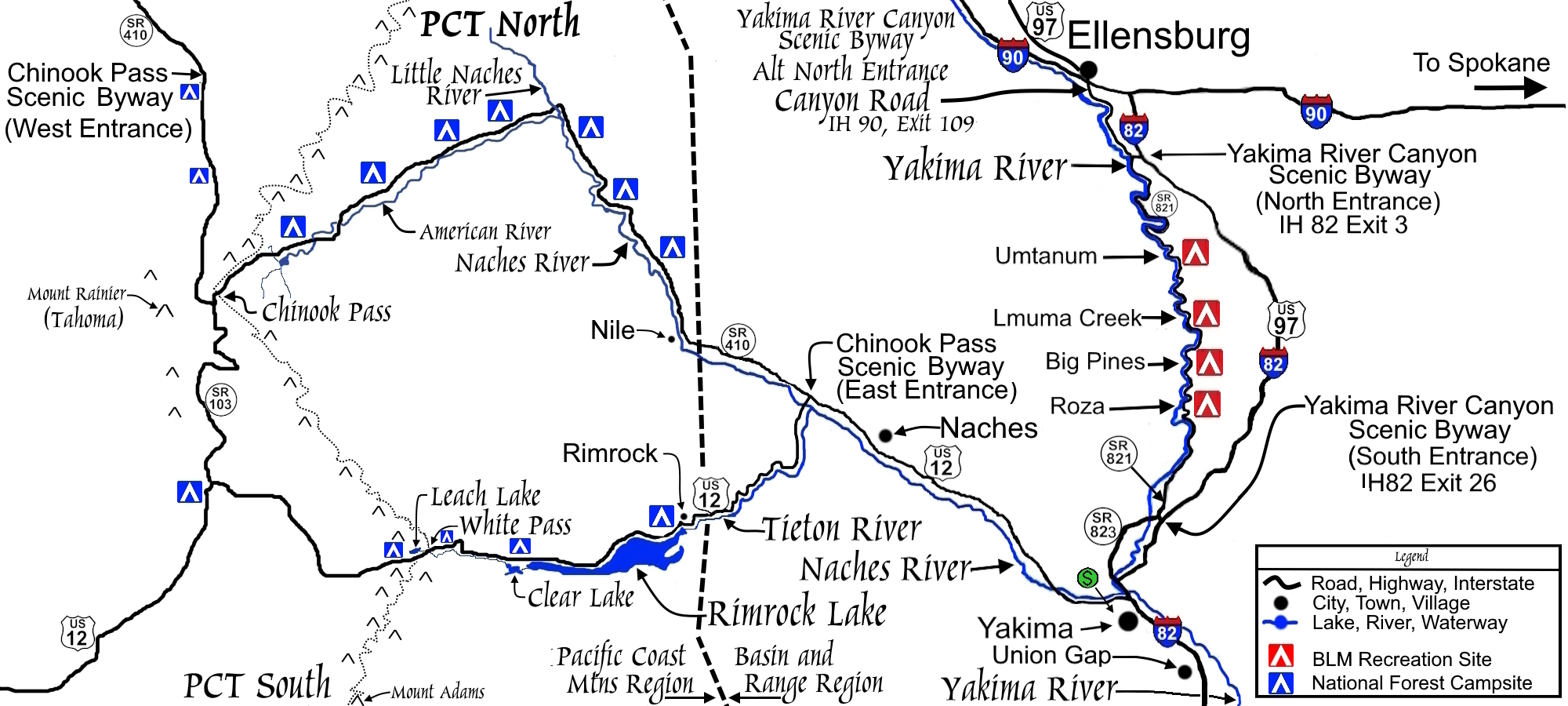
The scenic byway is located in south central Washington and generally follows the winding Yakima River for 25 miles between Ellensburg, Washington in the northern part of the River to Yakima, Washington in the southern area.
Originally, the highway was built in 1924 by the state as an old alignment of US 97 which in 1971, US 97 was rerouted uphill to the east over the Manastash Ridge and is currently sharing that alignment with IH 82. At that time, when US 97 was rerouted, the old alignment became State Highway 821 and has been this highway since.
A road link between Ellensburg and Yakima remained a priority for the state government, who appropriated funds in 1909 to survey the area for a potential state highway. It was to be a part of the planned Inland Empire Highway in 1913, forming a major trunk route through the Yakima Valley and Inland Northwest. At that time, a route along the east side of the river was surveyed in the early 1920s by state highway engineers.
Construction on the graded highway, using a surface of crushed rocks, through the Yakima Canyon began in 1920 and was completed on September 12, 1924. At that time, it′s cost was approximately $1 million to construct ($13 million in 2022 dollars) and included several tunnels cut through the lava basalt cliffs using dynamite. Those tunnels were later abandoned in 1963 when the traffic volumes had outgrown the narrow tunnels and the road was rerouted along a new alignment closer to the river.
This highway was signed as part of the Yellowstone Trail, a national east-west transcontinental auto trail from Plymouth Rock to Seattle, Washington. When the Federal numbered highway system was created in 1926, this route was given the US 97 designation. This highway was paved with concrete in 1932
(m6fi-wa-yakimariver-canyon) The Yakima River Canyon, Washington
Bureau of Land Management
The BLM owns 9000 acres of land in the Yakima River Canyon, in which it maintains four Recreation Areas containing four campgrounds, picnic areas, boat ramps, hiking trails and a footbridge over the Yakima River.
Railroad in the Canyon
The BNSF railroad, which forms part of the main east-west railroad across south central Washington, enters the canyon from the north on the east side but very soon, crosses to the west side. The railroad stays on the west side through most of the canyon until arriving at Roza Dam, where the railroad crosses back over to the east side.
The railroad remains on the east side until it exits the canyon to the south. Meanwhile, during the traverse in the southern part of the canyon on the west side, the roadway is required to take a higher elevation to continue south.
|