The Wayƒarers Journal ©

The Journal

The Wayƒarers

The Selƒ

The Journey

The Burden

The Mountain

   The Ancients
   The Earth
   The Life

     The Animals

       Annelida
       Arthropoda
       Chordata
       Cnidaria
       Echinodermata
       Mollusca
       Nematoda
       Platyhelminthes
       Porifera

     The Archaea
     The Bacteria
     The Chromista
     The Fungi
     The Plants
     The Protozoa

   The Modern Man
   The Nonpareils
   The Steps
   The Way

The Appendix

The Wayƒarer
The Mountain
Go to bottom of this page
THE FAMILY AESHNIDAE
Genus Anax

The Species A. junius (Green Darner) Go Down Go Back
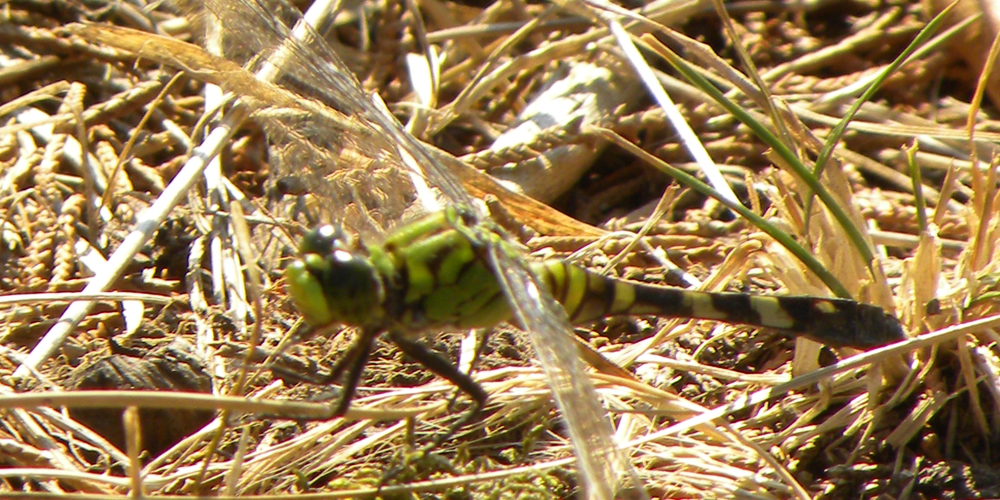
The green darner received its name because it resembles a darning needle and this dragonfly is one of the most common and abundant dragon fly species in North America.
Taxonomy:
Kingdom: Animalia
Phylum: Arthropoda
Class: Insecta
Order: Odonata
Infraorder: Anisoptera
Family: Aeshnidae
Genus: Anax
Species: A. junius

Common Name: Green Darner
Conservation Status: L.C.
Description:
The male green darner is one of the largest living dragonflies growing from 2,7 to 3.1 inches in length and having a wingspan of up to 3.9 inches wide. Both sexes have an unmarked green thorax, and mature males have bluish-purple abdomens. Females and immature males have a reddish-brown abdomen. Wings are initially clear but with age, fade to amber, especially females. Both sexes have a black bulls-eye mark on the face in front of their eyes.
The female oviposit (lays eggs) in aquatic vegetation beneath the water surface. Naiads, (nymphs) are aquatic carnivores which feed on insects, tadpoles and small fish.
Adult darners catch insects on the wing, including flies, flying ants, mosquitoes and moths. The primary predator of the nymphs are fish and of the adults are birds and spiders.
Habitat:
Adults are most frequently seen around nymph habitat but they are strong fliers and can be found in a wide variety of habitats including grasslands, forests, and urban areas.
Nymphs develop in lakes, ponds, and slow streams and rivers.
Range:
Throughout North America, south into Texas and Mexico as as far south as Panama, particularly in the winter. There are also population in Hawaii and the Caribbean. Other vagrant individuals have been sighted in Alaska, India, Europe, Tahiti, and Asia from Japan to mainland China. These sightings outside of their normal range are likely individuals blow off course by strong winds and storms.
It is the official insect for the state of Washington in the United States.

The 2013 Journey, Green Darner Go Down Go Up
(Day 193 JO) 79°F. 7:50 am, cloudy
Overnighting in a parking lot
By noon, I am back on the road, only to stop at a w-mart just before crossing the Arkansas River to get out of the midday heat. I also use a free drink coupon for a pumpkin latte. At two pm, I resume the hot road trek on US 165 to the next park, Arkansas Posts National Memorial which previously I had not even heard about.
After viewing the museums, I walk along the long pathways leading back to the area where all that remains of this post are some foundations, stoping to take photos of a great egret, a green darner dragonfly, some of the water plants and the Arkansas Posts Cannon cira 1762 that is displayed.

The Animals: Arthropoda, Insecta
Odonata, Libellulidae, Green Darner
(m3an-ar-ins-odonata-2013-0909.1403) Green Darner
Phylum Arthropids
Green Darner
(m3an-ar-ins-odonata-2013-0909.1404) Green Darner

To go back to the Phylum Level page, click on down arrow. Go Back Go to previous section
on this page

Thank you for visiting The Wayƒarers Journal.

See Ya above the Treeline!

This Page Last Updated: 31 March 2026


To continue to the next Episode Level page, Click here go to top
 
The Wayƒarers Journal © ::: Come Join the Journey ™
by Thom Buras
Come Join the Journey ™